
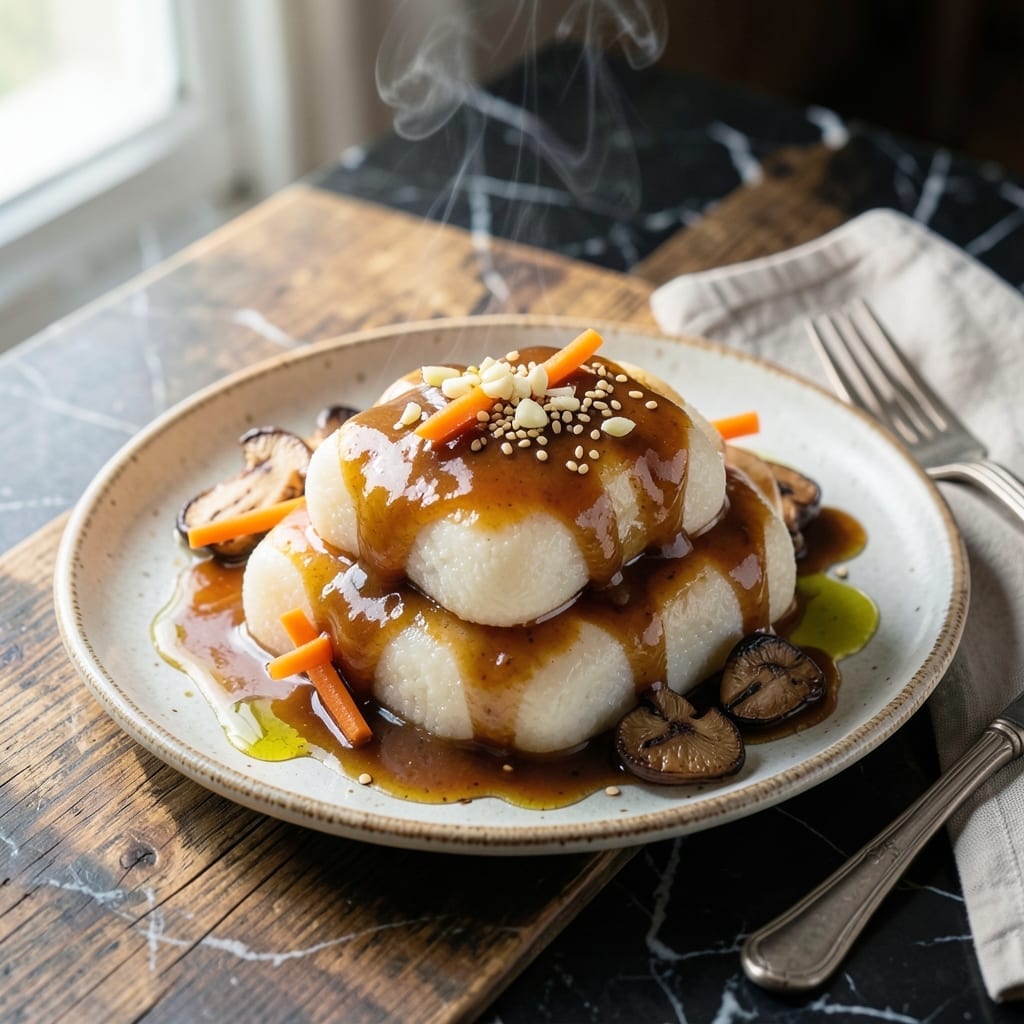
I developed this dish to prove that authentic Korean flavors don’t require gochujang. The chewy rice cakes absorb a rich, savory sauce built on soy, garlic, and sesame.
This version replaces heat with depth, using mushrooms and carrots for natural sweetness. The result is a mild yet complex dish that satisfies without spice.
Each bite delivers the signature chew of rice cakes with a silky, umami-packed sauce. The texture contrast keeps you reaching for more.
Perfect for those who love Korean flavors but prefer a gentler profile. Here’s how to make it.
Ingredients for Korean Rice Cake Recipe Without Gochujang
Fresh rice cakes and umami-rich ingredients create this savory Korean delight without heat.
| Ingredient | Amount | Notes |
|---|---|---|
| Korean Rice Cakes 🍚 | 1 lb | Cylindrical, fresh or thawed |
| Soy Sauce 🫒 | ½ cup | Low-sodium preferred for balance |
| Sesame Oil 🫒 | 2 tbsp | Toasted for nutty aroma |
| Garlic Cloves 🧄 | 6 cloves | Minced for maximum flavor |
| Brown Sugar 🍯 | 2 tbsp | Light or dark for sweetness |
| Shiitake Mushrooms 🍄 | 8 oz | Fresh, sliced thinly |
| Carrots 🥕 | 2 whole | Julienned for texture |
| Vegetable Broth 🥣 | 1 ½ cups | Low-sodium for control |
| Toasted Sesame Seeds 🌰 | 2 tbsp | For garnish and crunch |
| Green Onions 🧅 | 4 whole | Thinly sliced for freshness |
| Cornstarch 🌾 | 1 tbsp | Mixed with water for thickening |
| Water 💧 | 2 tbsp | For cornstarch slurry |
| Neutral Oil 🫒 | 1 tbsp | For sautéing vegetables |
The rice cakes are non-negotiable—look for cylindrical tteok in the refrigerated section of H Mart or Korean markets (frozen works too, just thaw first). Shiitake mushrooms add that meaty depth, and I always grab the fresh ones from Whole Foods for consistent quality. The soy sauce should be Korean brands like Sempio or Kikkoman for authentic flavor. Don’t skip the toasted sesame oil—it’s carrying most of the aroma here.
No shiitakes? Cremini or oyster mushrooms work in a pinch. Out of brown sugar? Coconut sugar or maple syrup at the same amount keeps the sweetness balanced. If you can’t find Korean rice cakes, fresh mochi or thick-cut rice noodles can sub (texture will differ). The cornstarch slurry is key—mix it cold to avoid lumps. And yes, tamari works if you’re gluten-free.
Leftovers keep 3-4 days in the fridge, but the rice cakes firm up—reheat with a splash of water to soften. Freezes for 2 months (thaw before reheating). The sesame seeds and green onions are best added fresh, so store them separately (the seeds keep 3 months in a cool, dark place).
Why You’ll Love This Recipe
- Under 20 Minutes: I can get this from pantry to plate faster than my kids can argue over who gets the last piece.
- Sweet-Savory Magic: The brown sugar and soy sauce caramelize into this glossy, finger-licking glaze that clings to every chewy rice cake.
- Weeknight MVP: Honestly, it’s my Tuesday night lifesaver—equally at home in lunchboxes or as a last-minute dinner when the fridge is bare.
- Stretches Far: One batch feeds my family of four with leftovers for my lunch tomorrow, and the rice cakes cost less than a coffee.
Step-by-Step Instructions for Korean Rice Cake Without Gochujang
This gentle approach keeps the rice cakes tender while building layers of savory, umami-rich flavor.
Step 1: Prepare the Vegetables and Aromatics
Thinly slice the 8 oz Shiitake Mushrooms—aim for ¼-inch pieces so they cook quickly and absorb the sauce. Peel and julienne the 2 whole Carrots into matchstick-sized pieces for consistent texture. Mince the 6 cloves Garlic Cloves finely; this ensures even distribution in the sauce.
Thinly slice the 4 whole Green Onions, separating the white and green parts. You’ll use the whites for cooking and reserve the greens for garnish. This prep step is crucial—uniform pieces mean even cooking and a polished final dish.
Step 2: Sauté the Base for Maximum Flavor
Heat the 1 tbsp Neutral Oil in a large skillet or wok over medium-high heat until shimmering. Add the sliced Shiitake Mushrooms and Carrots, stirring frequently for 5-6 minutes until the mushrooms soften and begin to lightly brown.
Add the minced Garlic Cloves and the white parts of the Green Onions. Sauté for 1-2 minutes until fragrant—this builds the aromatic foundation. Be careful not to let the garlic burn; it should turn just golden at the edges.
Step 3: Create the Sauce and Simmer the Rice Cakes
Pour in the 0.5 cup Soy Sauce, 2 tbsp Sesame Oil, and 2 tbsp Brown Sugar. Stir well to combine and dissolve the sugar. The mixture should start to bubble gently, releasing a rich, nutty aroma from the Sesame Oil.
Add the 1 lb Korean Rice Cakes and 1.5 cups Vegetable Broth. Stir to coat the rice cakes evenly in the sauce. Reduce heat to medium and let it simmer for 8-10 minutes, stirring occasionally, until the rice cakes are tender and slightly chewy and the broth has reduced slightly.
Step 4: Thicken the Sauce and Finish
In a small bowl, mix the 1 tbsp Cornstarch with the 2 tbsp Water to create a smooth slurry. Stir this into the skillet and cook for 1-2 minutes until the sauce thickens and becomes glossy, coating the back of a spoon.
Taste and adjust seasoning if needed, though the Soy Sauce and Brown Sugar should provide a balanced sweet-savory profile. The sauce should be thick enough to cling to the rice cakes but still fluid enough to pool slightly at the bottom of the pan.
Step 5: Garnish and Serve
Remove from heat and sprinkle with the 2 tbsp Toasted Sesame Seeds and the reserved green parts of the Green Onions. The Sesame Seeds add a nutty crunch, while the Green Onions bring a fresh, bright contrast to the rich, savory dish.
Let it sit for 2-3 minutes to allow the flavors to meld. Serve warm, ensuring each portion has an even mix of rice cakes, vegetables, and sauce. The rice cakes should be soft and slightly springy, with every bite carrying the deep, umami-packed sauce.
Pro Tips For Making Korean Rice Cake Recipe Without Gochujang
- Soak the Rice Cakes: Cover the rice cakes in warm water for 10-15 minutes before cooking—this prevents them from turning rock-hard when they hit the pan.
- Bloom the Garlic: Cook minced garlic in sesame oil for 30 seconds before adding anything else, just until fragrant but not brown. I learned this the hard way after burning three batches.
- Simmer, Don’t Boil: Keep the sauce at a gentle simmer once the rice cakes go in. Boiling makes them gummy and the sauce too thin.
- Add Sugar Last: Stir in the brown sugar in the final 2 minutes of cooking to avoid burning and to let it gloss the rice cakes perfectly.
Common Mistakes When Making korean rice cake recipe without gochujang
Over-Soaking Rice Cakes
Soaking rice cakes too long turns them mushy. I rinse them in cold water for 5 minutes only if they seem dry, then pat them dry. Fresh rice cakes from H Mart usually need just a quick rinse. This prevents them from breaking apart during cooking. 💡
Skipping the Cornstarch Slurry
Without the 1 tbsp Cornstarch mixed with 2 tbsp Water, your sauce will stay thin and watery. I mix the slurry with cold water to avoid lumps, then stir it in at the end. The sauce should coat the back of a spoon when done.
High Heat Cooking
Burnt garlic ruins the flavor. I keep the heat at medium after adding garlic to the 1 tbsp Neutral Oil. Golden edges on garlic are perfect; black bits mean you need to start over. Trust me, I’ve learned this the hard way.
Using Old Rice Cakes
Stale rice cakes turn rock-hard when cooked. I check the expiration date and buy from stores with high turnover like Whole Foods. If you must use older ones, soak them in warm water for 10-15 minutes before cooking.
Overcrowding the Pan
Too many rice cakes at once steams instead of sautés. I cook in batches if needed, using a large skillet. This ensures even cooking and proper sauce absorption. The rice cakes should have room to move around freely.
Skipping the Garnish
The 2 tbsp Toasted Sesame Seeds and green onions aren’t just pretty—they add essential texture and freshness. I always reserve some green onion tops for the final sprinkle. It makes the dish taste as good as it looks. ✨
Nutrition Facts
Frequently Asked Questions
Can I make this with frozen rice cakes?
Yes, but thaw them completely first. Rinse in cold water for 5 minutes to remove excess starch, then pat dry. Frozen rice cakes can be slightly tougher, so simmer for 2-3 extra minutes to soften.
What can I substitute for shiitake mushrooms?
Cremini or oyster mushrooms work well. For a different texture, try zucchini or bell peppers. If using dried shiitakes, rehydrate them first and chop finely.
How do I store leftovers?
Keep in an airtight container in the fridge for up to 3-4 days. Reheat gently with a splash of water to restore the chewy texture. Avoid freezing, as it can make the rice cakes rubbery.

- Jollof Rice Sauce Recipe: West African Tomato and Spice Infusion - September 25, 2026
- Japanese Rice Soup Recipe: Umami-Rich Comfort in a Bowl - September 25, 2026
- Homemade Cream Of Rice Recipe: Silk-Smooth Breakfast in Minutes - September 25, 2026