
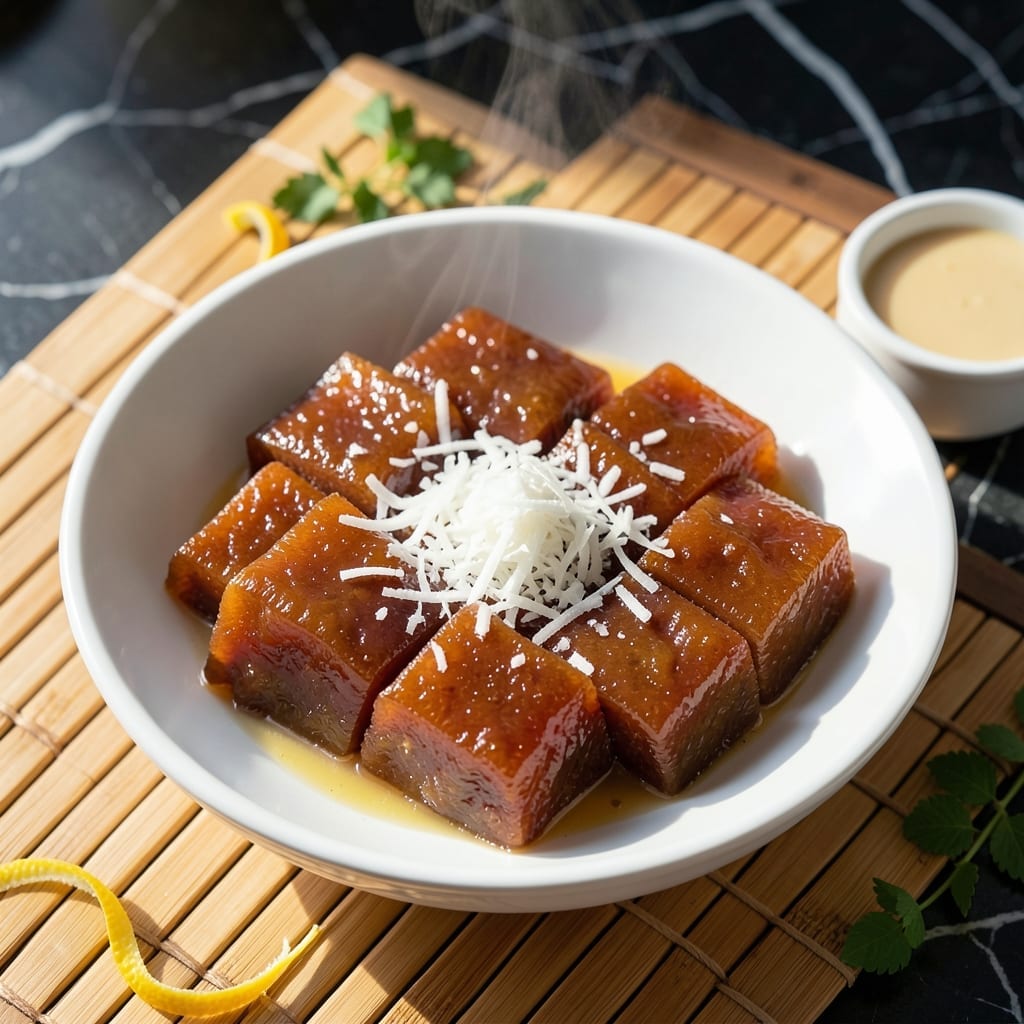
This traditional Filipino treat combines the best of both flours for a texture that’s impossible to resist. The blend creates a chewy center with a slightly sticky top that’s signature to authentic kutsinta.
I developed this version after testing multiple ratios, and the balance of glutinous rice flour with all-purpose achieves the ideal consistency. The addition of lye water gives it that characteristic brown color and subtle sweetness.
What emerges from the steamer is a batch of glossy, jiggly cakes with a soft bounce. Each piece offers a delicate sweetness that pairs perfectly with grated coconut or a sprinkle of sesame seeds.
This recipe proves that some of the best desserts require just a handful of ingredients and a little patience. The steaming process is what transforms the simple batter into something extraordinary.
Ingredients for Kutsinta Recipe Using Glutinous Rice Flour and All Purpose Flour
A few simple ingredients create this traditional Filipino rice cake with its signature chewy texture.
| Ingredient | Amount | Notes |
|---|---|---|
| Glutinous Rice Flour 🌾 | 1 ½ cups | Also called sweet rice flour |
| All-Purpose Flour 🌾 | ½ cup | Sifted for smooth batter |
| Brown Sugar 🍚 | ¾ cup | Packed for rich sweetness |
| Lye Water 💧 | 1 tbsp | Food-grade, for color and texture |
| Water 💧 | 1 ½ cups | Warm for better dissolution |
| Coconut Milk 🥥 | ½ cup | Full-fat for creaminess |
| Grated Coconut 🥥 | ½ cup | Fresh or frozen, unsweetened |
| Sesame Seeds 🌰 | 2 tbsp | Toasted for garnish |
| Vanilla Extract 🌿 | 1 tsp | Pure extract recommended |
| Salt 🧂 | ¼ tsp | Fine grain for even distribution |
The glutinous rice flour is non-negotiable for that authentic bounce—look for it in Asian markets or the international aisle at Whole Foods. Lye water can be tricky to find; online retailers like Amazon carry it, but ensure it’s food-grade. The coconut milk should be full-fat for the best texture (light versions won’t give you the same richness). Fresh grated coconut is ideal, but unsweetened shredded from a bag works in a pinch.
No lye water? You can substitute with a mix of baking soda and water, but the color won’t be the same. One-fourth teaspoon baking soda dissolved in one tablespoon water gets you close on texture. Brown sugar can be swapped for white, but the molasses notes are part of what makes this special. If you’re avoiding coconut, almond milk works, though the flavor profile shifts slightly.
The batter can sit for up to 30 minutes before steaming (great for prep ahead). Steamed kutsinta keeps at room temperature for 2 days or in the fridge for up to 5 days. Re-steam briefly to restore that fresh, jiggly texture.
Why You’ll Love This Recipe
- One Bowl Mix: I just dump the glutinous rice flour, all-purpose flour, brown sugar, and water together—no fancy steps, no extra bowls.
- Chewy Sweet Bite: That combo of glutinous rice flour and brown sugar gives it this addictive chewy texture with a deep caramel-like sweetness.
- Party Ready: I’ve served these at potlucks and they’re always the first to disappear. Between us, they taste even better the next day.
- Budget Stretch: A bag of glutinous rice flour and a little all-purpose flour makes dozens. Honestly, it’s my go-to when I need to feed a crowd without breaking the bank.
Step-by-Step Instructions for Chewy Brown Rice Cake Delight
Master this traditional method for perfectly textured, golden-brown rice cakes every time.
Step 1: Combine Dry Ingredients for Smooth Batter
In a large mixing bowl, whisk together the 1.5 cups Glutinous Rice Flour and 0.5 cup All-Purpose Flour until fully combined. The all-purpose flour adds structure while the glutinous rice flour provides the signature chewy texture.
Sift the mixture if you notice any lumps—this ensures a silky-smooth batter. I always take this extra step to prevent any grainy texture in the final product. The uniform consistency is crucial for even steaming.
Step 2: Create the Sweet Lye Water Mixture
In a separate bowl, combine the 0.75 cup Brown Sugar, 1 tbsp Lye Water, 1.5 cups Water, 0.5 cup Coconut Milk, 1 tsp Vanilla Extract, and 0.25 tsp Salt. Stir until the brown sugar fully dissolves and the lye water creates a slightly syrupy consistency.
Warm water helps the sugar dissolve faster and more completely. The lye water is what gives kutsinta its characteristic slightly alkaline taste and that beautiful golden-brown color. Handle this mixture carefully as lye water can be caustic.
Step 3: Combine Wet and Dry Ingredients
Gradually pour the wet mixture into the dry ingredients while whisking continuously. This prevents clumping and ensures a uniform batter. The batter should be thin enough to pour but thick enough to coat the back of a spoon.
After combining, let the batter rest for 10-15 minutes. This resting period allows the flours to fully hydrate and the lye water to work its magic on the color and texture. You’ll notice the batter thickens slightly during this time.
Step 4: Steam to Perfection
Pour the batter into greased or lined molds, filling each about ¾ full. Place the molds in a steamer with at least 2 inches of boiling water. Cover and steam over medium-high heat for 30-40 minutes.
Check for doneness by inserting a toothpick—it should come out clean. The cakes are ready when they’ve pulled away from the sides slightly and have developed that characteristic shiny, slightly sticky top with a deep brown hue.
Step 5: Garnish and Serve
Once steamed, let the cakes cool in the molds for 5 minutes before transferring to a wire rack. While still warm, brush the tops with a bit of the remaining coconut milk for extra shine and flavor.
Sprinkle generously with 0.5 cup Grated Coconut and 2 tbsp Sesame Seeds for the traditional presentation. The contrast of the nutty sesame and coconut with the chewy, sweet cake creates the perfect balance of textures and flavors.
Pro Tips For Making Kutsinta Recipe Using Glutinous Rice Flour And All Purpose Flour
- Steam Evenly: Use a cloth or parchment paper with holes to cover the steamer—this prevents water drips from ruining the kutsinta’s smooth surface while ensuring even heat distribution.
- Balance the Flours: Stick to a 2:1 ratio of glutinous rice flour to all-purpose flour; I learned this the hard way after my first batch turned out too dense instead of chewy.
- Dissolve Sugar Well: Mix the brown sugar thoroughly with warm water before adding it to the batter—lumpy sugar means uneven sweetness and a grainy texture.
- Measure Lye Carefully: Use exactly 1 teaspoon of lye water per cup of total flour; too much gives a bitter taste, and too little leaves the kutsinta flat and pale.
Storing and Reheating Leftovers
Room Temperature Storage
Once cooled, place your kutsinta in an airtight container lined with parchment paper. They’ll stay fresh at room temperature for up to 2 days. The texture remains soft and chewy if kept in a cool, dry spot away from direct sunlight. 💡
Refrigerator Storage
For longer storage, refrigerate in the same airtight container for up to 5 days. Separate layers with parchment to prevent sticking. The cold can firm up the cakes, but they’ll soften once brought back to room temperature.
Freezing for Later
Freeze individual pieces wrapped tightly in plastic wrap, then stored in a freezer-safe bag for up to 1 month. Thaw overnight in the fridge before reheating. This method preserves the chewy texture beautifully.
Steaming to Refresh
To restore that fresh-steamed texture, place cakes in a steamer over boiling water for 5-7 minutes. This revives the softness and stickiness, making them taste almost newly made. Avoid microwaving, as it can dry them out.
Serving Warm
If serving warm after storage, a quick steam is ideal. For a faster option, warm in a preheated oven at 300°F for 8-10 minutes, covered with foil to retain moisture. Always garnish with fresh coconut after reheating. 🥥
Nutrition Facts
Frequently Asked Questions
Why mix glutinous and all-purpose flour?
Glutinous rice flour gives the signature chewy texture, while all-purpose adds structure. This combo creates the ideal balance of elasticity and firmness that defines authentic cuts.
Can I make this without lye water?
Yes! Substitute with ¼ tsp baking soda dissolved in 1 tbsp water. The texture will be similar, but the color won’t be as deep brown.
How do I prevent a grainy texture?
Sift both flours together first and whisk the batter thoroughly. Let it rest for 10-15 minutes before steaming to fully hydrate the flours.
Why did my cakes turn out dense?
Overmixing or insufficient steaming time can cause this. Ensure your steamer has enough boiling water and steam for the full 30-40 minutes.

- Mujadara Rice and Lentils Recipe: Earthy Spiced Lentils With Caramelized Onions - November 1, 2026
- Naija Fried Rice Recipe: Street-Style Spice With Veggie Crunch - November 1, 2026
- Mushy Rice Recipe: Fluffy Grains Transformed in Minutes - November 1, 2026