
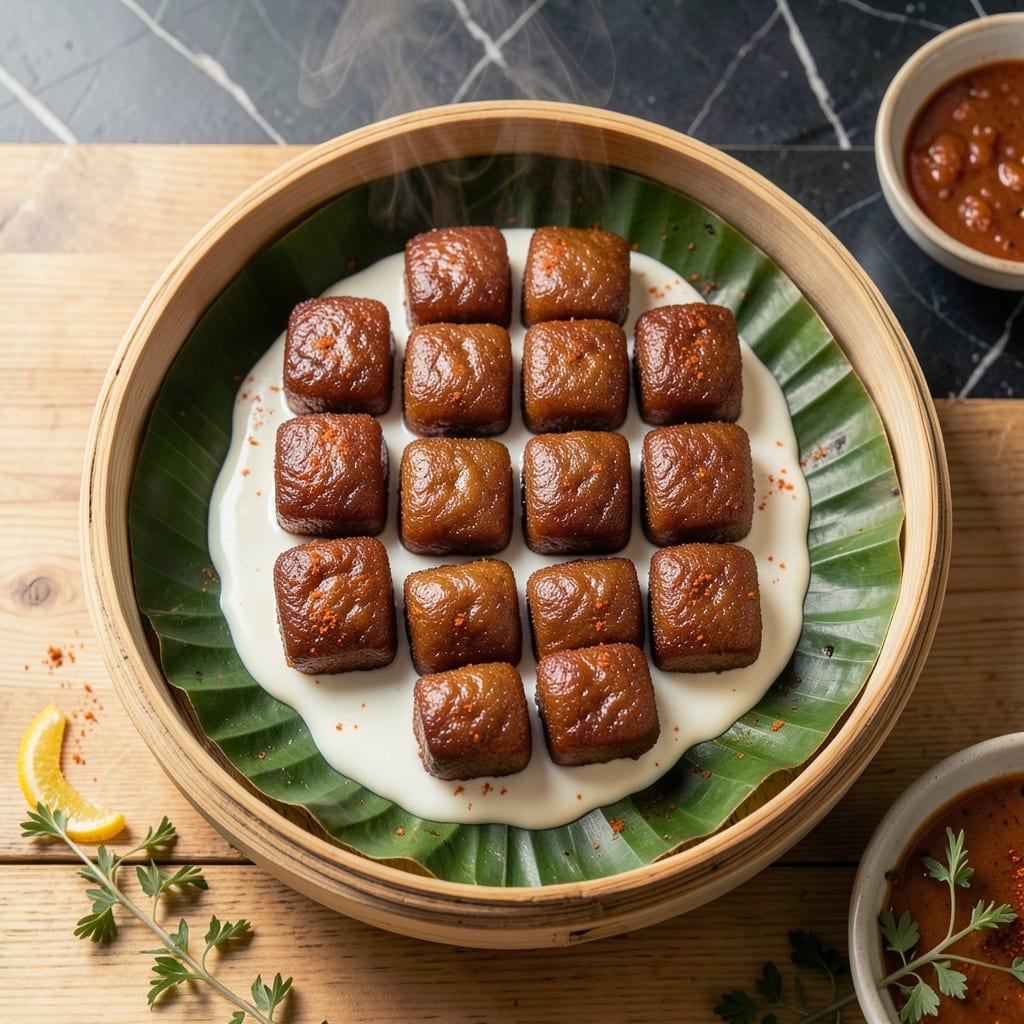
This traditional Filipino treat delivers a chewy texture and glossy finish that’s hard to resist. I’ve refined this method to ensure perfect results every time using simple pantry staples.
The key lies in balancing rice flour with brown sugar for that signature sticky-sweet bite. Steaming creates the ideal moist yet springy consistency that defines authentic kutsinta.
Each piece emerges with a shiny top and tender interior, ready to be enjoyed warm. The process is straightforward but rewards patience with its layered flavors.
Serve these as a sweet snack or dessert, and watch them disappear quickly. This recipe stays true to the classic while keeping preparation accessible.
Ingredients for Kutsinta Recipe Using Rice Flour
Simple pantry staples transform into this chewy, glossy Filipino delight with ease.
| Ingredient | Amount | Notes |
|---|---|---|
| Rice Flour 🌾 | 2 cups | Glutinous or regular variety |
| Brown Sugar 🧈 | 1 ½ cups | Packed, light or dark |
| Water 💧 | 2 ½ cups | Warm for dissolution |
| Lye Water 🧪 | 1 tsp | Food-grade, essential for texture |
| Coconut Milk 🥥 | ½ cup | Full-fat for creaminess |
| Annatto Powder 🌶️ | ¼ tsp | For color (optional) |
| Vanilla Extract 🌿 | 1 tsp | Pure, for depth of flavor |
| Salt 🧂 | ¼ tsp | Fine sea salt |
| Shredded Coconut 🥥 | ½ cup | Unsweetened, for topping |
| Banana Leaves 🍃 | 4 pieces | For lining steamer (optional) |
Rice flour is non-negotiable here—glutinous rice flour (also called sweet rice flour) gives that signature chew. Look for it at Asian markets or the international aisle. The brown sugar should be soft and fresh (not hardened into a brick). Lye water is the secret to that shiny top—find it in the baking aisle of Whole Foods or online. Skip the annatto if you prefer the natural beige color.
No lye water? In a pinch, baking soda solution (1/4 tsp baking soda dissolved in 1 tbsp warm water) works, but the finish won’t be as glossy. Coconut milk can be light if you’re watching calories, but full-fat delivers the best richness. For a twist, swap vanilla for pandan extract—it’s a beloved Filipino flavor combo.
Store the steamed kutsinta in an airtight container at room temperature for 2 days, or refrigerate for up to 1 week. Reheat by steaming for 5-10 minutes. The batter can be prepared a day ahead—just give it a good stir before pouring into molds.
Why You’ll Love This Recipe
- No Fuss Mixing: I just dump rice flour, brown sugar, and coconut milk in a bowl—no fancy tools, no complicated steps.
- Sticky Sweetness: The brown sugar caramelizes into this chewy, molasses-like topping that’s honestly hard to resist.
- Party or Snack: I’ve served these at fiestas and also as a 3 PM pick-me-up with coffee. Between us, both work.
- Pocket Friendly: Rice flour and brown sugar are pantry staples, so a batch costs me less than a fancy dessert.
Step-by-Step Instructions for Kutsinta Using Rice Flour
Master the technique for achieving that signature chewy texture and glossy finish with this traditional method.
Step 1: Prepare the Steamer and Line with Banana Leaves
Begin by setting up your steamer with 2-3 inches of water in the base. Bring the water to a simmer while you prepare the molds. If using the 4 pieces Banana Leaves, briefly pass them over a low flame to soften, then cut into squares to fit your molds.
Line your molds with the prepared banana leaves or parchment paper. This step prevents sticking and imparts a subtle aroma. The leaves should overlap slightly to fully cover the bottom and sides. I’ve found that warming the leaves first makes them more pliable for molding.
Step 2: Mix the Wet Ingredients and Dissolve the Lye Water
In a large mixing bowl, combine the 1.5 cups Brown Sugar with the 2.5 cups Water. Stir until the sugar is fully dissolved. Then, carefully add the 1 tsp Lye Water and mix thoroughly. Handle the lye water with caution as it is caustic.
The lye water is critical for achieving the characteristic chewy texture and glossy top. Ensure it is fully incorporated into the mixture before proceeding. The liquid should appear slightly cloudy at this stage.
Step 3: Combine Dry Ingredients and Create the Batter
In a separate bowl, whisk together the 2 cups Rice Flour, 0.25 tsp Salt, and 0.25 tsp Annatto Powder until evenly blended. Gradually add the dry mixture to the wet ingredients, whisking continuously to prevent lumps from forming.
Once the batter is smooth, stir in the 0.5 cup Coconut Milk and 1 tsp Vanilla Extract. The coconut milk adds richness and creaminess to the texture, while the vanilla enhances the depth of flavor. The batter should be thin enough to pour but thick enough to coat the back of a spoon.
Step 4: Steam the Kutsinta to Perfection
Pour the batter into the prepared molds, filling each about ¾ full. Place the molds in the steamer, ensuring the lid is tightly sealed to trap steam. Steam over medium heat for 45-50 minutes, or until the tops are firm to the touch and a toothpick inserted comes out clean.
Avoid opening the steamer lid during the first 30 minutes to prevent sudden temperature drops, which can cause the kutsinta to collapse. The surface should develop a glossy sheen as it cooks, indicating the lye water is working its magic.
Step 5: Cool, Top with Shredded Coconut, and Serve
Once cooked, remove the kutsinta from the steamer and let them cool in the molds for 10 minutes. This allows them to set fully and makes them easier to remove. Gently lift each piece from the mold, peeling away the banana leaves if used.
While still warm, sprinkle the tops generously with the 0.5 cup Shredded Coconut. Serve at room temperature for the best texture. The kutsinta should have a slightly sticky, chewy interior with a smooth, shiny top that glistens under the light.
Pro Tips For Making Kutsinta Recipe Using Rice Flour
- Preheat the Molds: Always heat your molds with a little oil before pouring the batter—I learned this the hard way after my first batch stuck like cement.
- Measure Lye Water Carefully: Use exactly 1/4 teaspoon of lye water per cup of rice flour. Too much makes the kutsinta bitter, and too little leaves it dense.
- Skip the Overmixing: Stir the batter just until the rice flour dissolves. Overmixing develops gluten in some flours, but with rice flour it just creates air bubbles that mess with the texture.
- Steam with Coconut Milk: Brush the tops with coconut milk halfway through steaming—about 15 minutes in—to keep them moist and add that signature rich flavor.
Make-Ahead Tips for kutsinta recipe using rice flour
Batter Prep Ahead
Mix your wet and dry ingredients the night before and store the batter in an airtight container in the fridge. I’ve found it keeps well for 24 hours, and the flavors actually deepen overnight. Just give it a good stir before using, as the rice flour tends to settle.
Steam in Batches
If you’re making a large batch, steam the kutsinta in multiple rounds to avoid overcrowding. This ensures even cooking and that signature glossy finish. I use a bamboo steamer for this—it holds heat beautifully and fits perfectly over my stockpot.
Room Temperature Storage
Once cooled, store your kutsinta in an airtight container at room temperature. They’ll stay fresh and chewy for up to 2 days. Line the container with parchment paper to prevent sticking. 💡
Refrigerator Storage
For longer storage, refrigerate in an airtight container for up to 1 week. The texture will firm up slightly, but a quick steam for 5-10 minutes restores their soft, chewy goodness. I like to add a damp paper towel on top to retain moisture.
Freezing for Later
Freeze individual pieces wrapped in plastic wrap and placed in a freezer bag for up to 1 month. Thaw overnight in the fridge, then steam to revive. This is perfect for unexpected guests or cravings. ❄️
Reheating Tips
Always reheat by steaming for 5-10 minutes until warm throughout. Microwaving can make them rubbery. If the tops lose their shine, a light brush with water before reheating helps restore the gloss.
Nutrition Facts
Frequently Asked Questions
Can I use regular rice flour instead of glutinous?
Regular rice flour works but won’t give the same chewy texture. Glutinous rice flour is key for that signature sticky bite. If you must substitute, add 1 tablespoon of cornstarch to help bind the mixture.
Why did my kutsinta not turn glossy?
Lye water is essential for the shiny top. If omitted, the finish will be dull. Ensure you use food-grade lye water and mix it thoroughly into the batter before steaming.
How do I know when it’s done steaming?
The top should be firm to the touch and a toothpick inserted should come out clean. Steam for 45-50 minutes over medium heat without peeking early.
Can I make this without banana leaves?
Yes! Use parchment paper or lightly greased molds instead. Banana leaves add aroma but aren’t required. Just ensure your molds are non-stick.

- Mujadara Rice and Lentils Recipe: Earthy Spiced Lentils With Caramelized Onions - November 1, 2026
- Naija Fried Rice Recipe: Street-Style Spice With Veggie Crunch - November 1, 2026
- Mushy Rice Recipe: Fluffy Grains Transformed in Minutes - November 1, 2026