
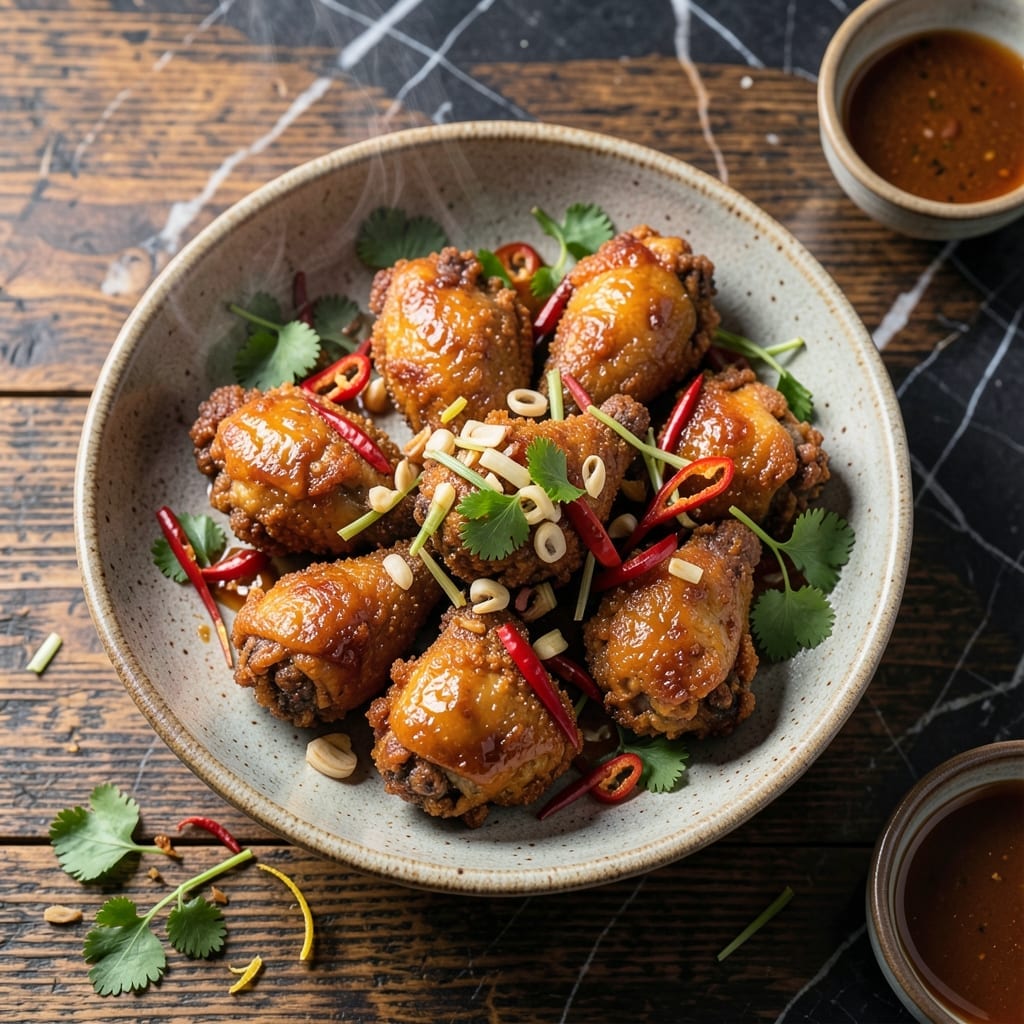
There’s a reason Lao fried chicken stands out in a world of crispy poultry—its crispy texture and bold, aromatic flavors come from a time-tested wok-frying tradition that’s hard to replicate.
This method relies on a marinade of fish sauce, garlic, and lemongrass, which infuses the meat with depth before it hits the hot oil. The double-frying technique ensures a shatteringly crispy exterior while keeping the inside juicy and tender.
What you get is golden, fragrant chicken with a crunch that holds up even after cooling. The aromatics in the marinade create a complexity that’s distinctly Lao, balancing salty, tangy, and umami notes.
Serve it with sticky rice and fresh herbs for the full experience. Here’s how to achieve it at home.
Ingredients for Lao Fried Chicken
Golden, aromatic chicken with a shatteringly crispy exterior requires these authentic ingredients.
| Ingredient | Amount | Notes |
|---|---|---|
| Chicken Thighs 🍗 | 2 lb | Boneless, skin-on, cut into pieces |
| Fish Sauce 🐟 | 3 tbsp | Thai or Vietnamese brand |
| Fresh Lemongrass 🌿 | 2 pieces | Bruised and finely minced |
| Garlic Cloves 🧄 | 6 cloves | Minced to a fine paste |
| Shallots 🧅 | 2 whole | Thinly sliced for marinade |
| Palm Sugar 🍚 | 1 ½ tbsp | Or substitute brown sugar |
| White Pepper 🧂 | 1 tsp | Freshly ground for authenticity |
| Cornstarch 🌾 | ½ cup | For ultra-crispy coating |
| All-Purpose Flour 🌾 | ½ cup | Combined with cornstarch |
| Neutral Oil 🫒 | 4 cups | For deep frying, like peanut or vegetable |
| Fresh Cilantro 🌿 | ½ cup | Chopped, for garnish |
| Fresh Mint Leaves 🌿 | ¼ cup | Torn, for serving |
| Lime Wedges 🍈 | 4 pieces | For serving alongside |
| Sticky Rice 🍚 | 2 cups | Uncooked, for serving |
The fish sauce is non-negotiable for authentic flavor—Red Boat or Three Crabs are top-tier brands. Lemongrass must be fresh (no dried substitutes here); look for firm, pale green stalks at Asian markets. Chicken thighs stay juicier than breasts through double-frying. For the oil, peanut or avocado oil handles the high heat best without smoking. Quality matters most with the marinade ingredients.
No lemongrass? Lime zest plus a bay leaf gets you 70% there (not ideal, but workable). Fish sauce can’t be swapped—soy sauce lacks the depth. Palm sugar is traditional, but light brown sugar works in a pinch. For gluten-free, swap the all-purpose flour for rice flour. The cornstarch is key for that signature crunch, so don’t skip it.
Marinate the chicken for at least 4 hours—overnight is even better. Fried chicken stays crispy for 1 hour at room temp but reheats poorly. Serve immediately with sticky rice and herbs. Leftovers? Rare, but they’ll keep in the fridge for 2 days (best eaten cold).
Why You’ll Love This Recipe
- One Pan Wonder: Honestly, I just toss the chicken thighs with fish sauce, lemongrass, and garlic—one bowl, one pan, minimal mess.
- Crave-Worthy Crisp: That fish sauce and shallot combo gives it a salty-sweet crunch I can’t resist.
- Weeknight Hero: Between us, this is my go-to for busy evenings—ready before the kids start asking for snacks.
- Budget Friendly: Chicken thighs stay cheap, and a little fish sauce goes a long way. I’ll be real: it’s my wallet’s favorite dinner.
Step-by-Step Instructions for Lao Fried Chicken
Master the technique for ultra-crispy, aromatic chicken with a perfectly balanced marinade.
Step 1: Marinate the Chicken Thighs
In a large bowl, combine the 2 lb Chicken Thighs with 3 tbsp Fish Sauce, 2 pieces Fresh Lemongrass, 6 cloves Garlic Cloves, 2 whole Shallots, 1.5 tbsp Palm Sugar, and 1 tsp White Pepper. Mix thoroughly, ensuring every piece is well-coated.
The palm sugar should dissolve into the fish sauce, creating a sticky, umami-rich marinade. Let it sit at room temperature for 30 minutes to allow the flavors to penetrate deeply. This step is crucial for achieving the authentic Lao taste profile.
Step 2: Prepare the Crispy Coating
In a shallow dish, whisk together the 0.5 cup Cornstarch and 0.5 cup All-Purpose Flour until fully combined. The cornstarch is the secret to an extra-crispy exterior, while the all-purpose flour provides structure.
Remove the chicken from the marinade (reserve the marinade for later use if desired) and dredge each piece thoroughly in the flour mixture. Press gently to ensure the coating adheres evenly. Shake off any excess—this prevents clumping during frying.
Step 3: Deep-Fry to Golden Perfection
Heat the 4 cups Neutral Oil in a deep, heavy-bottomed pot or wok over medium-high heat until it reaches 350°F. Use a thermometer for precision; the oil should shimmer but not smoke.
Working in batches to avoid overcrowding, carefully lower the coated chicken into the hot oil. Fry for 6-8 minutes, turning occasionally, until the coating is deep golden brown and crispy. The internal temperature should reach 165°F for fully cooked, juicy meat.
Step 4: Drain and Serve with Fresh Garnishes
Transfer the fried chicken to a wire rack set over a baking sheet or a paper towel-lined plate to drain excess oil. This keeps the coating crispy instead of soggy. Let it rest for 2-3 minutes before serving.
Arrange the chicken on a platter and garnish with 0.5 cup Fresh Cilantro and 0.25 cup Fresh Mint Leaves. Serve immediately with 4 pieces Lime Wedges for squeezing over the top and 2 cups Sticky Rice on the side to soak up the flavorful juices.
Pro Tips For Making Lao Fried Chicken
- Pound the Lemongrass: Bruise the fresh lemongrass stalks with the side of your knife or a rolling pin before adding them to the marinade—this releases way more aroma than just chopping them.
- Score the Thighs: Make 2-3 shallow cuts across each chicken thigh so the fish sauce and garlic penetrate deeper, and you’ll get more flavor in every bite.
- Skip the Overcrowding: I learned this the hard way—fry the chicken in batches so the pan stays hot and the skin actually crisps instead of steaming.
- Rest Before Frying: Let the marinated chicken sit at room temperature for 15 minutes before frying—it cooks more evenly and doesn’t seize up in the hot oil.
Common Mistakes When Making Great lao fried chicken
Skipping the Marinade Time
Rushing the marinade is the most common mistake. The fish sauce, lemongrass, and garlic need at least 4 hours to work their magic. I once tried 30 minutes and the flavor was noticeably flat. 💡
Overcrowding the Wok
Frying too many pieces at once drops the oil temperature, leading to greasy, soggy chicken. I fry in batches with 2-3 inches between pieces. A heavy-bottomed wok helps maintain steady heat.
Incorrect Oil Temperature
Oil that’s too cool creates a dense, oily coating. Too hot, and the outside burns before the inside cooks. I use a thermometer to keep it at a steady 350°F. Without one, test with a wooden chopstick—bubbles should form around it.
Skipping the Rest
Serving immediately after frying can make the coating fall off. I always rest the chicken on a wire rack for 2-3 minutes to let the crust set. This also allows the juices to redistribute.
Using the Wrong Oil
Low smoke-point oils like olive oil will burn. I use peanut or avocado oil for their high smoke points and neutral flavor. They can handle the 350°F heat without breaking down.
Neglecting the Dredge
The cornstarch and flour mix needs to be pressed firmly onto the chicken. I shake off excess but ensure every piece is fully coated. This creates that signature shattery crunch that makes Lao fried chicken special. 🔥
Nutrition Facts
Frequently Asked Questions
Can I use chicken breasts instead of thighs?
Thighs stay juicier, but breasts work if pounded to even thickness. Reduce frying time to 5-6 minutes to prevent dryness. Brining them first helps maintain moisture.
Why is fish sauce essential in the marinade?
It provides the signature umami depth and salty-savory balance that defines Lao flavor. No substitute replicates its complex fermented taste. 3 tbsp is the minimum for authentic results.
How do I keep the coating crispy longer?
Drain on a wire rack, not paper towels. Avoid covering or stacking pieces. For leftovers, reheat in a 375°F oven for 5-7 minutes to restore crunch.
What’s the best oil for frying?
Use oils with high smoke points like peanut or avocado. They handle 350°F heat without burning and have neutral flavors that won’t overpower the dish.

- Jollof Rice Sauce Recipe: West African Tomato and Spice Infusion - September 25, 2026
- Japanese Rice Soup Recipe: Umami-Rich Comfort in a Bowl - September 25, 2026
- Homemade Cream Of Rice Recipe: Silk-Smooth Breakfast in Minutes - September 25, 2026