
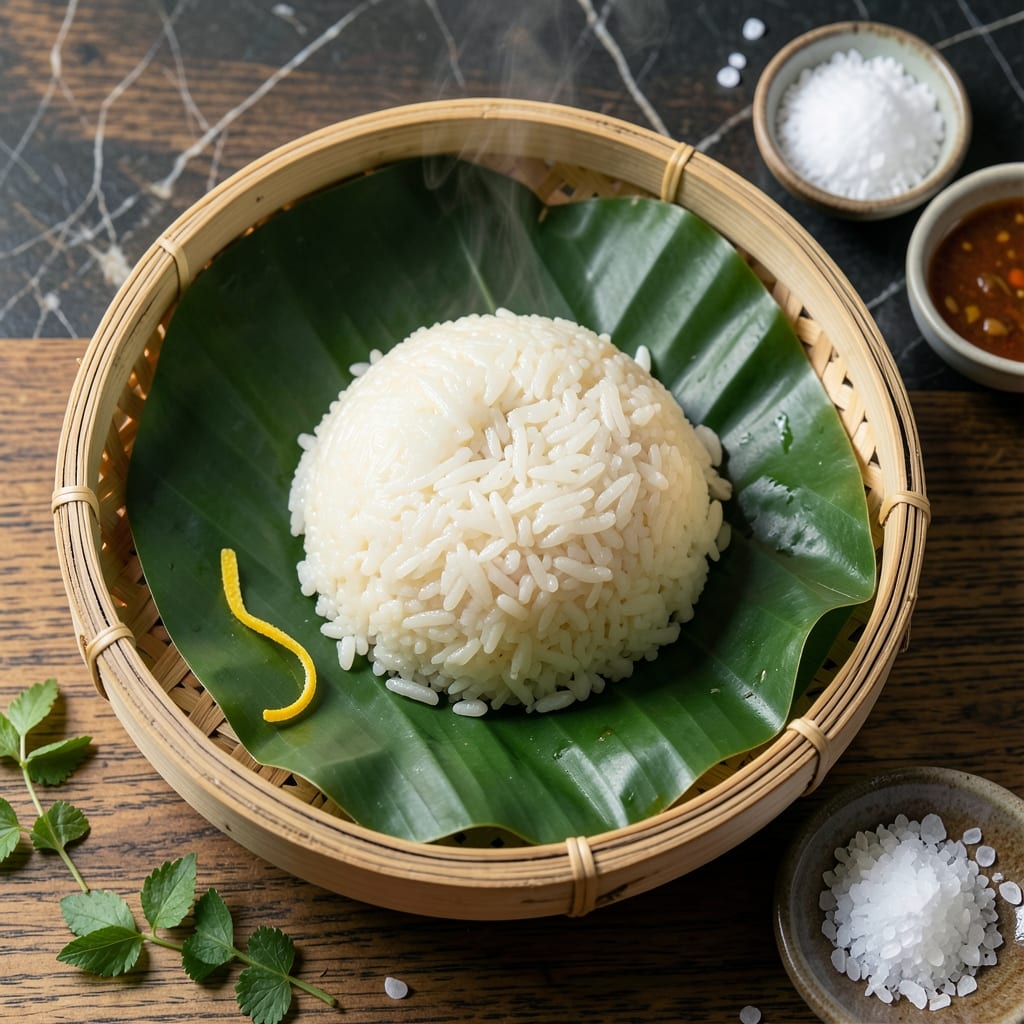
This traditional method delivers the authentic sticky rice that defines Lao cuisine. The soaking and steaming process creates those signature pillowy grains with a subtle nutty flavor that pairs perfectly with any meal.
I’ve refined this technique over years to ensure consistent results every time. The key is proper preparation and using a traditional bamboo steamer for that genuine texture and taste.
Ingredients for Laotian Sticky Rice
Traditional glutinous rice and simple tools create authentic Laotian sticky rice with perfect texture every time.
| Ingredient | Amount | Notes |
|---|---|---|
| Glutinous Rice 🍚 | 2 cups | Sweet rice variety, uncooked |
| Water 💧 | 2 ½ cups | For soaking rice overnight |
| Sea Salt 🧂 | ½ tsp | Fine grain, to taste |
| Banana Leaf 🌿 | 1 piece | Optional, for lining steamer |
| Bamboo Steamer Basket 🧺 | 1 whole | Traditional for authentic texture |
| Cheesecloth 🧻 | 1 piece | For lining if no banana leaf |
| Large Pot 🍲 | 1 whole | Wide enough for steamer basket |
| Steaming Water 💧 | 4 cups | For steaming process |
| Wooden Spoon 🥄 | 1 whole | For fluffing rice after steaming |
| Kitchen Towel 🧺 | 1 whole | For covering steamer lid |
The rice must be glutinous sweet rice—jasmine or long-grain won’t work. Look for it at Asian markets or the international aisle labeled as sticky rice or sweet rice. Brands like Khao Niao or Three Ladies are reliable. Soaking overnight (minimum 4 hours) is non-negotiable for that pillowy texture. A traditional bamboo steamer is ideal, though a metal colander over a pot works in a pinch.
No bamboo steamer? Use a metal steamer basket lined with cheesecloth or parchment paper—poke holes for steam circulation. Banana leaves add aroma but aren’t essential. The salt enhances the rice’s natural sweetness, so don’t skip it. If your rice is still hard after steaming, it likely didn’t soak long enough. For extra authenticity, soak in coconut water instead of plain water.
Uncooked rice keeps in a sealed container for 6-12 months. After cooking, sticky rice is best served immediately but can be reheated. Store leftovers in an airtight container for up to 3 days. Re-steam or microwave with a damp paper towel to revive the texture.
Why You’ll Love This Recipe
- One Bowl Wonder: I just soak the glutinous rice overnight, then steam it in the bamboo basket—hardly any active time at all.
- That Smoky Sweetness: The banana leaf wraps the rice in this subtle, earthy aroma that makes every bite taste like home.
- Pairs With Everything: I serve it with grilled meats, spicy dips, or even just a sprinkle of sea salt—it never fails me.
- Stretches for Days: A big batch costs pennies and stays soft in the fridge, so I always have a ready side dish.
Step-by-Step Instructions for Laotian Sticky Rice
Master the authentic steaming technique that delivers perfectly tender, fragrant grains every time.
Step 1: Soak the Glutinous Rice Overnight
Place the 2 cups Glutinous Rice in a large bowl and cover with the 2.5 cups Water. Stir in the 0.5 tsp Sea Salt until fully dissolved. The water should be at least 1 inch above the rice level to ensure complete submersion.
Let it soak at room temperature for 8-12 hours or overnight. This prolonged soaking is crucial—it softens the grains and reduces the steaming time while ensuring even cooking. The rice will absorb most of the water and nearly double in volume, becoming plump and slightly translucent at the edges.
Step 2: Prepare the Steamer Basket
Fill the large pot with the 4 cups Steaming Water and bring to a rolling boil over high heat. Meanwhile, line the bamboo steamer basket with either the banana leaf or the cheesecloth, ensuring it covers the bottom completely with no gaps.
If using the banana leaf, briefly pass it over an open flame to soften it and release its aroma, which will infuse the rice with a subtle, authentic fragrance. The lining prevents the rice from sticking to the basket and falling through the slats during steaming.
Step 3: Drain and Distribute the Rice
After soaking, drain the 2 cups Glutinous Rice thoroughly in a fine-mesh strainer, shaking gently to remove all excess water. The grains should glisten but not drip. Transfer the drained rice to the prepared bamboo steamer basket, spreading it in an even layer.
Use the wooden spoon to gently level the surface, but avoid pressing down—this maintains the light, fluffy texture that defines traditional sticky rice. The rice should fill the basket no more than halfway to allow steam to circulate freely.
Step 4: Steam to Perfection
Place the bamboo steamer basket over the boiling 4 cups Steaming Water in the large pot, ensuring the bottom of the basket doesn’t touch the water. Cover the basket with its lid, then drape the kitchen towel over the lid to catch condensation and prevent drips from falling back onto the rice.
Steam over medium-high heat for 20-25 minutes. Check the water level halfway through and replenish with hot water if needed to maintain a steady boil. The rice is done when the grains are tender, translucent, and cling together without being mushy.
Step 5: Fluff and Serve
Remove the steamer from the heat and let the rice sit, covered, for 5 minutes. This resting period allows the grains to finish absorbing moisture and set properly. Then, use the wooden spoon to gently fluff the rice from the bottom up, releasing steam and separating any clumps.
Serve immediately while hot. The rice should have a glossy sheen, a slightly chewy texture, and a subtle nutty aroma. Traditional presentation involves shaping portions into small balls or patties with your hands, which enhances the communal dining experience.
Pro Tips For Making Laotian Sticky Rice
- Soak the Rice Overnight: I learned this the hard way—glutinous rice needs at least 4 hours, but 8-12 hours in cool water makes it steam perfectly even and sticky. Anything less and you’ll get dry, undercooked spots.
- Line with Wet Leaves: Sounds weird, but it works: always dampen the banana leaves before lining the steamer. Dry leaves stick to the rice and tear when you try to serve it.
- Use Boiling Water: Start with boiling water in the steamer pot before adding the basket. This keeps the heat steady so the rice cooks through without turning mushy or uneven.
- Salt the Water: Add about ½ teaspoon of sea salt to the soaking water—just enough to season the rice lightly from the inside out. Skip it and the rice tastes flat, no matter what you serve it with.
Essential Equipment for laotian sticky rice
Bamboo Steamer Basket
The traditional bamboo steamer basket is non-negotiable for authentic texture. Look for a 10-12 inch diameter with a tight weave to prevent rice from falling through. I use a Helen Chen’s Asian Kitchen bamboo steamer—it fits most pots and lasts for years with proper care.
Large Pot with Lid
Your pot must be wide enough to accommodate the steamer with 1-2 inches of clearance. A 5-6 quart stainless steel pot works perfectly. Avoid non-stick as it can’t handle the high heat needed. I recommend All-Clad for even heat distribution.
Cheesecloth Alternative
If you skip the banana leaf, use unbleached cheesecloth to line your steamer. Cut a 12×12 inch square and fold it to fit the basket bottom. Secure with kitchen twine if needed. The cheesecloth prevents sticking while allowing steam to circulate freely.
Wooden Tools
A wooden spoon is essential for fluffing the rice without crushing the delicate grains. I also keep a wooden rice paddle on hand for serving. These tools won’t scratch your steamer and maintain the rice’s integrity. 🔥
Kitchen Towel Trick
Always drape a clean kitchen towel over the steamer lid during cooking. This absorbs condensation that could drip back onto your rice. Use a thin cotton towel—I find Flour Sack Towels work best for this purpose.
Fine-Mesh Strainer
A fine-mesh strainer ensures thorough draining after soaking. The OXO Good Grips version has a sturdy frame that won’t bend under the weight of soaked rice. Shake gently to remove all excess water without breaking the grains.
Nutrition Facts
Frequently Asked Questions
Why must the rice soak overnight?
Overnight soaking softens the grains for even cooking. This step ensures the rice absorbs enough moisture to steam properly and achieve that signature pillowy texture. Skipping it risks hard, unevenly cooked rice.
Can I use jasmine rice instead?
No, jasmine rice won’t work. Glutinous rice is essential for the sticky texture. Look for labels like “sweet rice” or “sticky rice” at Asian markets.
How do I store leftovers?
Keep cooked rice in an airtight container for up to 3 days. Re-steam or microwave with a damp paper towel to restore moisture and texture.
What if my rice turns out mushy?
This usually means it soaked too long or steamed too aggressively. Stick to 8-12 hours soaking and 20-25 minutes steaming for perfect results.

- Peri Peri Rice Recipe: Spicy Portuguese One-Pot Harmony - November 6, 2026
- Mexican Flavoured Rice Recipe: Authentic Spice-Infused One-Pot Meal - November 6, 2026
- Lao Gan Ma Fried Rice Recipe: Spicy Wok-Tossed Perfection - November 6, 2026