
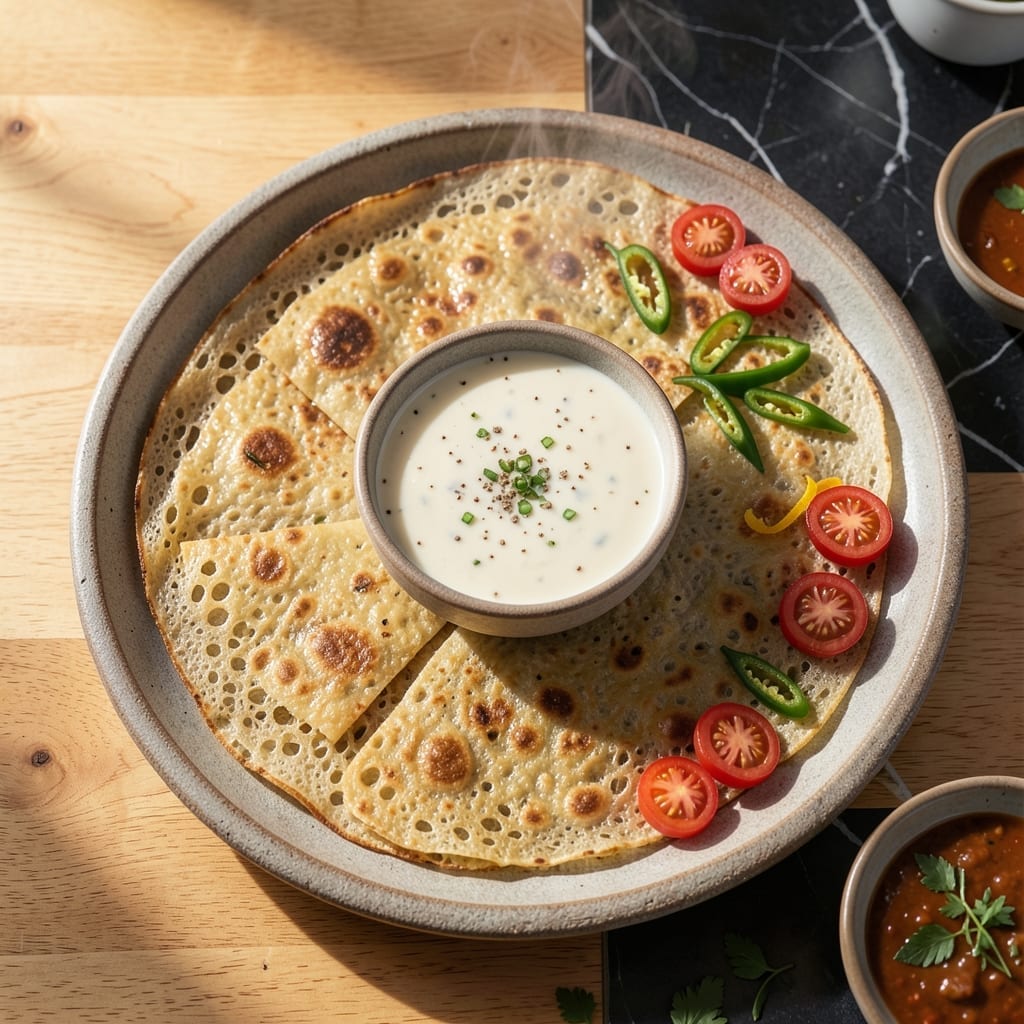
Transform yesterday’s rice into today’s crispy, golden dosa with this foolproof technique. The key lies in proper batter fermentation and precise cooking temperature to achieve that perfect balance of textures we all crave.
This method turns simple leftover rice into a South Indian classic without requiring special equipment. The batter comes together quickly with just a few pantry staples, then rests briefly to develop its characteristic tang.
Cooked on medium-high heat, each dosa develops crispy edges while maintaining a soft, tender center. The process is simpler than traditional dosa-making but delivers equally impressive results.
Serve hot with coconut chutney or sambar for a meal that’s both thrifty and restaurant-quality. Here’s how to make it happen in your kitchen.
Ingredients for Leftover Rice Dosa
Transform leftover rice into golden dosas with these pantry staples and a few fresh accents.
| Ingredient | Amount | Notes |
|---|---|---|
| Leftover Cooked Rice 🍚 | 3 cups | Day-old, chilled preferred |
| Semolina 🌾 | ½ cup | Fine or medium grind |
| All-Purpose Flour 🌾 | ¼ cup | For batter binding |
| Plain Yogurt 🥛 | ½ cup | Room temperature preferred |
| Water 💧 | 1 cup | Adjust for batter consistency |
| Salt 🧂 | 1 tsp | Adjust to taste |
| Cumin Seeds 🌿 | 1 tsp | Optional for flavor |
| Green Chili 🌶️ | 1 whole | Finely chopped, optional |
| Fresh Ginger 🌿 | 1 tsp | Grated for batter |
| Curry Leaves 🍃 | 8 pieces | Optional, for authenticity |
| Vegetable Oil 🫒 | ½ cup | For cooking dosas |
| Onion 🧅 | ½ whole | Thinly sliced, optional filling |
The rice quality is paramount here. Day-old basmati or jasmine works best—freshly cooked rice retains too much moisture. Semolina adds the essential crispness to the edges; Bob’s Red Mill carries reliable options at most supermarkets. For authentic flavor, seek out curry leaves at Indian grocery stores or specialty markets. They’re often sold in the freezer section.
Out of semolina? Fine cornmeal at half the amount works in a pinch but yields a slightly denser texture. No yogurt? Buttermilk or thinned sour cream can substitute, though the tang may differ. For heat, serrano peppers replace green chilies one-to-one. The ginger can be swapped for 1/4 tsp ground ginger, though fresh is always preferable for brightness.
Batter ferments best at room temperature for 4-6 hours. Store leftover batter sealed in the fridge for up to 2 days—the flavor actually improves. Cooked dosas stay crisp if kept uncovered, but they’re best enjoyed fresh off the griddle.
Why You’ll Love This Recipe
- No Fuss Batter: I just blend the leftover rice with yogurt and semolina—no overnight soaking, no complicated prep.
- Crispy & Tangy: The semolina gives it that perfect crunch while the yogurt adds a subtle tang that’s downright addictive.
- Breakfast or Snack: Honestly, it works for a quick morning bite or an after-school treat for the kids.
- Zero Waste: I love turning last night’s rice into something new—saves money and nothing goes to waste.
Step-by-Step Instructions for Leftover Rice Dosa
Master the technique for achieving that ideal balance between crisp edges and soft, tender centers.
Step 1: Prepare the Batter Base
Combine the 3 cups Leftover Cooked Rice, 0.5 cup Semolina, and 0.25 cup All-Purpose Flour in a large mixing bowl. The chilled rice breaks down more easily, creating a smoother batter texture essential for proper spreading.
Add the 0.5 cup Plain Yogurt and 1 cup Water, then mix thoroughly until no dry spots remain. The batter should be slightly thicker than pancake batter—adjust with a splash more water if needed. This consistency ensures the dosa spreads thinly while maintaining structural integrity.
Stir in the 1 tsp Salt, 1 tsp Fresh Ginger, and optional 1 tsp Cumin Seeds. Let the batter rest for 15-20 minutes to allow the semolina and flour to fully hydrate. This resting period prevents a gummy texture in the finished product.
Step 2: Incorporate Optional Flavor Enhancers
For authentic flavor, finely chop the 1 whole Green Chili and thinly slice the 0.5 whole Onion. Fold these into the batter along with the 8 pieces Curry Leaves, if using. These ingredients add subtle heat and aroma without overpowering the dish.
The curry leaves release their fragrance as they cook, creating a distinctive South Indian profile. If you’re sensitive to spice, reduce the green chili to half or omit it entirely. The onion will soften beautifully during cooking, adding a mild sweetness to contrast the crisp exterior.
Step 3: Cook the Dosa to Perfection
Heat a non-stick skillet over medium-high heat and lightly grease with some of the 0.5 cup Vegetable Oil. Pour a ladle of batter (about ½ cup) onto the center of the pan, immediately spreading it outward in a circular motion to form a thin layer.
Drizzle 1 teaspoon of oil around the edges and cook for 2-3 minutes until the surface appears dry and the edges begin to lift. The underside should develop a golden-brown crispness. Resist the urge to flip too early—wait until the entire surface looks matte.
Step 4: Flip and Finish Cooking
Carefully flip the dosa using a spatula and cook for an additional 1-2 minutes. The second side will cook faster, so watch for a light golden color. Press down gently with the spatula to ensure even contact with the pan.
Transfer to a plate and repeat with the remaining batter, adding oil to the pan between each dosa. The finished product should have a lacy, crisp perimeter with a slightly soft center. Serve immediately while hot and crisp, as they tend to soften as they cool.
Pro Tips For Making Leftover Rice Dosa
- Grind Rice Fine: Pulse the leftover rice in a blender with a splash of water until it’s as smooth as thick pancake batter—I learned this the hard way after my first few dosas turned out gritty.
- Rest the Batter: Let the mixed batter sit for at least 20 minutes before cooking; this gives the semolina and flour time to hydrate fully, and the dosas spread much easier.
- Heat the Pan First: Get your skillet or griddle screaming hot before pouring the batter, then drop the heat to medium—after burning three batches, I finally figured out this is the only way to get that golden, crisp edge.
- Use Cold Yogurt: Stir in plain yogurt straight from the fridge; it adds a nice tang and helps bind the batter, but if it’s warm, the dosas can turn out gummy instead of light.
Health Benefits of These Flavors
Nutrient-Rich Carbs
This creation turns leftover rice into a fiber-rich meal, with semolina adding 2g fiber per ¼ cup. The combination provides sustained energy without spiking blood sugar, making it ideal for active lifestyles. I notice I stay full longer compared to regular rice dishes.
Probiotic Boost
The yogurt in the batter introduces live cultures that support gut health. Room temperature yogurt ensures these beneficial bacteria remain active during the brief fermentation. Each serving contains about 10% of your daily probiotic needs. 💪
Low-Fat Cooking
Using minimal oil for cooking keeps this dish heart-healthy. A ½ cup vegetable oil is enough for the entire batch, with most of it remaining in the pan. The cooking method naturally limits fat absorption while achieving that coveted crisp texture.
Essential Minerals
Rice and semolina together provide iron and magnesium—vital for energy production and muscle function. One serving delivers approximately 15% of your daily iron needs. The ginger adds a small but meaningful amount of potassium.
Gluten-Free Option
Swap the all-purpose flour for chickpea flour to make this completely gluten-free. The nutritional profile actually improves, adding 6g protein per serving. I find the chickpea version has a nuttier flavor that complements the spices beautifully. ✨
Balanced Macros
This dish offers a well-rounded macronutrient profile with complex carbs from rice and semolina, protein from yogurt, and healthy fats from the oil. The balance helps maintain steady energy levels throughout your day.
Nutrition Facts
Frequently Asked Questions
Can I use fresh rice instead of leftover?
Fresh rice contains too much moisture and will make the batter sticky. Always use day-old, chilled rice for best texture and spreadability.
How thin should the dosa be?
Aim for a very thin layer, about ⅛-inch thick. Spread the batter quickly in a circular motion from the center outward. Thinner dosas crisp up better.
Why is my dosa not crispy?
Insufficient heat or not enough oil are common culprits. Cook on medium-high heat and drizzle 1 teaspoon oil around edges while cooking.
Can I make the batter ahead?
Yes! The batter keeps well in the fridge for up to 2 days. The flavor actually improves with time as it ferments slightly.

- Mujadara Rice and Lentils Recipe: Earthy Spiced Lentils With Caramelized Onions - November 1, 2026
- Naija Fried Rice Recipe: Street-Style Spice With Veggie Crunch - November 1, 2026
- Mushy Rice Recipe: Fluffy Grains Transformed in Minutes - November 1, 2026