
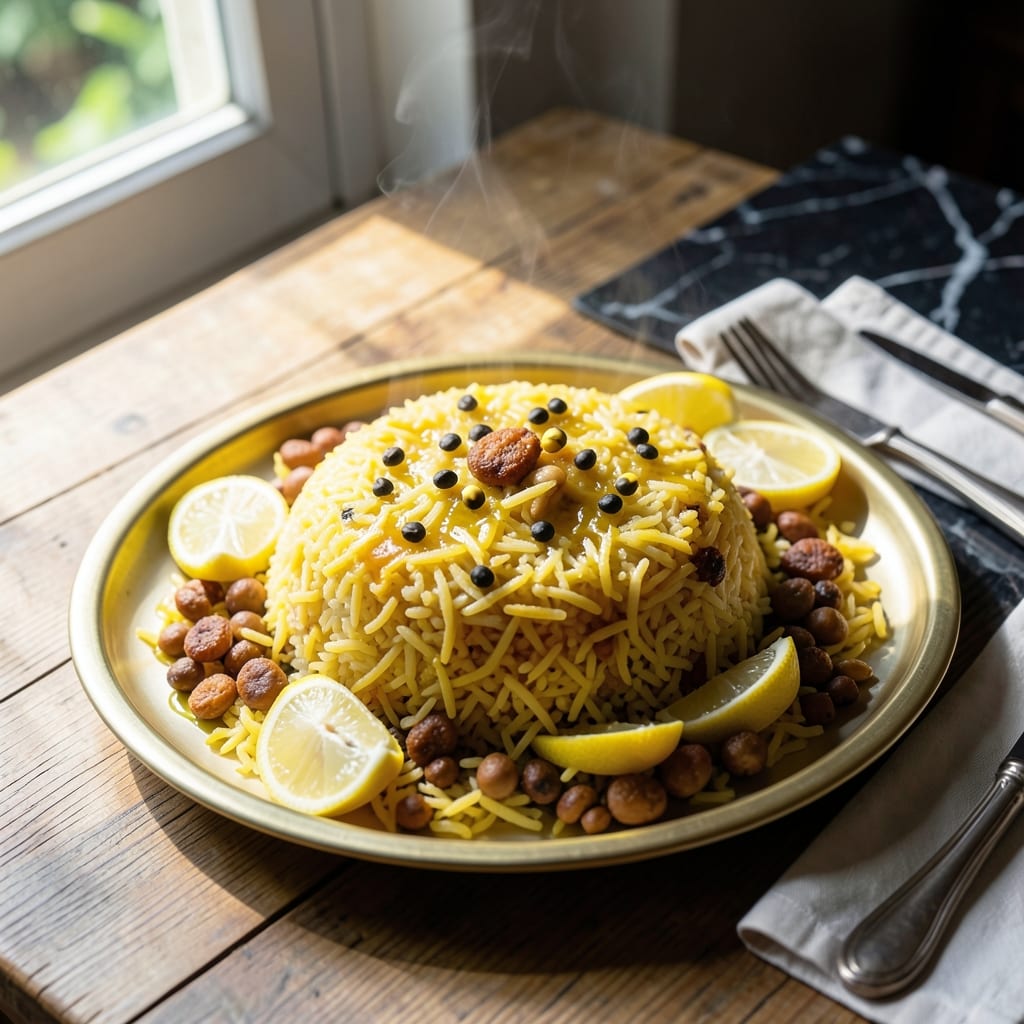
This classic Kerala-style lemon rice brings vibrant South Indian flavors to your table with minimal effort.
The dish relies on a simple yet precise method: turmeric-scented rice tossed with a bright lemon-tempered spice blend. Every grain absorbs the tangy, aromatic seasoning without turning mushy.
What results is a dish that’s golden, fragrant, and perfectly balanced—sour notes from lemon complement earthy turmeric and mustard seeds.
Traditionally served at room temperature, this makes an excellent lunchbox option or light meal accompaniment.
Ingredients for Lemon Rice Recipe Kerala
A handful of spices, fresh lemon, and basmati rice create this vibrant South Indian dish.
| Ingredient | Amount | Notes |
|---|---|---|
| Basmati Rice 🍚 | 1 ½ cups | Rinsed until water runs clear |
| Lemons 🍋 | 2 whole | Juiced, about 3-4 tbsp |
| Turmeric Powder 🌿 | ½ tsp | Ground, for vibrant color |
| Mustard Seeds 🌶️ | 1 tsp | Black or yellow variety |
| Urad Dal 🌿 | 1 tsp | Split black gram, optional |
| Chana Dal 🌾 | 1 tsp | Split chickpea lentils |
| Dried Red Chilies 🌶️ | 2 whole | Broken into pieces |
| Curry Leaves 🍃 | 10 piece | Fresh preferred, dried acceptable |
| Peanuts 🥜 | 2 tbsp | Raw or roasted |
| Green Chilies 🌶️ | 2 whole | Slit lengthwise, serrano or Thai |
| Vegetable Oil 🫒 | 3 tbsp | Neutral flavor like sunflower or coconut |
| Asafoetida 🌿 | ¼ tsp | Hing, optional for authenticity |
| Salt 🧂 | 1 tsp | Adjust to taste |
| Fresh Cilantro 🌿 | ¼ cup | Chopped, for garnish |
The rice is critical here—Basmati or other long-grain varieties hold their shape best. Indian grocery stores carry the authentic dals (urad and chana) and curry leaves, but Patel Brothers or HMart work if you’re in the US. Turmeric quality matters; opt for freshly ground from a reputable brand like MDH or Everest for that golden hue.
No curry leaves? Dried curry leaf powder at half the amount works, though fresh is superior. Substitute dried red chili flakes if whole chilies aren’t available. The peanuts add crunch—cashews or almonds can stand in. For a milder heat, reduce or omit green chilies. Asafoetida (hing) is traditional but can be skipped.
Lemon rice keeps well at room temperature for 4-6 hours, making it perfect for lunchboxes. Store leftovers in the fridge for up to 3 days—reheat gently with a splash of water. The flavors deepen over time, so it often tastes even better the next day.
Why You’ll Love This Recipe
- One Pot Wonder: I just dump everything in a single pan—rice, turmeric, mustard seeds—no fancy techniques, no mess.
- Zesty Sunshine: That hit of fresh lemon with the earthy turmeric and nutty urad dal? Honestly, it’s like a flavor party in my mouth.
- Lunchbox Hero: Pack it for work, serve it at picnics, or eat it cold straight from the fridge—it’s my reliable go-to.
- Pennywise Plate: Basmati rice and a handful of spices stretch a long way. I’ll be real: it’s saved me on more than one tight budget week.
Step-by-Step Instructions for Kerala Lemon Rice
Master this authentic method for vibrant, tangy rice with perfect texture and balanced flavors.
Step 1: Prepare the Basmati Rice
Rinse the 1.5 cups Basmati Rice under cold water until the water runs completely clear. This removes excess starch and prevents the grains from becoming gummy during cooking. I always do this step in a fine-mesh strainer for convenience.
Transfer the rinsed rice to a pot with 3 cups of water and bring to a boil. Once boiling, reduce heat to low, cover, and simmer for 12-15 minutes until the water is absorbed and the grains are tender. Spread the cooked rice on a plate to cool completely—this prevents it from becoming mushy when mixed with the tempering later.
Step 2: Create the Tempering Base
Heat the 3 tbsp Vegetable Oil in a large skillet over medium heat. Add the 1 tsp Mustard Seeds and wait until they begin to pop—this should take about 30-45 seconds. The popping sound is your audio cue that they’re ready.
Immediately add the 1 tsp Urad Dal, 1 tsp Chana Dal, 2 whole Dried Red Chilies, 2 whole Green Chilies, and 0.25 tsp Asafoetida. Stir constantly for 1-2 minutes until the dals turn light golden brown and the chilies darken slightly. Be careful not to burn the asafoetida—it imparts a bitter taste if overheated.
Step 3: Infuse with Aromatics
Add the 10 piece Curry Leaves and 2 tbsp Peanuts to the skillet. Stir for another 1-2 minutes until the curry leaves become crisp and the peanuts turn lightly golden. The fragrance at this stage should be incredibly aromatic—this is the heart of the dish’s flavor.
Next, add the 0.5 tsp Turmeric Powder and 1 tsp Salt. Stir quickly for 20-30 seconds to bloom the turmeric in the hot oil, which deepens its color and earthy flavor. The mixture should now be a vibrant golden yellow with all spices evenly distributed.
Step 4: Combine and Finish
Reduce heat to low and add the cooled rice to the skillet. Gently fold everything together with a spatula, ensuring each grain gets coated with the tempering mixture. Be careful not to break the rice grains—use a cutting motion rather than stirring.
Juice the 2 whole Lemons (you should get about 3-4 tbsp) directly over the rice mixture. Fold again to distribute the juice evenly. Taste and adjust salt if needed, though remember the lemon juice will enhance the flavors as it sits.
Step 5: Rest and Garnish
Remove from heat and let the rice sit covered for 5-10 minutes. This allows the flavors to meld together beautifully. The rice should be bright yellow with visible specks of spices and peanuts throughout.
Just before serving, garnish with the 0.25 cup Fresh Cilantro. The cilantro adds a fresh contrast to the rich, tangy flavors. Serve warm or at room temperature for the best texture and flavor balance.
Pro Tips For Making Lemon Rice Recipe Kerala
- Toast the Dal: Fry the urad dal until it turns deep golden—any paler and it stays crunchy, any darker and it tastes bitter. I learned this the hard way after pulling a batch too early.
- Use Warm Rice: Mix the lemon juice and turmeric into rice that’s still warm from the pot, not cold or fresh. The grains soak up the flavors better—sounds weird, but it works.
- Stop Over-Squeezing: Roll the lemons on the counter and halve them instead of juicing every last drop. The pith adds bitterness, and you only need about 3-4 tablespoons for a balanced tang.
- Temper the Mustard: Let the mustard seeds pop in hot oil until they stop spitting—about 20-30 seconds—then add the dal and curry leaves. If the oil isn’t hot enough, the seeds stay dull and the flavor falls flat.
Regional Styles of lemon rice recipe kerala
Kerala Traditional
In Kerala, this dish is called Nimmakaya Pulihora and uses raw rice (unparboiled) for maximum absorption. The tempering often includes coconut oil instead of vegetable oil, adding a subtle sweetness that pairs beautifully with the sour lemon. I prefer Parachute coconut oil for authentic flavor. 🌴
Tamil Nadu Style
Tamil versions often use sesame oil and add 1 tsp grated ginger to the tempering. The rice is typically more yellow due to extra turmeric—sometimes up to 1 tsp. They also prefer pulao rice for a slightly stickier texture that holds the spices better.
Karnataka Approach
Here, they add 1 tbsp grated coconut along with the peanuts for extra richness. The dish is called Chitranna and often includes 1 tsp sugar to balance the sourness. I find this version particularly kid-friendly because of the milder flavor profile.
Andhra Variation
Andhra cooks make it spicier with 4-5 green chilies and sometimes add 1 tsp cumin seeds to the tempering. They use Sona Masoori rice which cooks faster and has a softer texture. The result is a more intense, aromatic version of this classic. 🌶️
Maharashtra Twist
In Maharashtra, they make Limbu Bhaat with 1 tsp goda masala (a sweet-spicy blend) mixed into the tempering. The dish often includes ¼ cup grated carrots for color and texture. I love how this version adds a subtle sweetness to the tangy base.
Nutrition Facts
Frequently Asked Questions
Can I use regular rice instead of basmati?
Basmati is ideal for its long grains, but jasmine rice works too. Avoid short-grain varieties as they turn mushy. Rinse well regardless of type to remove excess starch.
Why does my rice turn green sometimes?
This happens when too much turmeric reacts with lemon juice. Use exactly 0.5 tsp turmeric and add lemon juice only after cooling the rice to prevent discoloration.
How do I make it less tangy?
Start with 1.5 lemons instead of 2, then adjust to taste. For balance, add 1/2 tsp sugar to the tempering. The flavors mellow after resting for 30 minutes.
Can I skip the curry leaves?
While authentic flavor suffers, you can substitute with 1 tsp dried curry leaf powder. Alternatively, add 1 bay leaf to the tempering for depth.

- Peri Peri Rice Recipe: Spicy Portuguese One-Pot Harmony - November 6, 2026
- Mexican Flavoured Rice Recipe: Authentic Spice-Infused One-Pot Meal - November 6, 2026
- Lao Gan Ma Fried Rice Recipe: Spicy Wok-Tossed Perfection - November 6, 2026