
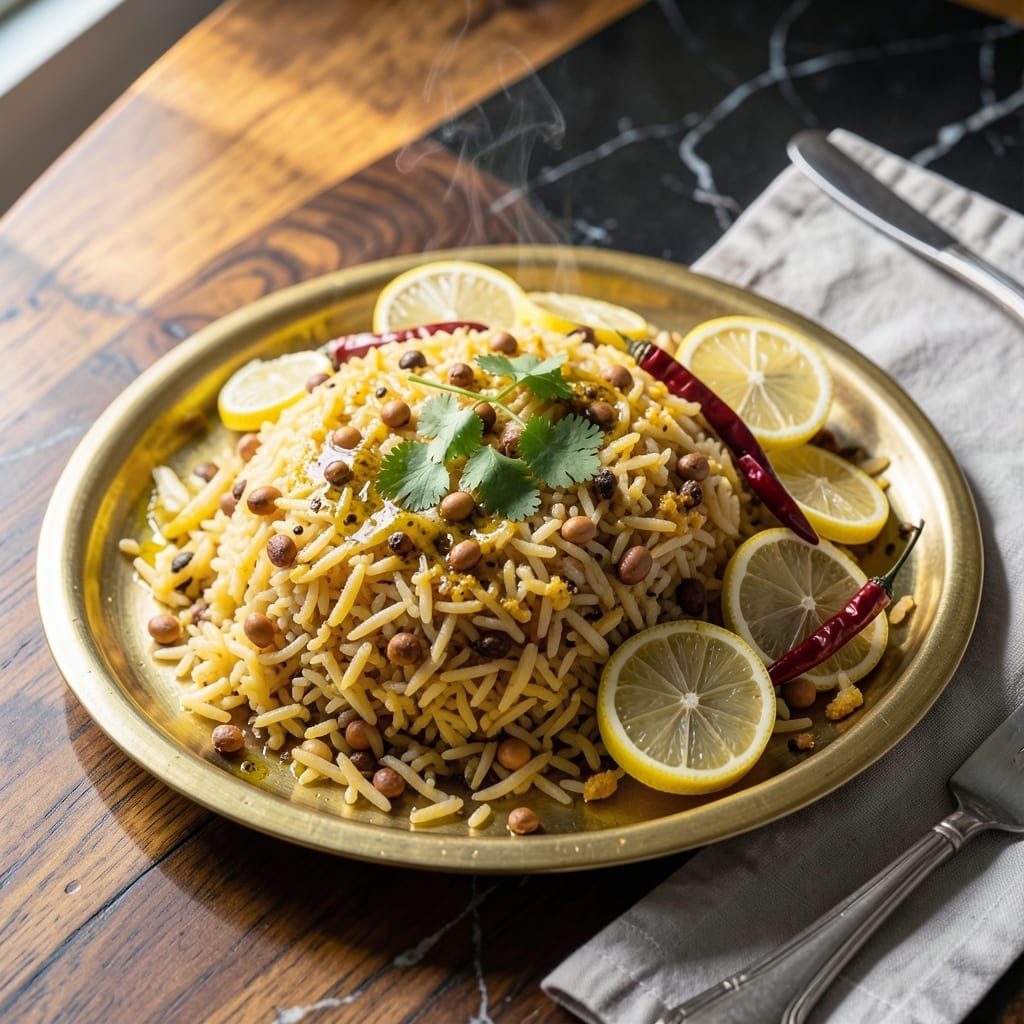
This South Indian classic brings bright, citrusy flavor to your table with minimal effort. A simple combination of turmeric, mustard seeds, and fresh lemon juice transforms plain rice into a vibrant, aromatic dish.
The technique is straightforward: temper whole spices in hot oil, then toss with cooked rice and a squeeze of lemon. The result is a tangy, fragrant side that pairs perfectly with any meal.
Ingredients for Lemon Rice
Bright citrus and aromatic spices transform plain basmati into a vibrant South Indian staple.
| Ingredient | Amount | Notes |
|---|---|---|
| Basmati Rice 🍚 | 1 ½ cups | Rinsed until water runs clear |
| Lemons 🍋 | 2 whole | Juiced, about 3-4 tbsp juice |
| Mustard Seeds 🌿 | 1 tsp | Yellow or black variety |
| Chana Dal 🌾 | 1 tsp | Split chickpea lentils |
| Urad Dal 🌾 | 1 tsp | Split black gram, optional |
| Dried Red Chilies 🌶️ | 2 whole | Broken into pieces |
| Ground Turmeric 🧂 | ½ tsp | For vibrant yellow color |
| Curry Leaves 🍃 | 8 pieces | Fresh preferred, dried acceptable |
| Peanuts 🥜 | 2 tbsp | Raw or roasted, unsalted |
| Vegetable Oil 🫒 | 3 tbsp | Neutral flavor like sunflower or coconut |
| Asafoetida 🧂 | ¼ tsp | Hing, optional for authenticity |
| Salt 🧂 | 1 tsp | Adjust to taste |
| Fresh Cilantro 🌿 | 2 tbsp | Chopped, for garnish |
The rice is everything here. Basmati gives you that perfect, separate grain texture—jasmine works too but has a different fragrance. Find Chana Dal and Urad Dal at any Indian grocery store or well-stocked international aisle. Curry leaves are non-negotiable for authenticity; look for fresh bunches in the refrigerated section or dried at Patel Brothers. Asafoetida (hing) adds umami depth but can be skipped if unavailable.
No fresh curry leaves? Dried curry leaf powder at one-third the amount works. Out of peanuts? Cashews or almonds add a similar crunch. Mustard seeds are key, but yellow or black both work. Want more heat? Add 1/2 tsp cayenne with the turmeric. For extra tang, zest the lemons before juicing. The turmeric stains, so use a bowl you don’t mind turning yellow.
Leftovers keep beautifully for 3-4 days in the fridge—flavors actually deepen. Freezes well for up to 3 months (thaw and reheat with a splash of water). Always make extra; this reheats perfectly for quick lunches. Store spices in airtight containers away from light.
Why You’ll Love This Recipe
- One Pot Wonder: I toss everything into a single pan—basmati rice, mustard seeds, and those little dals—and it’s done in 20 minutes flat.
- Zesty Crash Course: The tang of fresh lemon juice with the nutty crunch of tempered mustard seeds and dals hits all the right notes.
- Lunchbox MVP: Honestly, it’s my go-to for meal prep—tastes even better the next day and my kids actually finish it.
- Pantry Hero: Between us, I keep the ingredients on hand anyway, so this dish saves me a grocery run every time.
Step-by-Step Instructions for Lemon Rice
Master this traditional South Indian preparation with precise technique and authentic flavors.
Step 1: Prepare and Cook the Basmati Rice
Rinse the 1.5 cups Basmati Rice under cold water until the water runs completely clear. This removes excess starch and prevents the grains from clumping together. I recommend soaking the rice for 15 minutes after rinsing to achieve optimal texture.
Drain the rice thoroughly and cook it with 3 cups water in a pot. Bring to a boil, then reduce to a simmer, cover, and cook for 12-15 minutes until the water is absorbed and the grains are tender. Spread the cooked rice on a plate to cool completely—this prevents it from turning mushy when mixed with the tempering later.
Step 2: Create the Tempering Base
Heat the 3 tbsp Vegetable Oil in a large skillet over medium heat. Add the 1 tsp Mustard Seeds and let them sizzle for 30 seconds until they begin to pop. Immediately add the 1 tsp Chana Dal, 1 tsp Urad Dal, and 2 whole Dried Red Chilies broken into pieces.
Stir constantly for 2-3 minutes until the dals turn light golden brown and release their nutty aroma. The mustard seeds should have finished popping by this point. Watch carefully—burnt seeds will impart a bitter flavor to the dish.
Step 3: Build the Aromatic Foundation
Add the 0.25 tsp Asafoetida, 8 pieces Curry Leaves, and 2 tbsp Peanuts to the skillet. Sauté for 1-2 minutes until the peanuts turn light brown and the curry leaves become crisp. The asafoetida should release its pungent aroma immediately upon contact with the hot oil.
Stir in the 0.5 tsp Ground Turmeric and 1 tsp Salt, then quickly add the juice from the 2 whole Lemons. The turmeric will deepen in color as it toasts in the oil. Cook for 30 seconds to allow the turmeric to bloom and the flavors to meld.
Step 4: Combine and Finish
Add the cooled rice to the skillet and gently fold it into the tempering mixture using a spatula. Be careful not to break the rice grains. The rice should be evenly coated with the vibrant yellow turmeric mixture and the bright lemon juice should be fully incorporated.
Cook over low heat for 2-3 minutes, stirring occasionally, to allow the flavors to penetrate the rice. Taste and adjust salt if needed. The final dish should have a bright, tangy aroma with visible flecks of mustard seeds, dals, and curry leaves throughout.
Remove from heat and let it sit covered for 5 minutes to allow the flavors to develop fully.
Step 5: Garnish and Serve
Transfer the lemon rice to a serving dish and garnish with the 2 tbsp Fresh Cilantro. The cilantro adds a fresh, herbal contrast to the tangy, spiced rice. Serve warm with a side of yogurt or papadums for a complete South Indian meal.
Pro Tips For Making Lemon Rice
- Toast the Dals: Cook the chana dal and urad dal in hot oil until golden brown before adding mustard seeds—this brings out their nutty flavor and prevents a raw taste.
- Use Room-Temp Rice: Spread out the cooked basmati rice to cool slightly before mixing with lemon juice; hot rice absorbs the lemon unevenly and turns mushy.
- Zest Before Juicing: Grate the lemon zest first, then juice the halves—you’ll get more flavor from the peel without wasting any, and it’s easier than trying to zest a juiced lemon.
- Temper Evenly: Keep the heat medium when tempering mustard seeds in oil; too high and they’ll burn, too low and they won’t pop, and neither gives that right aroma.
Regional Styles of This Recipe
South Indian Style
This is the classic version from Tamil Nadu, where the dish originates. The key is the tempering of mustard seeds, chana dal, and urad dal in hot oil, which releases their nutty aroma. I always add curry leaves for that authentic South Indian fragrance. 💛
Karnataka Variation
In Karnataka, they often include cashews instead of peanuts for a richer texture. The tempering process remains the same, but the addition of 1 tbsp ghee along with the oil gives it a distinct, buttery note. I love how this version adds a touch of luxury.
Andhra Pradesh Twist
Andhra cuisine brings the heat with extra green chilies or red chili powder. They also use 1 tsp cumin seeds in the tempering for added depth. This version is spicier and more robust, perfect for those who love bold flavors. 🔥
Kerala Approach
In Kerala, coconut plays a starring role. They add 2 tbsp grated coconut to the tempering along with the peanuts. The result is a slightly sweeter, nuttier profile that pairs beautifully with the tangy lemon. I find this version particularly aromatic.
Maharashtrian Style
Maharashtra’s version often includes 1 tsp sesame seeds in the tempering. They also tend to use less turmeric for a milder color. The dish is simpler but no less flavorful, with a focus on the bright citrus notes.
Nutrition Facts
Frequently Asked Questions
Can I use regular rice instead of basmati?
Yes, but basmati gives the best texture. Long-grain white rice works too, though the grains may clump more. Avoid sticky varieties like jasmine or sushi rice, as they won’t separate properly.
How do I make it less tangy?
Reduce the lemon juice to 2 tbsp instead of 3-4 tbsp. You can also balance the flavor by adding 1 tsp sugar to the tempering. Taste as you go to adjust.
Why did my rice turn mushy?
This happens if the rice isn’t cooled before mixing. Always spread cooked rice on a plate for 10 minutes to cool completely. Also, fold gently to avoid breaking the grains.

- Lump Rice Recipe Sri Lanka: Traditional Island-Style Texture - November 4, 2026
- Laos Sticky Rice Recipe: Traditional Steamed Perfection - November 4, 2026
- Magic Rice Recipe: One-Pot Aromatic Wonder - November 4, 2026