
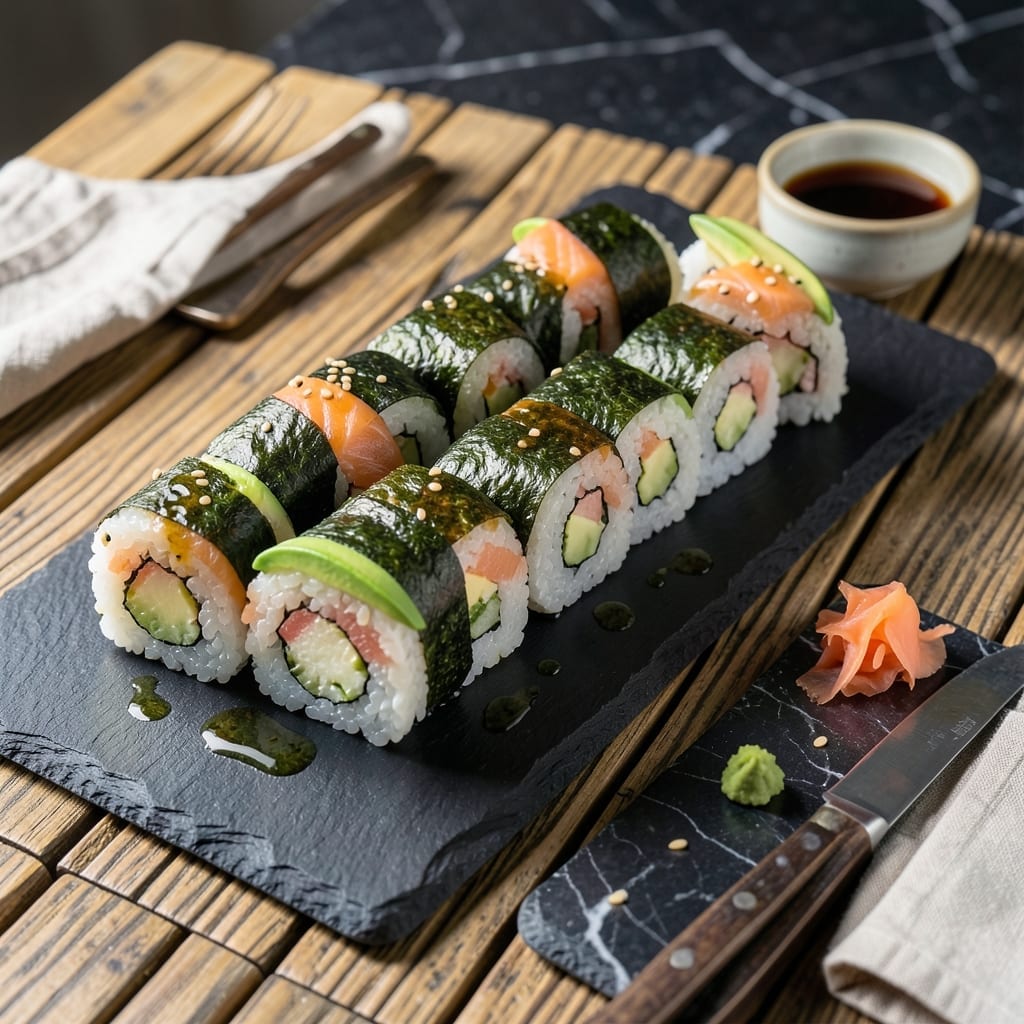
Achieving perfect sushi rice with jasmine requires precision and patience. This method transforms simple grains into the ideal base for rolls that hold their shape and flavor.
The process begins with rinsing the rice thoroughly to remove excess starch, ensuring each grain remains distinct after cooking. A careful balance of water and vinegar creates the signature sticky yet separate texture.
Proper seasoning is key—warm vinegar, sugar, and salt blend seamlessly into the cooked rice, giving it that authentic sushi flavor. The result is a slightly sweet, tangy foundation that complements any filling.
With this technique, your homemade rolls will rival restaurant quality, offering consistent texture and taste every time. Master the basics, and the possibilities are endless.
Ingredients for Jasmine Rice Sushi
Transform simple jasmine rice into perfectly seasoned sushi base with these essential ingredients.
| Ingredient | Amount | Notes |
|---|---|---|
| Jasmine Rice 🍚 | 2 cups | Short-grain, uncooked |
| Water 💧 | 2 ½ cups | For cooking rice |
| Rice Vinegar 🍶 | ½ cup | Unseasoned, for seasoning |
| Granulated Sugar 🍚 | 3 tbsp | Dissolved in vinegar mixture |
| Sea Salt 🧂 | 1 ½ tsp | Fine grain, for seasoning |
| Sushi Nori Sheets 🌊 | 4 sheets | Toasted seaweed sheets |
| Imitation Crab Sticks 🦀 | 8 oz | Surimi, shredded or whole |
| Cucumber 🥒 | 1 whole | Peeled, seeded, julienned |
| Avocado 🥑 | 1 whole | Ripe, sliced thinly |
| Pickled Ginger 🌸 | ¼ cup | For serving, optional |
| Soy Sauce 🥢 | ¼ cup | Low-sodium preferred |
| Wasabi 🟢 | 2 tbsp | Prepared, for serving |
| Sesame Seeds 🌰 | 2 tsp | Toasted, for garnish |
The rice is non-negotiable—short-grain jasmine delivers the right texture, while long-grain varieties fall apart. Rice vinegar must be unseasoned; seasoned versions contain sugar and salt that throw off the balance. For authentic results, seek out Japanese brands like Kikkoman or Marukan. The sugar should dissolve completely in the warm vinegar mixture to prevent grainy seasoning.
No jasmine rice? Short-grain sushi rice is the closest substitute, though it requires slightly less water. For a gluten-free option, ensure your imitation crab is labeled as such—some brands contain wheat. The nori should be crisp and deeply green (avoid dull or brittle sheets). Fresh ingredients like cucumber and avocado must be firm and unblemished to hold shape in rolls.
Cooked rice should be used immediately for best texture. Store unused portions in an airtight container at room temperature for up to 2 hours, or refrigerate for 1 day (reheat with a damp towel to restore moisture). Nori sheets keep in a dry pantry for 1 month unopened, or 1 week after opening.
Why You’ll Love This Recipe
- One Pot Wonder: I just dump jasmine rice, water, and a splash of rice vinegar in a pot—no fancy equipment needed.
- Bright & Tangy: The vinegar, sugar, and salt mix gives that classic sushi flavor without the restaurant price.
- Lunchbox Star: My kids actually finish their bento boxes when I pack these rolls with their favorite fillings.
- Stretches for Days: A big batch costs pennies and keeps well, so I meal prep once and eat for three days.
Step-by-Step Instructions for Jasmine Rice Sushi
Master the technique and you’ll create restaurant-quality rolls with ideal texture and flavor balance.
Step 1: Cook the Jasmine Rice to Ideal Consistency
Rinse the 2 cups Jasmine Rice under cold water until the water runs clear, removing excess starch. This prevents a gummy texture in the finished sushi rice. Drain thoroughly in a fine-mesh sieve.
Combine the rinsed rice with the 2.5 cups Water in a medium saucepan. Bring to a boil over high heat, then reduce to low, cover, and simmer for 15 minutes. Remove from heat and let it steam, covered, for an additional 10 minutes. The grains should be tender with no chalky center.
Step 2: Season the Rice with Vinegar Mixture
While the rice cooks, prepare the seasoning. In a small saucepan, gently heat the 0.5 cup Rice Vinegar, 3 tbsp Granulated Sugar, and 1.5 tsp Sea Salt over medium-low heat. Stir just until the sugar and salt dissolve completely—do not boil.
Transfer the cooked rice to a large wooden or glass bowl. Pour the warm vinegar mixture evenly over the rice. Using a rice paddle or wooden spoon, fold the rice gently with a slicing motion to distribute the seasoning. Continue fanning the rice with a piece of cardboard or a hand fan while folding—this gives it that characteristic glossy finish. The rice should be sticky but not mushy, and slightly warm to the touch.
Step 3: Prepare the Fillings and Nori Sheets
Lay the 4 sheets Sushi Nori Sheets on a clean, dry surface, shiny side down. Have the 8 oz Imitation Crab Sticks ready—if using whole sticks, slice them lengthwise into quarters for easier rolling.
Peel, seed, and julienne the 1 whole Cucumber into long, thin strips. Slice the 1 whole Avocado thinly just before assembly to prevent browning. Portion the fillings into four equal piles near your workspace for efficient assembly. The vegetables should be dry to prevent soggy rice.
Step 4: Assemble and Roll the Sushi
Place a sheet of nori on a bamboo sushi mat, shiny side down. With wet hands (to prevent sticking), spread a thin, even layer of the seasoned rice over the nori, leaving a 1-inch border at the top. Press gently—you want the rice to adhere without compacting it too tightly.
Arrange a portion of imitation crab, cucumber, and avocado in a line across the rice, about 1 inch from the bottom edge. Lift the edge of the mat closest to you and roll it over the fillings, pressing gently. Continue rolling until the edge of the nori seals the roll. The finished roll should be firm but not so tight that the fillings burst out.
Slice each roll into 6-8 pieces using a sharp, wet knife, wiping the blade between cuts for clean edges. Serve immediately with the 0.25 cup Soy Sauce, 2 tbsp Wasabi, and 2 tsp Sesame Seeds for garnish.
Pro Tips For Making Jasmine Rice Sushi
- Rinse the Rice: Wash jasmine rice in 3-4 changes of cold water until it runs clear—this removes excess starch so your sushi rice isn’t gummy. I learned this the hard way after my first batch turned into a sticky mush.
- Warm the Vinegar: Dissolve sugar and salt in rice vinegar over low heat before mixing with rice. This prevents grainy sugar bits from ruining the texture—sounds small, but it actually changes the outcome.
- Cool Before Seasoning: Spread cooked rice on a tray and let it cool slightly before adding vinegar mix. Resist the urge to rush this—hot rice absorbs the seasoning unevenly, leaving some bites bland.
- Use a Fan: Point a fan at the rice while mixing the vinegar in for a glossy finish. My grandmother swore by this, and she was right—it gives that perfect sushi-rice sheen without extra effort.
Make-Ahead Tips for This Dish
Prep Rice Ahead
Cook and season the rice up to 2 hours before assembling. Keep it covered with a damp towel at room temperature. This prevents drying while allowing the vinegar to fully penetrate each grain. 💡
Pre-cut Fillings
Slice the cucumber and avocado the night before. Store in airtight containers with a paper towel to absorb moisture. Keep the avocado submerged in cold water with a splash of lemon juice to prevent browning.
Prep Nori Sheets
Toast the nori sheets lightly over low heat for 10 seconds per side to enhance crispness. Stack them with parchment paper between each sheet to prevent sticking. Store in a dry place until ready to use.
Assemble the Morning Of
Roll and slice your sushi up to 4 hours ahead. Cover with plastic wrap and refrigerate. Bring to room temperature for 30 minutes before serving to restore the rice’s soft texture.
Store Leftovers Properly
Wrap individual rolls tightly in plastic wrap and refrigerate for up to 24 hours. Reheat gently in a microwave with a damp paper towel for 15-20 seconds to refresh. ❄️
Garnish Last
Add sesame seeds and serve with soy sauce and wasabi just before eating. This keeps the seeds crisp and the flavors vibrant.
Nutrition Facts
Frequently Asked Questions
Why rinse the rice before cooking?
Rinsing removes excess starch that would make the rice gummy. Continue until the water runs clear for the best texture. This ensures each grain stays separate while remaining sticky enough for rolling.
Can I use a different vinegar?
Stick with unseasoned rice vinegar for authentic flavor. Other vinegars may overpower or clash with the delicate balance of sugar and salt in the seasoning.
How do I prevent the rice from sticking to my hands?
Keep your hands damp with water or vinegar while handling the rice. This creates a barrier that stops sticking without affecting the texture.
What if my rolls fall apart when slicing?
Use a very sharp, wet knife and slice in one clean motion. Press the roll firmly but gently during assembly to ensure the ingredients hold together.

- Jeera Rice Recipe by VahChef: Cumin-Infused Basmati Perfection - October 20, 2026
- Jollof Rice Recipe Instant Pot: West African Flavor in a Fraction of the Time - October 20, 2026
- Keema Fried Rice Recipe: Spiced Minced Meat and Fluffy Grains - October 20, 2026