
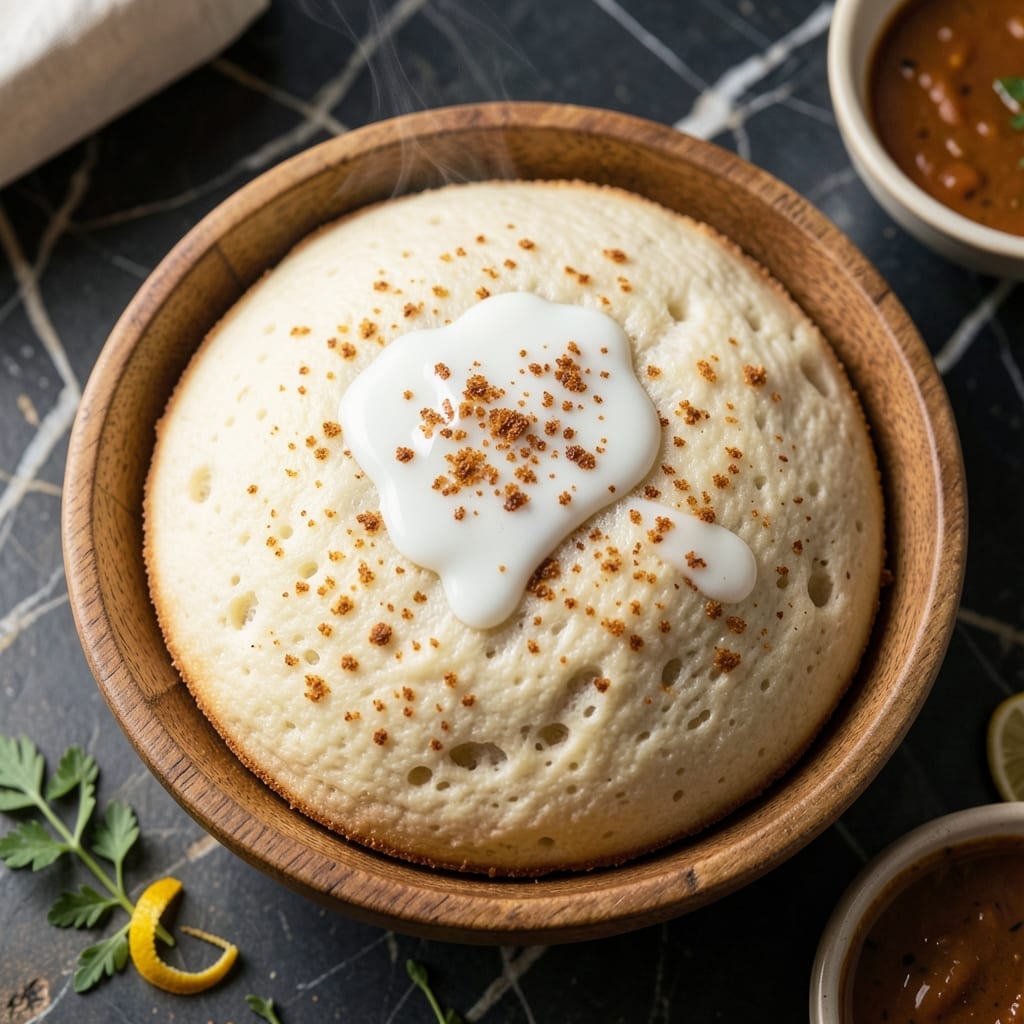
This Liberian staple transforms simple rice into a fluffy, slightly tangy bread through natural fermentation. It’s a testament to how basic ingredients can create something extraordinary with time and care.
The process begins with soaking rice overnight, then blending and fermenting the batter until bubbly. This step develops the signature texture and mild sourness that define the dish.
Once steamed, the bread emerges light, airy, and just sticky enough to cling to your fingers. It’s traditionally served alongside soups or stews, soaking up every last bit of flavor.
Perfect for those who appreciate the art of fermentation and the comfort of homemade bread. This method stays true to its cultural roots while being accessible to any home cook.
Ingredients for Liberia Rice Bread
Simple fermented rice batter creates this light, airy Liberian bread with minimal effort.
| Ingredient | Amount | Notes |
|---|---|---|
| Long-Grain White Rice 🌾 | 2 cups | Rinsed thoroughly before soaking |
| Water 💧 | 4 cups | For soaking rice overnight |
| Granulated Sugar 🍚 | 1 tbsp | Activates fermentation process |
| Active Dry Yeast 🍞 | ¼ tsp | Optional for accelerated rise |
| Salt 🧂 | ½ tsp | Added after fermentation begins |
| Coconut Milk 🥥 | ½ cup | Full-fat for creaminess |
| Vegetable Oil 🫒 | 2 tbsp | For greasing steaming cloth |
| Banana Leaves 🍌 | 4 pieces | Optional for authentic steaming |
| All-Purpose Flour 🌾 | 2 tbsp | Optional for dusting surface |
| Lime Juice 🍈 | 1 tbsp | Freshly squeezed for tang |
The rice quality matters here. Long-grain white rice (like Jasmine or Basmati) yields the best texture—avoid instant or pre-cooked varieties. For authentic results, African markets often carry the specific short-grain rice used traditionally. The sugar acts as yeast food, so organic cane sugar works best. Soaking overnight is non-negotiable; this develops the fermentation that creates the signature tang and airy crumb.
No coconut milk? Whole milk or evaporated milk can substitute, though the flavor will differ slightly. Skip the yeast if you prefer pure natural fermentation (it just takes longer). Banana leaves add aroma but parchment paper works in a pinch—just grease it well. The lime juice brightens the flavor; lemon juice is an acceptable alternative if that’s what you have on hand.
The fermented batter keeps in the fridge for 24 hours before steaming. Once cooked, the bread stays fresh for 2-3 days at room temperature in an airtight container. For longer storage, freeze slices for up to 1 month and reheat by steaming.
Why You’ll Love This Recipe
- Five Ingredients: That’s it—just rice, water, sugar, yeast, and salt to make something this good.
- Soft and Slightly Sweet: The sugar gives it a subtle sweetness that pairs perfectly with savory stews or jam at breakfast.
- Feeds a Crowd: I make a big batch on Sunday and we snack on it all week.
Step-by-Step Instructions for Liberia Rice Bread
Master the fermentation and steaming process for this traditional West African bread with perfect texture.
Step 1: Soak and Ferment the Rice
Begin by thoroughly rinsing the 2 cups Long-Grain White Rice under cold water until the water runs clear. This removes excess starch that could make the bread gummy. Transfer the rice to a large bowl and add the 4 cups Water along with the 1 tbsp Granulated Sugar.
If using, sprinkle the 0.25 tsp Active Dry Yeast over the surface. Cover with a clean kitchen towel and let ferment at room temperature for 8-12 hours or overnight. You’ll know it’s ready when the mixture is slightly bubbly and has a mild, tangy aroma.
Step 2: Blend and Season the Batter
Once fermented, drain the rice but reserve 1 cup of the soaking liquid. Transfer the rice to a blender along with the reserved liquid, 0.5 cup Coconut Milk, and 1 tbsp Lime Juice. Blend until completely smooth—this should take 2-3 minutes on high speed.
Pour the batter into a large mixing bowl and stir in the 0.5 tsp Salt. The mixture should have the consistency of thick pancake batter. If it’s too thin, let it rest for 15 minutes to thicken as the rice flour settles.
Step 3: Prepare the Steaming Surface
If using banana leaves, briefly pass them over a low flame for 10-15 seconds per side to soften and make them pliable. Cut into 4 equal pieces to line your steamer basket. Alternatively, use cheesecloth or parchment paper.
Lightly grease your chosen material with the 2 tbsp Vegetable Oil. If desired, dust the surface with the 2 tbsp All-Purpose Flour to prevent sticking. This creates a non-stick surface that will give your bread clean edges.
Step 4: Steam to Perfection
Pour the batter into the prepared steamer, spreading it evenly to about 1-inch thickness. Cover tightly with a lid and steam over boiling water for 45-60 minutes. Check the water level periodically—add hot water as needed to maintain consistent steam.
The bread is done when the top is set and a toothpick inserted in the center comes out clean. The surface should be slightly glossy with a spongy texture. Avoid opening the lid too early, as sudden temperature changes can cause the bread to collapse.
Step 5: Cool and Serve
Turn off the heat and let the bread cool in the steamer with the lid on for 10 minutes. This prevents sudden temperature shock that could make it dense. Then, transfer to a wire rack to cool completely.
Once cooled, the bread should be slightly sticky with a soft, chewy texture. Slice into squares or diamonds and serve warm or at room temperature. The flavors develop further after cooling, with the coconut milk adding richness and the lime juice providing a subtle tang.
Pro Tips For Making Liberia Rice Bread
- Proof the Yeast: Always dissolve the active dry yeast in warm water with a pinch of sugar first—I learned this the hard way after a few dense loaves that never rose properly.
- Rinse the Rice: Wash the long-grain white rice thoroughly until the water runs clear to remove excess starch, or your bread will turn out gummy instead of light.
- Skip Cold Water: Use lukewarm water throughout the process; cold water slows down fermentation, and I’ve ruined batches by being impatient with the temperature.
- Rest Before Shaping: Let the rice dough rest for 10-15 minutes after kneading—sounds weird, but it makes the final shaping way easier and prevents cracks in the bread.
Essential Equipment for This Recipe
Blender Essentials
A high-powered blender is non-negotiable for achieving the ultra-smooth batter. I use my Vitamix 5200—it pulverizes the soaked rice in under 3 minutes without leaving any gritty texture. Look for at least 1200 watts of power. 💡
Steaming Setup
You’ll need a large steamer basket that fits over a pot with a tight lid. I swear by my OXO Good Grips 3-tier steamer—it accommodates the full batch perfectly. Ensure your pot is wide enough to prevent the bread from touching the water.
Fermentation Vessel
A large glass or ceramic bowl works best for fermentation. I use a 4-quart Pyrex mixing bowl—it provides enough space for the rice to expand while fermenting. Avoid metal bowls as they can react with the acidic fermentation process.
Prep Tools
Have a fine-mesh strainer ready for draining the rice after soaking. I also keep a microplane zester handy for the lime juice and a digital kitchen scale for precise measurements. These small tools make the process much smoother.
Serving Supplies
A Sharp 8-inch chef’s knife is perfect for slicing the finished bread into clean squares. I also recommend a wire cooling rack—it allows air circulation underneath to prevent the bread from getting soggy as it cools.
Optional Extras
If using banana leaves, you’ll need kitchen twine to secure them. For authentic presentation, pick up banana leaves from an Asian or Latin market—they’re often sold frozen. A pastry brush helps with evenly coating the leaves with oil. 🌿
Nutrition Facts
Frequently Asked Questions
Can I use a different type of rice?
Stick to long-grain white rice for best results. Short-grain or instant rice won’t ferment properly and may create a dense texture. Jasmine or Basmati work well if traditional Liberian rice isn’t available.
Why does my batter smell sour?
That tangy aroma is normal! It’s the natural fermentation process working. If the smell is overly strong or unpleasant, your batter may have over-fermented. Discard it and start fresh.
How do I know when it’s fully steamed?
Insert a toothpick in the center—it should come out clean. The top will look set and slightly glossy. Avoid opening the lid too soon as this can cause the bread to collapse.
Can I bake instead of steam?
Steaming is traditional for the right texture. Baking may dry it out, but if needed, use a water bath in the oven at 350°F for 45-55 minutes. Results will differ.

- Mujadara Rice and Lentils Recipe: Earthy Spiced Lentils With Caramelized Onions - November 1, 2026
- Naija Fried Rice Recipe: Street-Style Spice With Veggie Crunch - November 1, 2026
- Mushy Rice Recipe: Fluffy Grains Transformed in Minutes - November 1, 2026