
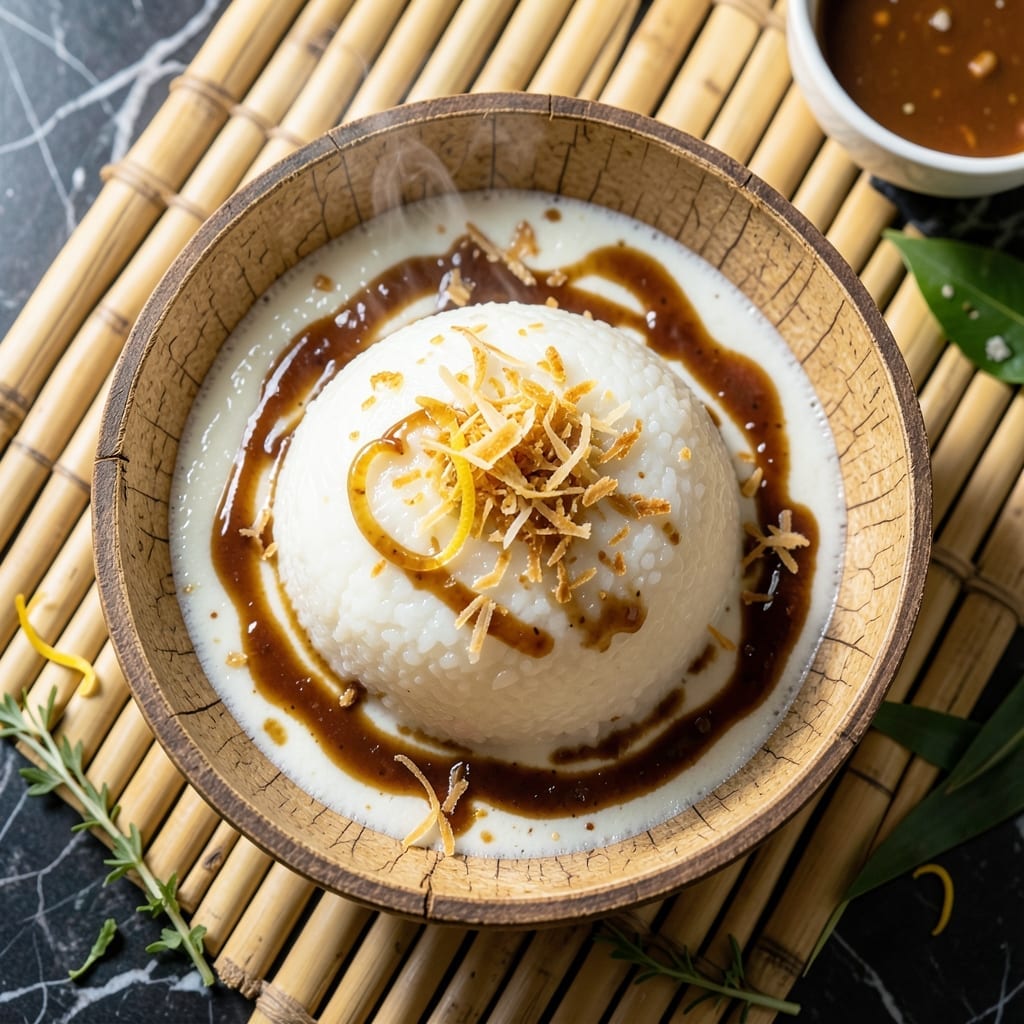
This traditional Filipino dessert brings together the unique texture of glutinous rice flour with the rich creaminess of coconut milk. The result is a treat that’s both comforting and indulgent.
I’ve perfected this method to ensure the perfect balance of chewy and sweet in every bite. The coconut milk adds a velvety richness that complements the dense, satisfying texture of the rice flour base.
Ingredients for Glutinous Rice Flour Pinoy
Glutinous rice flour and coconut milk create this dessert’s signature chewy, velvety texture with sweet depth.
| Ingredient | Amount | Notes |
|---|---|---|
| Glutinous Rice Flour 🌾 | 2 cups | Mochiko brand preferred |
| Full-Fat Coconut Milk 🥥 | 2 cups | Canned, well-shaken |
| Granulated Sugar 🍚 | 1 ½ cups | Organic preferred for flavor |
| Brown Sugar 🟤 | ½ cup | Packed, light or dark |
| Water 💧 | 1 ½ cups | Room temperature |
| Shredded Coconut 🥥 | 1 cup | Unsweetened, toasted |
| Pure Vanilla Extract 🌿 | 1 tsp | Alcohol-free if preferred |
| Salt 🧂 | ½ tsp | Fine sea salt |
| Coconut Oil 🫒 | 2 tbsp | For greasing pan |
| Pandan Leaves 🌿 | 3 pieces | Optional, for aroma |
| Cornstarch 🌾 | 1 tbsp | For thickening if needed |
| Toasted Sesame Seeds 🌰 | 1 tbsp | For garnish |
The glutinous rice flour is non-negotiable here. Mochiko brand is the gold standard for authentic texture—look for it in the Asian aisle at Whole Foods or H-Mart. Avoid substituting regular rice flour; it won’t deliver the same chew. Full-fat coconut milk is essential for richness; Thai Kitchen or Native Forest brands have the best consistency (avoid light versions at all costs).
No pandan leaves? A few drops of pandan extract (found at Asian markets) works, or skip entirely—the coconut flavor shines without it. Brown sugar can be swapped for coconut sugar at a 1:1 ratio. If the mixture seems thin, a cornstarch slurry (1 tbsp cornstarch + 1 tbsp water) thickens it right up. For extra richness, swap 1/4 cup water for coconut cream.
Stores beautifully at room temperature for 3 days in an airtight container, or refrigerate for up to 1 week. Freeze portions for 3 months—thaw at room temperature before serving. The texture firms up as it cools, so serve slightly warm for the best experience.
Why You’ll Love This Recipe
- One Bowl Wonder: I just dump the glutinous rice flour, coconut milk, and sugars in a bowl—no fancy tools, no fuss.
- Sweet Coconut Heaven: The rich full-fat coconut milk soaks into the chewy rice flour, and that brown sugar caramelizes into little pockets of joy.
- Fiesta Ready: I bring this to potlucks and it’s the first thing gone—works for merienda or dessert.
- Budget Stretcher: A bag of glutinous rice flour and a can of coconut milk feed my whole family twice, with pennies left over.
Step-by-Step Instructions for Glutinous Rice Flour Pinoy Dessert
This method ensures the perfect balance of chewiness and coconut richness with every bite.
Step 1: Prepare the Batter with Precision
In a large mixing bowl, whisk together the 2 cups Glutinous Rice Flour, 1.5 cups Granulated Sugar, and 0.5 tsp Salt until fully combined. The fine sea salt enhances the sweetness without overpowering the delicate coconut flavor.
Gradually add the 1.5 cups Water while continuing to whisk, ensuring no lumps form. The batter should be smooth and slightly thick, resembling heavy cream. Add the 0.5 cup Brown Sugar and 1 tsp Pure Vanilla Extract, mixing until the brown sugar dissolves completely.
Step 2: Infuse with Coconut and Pandan
Slowly pour in the 2 cups Full-Fat Coconut Milk, whisking constantly to create a homogeneous mixture. The canned coconut milk should be well-shaken beforehand to incorporate the cream fully. This step ensures the final texture is rich and velvety.
Add the 3 pieces Pandan Leaves to the batter if using. These leaves will infuse the mixture with a subtle, aromatic complexity characteristic of traditional Pinoy desserts. Let the batter rest for 10 minutes to allow the flavors to meld.
Step 3: Steam to Chewy Perfection
Grease a steaming dish or mold with 2 tbsp Coconut Oil, ensuring all surfaces are evenly coated. This prevents sticking and adds a subtle coconut note. Pour the batter into the prepared dish, smoothing the top with a spatula.
Steam over boiling water for 45-50 minutes until the center is set and a toothpick inserted comes out clean. The surface should look slightly glossy, and the edges will pull away from the sides of the dish when done. Avoid opening the steamer lid during cooking to prevent temperature fluctuations.
Step 4: Finish with Toasted Coconut and Sesame
Once cooked, remove the dish from the steamer and let it cool slightly. In a dry pan, lightly toast the 1 cup Shredded Coconut over low heat for 2-3 minutes until golden brown and fragrant. Watch closely to prevent burning.
Sprinkle the toasted shredded coconut evenly over the top of the dessert, pressing gently to adhere. For a final touch, dust with 1 tbsp Cornstarch if a thicker consistency is desired, and garnish with 1 tbsp Toasted Sesame Seeds. Serve warm or at room temperature for the best texture.
Pro Tips For Making Glutinous Rice Flour Pinoy
- Heat the Coconut Milk: Warm the full-fat coconut milk gently before mixing—cold milk makes the glutinous rice flour clump up and turns your batter into a lumpy mess.
- Use Room Temp Water: I learned this the hard way—mixing glutinous rice flour with cold water gives you a pasty, uneven texture. Lukewarm water blends smoother every time.
- Don’t Overmix: Stir just until the batter is smooth, then stop. Overworking it develops too much starch and your finished treat ends up dense instead of light.
- Swap Brown for Muscovado: Sounds weird, but it works: Muscovado sugar adds a deeper caramel note that pairs perfectly with coconut milk in Pinoy glutinous rice desserts.
Regional Styles of glutinous rice flour pinoy
Visayan Biko
In the Visayas region, this becomes biko, a sticky rice cake often made with coconut milk and brown sugar. I love how they layer it with latik (coconut curds) for extra richness. The texture is denser, almost fudge-like, and it’s a staple at fiestas. 🌟
Luzon Kutsinta
Up north in Luzon, kutsinta uses the same flour but adds lye water for a jelly-like texture. The brown version gets its color from muscovado sugar. I remember my lola making these in bamboo molds—the smell was incredible.
Mindanao Puto
Mindanao transforms it into puto by steaming the flour with sugar and coconut. Their version is often more cake-like, sometimes with ube halaya swirled in. The vibrant purple contrast is stunning. I prefer theirs with a sprinkle of cheese on top.
Ilocano Inip
The Ilocos region creates inip, a chewy, bite-sized treat wrapped in banana leaves. They mix the flour with grated coconut and pan-fry until golden. The banana leaf aroma infuses during cooking—pure comfort food.
Tagalog Suman
In Tagalog areas, suman is made by soaking glutinous rice flour in coconut milk, then steaming in banana leaves. The result is a delicate, slightly sticky cake. I’ve seen it served with mango or latik for extra indulgence. ✨
Modern Fusion
Filipino chefs now create fusion versions like mochi-inspired treats with ube or mango fillings. The chewy texture of the flour works perfectly with these modern twists. I love how traditional and new flavors come together so seamlessly.
Nutrition Facts
Frequently Asked Questions
Can I substitute regular rice flour?
No, regular rice flour won’t give the same chewy texture. Glutinous rice flour is essential for that signature sticky, elastic consistency. Mochiko brand is the most reliable for authentic results.
Why does my dessert turn out too dense?
Overmixing the batter or steaming too long can cause this. Whisk just until smooth and steam for exactly 45-50 minutes. Opening the lid during cooking can also affect the texture.
How do I store leftovers?
Keep in an airtight container at room temperature for up to 3 days. For longer storage, refrigerate for 1 week or freeze for 3 months. Reheat gently before serving.

- El Pollo Loco Spanish Rice Recipe: Smoky Tomato-Infused Side Dish - October 11, 2026
- Fresh Black Beans and Rice Recipe: Latin-Inspired One-Bowl Heartiness - October 11, 2026
- Empire Ghee Rice Recipe: Fragrant Basmati With Golden Clarity - October 11, 2026