
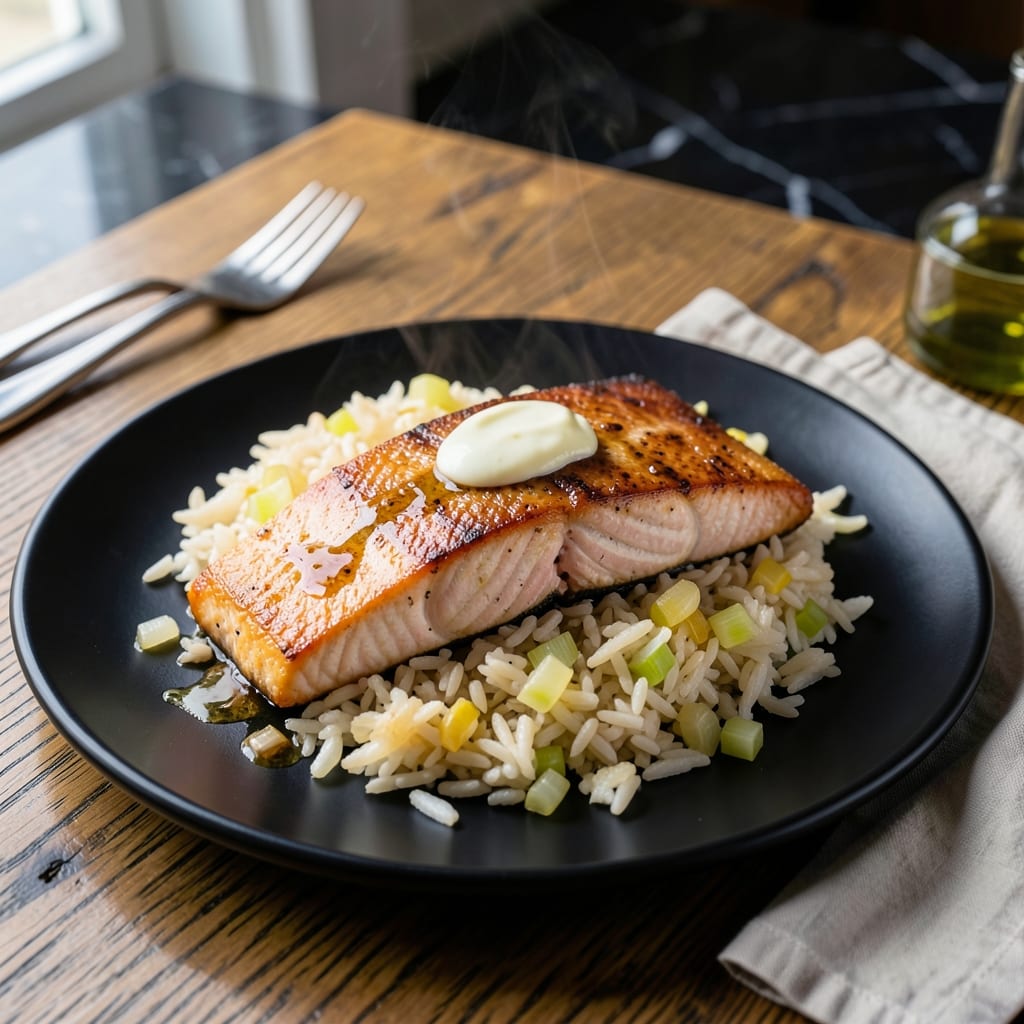
I’ve recreated the Longhorn Steakhouse experience at home with this perfectly balanced dish of garlic butter glazed salmon and fluffy pilaf rice. The salmon cooks in just 12 minutes, while the rice absorbs rich, savory flavors as it simmers.
The key is searing the salmon skin-side down first to achieve that signature crispy texture, then finishing it with a golden garlic butter glaze. Meanwhile, the pilaf rice develops a light, airy consistency with every grain distinct and fragrant.
This dish brings restaurant-quality results to your kitchen, with tender, flaky salmon and rice that’s never mushy. The garlic butter ties everything together, adding depth and a touch of indulgence.
Serve it hot, with the salmon resting atop the pilaf for a meal that’s as impressive as it is delicious.
Ingredients for Longhorn Steakhouse Salmon and Rice
Garlic butter, fluffy rice, and perfectly seared salmon make this dish restaurant-worthy at home.
| Ingredient | Amount | Notes |
|---|---|---|
| Salmon Fillets 🐟 | 1 ½ lb | Skin-on, center-cut preferred |
| Long-Grain White Rice 🍚 | 1 ½ cups | Rinsed until water runs clear |
| Unsalted Butter 🧈 | ½ cup | For garlic butter glaze |
| Garlic Cloves 🧄 | 4 cloves | Minced finely for even flavor |
| Chicken Stock 🥣 | 2 ½ cups | Low-sodium preferred for control |
| Yellow Onion 🧅 | 1 whole | Finely diced for pilaf base |
| Celery Stalks 🌿 | 2 pieces | Finely diced for aromatic base |
| Dried Thyme 🍃 | ½ tsp | Or fresh thyme at triple amount |
| Bay Leaf 🌿 | 1 whole | Removed before serving |
| Olive Oil 🫒 | 2 tbsp | For searing salmon and sautéing |
| Lemon 🍋 | 1 whole | Zested and juiced for brightness |
| Fresh Parsley 🌿 | ¼ cup | Chopped, for garnish |
| Kosher Salt 🧂 | 1 ½ tsp | Diamond Crystal preferred for consistency |
| Black Pepper 🌶️ | ½ tsp | Freshly cracked for best flavor |
Salmon quality is non-negotiable here. Wild-caught sockeye or king salmon from Whole Foods or Costco gives you that rich, buttery texture. Look for skin-on fillets with vibrant color (no brown spots). For the rice, Basmati or jasmine work beautifully—both have that light, distinct grain the dish promises. Chicken stock matters too; Better Than Bouillon is my go-to for depth without salt overload.
No fresh parsley? Dried works at one-third the amount, but it won’t have the same pop. Out of lemon? A splash of white wine in the pilaf adds similar brightness. If you’re avoiding dairy, swap the butter for olive oil, though you’ll lose some richness. For extra indulgence, add a pinch of saffron to the rice—it’s pricey but transforms the dish.
Salmon keeps in the fridge for 1-2 days max—cook it fresh. The pilaf holds well, actually improving as it sits. Stores in the fridge for 4-5 days or freezes for 3 months. Reheat rice with a splash of water to revive the texture.
Why You’ll Love This Recipe
- One Pan Meal: I love that the salmon and rice cook together in one skillet—minimal cleanup, maximum flavor.
- Garlic Butter Magic: The butter and garlic create a rich, savory glaze that makes the salmon taste restaurant-worthy.
- Weeknight Rescue: Honestly, this is my go-to when I need a healthy, filling dinner fast—no stress, just good food.
- Leftovers Win: The rice soaks up the extra garlic butter overnight, so tomorrow’s lunch tastes even better.
Step-by-Step Instructions for Garlic Butter Salmon and Rice Pilaf
Here’s the method to achieve perfectly cooked salmon with fragrant pilaf every time.
Step 1: Prepare the Rice Pilaf Base
In a medium saucepan, heat 1 tablespoon olive oil over medium heat. Add the finely diced yellow onion and 2 pieces celery stalks, cooking for 4-5 minutes until softened and translucent. Stir in the 1.5 cups long-grain white rice, coating it in the oil and vegetables.
Toast the rice for 1-2 minutes until it becomes fragrant and slightly golden. This step enhances the nutty flavor of the pilaf and prevents it from becoming mushy. Add the 0.5 tsp dried thyme and 1 whole bay leaf, stirring to combine.
Step 2: Cook the Pilaf to Fluffy Perfection
Pour in the 2.5 cups chicken stock and bring the mixture to a boil. Once boiling, reduce the heat to low, cover the saucepan, and let it simmer for 15-18 minutes. Resist the urge to lift the lid—steam is essential for even cooking.
After the time has elapsed, remove the saucepan from the heat and let it sit, covered, for an additional 5 minutes. The rice should be tender and all the liquid absorbed. Discard the bay leaf before serving.
Step 3: Sear and Glaze the Salmon
Pat the 1.5 lb salmon fillets dry with a paper towel and season both sides with 1 tsp kosher salt and 0.5 tsp black pepper. Heat the remaining 1 tablespoon olive oil in a large skillet over medium-high heat.
Place the salmon fillets skin-side down in the skillet. Cook for 4-5 minutes until the skin is crispy and golden. Flip the fillets and cook for an additional 3-4 minutes until the salmon is opaque and flakes easily with a fork.
Step 4: Create the Garlic Butter Glaze
Reduce the heat to low and add the 0.5 cup unsalted butter and 4 cloves minced garlic cloves to the skillet. Stir until the butter melts and the garlic becomes fragrant, about 1-2 minutes. Be careful not to let the garlic burn.
Squeeze the juice of 1 whole lemon into the skillet and stir to combine. Spoon the garlic butter glaze over the salmon fillets repeatedly for 1 minute to coat them evenly. The glaze should be glossy and aromatic.
Step 5: Garnish and Serve
Transfer the glazed salmon fillets to a serving platter. Spoon the pilaf onto individual plates and top with the salmon. Garnish with 0.25 cup chopped fresh parsley and any remaining lemon zest for a bright, fresh finish.
Serve immediately while the salmon is warm and the pilaf is fluffy. The combination of crispy salmon skin, rich garlic butter glaze, and fragrant pilaf creates a restaurant-quality dish that’s sure to impress.
Pro Tips For Making Longhorn Steakhouse Salmon And Rice
- Skin Down First: Place salmon fillets skin-side down in the pan first—this gives you a crispy skin while the flesh stays tender. I learned this the hard way after peeling half my fillets off the pan because I flipped too soon.
- Rinse the Rice: Always rinse your long-grain white rice before cooking to remove excess starch, or you’ll end up with a gummy mess. Sounds like a small step, but it actually changes the outcome.
- Low Simmer Only: When cooking the rice in chicken stock, keep it at a gentle simmer—not a rolling boil—or the grains will turn mushy. After burning three batches, I finally figured out the heat control.
- Butter the Garlic: Mince the garlic and let it sit in melted butter for 2-3 minutes before adding anything else. My grandmother swore by this, and she was right—it mellows the bite and infuses the oil beautifully.
Dietary Considerations for This longhorn steakhouse salmon and rice
Pescatarian Friendly
This dish is naturally pescatarian, focusing on salmon as the protein source. The combination of fish and rice provides a balanced meal without any meat. I love that it’s a great option for those avoiding red meat or poultry. 💪
Gluten-Free Option
To make this gluten-free, simply ensure your chicken stock is certified gluten-free. Brands like Pacific Foods or Imagine offer reliable options. The rest of the ingredients are naturally gluten-free, so no other substitutions are needed.
Dairy-Free Adaptation
If you’re avoiding dairy, swap the butter for an equal amount of olive oil. While you’ll lose some richness, the garlic and lemon will still provide plenty of flavor. The salmon and pilaf will remain just as satisfying.
Low-Sodium Considerations
For a low-sodium version, use low-sodium chicken stock and reduce the added salt to ½ tsp. The salmon and garlic butter glaze will still pack a flavorful punch without excess sodium. Taste as you go and adjust seasoning carefully.
Nut Allergy Note
This recipe is inherently nut-free, making it safe for those with nut allergies. Just double-check that your chicken stock and other ingredients haven’t been processed in facilities that handle nuts. 🥗
Diabetic Friendly
With 1.5 cups rice serving four, the carb count per portion is moderate. For a lower-carb option, reduce the rice to 1 cup and bulk up the plate with extra steamed veggies like broccoli or asparagus.
Nutrition Facts
Frequently Asked Questions
What’s the best rice for this pilaf?
Use long-grain white rice like Basmati or jasmine for the fluffiest texture. These varieties stay light and separate beautifully when cooked. Avoid instant rice, as it won’t absorb flavors as well.
Can I use frozen salmon?
Yes, but thaw it completely in the fridge overnight first. Pat it very dry before cooking to ensure crispy skin. Frozen salmon works well if it’s high-quality and properly thawed.
How do I prevent the garlic butter from burning?
Keep the heat on low when making the glaze. Remove the skillet from heat if the garlic starts browning too quickly. Butter burns easily, so watch it closely.
How long does leftovers last?
Store in the fridge for 2-3 days in an airtight container. Reheat the salmon gently in a skillet with a splash of water to prevent drying. The pilaf reheats well in the microwave.

- Lump Rice Recipe Sri Lanka: Traditional Island-Style Texture - November 4, 2026
- Laos Sticky Rice Recipe: Traditional Steamed Perfection - November 4, 2026
- Magic Rice Recipe: One-Pot Aromatic Wonder - November 4, 2026