
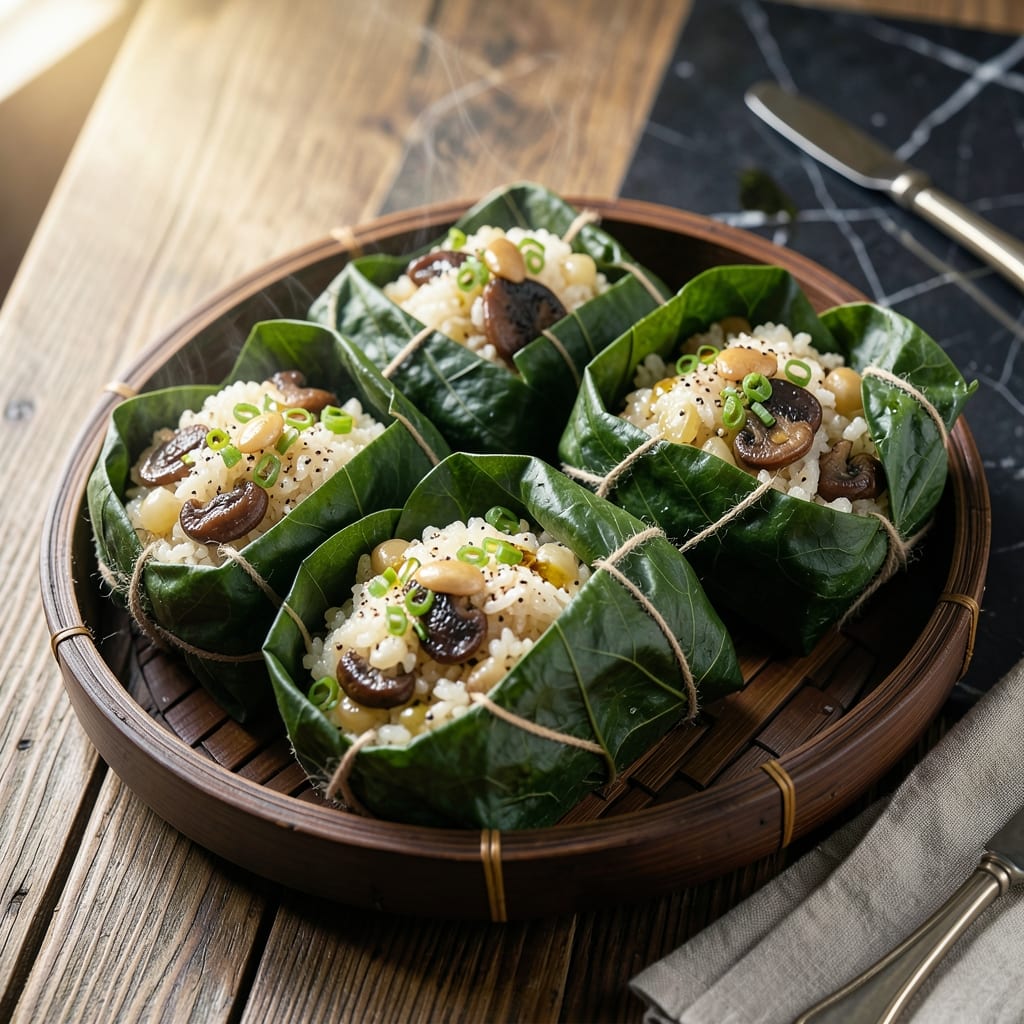
There’s an art to crafting these fragrant parcels, where each bite reveals layers of sticky, savory rice infused with earthy lotus leaf aroma. The process transforms simple ingredients into a dish that feels both rustic and refined.
I’ve refined this method to ensure the rice cooks evenly while the lotus leaf imparts its signature scent without bitterness. The key lies in proper preparation—soaking the rice, blanching the leaves, and balancing the fillings for perfect texture.
Each parcel emerges tender and fragrant, with the rice clinging slightly to the leaf for an authentic experience. The result is a harmonious blend of chewy, aromatic, and subtly sweet notes that elevate any meal.
Serve warm as a side or light main dish to let the flavors shine.
Ingredients for Lotus Leaf Glutinous Rice
Craft these aromatic parcels with glutinous rice, lotus leaves, and savory vegan fillings for authentic flavor.
| Ingredient | Amount | Notes |
|---|---|---|
| Glutinous Rice 🍚 | 2 cups | Soaked overnight for best texture |
| Dried Lotus Leaves 🌿 | 4 pieces | Blanched to remove bitterness |
| Shiitake Mushrooms 🍄 | 8 pieces | Dried, rehydrated and chopped |
| Water Chestnuts 🥜 | ½ cup | Canned, drained and diced |
| Green Onions 🧅 | 4 whole | Thinly sliced, white and green parts |
| Garlic Cloves 🧄 | 4 cloves | Minced finely for even flavor |
| Soy Sauce 🫒 | 3 tbsp | Low-sodium preferred for balance |
| Sesame Oil 🫒 | 1 tbsp | Toasted for depth of flavor |
| Vegetable Broth 💧 | 1 cup | Low-sodium for controlled seasoning |
| Dried Shrimp Substitute 🌿 | 2 tbsp | Vegan shrimp flakes or omitted |
| Salt 🧂 | ½ tsp | Adjust to taste after cooking |
| White Pepper 🌶️ | ½ tsp | Freshly ground for aroma |
| Sugar 🍚 | 1 tsp | Balances savory fillings |
| Cornstarch 🌾 | 1 tbsp | Mixed with water for sealing |
The lotus leaves are non-negotiable for authenticity—find them at Asian specialty markets or online retailers like Amazon or Weee!. Look for large, unbroken leaves with a deep green hue (avoid any with holes or brown spots). Glutinous rice must be the short-grain variety; sweet rice or sticky rice labels confirm you’ve got the right type. Soaking overnight ensures even cooking and that signature chewy texture.
No dried lotus leaves? Fresh banana leaves can work in a pinch (blanch first). Shiitake substitution: cremini or oyster mushrooms, rehydrated if using dried. For the shrimp substitute, chopped king oyster mushrooms mimic texture beautifully. The soy sauce can be tamari for gluten-free needs. Sesame oil is key—don’t swap it out, but ensure it’s 100% pure for best aroma.
Prepared parcels keep in the fridge for 3 days or freeze for 1 month. Reheat by steaming—microwaving can make the leaves tough. Store unused lotus leaves in a cool, dry place; they’ll keep for up to a year. Always blot rehydrated mushrooms dry to prevent soggy fillings.
Why You’ll Love This Recipe
- One Pot Wonder: I just soak the rice and lotus leaves overnight, then everything steams together in one pot—no fuss.
- Umami Bomb: The shiitake mushrooms and lotus leaf wrap create this deep, earthy flavor that’s honestly addictive.
- Feeds a Crowd: I make a big batch for family gatherings, and it’s always the first thing to disappear.
- Budget Stretcher: Honestly, a little glutinous rice and dried lotus leaves go a long way, and the filling is whatever I have on hand.
Step-by-Step Instructions for Lotus Leaf Glutinous Rice
Master the technique for creating these aromatic parcels with perfectly cooked rice and balanced flavors.
Step 1: Prepare the Lotus Leaves and Rice
Begin by blanching the 4 pieces dried lotus leaves in boiling water for 2 minutes to soften and remove any bitterness. Drain and pat dry with a clean towel. This step ensures the leaves become pliable enough to wrap without cracking.
Rinse the 2 cups glutinous rice thoroughly under cold water until the water runs clear. Soak the rice in fresh water for at least 4 hours or overnight for optimal texture. Drain completely before using—any excess moisture will dilute the filling’s flavor.
Step 2: Create the Flavorful Filling
Heat the 1 tbsp sesame oil in a wok over medium-high heat. Add the 4 cloves minced garlic cloves and 4 whole thinly sliced green onions, stir-frying for 30 seconds until fragrant. This aromatic base is the foundation of your filling’s depth.
Add the rehydrated and chopped 8 pieces shiitake mushrooms, diced 0.5 cup water chestnuts, and 2 tbsp dried shrimp substitute. Stir-fry for 3-4 minutes until the mushrooms soften. The water chestnuts should retain a slight crunch for textural contrast.
Step 3: Season and Combine with Rice
Pour in the 3 tbsp soy sauce, 1 cup vegetable broth, 1 tsp sugar, 0.5 tsp salt, and 0.5 tsp white pepper. Simmer for 2 minutes to meld the flavors. The sauce should reduce slightly but remain moist enough to coat the rice.
Add the drained glutinous rice to the wok, stirring to combine evenly. Cook for 2-3 minutes until the rice absorbs most of the liquid. The grains should appear glossy and slightly translucent at the edges—this indicates they’re ready for steaming.
Step 4: Wrap and Steam the Parcels
Lay a blanched lotus leaf on a clean surface, veined side up. Spoon about ½ cup of the rice mixture onto the center of each leaf. Fold the sides inward, then roll tightly into a compact parcel, tucking in the ends to seal. The leaves should completely enclose the filling with no gaps.
Arrange the parcels seam-side down in a steamer basket, leaving space between each for expansion. Steam over boiling water for 45-50 minutes until the rice is tender and the leaves have darkened slightly. The rice should be sticky yet firm, with no hard center.
Step 5: Rest and Serve
Remove the parcels from the steamer and let them rest for 5 minutes before serving. This allows the rice to set and makes unwrapping easier. The lotus leaves will have infused the rice with their unique floral aroma during steaming.
Serve the parcels whole at the table for a dramatic presentation. Each person can unwrap their own to release the fragrant steam. The rice should have a glossy sheen, with the filling ingredients distributed evenly throughout each portion.
Pro Tips For Making Lotus Leaf Glutinous Rice
- Soak the Leaves: Rehydrate dried lotus leaves in hot water for at least 30 minutes—I learned this the hard way after my first batch turned out dry and brittle.
- Rinse the Rice: Wash glutinous rice until the water runs clear, or it’ll turn gummy. Sounds tedious, but it actually changes the outcome.
- Parcook the Rice: Steam the rice for 10 minutes before adding fillings, so it finishes perfectly when wrapped and steamed again.
- Slice Chestnuts Thin: Cut water chestnuts into thin, even slices so they cook through without turning mushy. My grandmother swore by this, and she was right.
Serving Suggestions for This lotus leaf glutinous rice
Elegant Presentation
Serve these parcels whole on a bamboo steamer or wooden platter for an authentic touch. The natural lotus leaf wrapping creates a beautiful, rustic presentation that wows guests. I love using a dark wood tray to contrast the green leaves. 💛
Dipping Sauce Pairing
Offer a light soy-ginger dipping sauce on the side. Mix 3 tbsp soy sauce with 1 tsp grated ginger and 1 tsp rice vinegar. The tangy brightness complements the earthy rice perfectly.
Garnish Ideas
Sprinkle with toasted sesame seeds or thinly sliced green onions just before serving. These add visual contrast and a nutty crunch. I also like adding a few red chili threads for subtle heat.
Accompaniment Suggestions
Pair with simple steamed bok choy or a light cucumber salad to balance the richness. The mild flavors let the aromatic parcels shine. For heartier meals, add braised tofu or stir-fried greens.
Serving Temperature
These taste best served warm, straight from the steamer. The lotus leaf aroma is most pronounced when hot. If serving later, reheat by steaming for 5-10 minutes until warmed through. 🔥
Individual Portions
For intimate gatherings, serve one parcel per person as a main course. For larger groups, cut parcels in half to share. The sticky rice holds together well when sliced with a sharp knife.
Nutrition Facts
Frequently Asked Questions
Why do I need to blanch the lotus leaves first?
Blanching removes bitterness and softens the leaves for easier wrapping. Soak them in boiling water for 2 minutes, then pat dry before use. This ensures a clean, flexible base for your parcels.
Can I use regular rice instead of glutinous rice?
No, regular rice lacks the sticky texture essential for this dish. Glutinous rice (also called sweet or sticky rice) holds its shape and absorbs flavors better. Always soak it for at least 4 hours before cooking.
How can I prevent the parcels from unraveling while steaming?
Fold the leaves tightly and tuck in the ends securely. Place parcels seam-side down in the steamer with space between them. Using a cornstarch-water mix to seal edges can also help.

- Lump Rice Recipe Sri Lanka: Traditional Island-Style Texture - November 4, 2026
- Laos Sticky Rice Recipe: Traditional Steamed Perfection - November 4, 2026
- Magic Rice Recipe: One-Pot Aromatic Wonder - November 4, 2026