
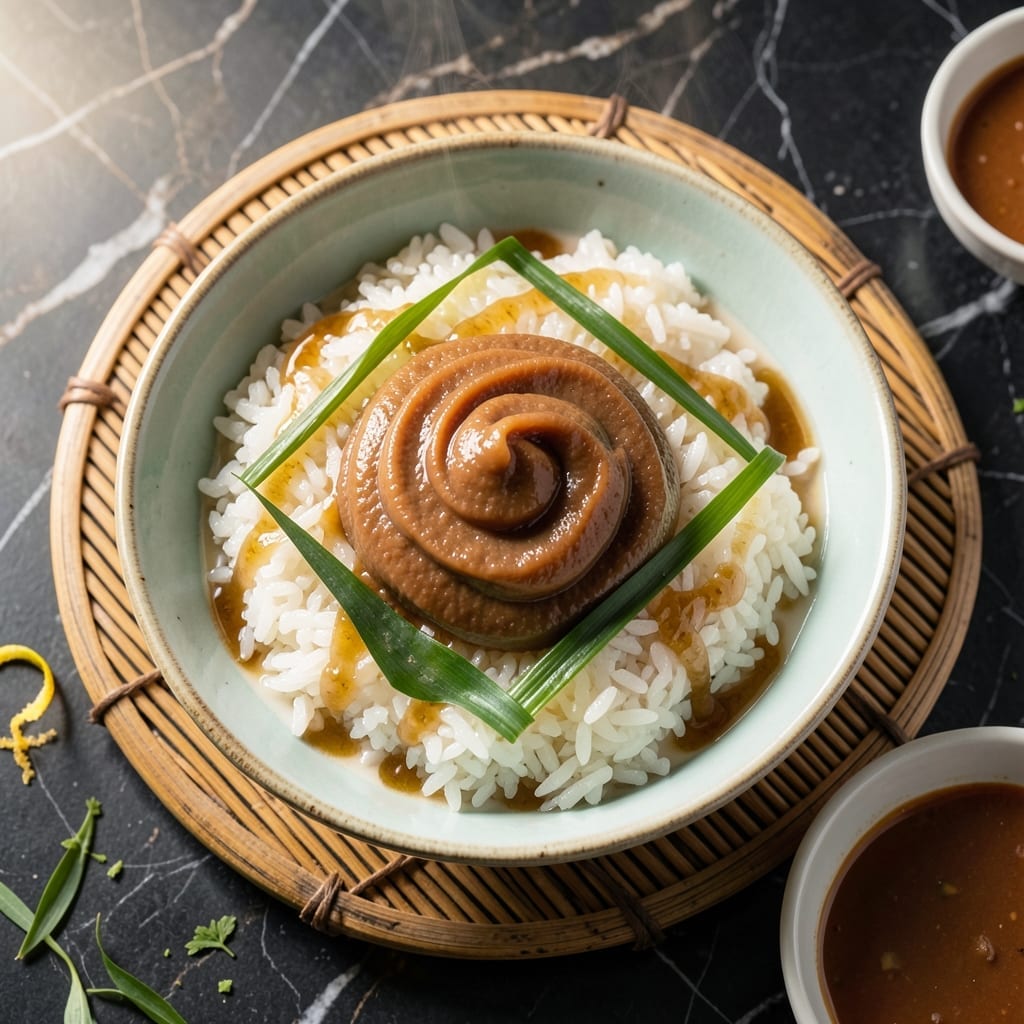
This traditional dessert transforms simple ingredients into a fragrant, coconut-infused masterpiece that captures the essence of Southeast Asian cuisine.
The secret lies in soaking the sticky rice overnight and steaming it to achieve that perfect tender yet slightly chewy texture. The lotus paste filling adds a delicate floral sweetness that pairs beautifully with the rich coconut cream topping.
What emerges is a dish that’s both visually stunning and deeply satisfying, with layers of flavor in every bite. The combination of creamy coconut and floral lotus creates a balance that’s neither too sweet nor too heavy.
Serve warm for the best experience, allowing the coconut cream to melt slightly and mingle with the rice. This recipe stays true to its cultural roots while being accessible for home cooks.
Ingredients for Lotus Sticky Rice
Simple yet elegant ingredients create this fragrant, coconut-kissed dessert with floral lotus filling.
| Ingredient | Amount | Notes |
|---|---|---|
| Glutinous Rice 🍚 | 2 cups | Also called sweet rice, soaked overnight |
| Lotus Paste 🌸 | 1 cup | Sweet, floral filling variety |
| Coconut Milk 🥥 | 1 ½ cups | Full-fat for creaminess |
| Palm Sugar 🍯 | ½ cup | Or substitute brown sugar |
| Salt 🧂 | ¼ tsp | Balances sweetness |
| Pandan Leaves 🌿 | 2 pieces | Optional, for aroma |
| Water 💧 | 2 cups | For soaking rice |
| Cornstarch 🌾 | 2 tbsp | For thickening coconut cream |
| Vanilla Extract 🌿 | 1 tsp | Pure extract preferred |
| Toasted Sesame Seeds 🌰 | 1 tbsp | For garnish |
The glutinous rice is non-negotiable—look for Thai sticky rice at Asian markets or well-stocked grocery stores. It’s labeled as sweet rice or glutinous rice (despite being gluten-free). Lotus paste can be found in cans at the same stores; opt for the smooth, sweet variety without added preservatives. For coconut milk, Chaokoh or Thai Kitchen brands are reliable for rich, creamy results.
No lotus paste? Sweet red bean paste works as a substitute with a different but complementary flavor. Palm sugar can be replaced with brown sugar in a 1:1 ratio. If pandan leaves aren’t available, a drop of pandan extract or a splash of vanilla can mimic the aroma. The cornstarch thickens the coconut cream beautifully—arrowroot powder can substitute in equal amounts.
Store glutinous rice in an airtight container for up to 6 months. Once opened, coconut milk keeps in the fridge for 1 week or can be frozen for 3 months. Lotus paste stays fresh in the pantry for 1 year if unopened.
Why You’ll Love This Recipe
- I’ll be real: it tastes even better the next day, cold from the fridge, with that coconut milk soaking deeper into the rice.
- One Bowl Wonder: I just dump the glutinous rice, coconut milk, and palm sugar in one pot—no fancy steps, no mess.
- Sweet-Salty Magic: The lotus paste’s floral sweetness with that hint of salt? Honestly, I could eat it straight from the spoon.
- Feeds a Party: I made this for my book club last week—12 people, zero leftovers, and three recipe requests before dessert was over.
Step-by-Step Instructions for Lotus Sticky Rice
Master the technique for perfectly fragrant, sweet, and creamy results every time.
Step 1: Soak and Prepare the Glutinous Rice
Begin by thoroughly rinsing the 2 cups Glutinous Rice under cold water until the water runs clear. This removes excess starch and prevents a gummy texture. Transfer the rice to a bowl and cover with the 2 cups Water.
Add the 2 pieces Pandan Leaves to the soaking water for added aroma, if using. Let the rice soak at room temperature for at least 4 hours, or preferably overnight. The grains should plump significantly and become translucent at the edges when properly soaked.
Step 2: Steam the Rice to Perfect Tenderness
Drain the soaked rice completely and transfer it to a heatproof bowl or steamer basket lined with cheesecloth. The rice should be spread in an even layer for uniform cooking. Place the bowl in a steamer over boiling water, ensuring the bottom doesn’t touch the water.
Cover tightly and steam for 25-30 minutes until the rice is tender and translucent throughout. Check by biting into a grain—it should be soft with no chalky center. Maintain a steady boil in the steamer; fluctuating heat leads to uneven cooking.
Step 3: Prepare the Coconut Infusion
While the rice steams, combine the 1.5 cups Coconut Milk, 0.5 cup Palm Sugar, and 0.25 tsp Salt in a small saucepan. Heat over medium-low until the palm sugar fully dissolves, stirring occasionally. Avoid boiling, as this can cause the coconut milk to separate.
Remove from heat and stir in the 1 tsp Vanilla Extract. In a small bowl, mix the 2 tbsp Cornstarch with 2 tablespoons of the warm coconut mixture to create a slurry. Return the slurry to the saucepan and cook for 1-2 minutes, stirring constantly, until the mixture thickens slightly to a creamy consistency.
Step 4: Assemble and Infuse the Rice
Once the rice is cooked, transfer it to a large bowl. Pour about ¾ cup of the warm coconut mixture over the hot rice. Gently fold with a spatula to coat the grains evenly. The rice should glisten with the coconut infusion but not be soggy.
Cover the bowl and let it sit for 10 minutes to allow the rice to absorb the coconut flavors. The grains should become slightly sticky and fragrant. Reserve the remaining coconut mixture for serving.
Step 5: Shape, Fill, and Garnish
To serve, take a portion of the coconut-infused rice and shape it into a small cup in your hand. Add a spoonful of the 1 cup Lotus Paste in the center, then enclose it completely with more rice, forming a neat package. The rice should hold its shape but remain tender.
Drizzle the reserved coconut mixture over the top and finish with a sprinkle of 1 tbsp Toasted Sesame Seeds. Serve warm, with the lotus paste center revealed as a sweet, floral surprise in each bite.
Pro Tips For Making Lotus Sticky Rice
- Soak the Rice: Give the glutinous rice a good 4-6 hour soak in cold water—I learned this the hard way when my first batch turned out dry and crumbly.
- Warm the Coconut Milk: Heat the coconut milk gently before mixing with palm sugar to prevent clumping, especially if your kitchen runs cold like mine.
- Skip the Overmixing: After combining the lotus paste with rice, resist the urge to stir too much or the filling will bleed into the grains.
- Use Heavy Steam: A vigorous boil in the steamer pot for 20-25 minutes guarantees the rice gets that perfect sticky yet tender texture—any less and it stays undercooked.
Health Benefits of This Dish
Rich in Energy
Glutinous rice provides complex carbohydrates that release energy slowly, keeping you full for hours. A single serving offers about 200 calories of sustained fuel, perfect for an afternoon pick-me-up. The natural sugars in lotus paste provide a quick boost without the crash. 💪
Heart-Healthy Fats
Coconut milk contains medium-chain triglycerides (MCTs), fats that your body processes differently from others. These can support heart health and metabolism. The 1.5 cups in this dish offer a good balance of healthy fats and flavor.
Natural Sweetness
Lotus paste brings dietary fiber and antioxidants, particularly from the lotus seed. Unlike refined sugar, its natural sweetness comes with nutrients that aid digestion. Palm sugar also has a lower glycemic index than regular sugar.
Essential Minerals
This recipe delivers key minerals like iron from lotus paste and magnesium from coconut milk. These support blood health and muscle function. A serving provides about 10% of your daily iron needs. ✨
Gluten-Free Goodness
Despite its name, glutinous rice is naturally gluten-free, making this dessert safe for those with gluten sensitivities. The sticky texture comes from starch, not gluten, so everyone can enjoy this treat without worry.
Digestion Support
The combination of fiber from lotus paste and healthy fats from coconut helps slow digestion. This prevents blood sugar spikes and keeps your digestive system running smoothly. A perfect dessert that satisfies without heaviness.
Nutrition Facts
Frequently Asked Questions
Can I use regular rice instead of glutinous rice?
No, regular rice won’t give the signature sticky texture. Glutinous rice is essential for that chewy, clingy consistency.
How long can I store leftovers?
Keep in an airtight container in the fridge for up to 3 days. Reheat by steaming for 5-10 minutes to restore softness.
What if my coconut mixture separates?
This happens if boiled. Warm over low heat and stir constantly. If separated, whisk vigorously to reincorporate.
Can I make this without lotus paste?
Yes! Try sweet red bean paste or mung bean paste for a different but delicious flavor.

- Lump Rice Recipe Sri Lanka: Traditional Island-Style Texture - November 4, 2026
- Laos Sticky Rice Recipe: Traditional Steamed Perfection - November 4, 2026
- Magic Rice Recipe: One-Pot Aromatic Wonder - November 4, 2026