
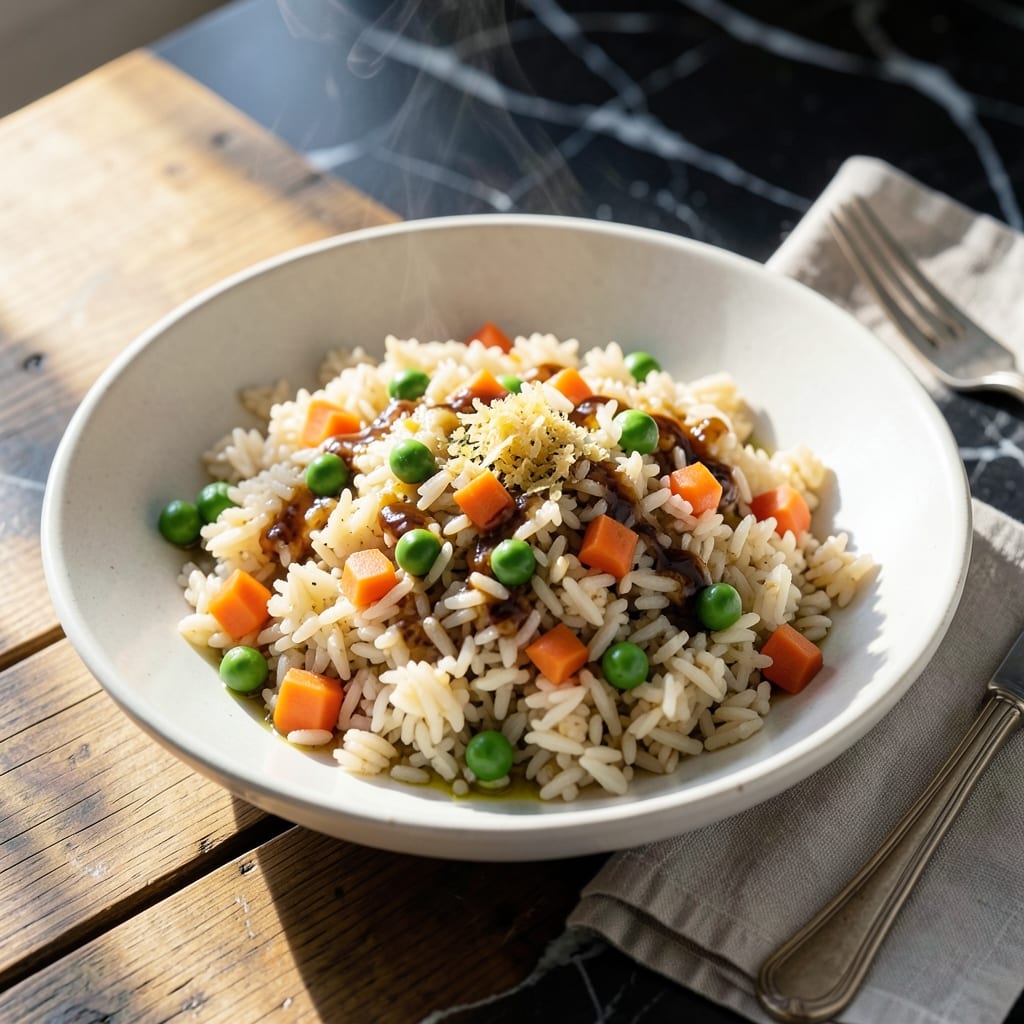
Crafting flavorful fried rice without excess salt is simpler than you think. This approach relies on fresh ingredients and smart seasoning choices to build depth without sodium overload.
The secret lies in using low-sodium soy sauce alternatives and amplifying natural umami through garlic, ginger, and fresh vegetables. High heat and proper technique ensure each grain stays separate and perfectly cooked.
You’ll achieve restaurant-style texture and taste with just a fraction of the usual salt content. The result is a dish that satisfies without compromise.
Ready in under 30 minutes, it proves healthy eating can be both delicious and efficient.
Ingredients for Low Sodium Fried Rice
Fresh vegetables, aromatic bases, and smart seasoning create bold flavor without excess sodium.
| Ingredient | Amount | Notes |
|---|---|---|
| Cooked White Rice 🍚 | 4 cups | Day-old, chilled for best texture |
| Low-Sodium Soy Sauce 🥄 | 2 tbsp | Or coconut aminos for lower sodium |
| Garlic Cloves 🧄 | 4 cloves | Minced for maximum flavor |
| Fresh Ginger Root 🌿 | 1 tbsp | Grated, packed |
| Carrots 🥕 | 2 whole | Diced small for even cooking |
| Frozen Peas 🌱 | 1 cup | Thawed or frozen works fine |
| Large Eggs 🥚 | 3 whole | Lightly beaten |
| Green Onions 🧅 | 4 whole | Thinly sliced, white and green parts |
| Sesame Oil 🫒 | 1 tsp | Toasted for nutty aroma |
| Vegetable Oil 💧 | 2 tbsp | Neutral flavor, high smoke point |
| Diamond Crystal Kosher Salt 🧂 | ¼ tsp | Adjust to taste at end |
| Ground White Pepper 🌶️ | ½ tsp | For subtle heat without color |
| Shaoxing Wine 🍶 | 1 tbsp | Dry sherry works as substitute |
The rice quality is non-negotiable. Day-old cooked jasmine or long-grain white rice prevents mushiness—freshly cooked rice releases too much starch. For low-sodium soy sauce, Kikkoman Less Sodium or San-J Tamari are reliable brands. The ginger and garlic should be freshly grated and minced respectively; pre-minced jars lack potency. Asian markets often carry the best ginger roots at peak freshness.
Need to reduce sodium further? Coconut aminos cut sodium by 75% with similar depth. No Shaoxing wine? Dry sherry at equal volume works, or skip entirely. The peas can be swapped for diced bell peppers or corn. For protein, firm tofu or shrimp can be added—just adjust cooking time accordingly. The sesame oil is key for aroma, but avocado oil substitutes in a pinch.
Cooked rice stores well in the fridge for 3-4 days before use. Prepped vegetables keep separated in airtight containers for 2 days. The complete dish reheats beautifully—store leftovers for up to 4 days or freeze for 3 months. Always use high heat to revive fried rice, adding a splash of water to prevent drying.
Why You’ll Love This Recipe
- One Pan Wonder: I toss everything into a single skillet—rice, garlic, ginger—and dinner’s ready before the takeout arrives.
- Garlic-Ginger Magic: Honestly, the combo of fresh ginger and minced garlic with low-sodium soy sauce makes it crave-worthy without the salt overload.
- Meal Prep Hero: I make a big batch on Sunday and it reheats beautifully for lunches all week.
- Budget Stretcher: Between us, it’s the best way to use up leftover rice and those stray carrots in the crisper.
Step-by-Step Instructions for Low Sodium Fried Rice
Master the technique for perfectly textured fried rice with balanced flavors and minimal sodium.
Step 1: Prepare and Sauté the Aromatics
Heat the 2 tablespoons vegetable oil in a wok or large skillet over medium-high heat until shimmering. Add the minced 4 cloves garlic cloves and grated 1 tablespoon fresh ginger root, stirring constantly for 30-45 seconds until fragrant.
This foundation layer infuses the oil with essential flavor compounds that define the dish. Watch carefully to prevent burning—the moment the garlic turns light golden, it’s ready for the next addition. The ginger should sizzle but not darken.
Step 2: Cook the Vegetables and Scramble the Eggs
Add the diced 2 whole carrots and cook for 2-3 minutes until slightly softened but still crisp. Toss in the 1 cup frozen peas and continue cooking for 1 minute to take the chill off.
Push the vegetables to one side of the pan and pour in the lightly beaten 3 whole large eggs. Scramble quickly with a spatula until just set but still moist, then combine with the vegetables. The eggs should form soft, distinct curds rather than a solid mass.
Step 3: Incorporate the Rice and Seasonings
Add the 4 cups cooked white rice, breaking up any clumps with your spatula. Drizzle the 2 tablespoons low-sodium soy sauce, 1 tablespoon Shaoxing wine, 0.25 teaspoon Diamond Crystal kosher salt, and 0.5 teaspoon ground white pepper evenly over the rice.
Stir-fry for 4-5 minutes until the rice is heated through and begins to develop a light crust in spots. The grains should be separate and slightly chewy, with the seasonings evenly distributed. Taste and adjust salt if needed, remembering the sauce is already low in sodium.
Step 4: Finish with Green Onions and Sesame Oil
Remove from heat and stir in the thinly sliced 4 whole green onions and 1 teaspoon sesame oil. The residual heat will soften the onions slightly while preserving their bright color and crisp texture.
The sesame oil adds a final layer of nutty aroma that ties all the flavors together. Let the dish rest for 2 minutes before serving to allow the flavors to meld completely. The finished rice should be fragrant, with distinct vegetable pieces and a subtle sheen from the oils.
Pro Tips For Making Low Sodium Fried Rice
- Use Day-Old Rice: Fresh rice turns to mush in the wok—spread yesterday’s leftovers on a tray and refrigerate uncovered for 1 hour to dry it out. Sounds weird, but it works.
- Prep Small Carrots: Cut carrots into tiny ¼-inch dice so they soften quickly without overcooking the garlic and ginger. I learned this the hard way after too many crunchy bites.
- High Heat Only: Crank the burner to max and keep the wok moving constantly—low sodium soy sauce won’t caramelize if the pan isn’t screaming hot.
- Bloom Aromatics First: Cook minced garlic and grated ginger in oil for 30 seconds before adding anything else—this builds flavor without extra salt. My grandmother swore by this, and she was right.
Creative Variations of This Dish
Protein-Packed Version
Add 1 lb cooked shrimp or diced chicken breast along with the vegetables in Step 2. For extra flavor, marinate the protein in 1 tsp grated ginger and 1 minced garlic clove for 15 minutes before cooking. This boosts protein without adding sodium. 💪
Vegetable Medley
Swap carrots and peas for 1 cup diced bell peppers, 1 cup broccoli florets, and ½ cup corn kernels. Cook the broccoli for 2 minutes before adding other veggies. This version adds vibrant colors and extra nutrients while keeping it low-sodium.
Spicy Kick
Increase the heat by adding 1 finely chopped jalapeño with the aromatics or ½ tsp red pepper flakes with the rice. For a smoky touch, use 1 tsp smoked paprika instead of white pepper. The spice enhances flavor perception, reducing the need for salt.
Cauliflower Rice
Replace white rice with 4 cups riced cauliflower for a low-carb option. Cook it for 5-6 minutes in Step 3 until tender. You may need 1 extra tbsp vegetable oil to prevent drying out. This variation cuts carbs while maintaining the dish’s savory character.
Mushroom Umami Boost
Add 1 cup sliced shiitake mushrooms with the carrots in Step 2. Their natural umami deepens the flavor profile, compensating for reduced sodium. Sauté until mushrooms release their moisture and begin to brown for maximum impact. ✨
Egg-Free Option
Omit the eggs and add 1 cup cubed firm tofu with the vegetables. Press the tofu first to remove excess water. For extra flavor, toss the tofu with 1 tsp cornstarch and ½ tsp garlic powder before cooking. This keeps the dish just as satisfying.
Nutrition Facts
Frequently Asked Questions
Can I use fresh rice instead of day-old?
Fresh rice contains too much moisture and will turn mushy. Always use day-old chilled rice for the best texture. Spread it on a tray to cool quickly if you’re in a hurry.
What’s the best low-sodium soy sauce substitute?
Coconut aminos offers similar depth with 75% less sodium. For a more traditional taste, try San-J Tamari or Kikkoman Less Sodium. Both work well in this recipe.
How do I prevent my fried rice from being dry?
Use high heat and cook in small batches. Add a splash of water or broth if needed. The key is keeping the rice moving constantly in the pan.
Can I make this ahead of time?
Yes! Store leftovers in an airtight container for up to 4 days. Reheat in a skillet over medium-high heat with a splash of water to restore moisture.

- Peri Peri Rice Recipe: Spicy Portuguese One-Pot Harmony - November 6, 2026
- Mexican Flavoured Rice Recipe: Authentic Spice-Infused One-Pot Meal - November 6, 2026
- Lao Gan Ma Fried Rice Recipe: Spicy Wok-Tossed Perfection - November 6, 2026