
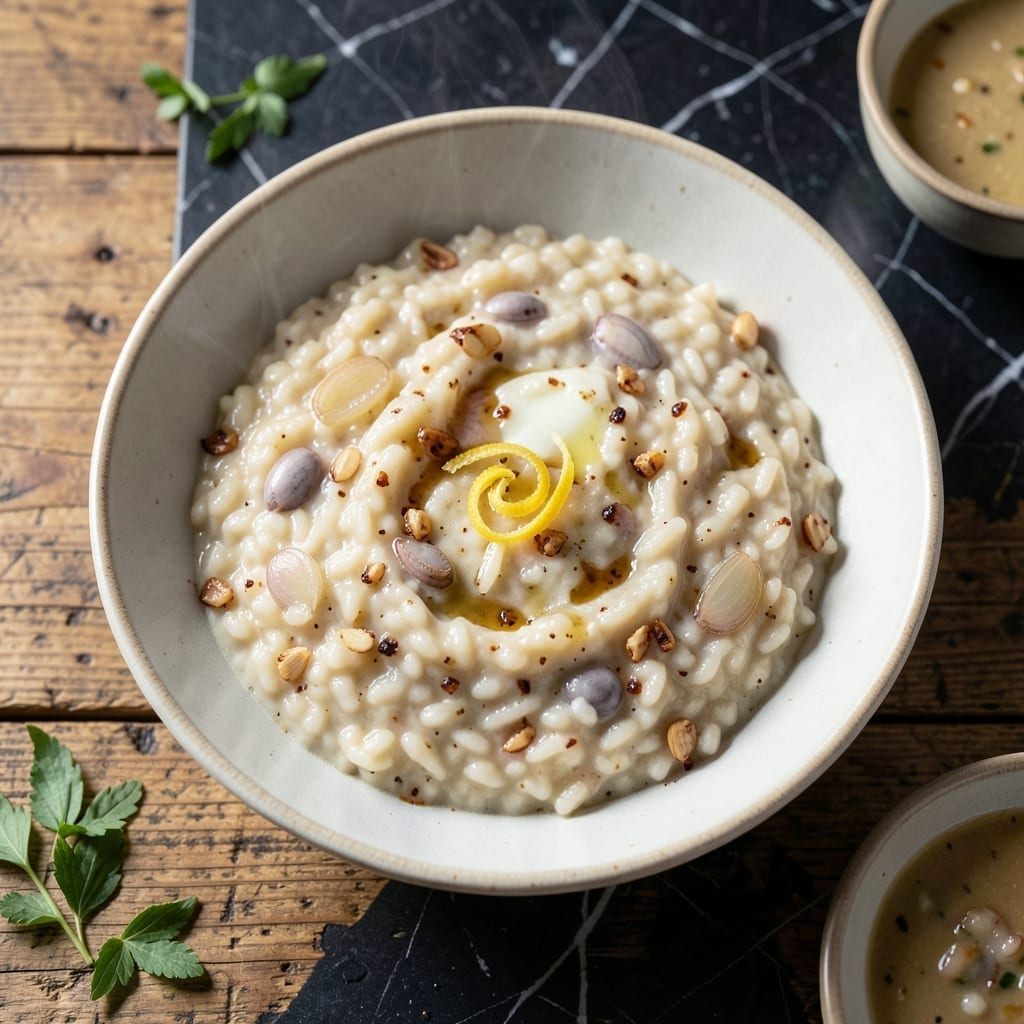
There’s an art to achieving the perfect creamy risotto, and it starts with quality ingredients like Lundberg Arborio rice. This variety’s high starch content is the foundation for that signature silky texture.
The traditional method requires patience—slowly adding warm broth and stirring constantly allows the rice to release its starches gradually. Each stir builds layers of flavor and that coveted velvety consistency.
What emerges is a dish where every grain of rice is tender yet firm, suspended in a rich, creamy sauce that coats your spoon. The process is as rewarding as the result.
Serve it as a side or a light main course. This method delivers restaurant-quality results every time.
Ingredients for Lundberg Arborio Rice Risotto
Quality ingredients like Lundberg Arborio rice transform into this velvety, restaurant-worthy dish with patience.
| Ingredient | Amount | Notes |
|---|---|---|
| Lundberg Arborio Rice 🍚 | 1 ½ cups | High starch, short grain essential |
| Vegetable Broth 🥣 | 6 cups | Warm, low-sodium preferred |
| Unsalted Butter 🧈 | ½ cup | Divided for toasting and finishing |
| Shallot 🧅 | 1 whole | Finely minced for base flavor |
| Garlic Cloves 🧄 | 2 cloves | Minced for aromatic depth |
| Dry White Wine 🍷 | ½ cup | Acidic, crisp variety |
| Parmesan Cheese 🧀 | ¾ cup | Freshly grated, aged variety |
| Heavy Cream 🥛 | ¼ cup | Optional for extra richness |
| Fresh Thyme Sprigs 🌿 | 3 sprigs | Leaves stripped, stems discarded |
| Fresh Parsley 🍃 | ¼ cup | Chopped, for garnish |
| Kosher Salt 🧂 | 1 tsp | Diamond Crystal preferred for consistency |
| Freshly Ground Black Pepper 🌶️ | ½ tsp | Adjust to taste preference |
| Olive Oil 🫒 | 2 tbsp | Extra-virgin for depth |
The rice is non-negotiable—Lundberg Arborio delivers the high starch content essential for that signature creamy texture. Whole Foods or Natural Grocers typically stock it in bulk bins, but most major supermarkets carry it in the rice aisle. Look for plump, pearly grains without any discoloration. The broth should be warm and flavorful; Better Than Bouillon vegetable base makes an excellent quick option when you’re short on time.
No white wine? Substitute with additional warm broth and a tablespoon of lemon juice for acidity. Shallots can be replaced with yellow onion at one-to-one ratio, though the flavor will be slightly more pungent. For a vegan adaptation, swap butter for olive oil and Parmesan for nutritional yeast. The heavy cream is optional but adds a luxurious finish—skip it or use half-and-half if preferred.
Risotto is best served immediately, but leftovers keep in the fridge for 3-4 days. Reheat gently with a splash of broth to restore creaminess. The Parmesan wedge stays fresh wrapped in parchment for several weeks. Always store rice in an airtight container to prevent moisture absorption.
Why You’ll Love This Recipe
- One-Pot Simplicity: I just stir the Lundberg Arborio into warm broth with butter, shallots, and garlic—no fancy steps, no extra pans.
- Buttery Garlic Magic: The shallots sweat down, the garlic melts into the rice, and that butter ties it all together in this rich, creamy bite.
- Weeknight Flexibility: I’ll serve it plain with roasted veggies or fold in leftover chicken—adjustable for whatever’s in the fridge.
- Stretches Farther: A single bag of Lundberg Arborio and a carton of broth feeds four, with leftovers that reheat beautifully for lunch.
Step-by-Step Instructions for Lundberg Arborio Rice Risotto
Master the technique for velvety risotto with these precise, tested steps.
Step 1: Toast the Rice in Aromatic Fat
Heat the 2 tbsp olive oil and 0.25 cup unsalted butter in a wide, heavy-bottomed pan over medium heat. When the butter foams, add the 1 whole shallot and sauté for 2-3 minutes until translucent.
Add the 1.5 cups Lundberg Arborio Rice and stir constantly for 2-3 minutes until the grains become translucent at the edges. The rice should smell nutty and toasted—this step builds the flavor foundation and prevents a gummy texture. Stir in the 2 cloves garlic cloves and the leaves from the 3 sprigs fresh thyme sprigs, cooking for 30 seconds until fragrant.
Step 2: Deglaze and Begin the Cooking Process
Pour in the 0.5 cup dry white wine and stir constantly until the liquid is fully absorbed and the pan is nearly dry. This deglazing step lifts the browned bits from the bottom, infusing the rice with deep, caramelized flavor.
Add 1 tsp kosher salt and 0.5 tsp freshly ground black pepper, then begin adding the 6 cups vegetable broth, 1 cup at a time. Stir frequently but not constantly—you want the rice to gently simmer, not boil vigorously. The broth should be warm to maintain a steady cooking temperature.
Step 3: Build Creaminess Through Gradual Hydration
Continue adding broth only when the previous addition is nearly absorbed. The rice is ready for more liquid when you drag a spoon through it and the path briefly holds its shape before melting back in. This process should take 18-20 minutes total.
The grains should be al dente—tender with a slight bite in the center. At this point, the risotto will look creamy but still fluid. Avoid the temptation to rush by adding all the broth at once; the gradual addition is what creates the signature texture.
Step 4: Finish with Richness and Serve
Remove the pan from heat and stir in the remaining 0.25 cup unsalted butter, the 0.75 cup Parmesan cheese, and the 0.25 cup heavy cream. This final step, called mantecatura, enriches the risotto and gives it a glossy, luxurious finish.
Taste and adjust seasoning if needed. The risotto should be creamy enough to flow slightly when spooned but thick enough to hold its shape briefly. Serve immediately in shallow bowls, garnished with the 0.25 cup fresh parsley. Risotto waits for no one—it thickens quickly as it cools.
Pro Tips For Making Lundberg Arborio Rice Risotto
- Toast the Rice: Cook the Lundberg Arborio in the butter with shallots and garlic for 2-3 minutes before adding liquid—I learned this the hard way when my risotto turned out gummy instead of creamy.
- Keep Broth Simmering: Maintain your vegetable broth at a low simmer in a separate pot; adding cold broth slows down cooking and makes the rice seize up.
- Stir Often, Not Constantly: After burning a batch from walking away, I now stir every 30-60 seconds—enough to prevent sticking but not so much that you break the rice grains.
- Finish with Cold Butter: Swirl in 1-2 tablespoons of cold unsalted butter at the end for a silkier texture—sounds weird, but it works.
Essential Equipment for This Dish
Must-Have Pan
A wide, heavy-bottomed stainless steel or enameled cast iron pan is essential. I use my All-Clad 12-inch stainless skillet—its even heat distribution prevents hot spots that could scorch the rice. The wide surface area allows for better evaporation and stirring control.
Quality Wooden Spoon
Invest in a sturdy wooden spoon with a flat edge for scraping the bottom while stirring. I prefer bamboo as it won’t scratch your pan and handles the constant motion better than metal. The spoon becomes an extension of your arm during the 18-20 minute stirring process. 💪
Accurate Thermometer
While not strictly necessary, an instant-read thermometer helps maintain the ideal broth temperature of 160-180°F. I keep my ThermoWorks Thermapen nearby to check both broth and risotto temperature. Cold broth slows cooking and can lead to uneven texture.
Broth Warmer
Keep your 6 cups vegetable broth warm in a separate pot on the stove. I use a 2-quart saucepan on the lowest heat setting. Adding cold liquid shocks the rice and interrupts the creamy development. A slow cooker on warm works too for hands-off temperature maintenance.
Microplane for Cheese
For the finest, most meltable Parmesan texture, I swear by my Microplane Premium Zester. The 0.75 cup Parmesan cheese integrates seamlessly when freshly grated. Pre-grated cheese contains anti-caking agents that prevent smooth melting.
Shallow Serving Bowls
Serve your risotto in wide, shallow bowls to showcase its creamy texture. I use stoneware bowls from Le Creuset—they retain heat beautifully and provide the perfect backdrop for garnishing with 0.25 cup fresh parsley. 🌟
Nutrition Facts
Frequently Asked Questions
Can I use another rice variety?
Stick with short-grain varieties like Carnaroli or Vialone Nano for similar creaminess. Long-grain rice won’t release enough starch for that signature texture.
Why stir constantly?
Constant stirring prevents sticking and helps release starches for creaminess. It also ensures even cooking and a uniform texture throughout.
Can I make this ahead?
Risotto is best served immediately, but you can par-cook it and finish later. Spread it on a tray to cool quickly, then refrigerate for up to 2 hours before completing.
What if my risotto is too thick?
Stir in warm broth 1/4 cup at a time until it reaches the desired consistency. Avoid adding cold liquid, as it can make the dish grainy.

- Lump Rice Recipe Sri Lanka: Traditional Island-Style Texture - November 4, 2026
- Laos Sticky Rice Recipe: Traditional Steamed Perfection - November 4, 2026
- Magic Rice Recipe: One-Pot Aromatic Wonder - November 4, 2026