
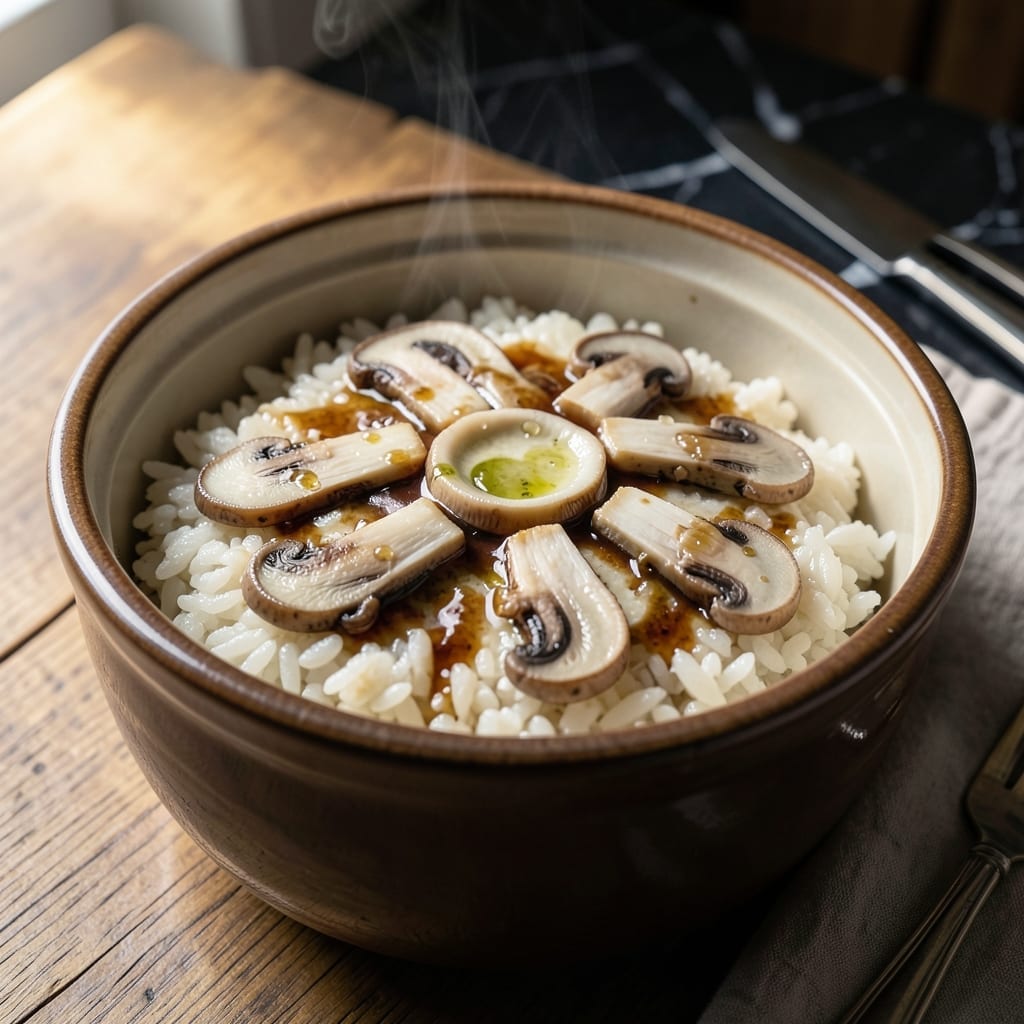
There’s something magical about the earthy aroma of matsutake mushrooms infusing every grain of rice. This dish captures the essence of autumn in Japan, where the forest’s bounty meets simple, comforting home cooking.
Using a rice cooker makes it effortless—just layer fresh matsutake slices over washed rice, add dashi, and let the machine work its magic. The mushrooms release their rich, pine-like fragrance as they steam, transforming plain rice into a luxurious meal.
The result is a bowl of fluffy, fragrant rice studded with tender mushroom pieces. Each bite carries the deep umami and woodsy notes that make matsutake so prized.
Serve it hot as a side or light main, and savor the taste of the forest in every mouthful.
Ingredients for Matsutake Gohan Recipe Rice Cooker
Authentic Japanese ingredients bring forest depths to your rice cooker with minimal effort.
| Ingredient | Amount | Notes |
|---|---|---|
| Japanese Short-Grain Rice 🍚 | 2 cups | Rinsed until water runs clear |
| Fresh Matsutake Mushrooms 🍄 | 8 oz | Cleaned, sliced thinly |
| Dashi Stock 🥣 | 2 ¼ cups | Traditional kombu-based preferred |
| Soy Sauce 🫒 | 2 tbsp | Low-sodium for balance |
| Sake 🍶 | 2 tbsp | Dry variety for cooking |
| Mirin 🍯 | 1 tbsp | Sweet rice wine for depth |
| Nori Sheets 🌿 | 1 sheet | Cut into thin strips for garnish |
| Scallions 🧅 | 2 whole | Thinly sliced for topping |
| Sesame Seeds 🌰 | 1 tsp | Toasted for aroma |
| Neutral Oil 🫒 | 1 tsp | For light sautéing if desired |
| Salt 🧂 | ½ tsp | Adjust to taste |
| White Sesame Oil 🫒 | ½ tsp | For finishing touch |
The matsutake mushrooms are non-negotiable for that signature pine-like aroma. Asian markets carry them fresh in autumn, or look for dried at Uwajimaya or online. Choose firm caps with a bright, earthy scent—avoid any with dark spots. For dashi, instant dashi granules work in a pinch, but traditional kombu-based is worth the effort for depth.
No matsutake? Shiitake or oyster mushrooms offer a similar meaty texture (though the fragrance won’t be the same). Substitute vegetable broth for dashi if needed. Sake and mirin can be replaced with dry white wine plus a pinch of sugar. For gluten-free, use tamari in place of soy sauce—just reduce by half a teaspoon to account for saltiness.
Cooked rice stays fresh for 2-3 days in the fridge. Reheat with a splash of water to restore moisture. For best flavor, serve immediately—the aromatic compounds are most vibrant when hot. Leftovers make great onigiri (rice balls) the next day.
Why You’ll Love This Recipe
- I’ll be real: the flavors meld overnight, so day-two rice tastes even more rich and satisfying for lunch the next day.
- Hands-Off Cooking: I just toss everything in the rice cooker and walk away—no stirring, no watching, just perfect matsutake gohan every time.
- Earthy Luxury: The matsutake’s piney aroma mixed with dashi and sake creates this deep, umami-rich bowl that feels fancy but is totally unfussy.
- Crowd-Pleasing Side: Honestly, I serve this at dinner parties and potlucks alike—it pairs as well with grilled fish as it does with a simple miso soup.
Step-by-Step Instructions for Matsutake Gohan Rice Cooker
Precise technique transforms simple ingredients into a fragrant, umami-rich dish with minimal effort.
Step 1: Prepare the Japanese Short-Grain Rice and Matsutake Mushrooms
Rinse the 2 cups Japanese Short-Grain Rice under cold water until the water runs completely clear, which removes excess starch and prevents gummy results. Drain thoroughly in a fine-mesh strainer for 5 minutes—any residual moisture will throw off your liquid ratios.
While the rice drains, clean the 8 oz Fresh Matsutake Mushrooms by gently brushing off debris with a soft brush or damp paper towel. Slice them thinly, about ⅛-inch thick, to ensure even cooking and maximum flavor infusion. Avoid soaking them, as matsutakes absorb water quickly and lose their earthy intensity.
Step 2: Sauté Aromatics and Toast the Rice
Add the 1 tsp Neutral Oil to the rice cooker pot and select the sauté function if available. Heat for 1 minute until the oil shimmers, then add the sliced matsutake mushrooms. Sauté for 3-4 minutes until they soften slightly and release their fragrance—you’ll notice the kitchen filling with a pine-like aroma.
Stir in the drained rice and toast for 1-2 minutes, stirring constantly. The grains should appear slightly translucent at the edges, and the pot will develop a nutty scent. This step enhances the depth of flavor and prevents a raw, starchy finish.
Step 3: Add Liquids and Seasonings
Pour in the 2.25 cups Dashi Stock, 2 tbsp Soy Sauce, 2 tbsp Sake, 1 tbsp Mirin, and 0.5 tsp Salt. Stir gently to distribute the rice and mushrooms evenly—don’t press down, as this can compact the grains and lead to uneven cooking.
The liquid should cover the rice by about ½ inch. If your rice cooker has measurement lines, ensure the total liquid reaches the appropriate level for 2 cups of rice. The dashi will infuse the dish with a subtle oceanic note, while the soy, sake, and mirin create a balanced sweet-savory base.
Step 4: Cook and Rest for Optimal Texture
Secure the rice cooker lid and select the standard white rice setting. Let it cook undisturbed for the full cycle, typically 20-25 minutes. Avoid opening the lid during cooking, as this releases steam and can result in undercooked or unevenly textured rice.
Once the cooker switches to “keep warm,” let the rice rest for 10-15 minutes. This allows the grains to absorb any remaining liquid and the flavors to meld. The matsutakes will have softened further, and the rice should be tender with a slight chew, each grain distinct yet cohesive.
Step 5: Garnish and Serve
Gently fluff the rice with a rice paddle, taking care not to crush the matsutake slices. Drizzle with the 0.5 tsp White Sesame Oil and toss lightly to incorporate. This final touch adds a subtle toasty note that complements the dish’s earthy profile.
Garnish with the 1 sheet Nori Sheets cut into thin strips, the 2 whole Scallions thinly sliced, and the 1 tsp Sesame Seeds. Serve immediately in bowls, ensuring each portion includes a generous share of the fragrant matsutake mushrooms. The nori will add a briny contrast, while the scallions and sesame seeds provide freshness and crunch.
Pro Tips For Making Matsutake Gohan Recipe Rice Cooker
- Rinse the Rice: Use cold water and rinse until it runs clear—this removes excess starch so your matsutake gohan stays fluffy, not gummy.
- Slice Matsutake Thin: Cut the mushrooms into paper-thin slices so their aroma infuses every bite of rice during cooking.
- Use Fresh Dashi: Skip the powdered stuff; fresh dashi stock adds a cleaner, more delicate base that lets the matsutake shine.
- Soak the Rice: Let the rice soak in the dashi, soy, and sake mixture for 15 minutes before cooking—this guarantees even flavor absorption.
Wine and Beer Pairings for These Flavors
Japanese Sake Pairings
A dry junmai sake like Dassai 39 complements the earthy matsutake beautifully. Its clean, crisp profile cuts through the richness while enhancing the mushrooms’ pine-like aroma. Serve chilled in small cups to sip between bites. 🍶
Light Beer Options
Try a Japanese lager such as Asahi Super Dry for a refreshing contrast. The beer’s light body and subtle bitterness cleanse your palate, making each mouthful of this dish taste as vibrant as the first.
For craft lovers, Sapporo Premium Beer offers a slightly sweeter profile that pairs well with the umami depth of the rice.
White Wine Choices
A crisp Pinot Grigio from Friuli-Venezia Giulia works wonderfully. Its bright acidity and citrus notes balance the dish’s savory elements without overwhelming the delicate matsutake fragrance. 🍷
Green Tea Harmony
For a non-alcoholic option, serve with sencha green tea. The tea’s grassy, slightly astringent notes harmonize with the earthy mushrooms. Brew at 175°F for 2 minutes to avoid bitterness.
Nutrition Facts
Frequently Asked Questions
Can I use dried matsutake instead of fresh?
Yes, rehydrate 1 oz dried matsutake in 1 cup warm water for 20 minutes. Use the soaking liquid as part of your dashi for extra flavor.
Why does my rice turn out mushy?
Over-rinsing or using too much liquid causes gummy rice. Stick to 2.25 cups dashi for 2 cups rice, and rinse until water is just slightly cloudy.
How do I adjust for a smaller rice cooker?
Halve all ingredients but keep the same ratios. For 1 cup rice, use 1.125 cups dashi and half the seasonings.
Can I add other vegetables?
Yes, but avoid watery types like zucchini. Try shiitake mushrooms or carrots in thin slices for texture without excess moisture.

- Lump Rice Recipe Sri Lanka: Traditional Island-Style Texture - November 4, 2026
- Laos Sticky Rice Recipe: Traditional Steamed Perfection - November 4, 2026
- Magic Rice Recipe: One-Pot Aromatic Wonder - November 4, 2026