
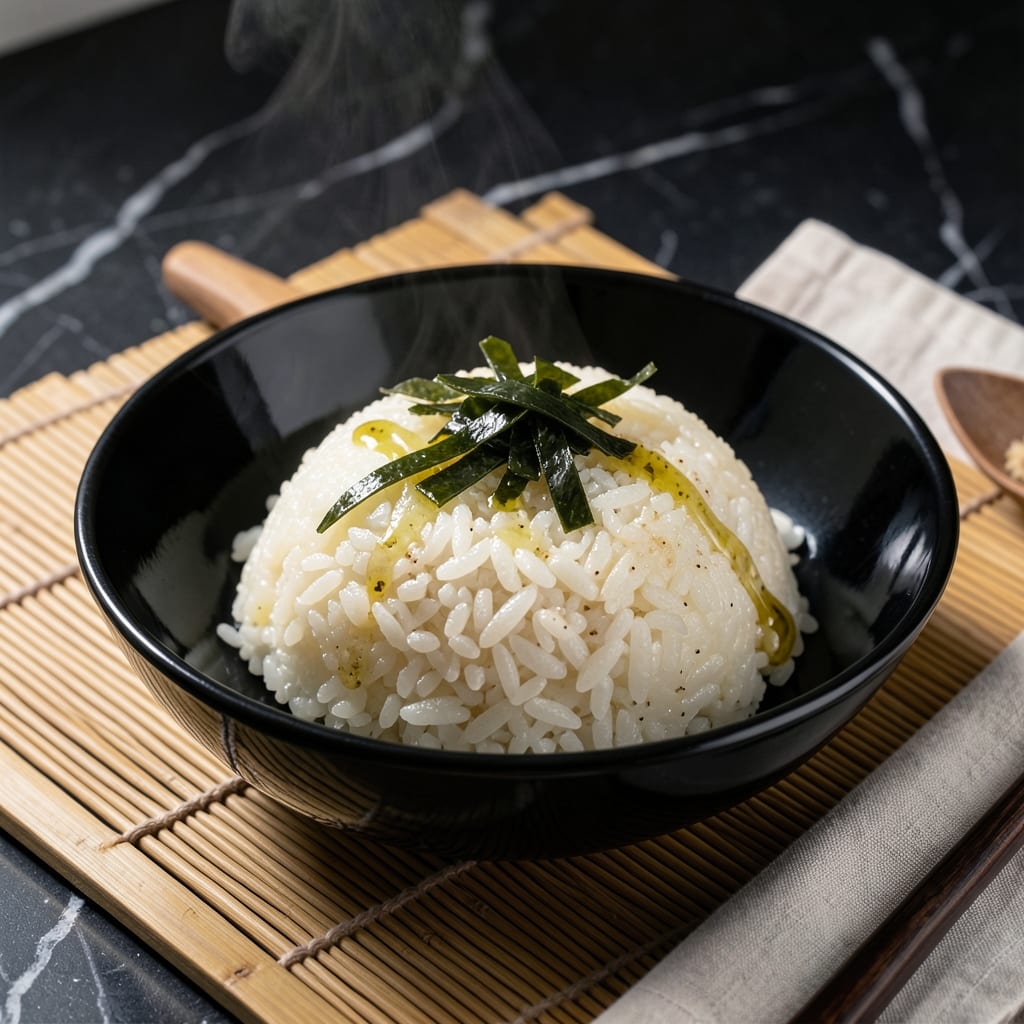
Achieving perfectly sticky sushi rice requires precision, and this method delivers consistent results every time. Lundberg rice provides the ideal base for its balanced texture and authentic flavor.
The key lies in the proper water-to-rice ratio and soaking time, which ensures each grain absorbs moisture evenly. Seasoning with rice vinegar, sugar, and salt creates that signature slightly sweet, tangy taste.
This rice forms the foundation for any sushi creation, from delicate nigiri to hearty rolls. The grains maintain their shape while offering just the right amount of stickiness for easy handling.
Mastering this technique elevates homemade sushi to restaurant quality. The process is straightforward but demands attention to detail for the best outcome.
Ingredients for Lundberg Sushi Rice
Lundberg rice and a few pantry staples create the perfect foundation for authentic sushi.
| Ingredient | Amount | Notes |
|---|---|---|
| Lundberg Sushi Rice 🍚 | 2 cups | Short-grain, rinsed thoroughly |
| Water 💧 | 2 ½ cups | Filtered for best results |
| Rice Vinegar 🍯 | ½ cup | Seasoned or unseasoned |
| Granulated Sugar 🍚 | 2 tbsp | Dissolved in vinegar mixture |
| Sea Salt 🧂 | 1 tsp | Fine grain for even distribution |
| Kombu Strip 🌿 | 1 piece | Optional, 2-inch square for umami |
| Sake 🍶 | 1 tbsp | Optional, enhances flavor depth |
| Mirin 🍶 | 1 tbsp | Optional, adds subtle sweetness |
| White Sesame Seeds 🌰 | 1 tbsp | Toasted, for garnish |
| Nori Sheets 🌿 | 4 sheets | For serving or rolling |
The rice quality is paramount. Lundberg short-grain sushi rice delivers consistent texture and authentic flavor. For optimal results, source it from Whole Foods or Asian specialty markets. The kombu strip, though optional, adds a subtle oceanic depth that elevates the dish. Ensure your rice vinegar is high-quality—Mizkan or Marukan brands are reliable choices for authentic taste.
No sake or mirin? Dry white wine at half the amount can substitute for sake, while 1 tsp sugar plus 1 tsp water mimics mirin. For a gluten-free version, verify rice vinegar and mirin labels. The sesame seeds can be omitted, but their nutty crunch adds a classic finishing touch. If using pre-toasted nori, store it in an airtight container to maintain crispness.
Cooked rice holds at room temperature for 2 hours but is best used immediately. Leftovers keep in the fridge for 2-3 days—reheat gently with a splash of water. For sushi, always use rice the same day it’s cooked for the ideal sticky texture and fresh flavor.
Why You’ll Love This Recipe
- One Pot Wonder: I just dump the Lundberg rice and water in a pot, let it simmer, and the vinegar-sugar-salt mix stirs in while it’s still warm—no fancy gadgets.
- Sticky Sweet Balance: That first bite with the tangy rice vinegar hitting the sweet sugar and salty edge? I make extra just to snack on it plain.
- Roll or Bowl: I’ve used this base for sushi rolls, poke bowls, and even quick fried rice the next day when I’m too lazy to cook.
- Penny Pincher: A 2-pound bag of Lundberg sushi rice costs me less than a fiver and feeds us for three meals—honestly, my wallet’s favorite grain.
Step-by-Step Instructions for Perfect Sushi Rice
Master the technique for consistently excellent results with this time-tested method.
Step 1: Rinse and Soak the Lundberg Sushi Rice
Place the 2 cups Lundberg Sushi Rice in a fine-mesh strainer and rinse under cold running water. I agitate the rice gently with my hand, changing the water 4-5 times until it runs nearly clear. This removes excess starch that would otherwise make the rice gummy.
After rinsing, transfer the rice to a bowl and cover with the 2.5 cups Water. Let it soak for 30 minutes. This hydrates the grains evenly and prevents cracking during cooking, ensuring each grain stays intact and plump.
Step 2: Cook the Rice with Kombu
Drain the soaked rice completely in the strainer. Transfer it to a heavy-bottomed pot and add the 2.5 cups Water along with the 1 piece Kombu Strip. The kombu infuses subtle umami depth without overpowering the rice’s natural flavor.
Bring to a boil over high heat, then immediately reduce to low heat, cover, and simmer for 15 minutes. Resist the urge to lift the lid—steam is critical for even cooking. After 15 minutes, turn off the heat and let it steam, covered, for another 10 minutes.
Step 3: Prepare the Seasoning Mixture
While the rice cooks, combine the 0.5 cup Rice Vinegar, 2 tbsp Granulated Sugar, 1 tsp Sea Salt, 1 tbsp Sake, and 1 tbsp Mirin in a small saucepan. Heat over medium-low heat just until the sugar and salt dissolve completely—about 2-3 minutes.
Don’t let this mixture boil. The goal is to create a smooth, well-integrated seasoning liquid that will coat each grain evenly. The sake and mirin add complexity, but the vinegar remains the dominant flavor, as it should for authentic sushi rice.
Step 4: Fold the Seasoning into the Rice
Transfer the cooked rice to a large, non-reactive bowl—wooden or glass works best. Drizzle the seasoning mixture evenly over the hot rice. Using a rice paddle or silicone spatula, fold the rice gently with a cutting motion for 2-3 minutes. This distributes the seasoning without crushing the grains.
Fan the rice with a handheld fan or piece of cardboard as you fold to cool it to body temperature. You’ll notice the rice becomes glossy and slightly sticky—this is exactly what you want. The grains should hold together when pressed but separate easily when nudged.
Step 5: Rest and Garnish for Serving
Cover the seasoned rice with a damp towel and let it rest for 10 minutes. This allows the flavors to meld and the texture to stabilize. Just before serving, sprinkle the 1 tbsp White Sesame Seeds over the top for visual appeal and a subtle nutty crunch.
Serve the rice immediately with the 4 sheets Nori Sheets for rolling or as a bed for sushi toppings. The rice should be at room temperature for optimal texture and flavor balance. Use within 4 hours for best results.
Pro Tips For Making Lundberg Sushi Rice
- Rinse Thoroughly: Wash the Lundberg sushi rice in 3-4 changes of cold water until it runs clear—I learned this the hard way after my first batch turned gummy from excess starch.
- Use Exact Water Ratio: Stick to a 1:1.1 rice-to-water ratio (1 cup rice to 1.1 cups water) for perfect tenderness; even a slight overpour leaves the grains mushy.
- Cool Before Seasoning: Let the cooked rice sit covered for 10 minutes, then transfer to a wooden bowl to cool slightly before folding in the vinegar mixture—hot rice absorbs the seasoning unevenly.
- Dissolve Sugar First: Heat the rice vinegar, sugar, and sea salt in a small saucepan just until the sugar dissolves, then cool; this prevents grainy clumps in your finished rice.
Regional Styles of These Flavors
Japanese Traditional
In Japan, sushi rice is the heart of any sushi creation. The standard is short-grain rice like Lundberg, seasoned with a precise 5:2:1 ratio of rice vinegar, sugar, and salt. The grains should glisten with a delicate balance of sweetness and acidity. I learned this method from a sushi master in Tokyo. 🗺️
California Style
California rolls introduced sushi to America, often using slightly sweeter seasoning. Here, I add an extra ½ tbsp sugar to the vinegar mixture for a milder, more approachable flavor. The rice is often cooled more before rolling to prevent the nori from getting soggy.
Korean Kimbap
Korean kimbap uses similar rice but seasons it with toasted sesame oil (1 tsp) and a touch of soy sauce (½ tbsp) for a nuttier, savory profile. The rice is typically less sticky, making it easier to handle for intricate rolls. I love this version for picnics.
Hawaiian Poke Bowl
For poke bowls, the rice is often slightly under-seasoned to let the fresh fish shine. I reduce the vinegar mixture by 20% and fold in 1 tbsp toasted sesame seeds directly into the rice. This creates a neutral base that pairs perfectly with bold toppings.
Thai-Inspired
Thai-style sushi rice incorporates coconut milk (¼ cup) and lemongrass for a fragrant twist. The rice becomes richer and pairs beautifully with spicy or herbal fillings. This fusion style is a crowd-pleaser at my summer gatherings. ✨
Nutrition Facts
Frequently Asked Questions
Why rinse the rice before cooking?
Rinsing removes excess starch to prevent gummy texture. Skipping this step results in overly sticky rice that lacks the right bite.
Can I use a rice cooker instead of a pot?
Use the same 2:2.5 rice-to-water ratio and cook on the sushi setting. Let it steam for 10 minutes after cooking completes.
How do I fix rice that’s too dry?
Sprinkle 1-2 tbsp warm water over the rice, cover, and let sit for 5 minutes. Re-fold with a damp paddle to restore moisture.
What if I don’t have mirin or sake?
Use ½ tsp sugar + ½ tsp water per missing ingredient. The flavor won’t be identical but will still be delicious.

- Lump Rice Recipe Sri Lanka: Traditional Island-Style Texture - November 4, 2026
- Laos Sticky Rice Recipe: Traditional Steamed Perfection - November 4, 2026
- Magic Rice Recipe: One-Pot Aromatic Wonder - November 4, 2026