
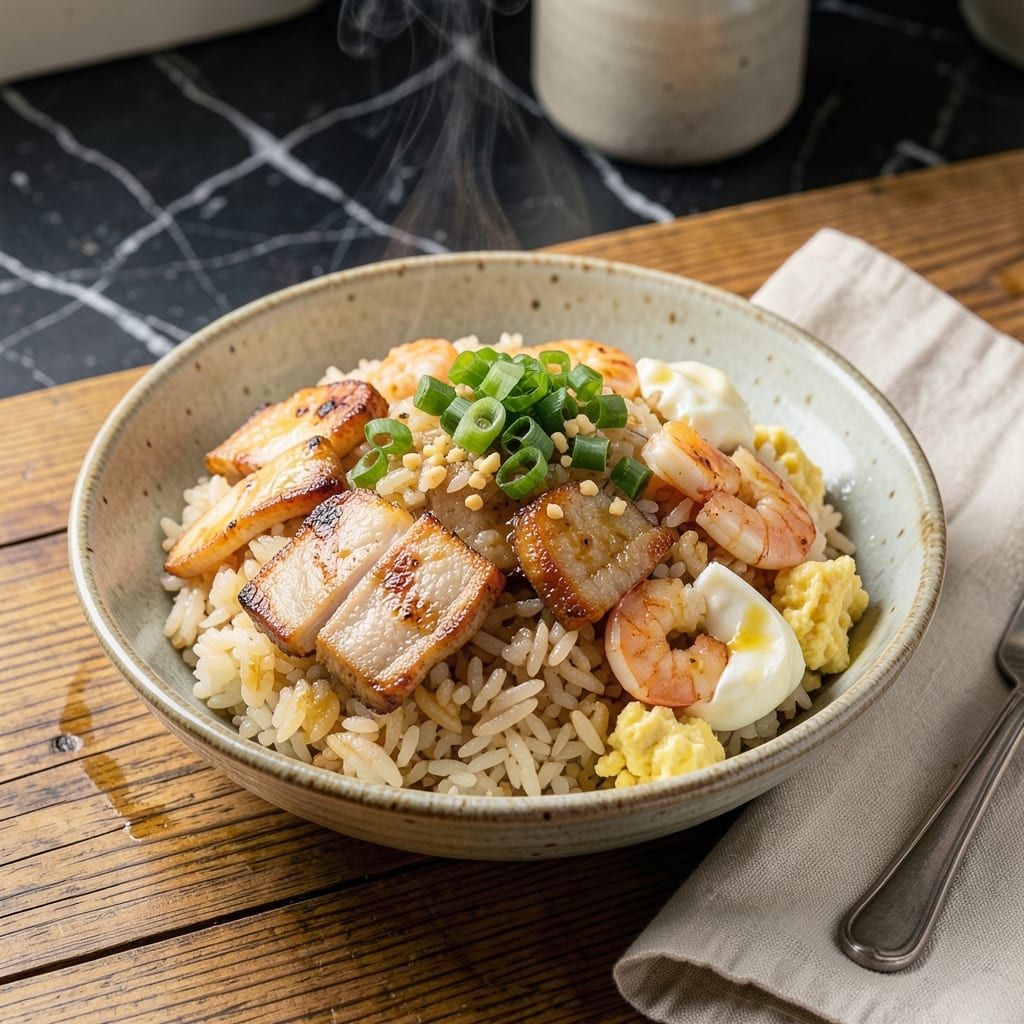
This recipe transforms everyday fried rice into a crispy, umami-packed masterpiece inspired by Nagoya’s bold flavors. The combination of savory pork, tender shrimp, and fragrant aromatics creates a dish that’s far from ordinary.
The secret lies in high-heat cooking, which delivers perfectly crispy edges while keeping the rice light and fluffy. A splash of soy sauce and a touch of sesame oil layer in deep, satisfying flavor without overpowering the dish.
Each bite offers a balance of textures and tastes—chewy rice, crisp pork, and the subtle sweetness of vegetables. The result is a side dish that stands on its own or complements any Asian-inspired meal.
Ready in under 30 minutes, this is one fried rice that’s worth the effort.
Ingredients for Nagoya Fried Rice
Transform everyday rice into a crispy, umami-packed Nagoya-style dish with these ingredients.
| Ingredient | Amount | Notes |
|---|---|---|
| Jasmine Rice 🍚 | 3 cups | Day-old, cooked and chilled |
| Pork Belly 🥓 | ½ lb | Thinly sliced for crispiness |
| Medium Shrimp 🦐 | ½ lb | Peeled and deveined |
| Large Eggs 🥚 | 3 whole | Beaten for scrambling |
| Green Onions 🧅 | 4 whole | Thinly sliced, white and green separated |
| Garlic Cloves 🧄 | 4 cloves | Minced finely |
| Fresh Ginger 🌿 | 1 tbsp | Grated or minced |
| Soy Sauce 💧 | 3 tbsp | Low-sodium preferred |
| Sesame Oil 🫒 | 1 tbsp | Toasted for depth |
| Oyster Sauce 🍶 | 2 tbsp | Vegetarian oyster sauce if needed |
| Frozen Peas 🌱 | ½ cup | Thawed before cooking |
| Carrot 🥕 | 1 whole | Finely diced |
| Neutral Oil 🛢️ | 3 tbsp | High smoke point for frying |
| Salt 🧂 | ½ tsp | Adjust to taste |
| White Pepper 🌶️ | ¼ tsp | Freshly ground |
The pork belly is non-negotiable for that signature crispiness—source it from an Asian market or specialty butcher for the best marbling. Thin slicing (about 1/8-inch thick) ensures it crisps up quickly without drying out. For the shrimp, wild-caught from a trusted seafood counter delivers superior texture. Jasmine rice is ideal here (its fragrant, slightly sticky grains hold up to high heat), but leftover long-grain works in a pinch.
No pork belly? Thick-cut bacon gets you 80% of the way there—just trim excess fat first. For a seafood-free version, extra shrimp or chicken thigh maintains the protein balance. Tamari can replace soy sauce (gluten-free, slightly richer), and hoisin sauce adds depth if you’re out of oyster sauce. The ginger and garlic must be fresh—jarred minced versions lack the necessary punch for this dish.
Cooked rice keeps in the fridge for 3-4 days (perfect for fried rice). The pork belly can be pre-sliced and refrigerated for 24 hours before cooking. Once combined, this dish is best served immediately but reheats decently for 2-3 days—splash a little water in the pan to revive the rice.
Why You’ll Love This Recipe
- One Pan Magic: I toss everything in my wok—jasmine rice, pork belly, shrimp—and it’s done in 20 minutes flat.
- Umami Bomb: The pork belly renders into the rice, and the shrimp soaks up that savory goodness. Honestly, I lick the spatula every time.
- Weeknight Hero: Between us, this is my Tuesday night lifesaver when I need something fast but still impressive.
- Leftovers? Yes Please: I make a double batch on purpose—the fried rice tastes even better the next day straight from the fridge.
Step-by-Step Instructions for Nagoya Fried Rice
Master the wok technique for crispy pork, tender shrimp, and perfectly seasoned rice with professional precision.
Step 1: Prepare and Cook the Proteins
Heat 2 tbsp neutral oil in a wok over high heat until shimmering. Add the 0.5 lb pork belly slices and cook undisturbed for 3-4 minutes until the edges curl and turn golden brown and crispy. The fat should render completely, creating a glossy surface in the pan.
Push the pork to one side and add the 0.5 lb medium shrimp to the empty space. Stir-fry for 2-3 minutes until the shrimp turn opaque and pink with a slight curl. Remove both proteins with a slotted spoon and set aside, leaving the rendered fat in the wok. This two-stage cooking ensures each protein reaches optimal texture without overcooking.
Step 2: Scramble Eggs and Build the Aroma Base
In the same wok, add the remaining 1 tbsp neutral oil if needed. Pour in the 3 whole large eggs and scramble vigorously with a spatula for 30-45 seconds until just set but still slightly runny. Remove the eggs and set aside with the proteins—they’ll finish cooking when combined later.
Add the 4 cloves garlic cloves and 1 tbsp fresh ginger to the wok, stirring constantly for 15-20 seconds until fragrant. Immediately add the white parts of the 4 whole green onions, finely diced carrot, and 0.5 cup frozen peas. Stir-fry for 2 minutes until the vegetables soften slightly but retain a vibrant color and slight crunch.
Step 3: Combine Rice and Seasonings
Break up any clumps in the 3 cups jasmine rice with your hands and add it to the wok. Stir-fry over high heat for 2-3 minutes, pressing the rice against the wok surface to achieve a light toast. You’ll notice the grains separate and develop a subtle nutty aroma.
Drizzle the 3 tbsp soy sauce, 2 tbsp oyster sauce, and 1 tbsp sesame oil evenly over the rice. Add the 0.5 tsp salt and 0.25 tsp white pepper. Toss everything together with a scooping motion for 1-2 minutes to ensure even distribution of the sauces and seasonings. The rice should turn a uniform light brown color, glistening with the umami-rich liquids.
Step 4: Finish and Serve with Garnish
Return the pork belly, medium shrimp, and scrambled large eggs to the wok. Stir-fry for an additional 1-2 minutes until all ingredients are heated through and the proteins are integrated into the rice. The pork should remain crispy, the shrimp tender, and the eggs fully set but still moist.
Taste and adjust seasoning if needed—this dish should be deeply savory with a balanced saltiness. Transfer to a serving platter and garnish with the green parts of the green onions. Serve immediately while the rice is hot and the textures are at their peak, with each bite offering a harmonious blend of crispy, tender, and chewy elements.
Pro Tips For Making Nagoya Fried Rice
- Chill the Rice: Use day-old jasmine rice straight from the fridge—dry, cold grains fry up fluffy instead of mushy. I learned this the hard way after making gluey fried rice with fresh rice three times.
- Render the Belly First: Cook the pork belly on medium-low until the fat renders out (about 8-10 minutes), then remove it before adding shrimp and eggs. Skipping this leaves your rice greasy instead of rich.
- Skip the Overcrowding: Fry the shrimp and eggs in batches if needed—dumping everything in at once steams the rice instead of searing it. Sounds like extra work, but it actually changes the outcome.
- Finish with Raw Onions: Add the green onions at the very end, just before serving. Tossing them in early turns them limp and sad—you want that sharp, fresh crunch against the rich pork and rice.
Health Benefits of This Recipe
Protein Powerhouse
This dish delivers a serious protein punch with 0.5 lb pork belly and 0.5 lb shrimp providing about 40g of protein per serving. That’s nearly your daily recommended intake in one delicious meal. I love how it keeps me full for hours. 💪
Vitamin and Mineral Boost
The carrot and peas add essential vitamins like vitamin A and vitamin C, while the eggs contribute vitamin B12 and choline. Even the green onions provide a healthy dose of vitamin K for bone health.
Healthy Fats
While pork belly contains saturated fat, it also provides monounsaturated fats that support heart health. The sesame oil adds polyunsaturated fats, including omega-6 fatty acids, which are essential for brain function.
Energy from Carbs
The 3 cups jasmine rice offers complex carbohydrates for sustained energy. This slow-digesting starch helps maintain steady blood sugar levels, keeping you energized throughout your day without the crash of refined carbs.
Antioxidant Rich
Garlic and ginger are packed with antioxidants that combat inflammation. These aromatic ingredients not only enhance flavor but also support your immune system. The soy sauce even contains fermented antioxidants. 🌟
Low in Added Sugars
With no added sugars, this creation lets the natural flavors shine. The oyster sauce contributes minimal sugars while adding depth. This makes it a great option for those watching their sugar intake without sacrificing taste.
Nutrition Facts
Frequently Asked Questions
Can I use fresh rice instead of day-old?
Day-old rice works best because it’s drier and fries up fluffier. Fresh rice tends to clump and turn mushy. If you must use fresh, spread it on a tray and refrigerate for 30 minutes to dry it out first.
What can I substitute for pork belly?
Thick-cut bacon is the closest alternative for that crispy texture. For a leaner option, use chicken thigh or extra shrimp. Each provides a different texture but maintains the dish’s hearty character.
How do I prevent soggy fried rice?
Cook over high heat and avoid overcrowding the wok. Press the rice against the hot surface to create crispy bits. Also, add sauces at the end to prevent steaming the rice.
Is this dish gluten-free?
Traditional soy and oyster sauces contain wheat. Use tamari instead of soy sauce and a gluten-free oyster sauce alternative. Always check labels to be sure.

- Lump Rice Recipe Sri Lanka: Traditional Island-Style Texture - November 4, 2026
- Laos Sticky Rice Recipe: Traditional Steamed Perfection - November 4, 2026
- Magic Rice Recipe: One-Pot Aromatic Wonder - November 4, 2026