
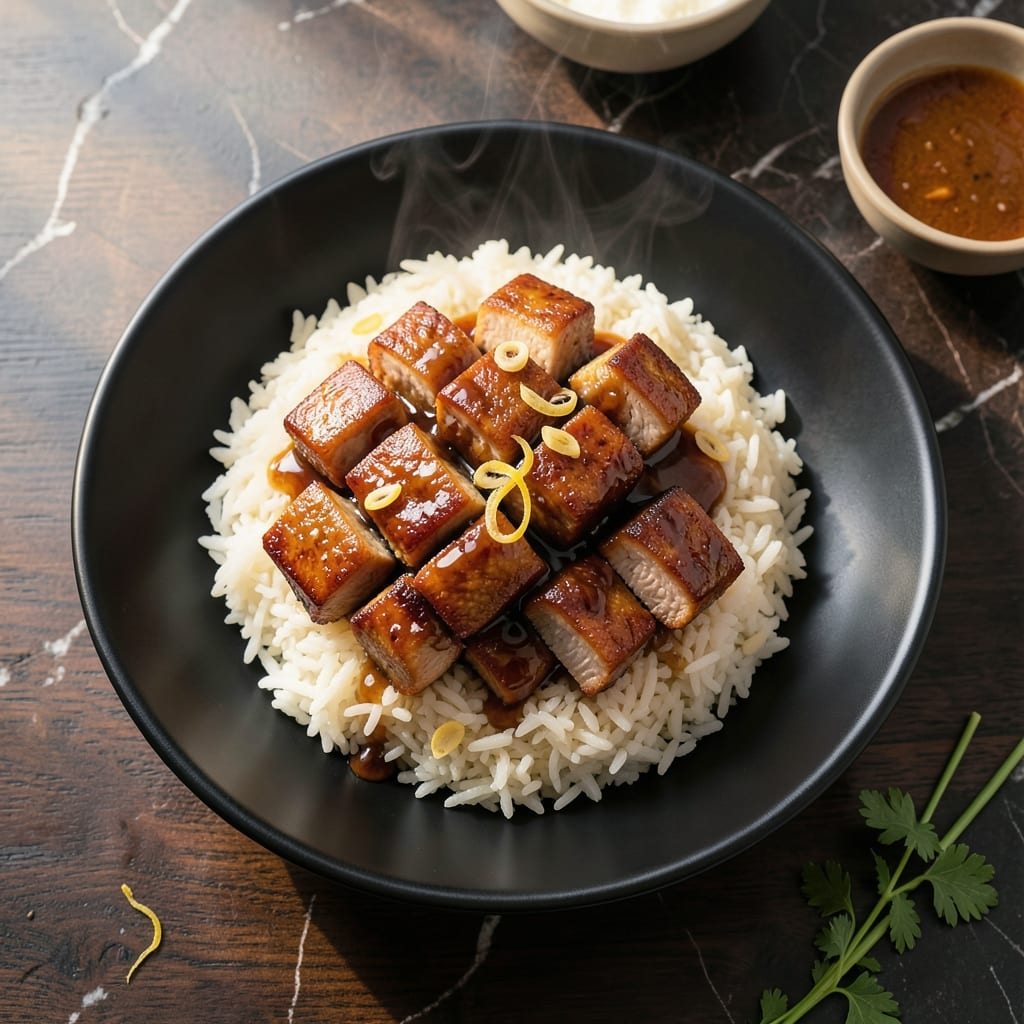
This recipe transforms simple ingredients into a restaurant-quality meal with deep, complex flavors. The pork develops a caramelized crust in the wok, while jasmine rice absorbs every savory note.
The secret lies in marinating the pork with soy sauce, garlic, and a touch of sugar before stir-frying at high heat. Meanwhile, the rice is cooked with a splash of the same marinade for cohesive flavor.
You’ll achieve tender pork pieces with charred edges, nestled against fragrant jasmine grains. Each bite delivers umami richness with a satisfying texture contrast.
Serve this as a complete meal or alongside stir-fried vegetables for a balanced plate. The technique is straightforward but yields impressive results.
Ingredients for Pork and Rice Asian
Restaurant-quality results rely on these carefully selected Asian pantry staples and fresh ingredients for depth.
| Ingredient | Amount | Notes |
|---|---|---|
| Pork Shoulder 🥩 | 1 ½ lb | Cut into 1-inch cubes, boneless |
| Jasmine Rice 🍚 | 2 cups | Rinsed until water runs clear |
| Soy Sauce 🫒 | ½ cup | Low-sodium preferred for marinade |
| Garlic Cloves 🧄 | 6 cloves | Minced finely for maximum flavor |
| Brown Sugar 🍚 | 2 tbsp | Light or dark for caramelization |
| Oyster Sauce 🫒 | 2 tbsp | Substitute with hoisin if unavailable |
| Sesame Oil 🫒 | 1 tbsp | Toasted for aromatic depth |
| Ginger Root 🌿 | 1 whole | Peeled and grated, about 1 tbsp |
| Green Onions 🧅 | 4 whole | Thinly sliced, white and green parts separated |
| Vegetable Oil 🫒 | 3 tbsp | High smoke point for stir-frying |
| Rice Vinegar 🍶 | 1 tbsp | Balances richness with acidity |
| Cornstarch 🌾 | 1 tbsp | For velveting pork texture |
| Water 💧 | 3 cups | For cooking jasmine rice |
| Sesame Seeds 🌿 | 1 tsp | Toasted, for garnish |
| Red Pepper Flakes 🌶️ | ½ tsp | Optional for heat, adjust to taste |
The pork is non-negotiable here—pork shoulder offers the ideal fat-to-meat ratio for tender, charred results. Whole Foods or Costco carry high-quality options with good marbling. For jasmine rice, look for vibrant white grains without broken pieces. The soy sauce should be low-sodium to control seasoning; Kikkoman is a reliable brand for consistent flavor.
No oyster sauce? Hoisin or vegetarian oyster sauce works at a 1:1 ratio. Brown sugar can be swapped for white in a pinch (though it lacks depth). Fresh ginger is ideal, but ground ginger at half the amount will suffice. For the rice vinegar, apple cider vinegar offers a similar tang. If avoiding pork, chicken thighs or firm tofu make excellent one-to-one substitutions.
Marinated pork keeps 24-48 hours in the fridge before cooking. Cooked rice benefits from resting 10 minutes before serving. Leftovers store well for 3-4 days refrigerated or freeze for 3 months. Reheat in a skillet with a splash of water to revive texture.
Why You’ll Love This Recipe
- One Pan Magic: I toss everything in together—the pork shoulder, jasmine rice, and that sticky-sweet soy sauce mix—and let the oven do the work.
- Sweet-Savory Hook: The brown sugar caramelizes with the garlic and soy, giving every bite that deep, umami-rich taste I can’t get enough of.
- Weeknight Hero: Between us, this feeds my family of four with leftovers for lunch the next day.
- Budget Stretcher: Pork shoulder is cheap, rice is even cheaper, and together they make a meal that feels way fancier than the cost.
Step-by-Step Instructions for Pork and Rice Asian Dish
Master the technique for perfectly charred pork and fragrant jasmine rice with professional precision.
Step 1: Velvet the Pork Shoulder for Tenderness
Cut the 1.5 lb Pork Shoulder into 1-inch cubes as specified. In a bowl, combine the pork with 1 tbsp Cornstarch, 0.5 cup Soy Sauce, 2 tbsp Brown Sugar, 2 tbsp Oyster Sauce, 1 tbsp Sesame Oil, and 1 tbsp Rice Vinegar.
Mix thoroughly to coat each piece evenly. I use my hands for this—it ensures every cube is perfectly coated. Let it marinate for 15-20 minutes while you prepare the remaining ingredients. This velveting process guarantees tender, juicy pork that absorbs maximum flavor.
Step 2: Cook the Jasmine Rice to Perfection
Rinse the 2 cups Jasmine Rice under cold water until the water runs clear. This removes excess starch and prevents gummy rice. Combine the rinsed rice with 3 cups Water in a pot with a tight-fitting lid.
Bring to a boil over high heat, then immediately reduce to low heat, cover, and simmer for 15 minutes. Remove from heat and let it steam, covered, for another 10 minutes. The grains should be distinct, fragrant, and slightly sticky—ideal for absorbing the pork’s saucy glaze.
Step 3: Stir-Fry the Pork with Aromatics
Heat 2 tbsp Vegetable Oil in a wok or large skillet over high heat until shimmering. Add the marinated pork in a single layer, working in batches if needed to avoid crowding. Sear undisturbed for 2-3 minutes until the edges develop a deep, caramelized crust.
Add the minced 6 cloves Garlic Cloves and grated 1 whole Ginger Root to the pan. Stir-fry for 1-2 minutes until the aromatics are fragrant and the pork is cooked through. The garlic should be golden but not burnt—burnt garlic turns bitter and ruins the dish.
Step 4: Finish and Combine with Green Onions
Return all pork to the pan and add the remaining 1 tbsp Vegetable Oil. Toss in the white parts of the 4 whole Green Onions and 0.5 tsp Red Pepper Flakes for a subtle heat. Stir-fry for 1 minute to meld the flavors.
Spoon the pork and its glossy sauce over the cooked jasmine rice. Garnish with the green onion tops and 1 tsp Sesame Seeds. The pork should be glossy and deeply flavored, with just enough sauce to coat each grain of rice without making it soggy.
Pro Tips For Making Pork And Rice Asian
- Sear the Pork: High heat first—get a deep brown crust on the pork shoulder before braising, or your dish will taste flat. I learned this the hard way after making pale, bland pork more times than I care to admit.
- Rinse the Rice: Wash the jasmine rice until the water runs clear, otherwise you’ll end up with gummy, sticky grains. My grandmother swore by this, and she was right.
- Don’t Over-Sauce: Use soy sauce sparingly at first—you can always add more later, but you can’t take it out once it’s in. After ruining a batch with too much salt, I finally figured out balance.
- Toast the Garlic: Cook the garlic cloves in oil until just golden before adding the pork—it adds a nutty depth that raw garlic can’t. Sounds weird, but it works every time.
Best Sauces and Condiments for This Recipe
Sweet and Tangy
I love drizzling sriracha mayo over this dish for a creamy kick. Mix 2 tbsp mayo with 1 tsp sriracha for the perfect balance of heat and richness. It pairs beautifully with the caramelized pork. 🌶️
Classic Dipping Sauce
For a traditional touch, whisk 3 tbsp soy sauce, 1 tbsp rice vinegar, and 1 tsp sesame oil. This simple sauce enhances the pork’s umami without overpowering it. I keep it in a small bowl for dipping.
Spicy Garlic Chilli
A chili garlic sauce adds bold flavor. Combine 2 tbsp chili garlic sauce with 1 tsp honey and 1 tbsp lime juice. The sweetness balances the heat, while the lime brightens the dish.
Herbed Yogurt
For a cooling contrast, I mix ½ cup plain yogurt with 1 tbsp chopped mint and 1 tsp grated ginger. This yogurt sauce is refreshing against the rich pork and rice. 💡
Citrus Soy Glaze
Simmer ¼ cup soy sauce, 2 tbsp orange juice, and 1 tbsp brown sugar until thickened. Drizzle this glaze over the pork for a glossy, citrusy finish that complements the dish perfectly.
Nutrition Facts
Frequently Asked Questions
Can I use a different cut of pork?
Yes, pork tenderloin works well for a leaner option. Pork belly adds more fat for extra richness. Avoid very lean cuts like pork loin as they can dry out during stir-frying.
What if I don’t have a wok?
A large skillet with high sides works fine. Use medium-high heat and cook in batches to prevent steaming. A cast iron pan gives excellent searing results too.
How do I prevent the rice from getting mushy?
Rinse the jasmine rice thoroughly and use the exact 1:1.5 rice-to-water ratio. Let it rest 10 minutes covered after cooking. This ensures fluffy, separate grains.
Can I make this ahead of time?
Marinate the pork up to 24 hours in advance. Cooked dish keeps well refrigerated for 3-4 days. Reheat gently in a skillet with a splash of water.

- Jollof Rice Sauce Recipe: West African Tomato and Spice Infusion - September 25, 2026
- Japanese Rice Soup Recipe: Umami-Rich Comfort in a Bowl - September 25, 2026
- Homemade Cream Of Rice Recipe: Silk-Smooth Breakfast in Minutes - September 25, 2026