
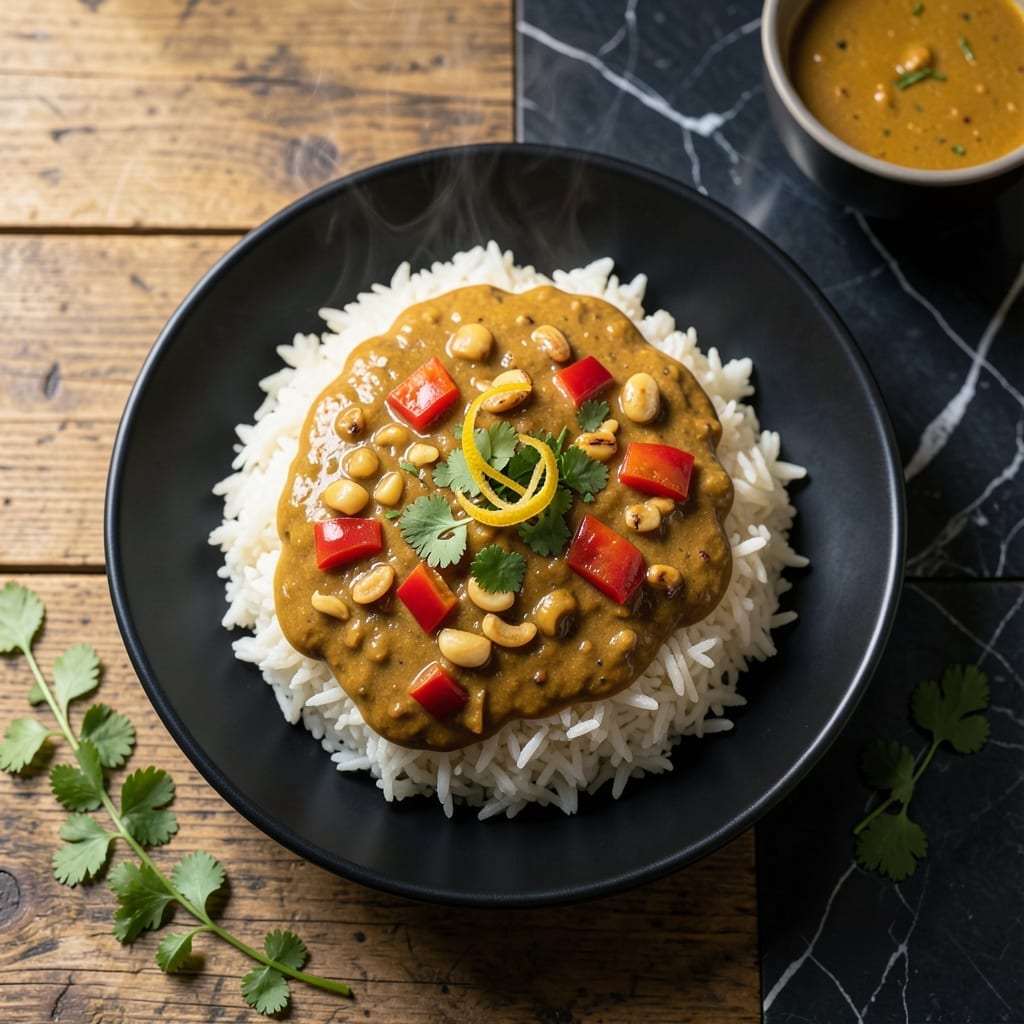
This Thai-style coconut curry rice transforms simple ingredients into a deeply aromatic one-pot meal. The secret lies in toasting the curry paste before adding liquids, which intensifies the flavors significantly.
Light coconut milk creates a creamy base without overpowering the dish, while fresh herbs add brightness. The rice absorbs all the rich, spiced liquid as it cooks, resulting in perfectly tender grains.
Each bite delivers layers of complexity—savory from the curry, sweet from the coconut, and fragrant from the herbs. The dish comes together in about 30 minutes with minimal active preparation.
Serve as a main course or alongside your favorite protein. This method ensures consistent, restaurant-quality results every time.
Ingredients for Coconut Curry Rice
Transform simple pantry staples into this aromatic one-pot Thai-style dish with vibrant vegetables and herbs.
| Ingredient | Amount | Notes |
|---|---|---|
| Jasmine Rice 🍚 | 1 ½ cups | Rinsed until water runs clear |
| Light Coconut Milk 🥥 | 2 cups | Full-fat works but heavier |
| Red Curry Paste 🌶️ | 3 tbsp | Thai-style, check for fish sauce |
| Vegetable Broth 💧 | 1 ½ cups | Low-sodium preferred for control |
| Shallots 🧅 | 2 whole | Finely minced for even cooking |
| Garlic Cloves 🧄 | 4 cloves | Minced to release full flavor |
| Fresh Ginger 🌿 | 1 tbsp | Peeled and grated finely |
| Red Bell Pepper 🌶️ | 1 whole | Diced into small uniform pieces |
| Carrots 🥕 | 2 whole | Peeled and julienned |
| Fresh Cilantro 🌿 | ½ cup | Chopped, stems removed |
| Fresh Thai Basil 🍃 | ¼ cup | Loosely packed leaves |
| Lime 🍈 | 1 whole | Juiced and zested |
| Soy Sauce 🫙 | 2 tbsp | Tamari for gluten-free option |
| Coconut Sugar 🍚 | 1 tsp | Optional for balancing flavors |
| Salt 🧂 | ½ tsp | Sea salt or kosher salt |
The curry paste is non-negotiable for authentic flavor—Maesri or Thai Kitchen are reliable brands available at most Asian markets or well-stocked supermarkets. Always check labels for fish sauce (some brands include it, which isn’t vegan). For the coconut milk, Thai Kitchen or Native Forest offer consistent quality without additives. Jasmine rice is traditional, but basmati works in a pinch (just adjust liquid slightly).
No red curry paste? Green or yellow curry paste can substitute, though the flavor profile changes. For the herbs, regular basil works if Thai basil isn’t available (use one and a half times the amount). The vegetables are flexible—zucchini or snap peas add nice texture. If avoiding gluten, tamari replaces soy sauce perfectly. The ginger can be from a jar (about 1 tbsp) if fresh isn’t available.
Store curry paste in the fridge for up to 1 month after opening, or freeze in ice cube trays for 6 months. Fresh herbs keep 5-7 days wrapped in damp paper towels. Cooked rice holds 4 days refrigerated or freezes beautifully for 3 months.
Why You’ll Love This Recipe
- One Pot Wonder: I just dump everything in, let the jasmine rice soak up that coconut milk and curry paste, and walk away.
- Flavor Bomb: The shallots and red curry paste create this deep, creamy, slightly spicy taste that’s ridiculously good.
- Meal Prep Hero: I make a big batch on Sunday and it reheats perfectly for lunches all week.
- Budget Friendly: A can of coconut milk and a spoonful of curry paste stretch a bag of rice into something special without breaking the bank.
Step-by-Step Instructions for Coconut Curry Rice
Master this technique for perfectly fragrant rice with balanced Thai-inspired flavors every time.
Step 1: Prepare the Aromatics and Vegetables
Finely mince the 2 whole Shallots and 4 cloves Garlic Cloves until almost paste-like. Peel and finely grate the 1 tbsp Fresh Ginger—fresh is essential for vibrant flavor. Dice the 1 whole Red Bell Pepper into small, uniform pieces for even cooking.
Peel and julienne the 2 whole Carrots into thin matchsticks. This shape ensures they soften quickly and absorb the curry flavors. Chop the 0.5 cup Fresh Cilantro, removing any tough stems. Loosely pack the 0.25 cup Fresh Thai Basil leaves, keeping them whole to preserve their delicate structure.
Step 2: Bloom the Curry Paste and Aromatics
In a medium saucepan with a tight-fitting lid, combine the 3 tbsp Red Curry Paste, minced shallots, garlic, and ginger. Toast over medium heat for 2-3 minutes, stirring constantly, until the mixture becomes deeply fragrant and the paste darkens slightly.
This step is critical—it wakes up the spices and builds depth of flavor. If the paste starts to stick, reduce heat slightly. You want to cook it just until the raw edge disappears but before it burns. The aroma should be intense and inviting, filling your kitchen with warm, spicy notes.
Step 3: Add Liquids and Rice
Pour in the 2 cups Light Coconut Milk and 1.5 cups Vegetable Broth, stirring to combine with the curry paste mixture. Add the 1.5 cups Jasmine Rice, 2 tbsp Soy Sauce, 1 tsp Coconut Sugar, and 0.5 tsp Salt. Stir well to distribute the rice evenly in the liquid.
Bring to a gentle boil over medium-high heat, then immediately reduce to low heat. Cover with the lid and simmer for 15 minutes. Resist the urge to lift the lid—steam is what cooks the rice perfectly and prevents a dry, uneven texture.
Step 4: Add Vegetables and Finish Cooking
After 15 minutes, carefully lift the lid and stir in the diced red bell pepper and julienned carrots. Replace the lid and continue cooking for 5-7 minutes until the rice is tender and the liquid is absorbed. The vegetables should be tender-crisp and the rice should have a slight bite.
Turn off the heat and let the rice sit, covered, for 5 minutes. This final rest allows the grains to steam and absorb any remaining moisture, ensuring fluffy, separate grains rather than a sticky mass.
Step 5: Incorporate Fresh Herbs and Serve
Juice and zest the 1 whole Lime, then stir both into the rice along with the chopped cilantro and half of the Thai basil. Reserve the remaining basil for garnish. Gently fold everything together to distribute the bright, citrusy flavors.
Taste and adjust seasoning if needed—add a pinch more salt or a squeeze of lime for balance. Transfer to a serving dish and top with the reserved Thai basil. The rice should be fragrant with layers of coconut, curry, and fresh herbal notes in every bite.
Pro Tips For Making Coconut Curry Rice
- Bloom the paste: Cook the red curry paste in a little oil for 1-2 minutes before adding liquids—this wakes up the flavors and prevents a raw, gritty texture in your finished coconut curry rice.
- Rinse the jasmine: Always rinse your jasmine rice until the water runs clear to remove excess starch, otherwise your curry rice will turn out gummy instead of light and fluffy.
- Use full-fat once: I learned this the hard way—light coconut milk can separate or taste thin, so splurge on full-fat just this once for a richer, creamier curry base.
- Simmer covered: After adding the broth and coconut milk, keep the pot covered and resist the urge to stir—this guarantees even cooking and prevents the rice from turning mushy.
Serving Suggestions for This Recipe
Garnishing for Impact
Fresh herbs make all the difference—I always reserve extra Thai basil and cilantro for a final pop of color. A squeeze of lime juice right before serving brightens every bite. 🌿
Protein Pairings
For a complete meal, serve with grilled tofu marinated in soy sauce and lime. Shrimp works beautifully too—just sauté 12-15 large shrimp in the same curry paste for 2-3 minutes per side before adding to the rice.
Fresh Accompaniments
A simple cucumber salad with rice vinegar and a pinch of coconut sugar adds refreshing contrast. Thinly slice 1 cucumber and toss with 1 tbsp rice vinegar and ½ tsp coconut sugar for balance.
Bread Options
Warm naan bread or crusty baguette is perfect for soaking up the coconut-curry sauce. I prefer whole wheat naan for a nutty flavor that complements the dish. Toast slices for 1-2 minutes in a dry pan for extra crispiness.
Drink Pairings
A crisp Riesling or Sauvignon Blanc cuts through the richness. For beer lovers, a Thai lager like Singha offers a light, refreshing contrast. Non-alcoholic? Try sparkling water with a lime wedge. 🍷
Serving Temperature
This dish is best served hot, straight from the pot. If making ahead, reheat gently with 2-3 tbsp water to restore moisture. Garnish with fresh herbs just before serving to preserve their vibrant flavor and color.
Nutrition Facts
Frequently Asked Questions
What type of rice works best?
Jasmine rice is ideal for its fragrant aroma and slightly sticky texture. Basmati can substitute but may require 1-2 tbsp less liquid. Always rinse until water runs clear to avoid gummy results.
Can I use full-fat coconut milk?
Yes, but the dish will be richer and heavier. Light versions create a balanced texture while still delivering coconut flavor. For best results, stick to canned coconut milk not carton varieties.
Why toast the curry paste first?
This unlocks the spices’ essential oils, creating deeper, more complex flavors. Skipping this step leaves the dish tasting flat. Toast for 2-3 minutes until fragrant but not burnt.
How do I fix undercooked rice?
If grains are still firm, add 2-3 tbsp hot water, cover, and cook 5 more minutes on low. Let rest 5 minutes off heat to finish absorbing moisture.

- Jollof Rice Sauce Recipe: West African Tomato and Spice Infusion - September 25, 2026
- Japanese Rice Soup Recipe: Umami-Rich Comfort in a Bowl - September 25, 2026
- Homemade Cream Of Rice Recipe: Silk-Smooth Breakfast in Minutes - September 25, 2026