
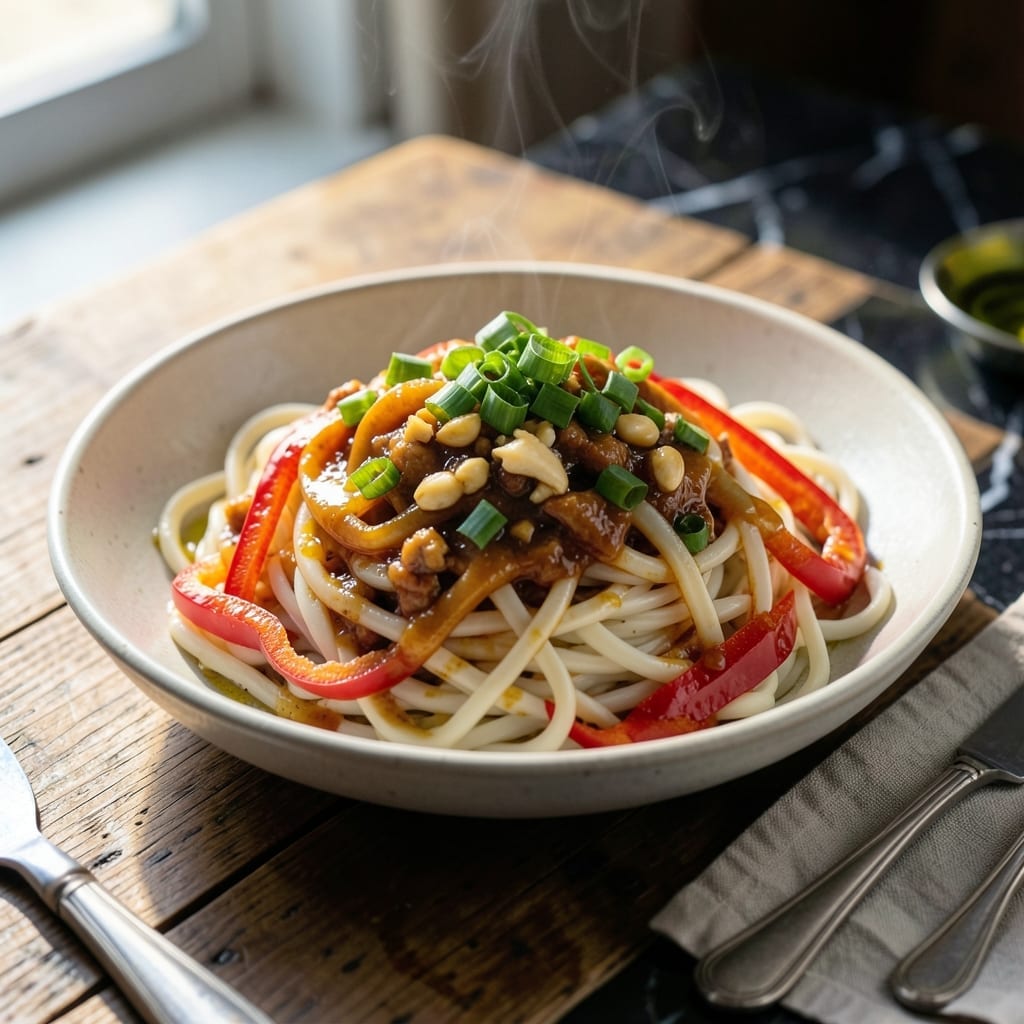
I’ve perfected the art of cooking maifun rice noodles to achieve that ideal chewy texture every time. The key lies in precise soaking and high-heat stir-frying.
This method transforms simple ingredients into a dish with perfect springy noodles and balanced flavors. The result is a satisfying meal that’s quick to prepare and endlessly customizable.
Ingredients for Maifun Rice Noodles
Simple plant-based ingredients create vibrant stir-fried noodles with perfect chewy texture every time.
| Ingredient | Amount | Notes |
|---|---|---|
| Maifun Rice Noodles 🍜 | 8 oz | Dried, thin variety preferred |
| Vegetable Oil 🫒 | 3 tbsp | High smoke point for stir-frying |
| Garlic Cloves 🧄 | 4 cloves | Minced finely for even distribution |
| Fresh Ginger 🌿 | 1 tbsp | Peeled and grated |
| Green Onions 🧅 | 4 whole | Thinly sliced on diagonal |
| Red Bell Pepper 🌶️ | 1 whole | Julienned for texture |
| Carrots 🥕 | 2 whole | Julienned or sliced thin |
| Shiitake Mushrooms 🍄 | 1 cup | Fresh, sliced thinly |
| Soy Sauce 💧 | 3 tbsp | Low-sodium preferred for control |
| Rice Vinegar 🍯 | 1 tbsp | For brightness and balance |
| Sesame Oil 🫒 | 1 tsp | Toasted variety for depth |
| Maple Syrup 🍁 | 1 tbsp | For subtle sweetness |
| Cornstarch 🌾 | 1 tbsp | Mixed with water for slurry |
| Tofu 🧈 | 12 oz | Extra-firm, pressed and cubed |
| Sesame Seeds 🌰 | 1 tbsp | Toasted for garnish |
The rice noodles are critical here. Look for maifun labeled as thin—they deliver that signature chew. Asian markets carry the best selection, but well-stocked Whole Foods or international aisles work too. For tofu, extra-firm from Nasoya or Wildwood holds up best to high heat. Press it well to avoid soggy stir-fry (paper towels, heavy pan, 15 minutes does the trick).
No shiitake mushrooms? Cremini or white button work fine—just slice them thin so they cook fast. Out of maple syrup? Agave nectar at equal amounts substitutes well. For the soy sauce, tamari makes this gluten-free. The cornstarch slurry thickens the sauce—skip it if you prefer a lighter consistency (the noodles will still absorb flavor).
Dried noodles keep indefinitely in a cool pantry. Pressed tofu stays good for 5 days in the fridge, or freeze it for 3 months. Leftovers reheat beautifully in a skillet with a splash of water—actually improves as flavors meld overnight.
Why You’ll Love This Recipe
- No Fuss Cooking: I just soak the noodles while the garlic and ginger sizzle in the pan—dinner’s half done before I finish chopping the green onions.
- Aroma Overload: The smell of garlic and ginger hitting hot oil is reason enough to make this every week. Honestly, it’s the first thing my family notices when they walk in.
- Endless Mix-Ins: I’ve tossed in leftover chicken, tofu, even that half-empty bag of frozen veggies with great results.
- Stretches Far: One pack of maifun feeds my family of four with leftovers for lunch the next day. Between us, it’s cheaper than takeout and twice as satisfying.
Step-by-Step Instructions for Stir-Fried Maifun Rice Noodles
Master the technique for achieving ideal texture and flavor balance in this dish.
Step 1: Prepare the Maifun Rice Noodles
Soak the 8 oz Maifun Rice Noodles in warm water for 8-10 minutes until pliable but still slightly firm. This ensures they maintain their signature chewy texture during stir-frying rather than turning mushy.
Drain the noodles and rinse briefly under cold water to halt the softening process. Toss with 1 tsp Sesame Oil to prevent sticking while you prepare the remaining components. The noodles should appear translucent with a slight white core when ready.
Step 2: Stir-Fry the Aromatics and Vegetables
Heat 2 tbsp Vegetable Oil in a wok or large skillet over high heat until shimmering. Add the 4 cloves Garlic Cloves and 1 tbsp Fresh Ginger, stir-frying for 30 seconds until fragrant but not browned. The garlic should sizzle vigorously without burning.
Add the 1 whole Red Bell Pepper, 2 whole Carrots, and 1 cup Shiitake Mushrooms. Stir-fry for 4-5 minutes until the vegetables begin to soften but retain their vibrant color and slight crispness. The bell pepper should develop glossy edges.
Step 3: Cook the Tofu and Combine All Elements
Increase heat to maximum and add the remaining 1 tbsp Vegetable Oil along with the 12 oz Tofu. Cook undisturbed for 2 minutes to develop a golden crust, then stir-fry for another 3 minutes until the tofu is lightly browned on all sides.
Add the drained noodles to the wok along with the 4 whole Green Onions. Toss everything together for 2 minutes to integrate the flavors. The noodles should begin to absorb the aromatic oils and take on a glossy sheen.
Step 4: Create and Incorporate the Sauce
In a small bowl, whisk together the 3 tbsp Soy Sauce, 1 tbsp Rice Vinegar, 1 tbsp Maple Syrup, and 1 tbsp Cornstarch mixed with 2 tbsp water to form a slurry. Pour this mixture over the noodle-vegetable combination.
Stir continuously for 1-2 minutes until the sauce thickens and evenly coats every strand of noodle. The sauce should transform from a thin liquid to a glossy, clinging consistency that pools slightly at the bottom of the wok.
Step 5: Finish and Serve
Remove from heat and drizzle with the remaining 1 tsp Sesame Oil. Toss once more to distribute the final layer of flavor. The noodles should appear uniformly coated with a balanced sheen, not greasy or dry.
Transfer to serving plates and garnish with the 1 tbsp Sesame Seeds. Serve immediately while the noodles retain their perfect chewy texture and the vegetables maintain their slight crispness. Each bite should deliver a harmonious blend of savory, slightly sweet, and umami notes.
Pro Tips For Making Maifun Rice Noodles
- Soak First: Cover maifun noodles in warm water for 8-10 minutes—just until pliable, not soft. I learned this the hard way after ending up with mushy noodles more than once.
- Slice Thin: Cut your garlic, ginger, and green onions into paper-thin slices. Sounds tedious, but it actually changes the outcome by letting the flavors distribute evenly through the dish.
- High Heat Only: Crank the heat to medium-high when stir-frying. After burning three batches, I finally figured out that low heat just steams the noodles instead of giving them that slight char.
- Prep Everything: Have all your ingredients measured, chopped, and within reach before you start cooking. Maifun noodles cook fast, and you won’t have time to mince garlic while they’re in the pan.
Pro Cooking Tips for Great maifun rice noodles
Noodle Soaking Precision
Soak maifun in warm—not hot—water for exactly 8-10 minutes. Any longer and they’ll turn mushy during stir-frying. I use a digital timer to avoid over-soaking. The noodles should be pliable but retain a slight firmness when bent. 🌡️
High-Heat Stir-Frying
Your wok or skillet must be screaming hot before adding oil. I test by flicking water droplets—they should dance and evaporate instantly. Use high smoke point oil like avocado or peanut oil if you’re cooking at extreme temperatures.
Tofu Crust Technique
Press tofu for at least 15 minutes with a heavy pan to remove excess water. For extra crispiness, dust the cubes with 1 tsp cornstarch before adding to the wok. Let them sear undisturbed for 2 minutes to develop that golden crust.
Sauce Thickening Timing
Add the cornstarch slurry only after all ingredients are in the wok. Stir continuously for 1-2 minutes until the sauce transforms from thin to glossy. If it thickens too quickly, add 1-2 tbsp water to adjust consistency.
Final Flavor Boost
Always finish with a drizzle of toasted sesame oil off heat. This preserves its delicate aroma. Toss thoroughly to coat every noodle strand evenly. The difference this final touch makes is incredible.
Serving Immediate
These noodles wait for no one—serve immediately after cooking. The texture changes rapidly as they cool. I keep plates warmed in a 200°F oven to maintain that perfect chewiness. ✨
Nutrition Facts
Frequently Asked Questions
How long should I soak the noodles?
Soak them in warm water for exactly 8-10 minutes. They should be pliable but still slightly firm to maintain that perfect chewy texture during cooking.
Can I use other noodles instead?
Thin rice noodles work best, but you can substitute with vermicelli. Avoid thicker varieties as they won’t achieve the same delicate texture. The cooking time may need adjustment.
Why did my noodles turn mushy?
Over-soaking is the most common culprit. Stick to 8-10 minutes max in warm water. Also, stir-fry on high heat quickly to prevent them from absorbing too much liquid.
How do I make the tofu crispier?
Press it for 15 minutes first, then dust with 1 tsp cornstarch before cooking. Let it sear undisturbed for 2 minutes to develop a golden crust.

- Jollof Rice Sauce Recipe: West African Tomato and Spice Infusion - September 25, 2026
- Japanese Rice Soup Recipe: Umami-Rich Comfort in a Bowl - September 25, 2026
- Homemade Cream Of Rice Recipe: Silk-Smooth Breakfast in Minutes - September 25, 2026