
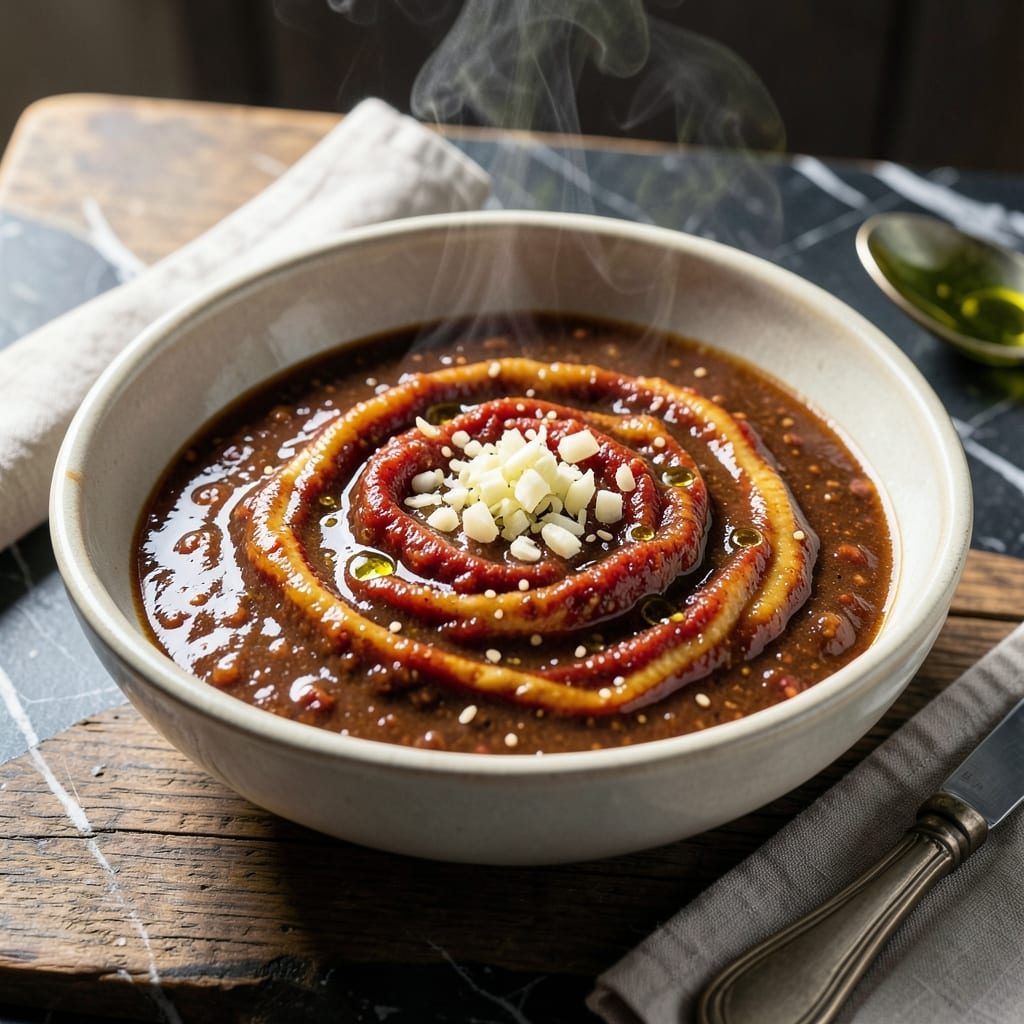
This sauce transforms plain rice cakes into the iconic Korean street food experience. A perfect balance of sweet, spicy, and umami creates that signature sticky glaze that clings beautifully to every piece.
With just a few pantry staples and 10 minutes of simmering, you’ll have a versatile condiment that’s equally delicious on vegetables or proteins. The depth comes from gochujang, while sugar and soy sauce round out the complex flavors.
Ingredients for Rice Cake Sauce
Nine pantry staples create that signature sweet, spicy, umami-packed Korean glaze.
| Ingredient | Amount | Notes |
|---|---|---|
| Gochujang 🌶️ | ½ cup | Korean red pepper paste essential |
| Sugar 🍚 | ¼ cup | White or brown both work |
| Soy Sauce 🫒 | 3 tbsp | Low-sodium if preferred |
| Rice Vinegar 🍋 | 1 tbsp | Adds tangy brightness |
| Minced Garlic 🧄 | 3 cloves | Freshly minced preferred |
| Gochugaru 🌶️ | 2 tsp | Korean red pepper flakes |
| Sesame Oil 🫒 | 1 tsp | Toasted for aromatic depth |
| Water 💧 | ½ cup | To thin the sauce |
| Corn Syrup 🍯 | 2 tbsp | Optional for extra sheen |
Gochujang is non-negotiable here—look for it in the Asian aisle at Whole Foods or H Mart (the Sempio brand is my go-to). Gochugaru adds a different layer of heat than gochujang, so don’t skip it. Korean markets are your best bet for both, but larger supermarkets often carry them now. The soy sauce should be good quality—Kikkoman or Pearl River Bridge are solid choices.
No gochujang? Sriracha plus a tablespoon of miso gets you close but won’t be the same. Swap white sugar for honey or maple syrup if you prefer. Apple cider vinegar works in place of rice vinegar. If you’re missing gochugaru, crushed red pepper flakes at half the amount will add heat, though the flavor profile shifts slightly. Corn syrup can be replaced with agave or more sugar.
This keeps beautifully in the fridge for up to 2 weeks. The flavors meld and deepen over time. Store in an airtight container, and give it a good stir before using since the spices tend to settle. Freeze for up to 3 months if you want to make a big batch.
Why You’ll Love This Recipe
- 5-Minute Mix: I just stir gochujang, sugar, soy sauce, rice vinegar, and garlic in a bowl—no cooking, no fuss.
- Sweet-Spicy Balance: The sugar mellows the gochujang’s heat while garlic adds that punchy kick I crave.
- Pairs with Everything: Honestly, I drizzle this on rice cakes, noodles, or even grilled veggies and it never disappoints.
- Budget Stretcher: One batch costs pennies and lasts a week in my fridge, so I always have flavor on hand.
Step-by-Step Instructions for Sweet Spicy Rice Cake Glaze
This method delivers the perfect balance of heat, sweetness, and umami for your tteokbokki.
Step 1: Bloom the Aromatics in Oil
Heat a medium saucepan over medium-low heat and add the 1 tsp Sesame Oil. When it shimmers, add all 3 cloves Minced Garlic and stir constantly for 30-45 seconds until just fragrant but not browned.
This quick bloom step releases the garlic’s essential oils, creating a deep, aromatic base for your sauce. Watch carefully—garlic burns easily and will turn bitter if it darkens. The oil should be just warm enough to carry the garlic’s scent without smoking.
Step 2: Build the Flavor Foundation
Add the 0.5 cup Gochujang, 0.25 cup Sugar, 3 tbsp Soy Sauce, 1 tbsp Rice Vinegar, and 2 tsp Gochugaru to the pan. Stir well to combine all ingredients with the garlic and sesame oil.
The mixture will look thick and paste-like at first. Keep stirring as the heat begins to activate the gochujang’s natural pungency. You’ll notice the color deepen slightly as the paste starts to cook. This is where the magic begins to happen.
Step 3: Thin and Smooth the Sauce
Pour in the 0.5 cup Water and 2 tbsp Corn Syrup while stirring continuously. The water will immediately start to loosen the thick paste. Switch to a whisk and work out any lumps until the sauce becomes completely smooth.
Increase heat to medium and bring the mixture to a gentle simmer. The sauce should bubble lightly around the edges. As it heats, the flavors will meld together, and the sauce will take on a glossy sheen. The corn syrup adds that signature Korean glaze finish.
Step 4: Simmer to Perfect Consistency
Reduce heat to medium-low and let the sauce simmer for 8-10 minutes, stirring occasionally. You’re looking for it to thicken enough to coat the back of a spoon but still be pourable.
The sauce should reduce by about 15-20% and develop a deeper red color. Taste and adjust seasoning if needed, though the balance should be spot-on with these measurements. The final consistency should cling beautifully to rice cakes without being too thick or watery.
Remove from heat and let cool slightly before using. The sauce will continue to thicken as it cools, reaching the perfect glaze-like consistency for tossing with your rice cakes.
Pro Tips For Making Rice Cake Sauce
- Bloom the Garlic: Cook the minced garlic in a little oil for 30 seconds before adding other ingredients—I learned this the hard way after tasting raw garlic bits in my first few batches.
- Balance the Sweet: Start with half the sugar, taste, then add more—gochujang’s heat varies by brand, and you can’t take sweetness out once it’s in.
- Skip the Boil: Simmer the sauce gently instead of boiling it hard, or the soy sauce will reduce too fast and turn bitter.
- Rest the Sauce: Let it sit 10 minutes off heat before using—sounds weird, but the flavors meld better, especially the rice vinegar’s tang.
Storing and Reheating This rice cake sauce
Fridge Storage
Let your sauce cool completely before transferring to an airtight container. I use glass jars for easy visibility. Store in the fridge for up to 2 weeks—the flavors deepen beautifully over time. Always give it a good stir before using as the spices settle at the bottom. ❄️
Freezer Storage
For longer storage, freeze in ice cube trays first, then transfer cubes to a zip-top bag. This lets you thaw only what you need. The sauce keeps well for up to 3 months without losing its vibrant flavor or glossy texture.
Thawing Methods
Overnight in the fridge is best for even thawing. For quick use, place the sealed container in a bowl of cold water and change the water every 30 minutes. Never thaw at room temperature to prevent bacterial growth.
Reheating on Stovetop
Gently warm over low heat in a small saucepan, stirring frequently. Add 1-2 tsp water if it seems too thick. The sauce should return to its glossy, pourable consistency within 3-5 minutes. 🔥
Microwave Reheating
Use 15-second intervals at 50% power, stirring between each, until just warm. This prevents hot spots and maintains the sauce’s smooth texture. A small microwave-safe bowl works best.
Room Temperature Use
If using immediately after making, let it cool to room temperature before tossing with rice cakes. The sauce clings better when not piping hot, and you avoid cooking the rice cakes further.
Nutrition Facts
Frequently Asked Questions
Can I make this sauce less spicy?
Yes! Reduce the gochugaru to 1 tsp or omit it entirely. You can also substitute 1 tbsp of mild paprika for color without heat. The gochujang provides most of the spice, so start with 1/4 cup and adjust to taste.
What can I use instead of gochujang?
Mix 2 tbsp sriracha with 1 tbsp miso paste and 1 tbsp tomato paste for a similar depth. While not identical, this blend captures the sweet-savory balance. For best results, add a pinch of sugar to round out the flavors.
How do I fix sauce that’s too thick?
Thin it with 1-2 tbsp hot water at a time, stirring well after each addition. For extra shine, use 1 tbsp corn syrup mixed with water. Simmer for 2-3 minutes to blend fully.
Can this sauce be used for other dishes?
It’s delicious on grilled meats, tofu, or stir-fried vegetables. Try it as a glaze for roasted chicken or a dip for spring rolls. The versatility makes it a pantry staple.

- Jollof Rice Sauce Recipe: West African Tomato and Spice Infusion - September 25, 2026
- Japanese Rice Soup Recipe: Umami-Rich Comfort in a Bowl - September 25, 2026
- Homemade Cream Of Rice Recipe: Silk-Smooth Breakfast in Minutes - September 25, 2026