
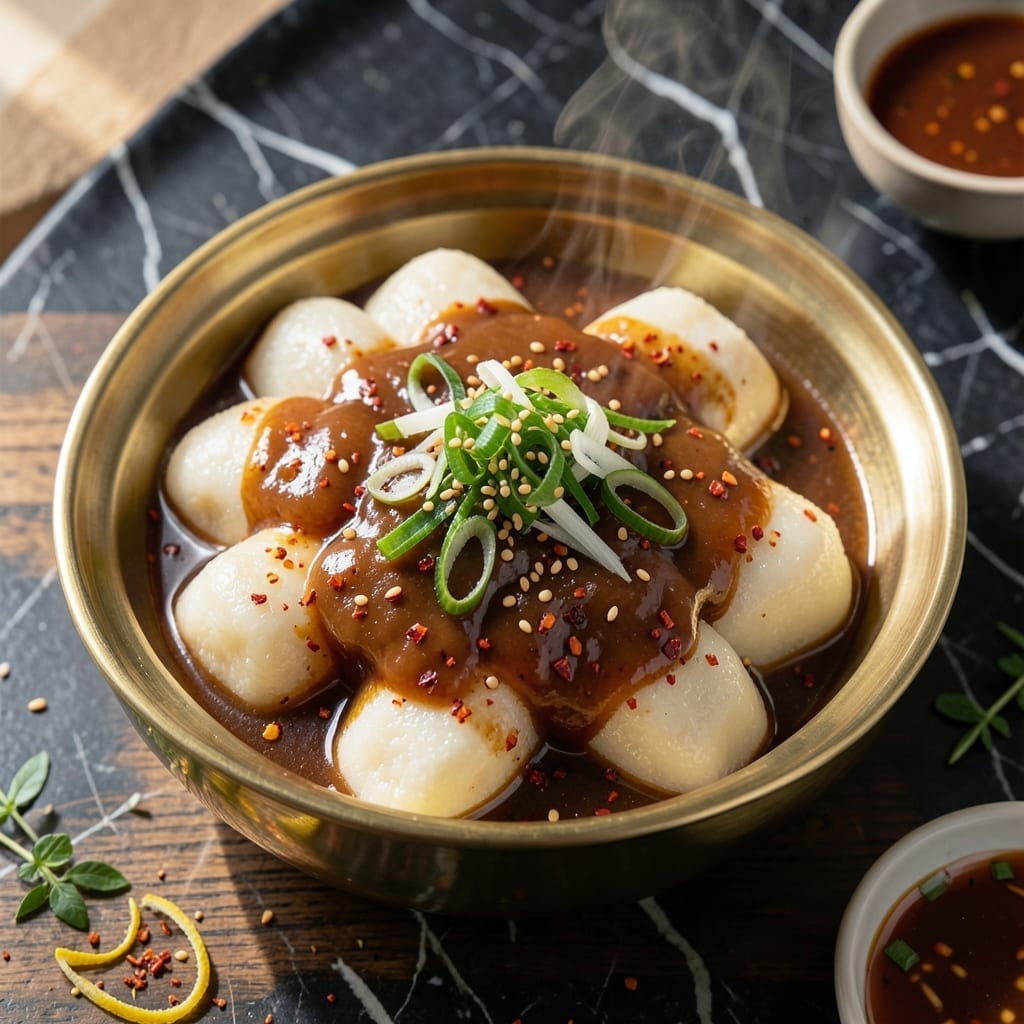
This traditional Korean dish transforms simple rice flour into chewy, pillowy cakes that are impossible to resist. The texture alone makes it worth trying.
The magic happens through steaming the batter, which creates that signature soft yet slightly elastic consistency. A sweet and spicy glaze adds the perfect finishing touch.
What you’ll end up with are delicate rice cakes that are tender on the inside with a lightly crisp exterior from the glaze. The balance of sweetness and heat is what makes this dish so addictive.
Serve warm for the best experience. This recipe stays true to its roots while being simple to make at home.
Ingredients for Korean Sticky Rice Cake
Simple ingredients create those chewy, pillowy rice cakes with irresistible texture and flavor balance.
| Ingredient | Amount | Notes |
|---|---|---|
| Glutinous Rice Flour 🌾 | 2 cups | Also called sweet rice flour |
| Water 💧 | 1 ½ cups | Warm, for batter consistency |
| Sugar 🍚 | ¼ cup | Granulated, for sweetness |
| Salt 🧂 | ½ tsp | Fine sea salt preferred |
| Soy Sauce 🫒 | 2 tbsp | Low-sodium if preferred |
| Gochujang 🌶️ | 2 tbsp | Korean red pepper paste |
| Honey 🍯 | 3 tbsp | For glaze sweetness |
| Rice Vinegar 🍋 | 1 tbsp | Adds tang to glaze |
| Garlic Cloves 🧄 | 3 cloves | Minced for glaze |
| Sesame Oil 🫒 | 1 tsp | Toasted, for aroma |
| Sesame Seeds 🌰 | 2 tsp | Toasted, for garnish |
| Green Onions 🧅 | 3 whole | Thinly sliced for garnish |
The rice flour is critical here—look for glutinous or sweet rice flour at Asian markets or the international aisle of Whole Foods. Brands like Shiratamako or Mochiko are ideal. Don’t confuse it with regular rice flour, as the texture won’t be the same. The gochujang, a fermented chili paste, should be vibrant red and thick—avoid any with added sugar or preservatives.
No gochujang? Sriracha plus a pinch of miso paste can work in a pinch, though the flavor profile won’t be identical. For a milder version, reduce the amount by half. Honey can be swapped with maple syrup or agave at a 1:1 ratio. If you don’t have rice vinegar, apple cider vinegar is a fine substitute. The sesame oil adds depth, but skip it if you’re allergic.
Store rice flour in an airtight container in a cool, dark place for up to 6 months. The glaze can be made ahead and stored in the fridge for 5 days. Once steamed, the rice cakes keep for 2-3 days in the fridge, but they’re best enjoyed fresh and warm.
Why You’ll Love This Recipe
- Five Ingredients: I love that I only need glutinous rice flour, water, sugar, salt, and soy sauce—no last-minute grocery runs.
- Sweet-Savory Balance: The sugar and soy sauce create this addictive contrast that keeps me sneaking bites.
- Meal Prep Hero: I make a big batch on Sunday and reheat portions all week for quick snacks.
- Budget Friendly: Honestly, a pound of rice flour costs pennies and makes enough to feed my whole family twice.
Step-by-Step Instructions for Korean Sticky Rice Cake
Master the technique for perfect chewy texture and glossy glaze with these precise steps.
Step 1: Prepare the Rice Cake Batter
In a large bowl, whisk together the 2 cups Glutinous Rice Flour with 0.25 cup Sugar and 0.5 tsp Salt until fully combined. I always sift the glutinous rice flour first to prevent lumps in the batter.
Gradually pour in the 1.5 cups Water while whisking continuously. The batter should be smooth and slightly viscous, similar to pancake batter. Let it rest for 10 minutes to allow the flour to fully hydrate.
Step 2: Steam the Rice Cake
Line a 9-inch round cake pan or steamer tray with parchment paper. Pour the batter in, spreading it evenly. The layer should be about ½-inch thick—this ensures even cooking and the right chewy texture.
Place the pan in a steamer over boiling water. Cover tightly with a lid and steam for 20-25 minutes until the center is firm and a toothpick inserted comes out clean. Avoid lifting the lid during steaming to prevent condensation from dripping onto the cake.
Step 3: Make the Sweet and Spicy Glaze
While the rice cake steams, combine 2 tbsp Soy Sauce, 2 tbsp Gochujang, 3 tbsp Honey, 1 tbsp Rice Vinegar, and minced 3 cloves Garlic Cloves in a small saucepan. Cook over medium heat for 3-4 minutes, stirring constantly, until the mixture thickens slightly and becomes glossy.
Remove from heat and stir in 1 tsp Sesame Oil. The glaze should coat the back of a spoon. If it’s too thick, add a teaspoon of water to loosen it.
Step 4: Glaze and Finish the Rice Cake
Once the rice cake is steamed, let it cool for 5 minutes in the pan. This makes it easier to handle. Carefully invert it onto a cutting board and cut into 1-inch squares or diamonds using a sharp knife (a plastic knife works well to prevent sticking).
Brush the warm glaze generously over all sides of the rice cake pieces. The glaze will soak in slightly, creating that signature sticky, sweet-spicy coating.
Step 5: Garnish and Serve
Arrange the glazed rice cakes on a serving platter. Sprinkle with 2 tsp Sesame Seeds and thinly sliced 3 whole Green Onions for a fresh contrast. Serve warm or at room temperature.
The rice cakes should be tender and chewy with a glossy, slightly sticky exterior from the glaze. For best texture, consume within 2 hours of preparation.
Pro Tips For Making Korean Sticky Rice Cake
- Steam Thoroughly: I learned this the hard way—under-steamed rice cakes stay gummy inside. Give them a full 20-25 minutes in the steamer, checking with a toothpick for that clean pull-out.
- Sift the Flour: Glutinous rice flour clumps like crazy if you don’t. Sift it twice before mixing with water—this keeps your cakes smooth, not lumpy.
- Skip Cold Water: After burning three batches, I finally figured out cold water makes the batter seize up. Use warm water, about 100°F, for a silky, workable consistency.
- Rest Before Cutting: Sounds weird, but it works: Let the steamed cake cool for 10 minutes before slicing—this keeps the pieces from sticking to the knife and falling apart.
Creative Variations of korean sticky rice cake
Savory Soy-Glazed Version
Skip the Gochujang and increase Soy Sauce to 3 tbsp for a milder, umami-rich glaze. Add 1 tbsp grated ginger and 1 tsp toasted sesame seeds to the mixture. This version highlights the natural sweetness of the rice cakes without spice.
Spicy Sriracha Twist
Replace Gochujang with 2 tbsp Sriracha and add 1 tsp miso paste for depth. The result is a fiery, tangy glaze that packs a punch. I love this variation when I want extra heat without the fermented complexity of gochujang. 🔥
Nutty Crunch Addition
After glazing, roll the rice cake pieces in crushed peanuts or almonds for added texture. Toast ¼ cup nuts in a dry pan over medium heat for 2-3 minutes until fragrant. Press gently so the nuts adhere to the sticky surface.
Coconut Milk Infusion
For a tropical twist, replace 1 cup Water with coconut milk in the batter. This creates a subtly sweet, rich base that pairs beautifully with the spicy glaze. The coconut flavor is mild but adds a lovely aromatic note.
Fruit-Infused Glaze
Simmer ½ cup diced mango or pineapple with the glaze ingredients until soft. Blend until smooth, then strain for a silky, fruit-forward topping. This variation works wonderfully with the chewy texture of the rice cakes. 💛
Pan-Fried Crispy Version
After steaming and glazing, heat 1 tbsp Sesame Oil in a pan over medium-high heat. Pan-fry the rice cakes for 1-2 minutes per side until golden and crispy. This adds a delightful crunch to the otherwise soft texture.
Nutrition Facts
Frequently Asked Questions
What’s the best flour for chewy texture?
Use glutinous rice flour (also called sweet rice flour). Regular rice flour won’t give you the same elastic, chewy result.
Can I make this without a steamer?
A bamboo or metal steamer works best, but you can use a colander over a pot of boiling water. Cover tightly with foil to trap steam for 20-25 minutes.
How do I adjust the spice level?
Reduce gochujang by half for mild heat, or skip it entirely for a savory version. For extra spice, add 1 tsp sriracha to the glaze.
Why is my rice cake dense instead of chewy?
Overmixing the batter or using the wrong flour can cause this. Whisk just until smooth, and always use glutinous rice flour for the right texture.

- Jollof Rice Sauce Recipe: West African Tomato and Spice Infusion - September 25, 2026
- Japanese Rice Soup Recipe: Umami-Rich Comfort in a Bowl - September 25, 2026
- Homemade Cream Of Rice Recipe: Silk-Smooth Breakfast in Minutes - September 25, 2026