
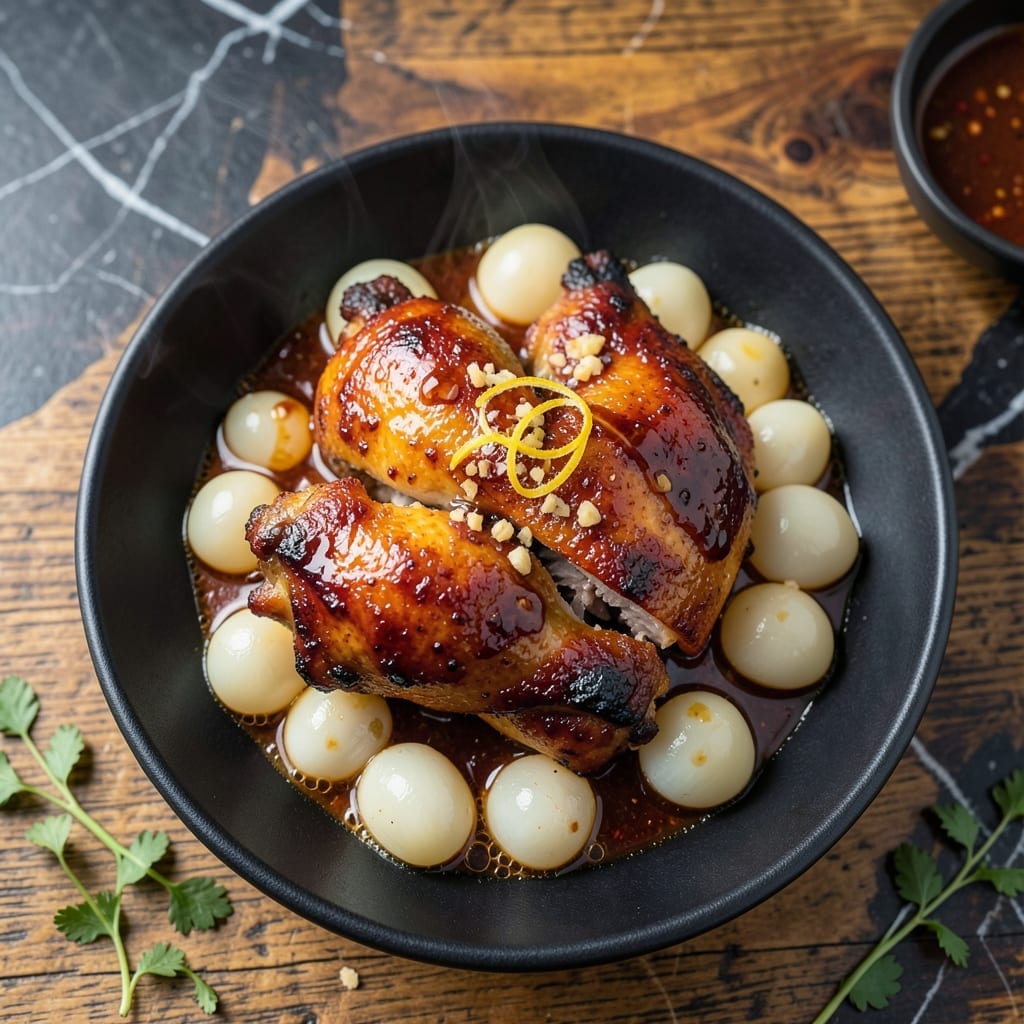
This Korean-inspired dish delivers a perfect balance of sweet and tangy flavors with a crispy finish. The makgeolli marinade tenderizes the chicken while adding depth you won’t find in typical recipes.
The secret lies in the fermentation of makgeolli, which breaks down proteins for fall-off-the-bone tenderness. A quick fry or bake locks in moisture while creating that signature crisp texture.
What emerges is golden, crispy chicken with a sticky, caramelized glaze that’s both savory and slightly effervescent. The aroma alone will draw everyone to the table.
Serve with steamed rice and pickled vegetables for a complete meal. This technique works with thighs or wings for equally impressive results.
Ingredients for Makgeolli Chicken
Korean rice wine, bold spices, and crispy chicken come together for this standout dish.
| Ingredient | Amount | Notes |
|---|---|---|
| Chicken Thighs 🍗 | 2 lb | Boneless, skin-on preferred |
| Makgeolli 🍶 | 1 ½ cups | Korean rice wine, unfiltered |
| Soy Sauce 🫙 | ¼ cup | Low-sodium preferred |
| Gochujang 🌶️ | 2 tbsp | Korean red pepper paste |
| Honey 🍯 | 3 tbsp | For caramelized glaze |
| Rice Vinegar 🍚 | 2 tbsp | For tangy balance |
| Garlic Cloves 🧄 | 6 cloves | Minced for marinade |
| Fresh Ginger 🌿 | 1 tbsp | Grated, peeled |
| Sesame Oil 🫒 | 1 tbsp | Toasted for aroma |
| Cornstarch 🌾 | ½ cup | For crispy coating |
| Green Onions 🧅 | 4 whole | Thinly sliced for garnish |
| Sesame Seeds 🌰 | 1 tbsp | Toasted for topping |
| Vegetable Oil 🫒 | 2 cups | For deep frying |
| Salt 🧂 | 1 tsp | Kosher or sea salt |
| Black Pepper 🌶️ | ½ tsp | Freshly ground |
Makgeolli is non-negotiable here—it’s the fermentation that tenderizes the chicken. Look for unfiltered, milky versions at Korean markets like H Mart or Assi Plaza. The gochujang should be vibrant red (not dark brown) for the right heat level. For the chicken, skin-on thighs deliver the best crisp-to-juice ratio, but wings work too if you prefer smaller pieces.
No makgeolli? Dry white wine plus a splash of rice vinegar gets you partway there. Out of gochujang? Sriracha mixed with miso paste (2:1 ratio) in a pinch. The honey can be swapped for agave or maple syrup—just avoid granulated sugar as it won’t dissolve properly in the marinade. For gluten-free, use tamari instead of soy sauce.
Marinate the chicken for at least 4 hours (overnight is ideal). The cornstarch coating keeps it crispy for 2 days in the fridge—reheat in the oven to revive. Freeze cooked chicken for up to 3 months, but texture changes slightly after thawing.
Why You’ll Love This Recipe
- One Pan Magic: I toss everything in a single bowl, let it marinate, then bake—no fuss, no messy countertops.
- Sweet-Spicy Perfection: The makgeolli and honey balance the gochujang’s heat, creating this sticky, crave-worthy glaze on the chicken.
- Weeknight MVP: I’ve served this for casual dinners and potlucks, and it’s always the first to disappear.
- Budget Stretcher: Chicken thighs stay juicy and affordable, and a little makgeolli goes a long way for big flavor.
Step-by-Step Instructions for Korean-Inspired Sweet and Tangy Chicken
This method delivers crispy, glossy chicken with complex sweet-spicy depth in each bite.
Step 1: Marinate the Chicken Thighs
In a large bowl, whisk together the 1.5 cups Makgeolli, 0.25 cup Soy Sauce, 2 tbsp Gochujang, 3 tbsp Honey, 2 tbsp Rice Vinegar, 6 cloves Garlic Cloves, and 1 tbsp Fresh Ginger until smooth. The honey will be thick—press it against the bowl with the whisk to incorporate fully.
Add the 2 lb Chicken Thighs and turn to coat evenly in the marinade. Cover and refrigerate for at least 1 hour, or ideally overnight. The Makgeolli tenderizes the meat while the gochujang builds layers of heat and umami. You’ll notice the chicken plumps slightly as it absorbs the marinade.
Step 2: Prepare the Coating and Heat the Oil
After marinating, remove the chicken thighs from the liquid (reserve the marinade) and pat them dry with paper towels. This step is crucial—excess moisture prevents the coating from adhering. Season both sides with 1 tsp Salt and 0.5 tsp Black Pepper.
Place the 0.5 cup Cornstarch in a shallow dish. Dredge each piece of chicken through the cornstarch, pressing firmly to create an even, thick layer. Meanwhile, heat the 2 cups Vegetable Oil in a deep, heavy pot over medium-high heat to 350°F. Use a thermometer for accuracy—oil that’s too cool will make the chicken greasy.
Step 3: Fry to Golden Perfection
Carefully lower the coated chicken thighs into the hot oil, working in batches to avoid crowding the pot. Fry for 6-7 minutes per side until the coating turns a deep golden brown and the internal temperature reaches 165°F. The cornstarch will create a shatteringly crisp shell.
As the chicken cooks, the reserved marinade will thicken slightly from the cornstarch residue. Keep an eye on the oil temperature—it may drop when you add the chicken, so adjust the heat to maintain 325-350°F. Drain the fried chicken on a wire rack set over a baking sheet to maintain crispness.
Step 4: Glaze and Garnish for Serving
In a small saucepan, gently heat the reserved marinade over medium heat for 5-7 minutes, stirring frequently, until it reduces to a glossy glaze. Stir in the 1 tbsp Sesame Oil for added aroma. Brush this glaze generously over the fried chicken, coating each piece thoroughly.
Slice the 4 whole Green Onions thinly and sprinkle them, along with the 1 tbsp Sesame Seeds, over the glazed chicken. The green onions add a fresh crunch, while the sesame seeds provide a nutty finish. Serve immediately while the coating is still crisp and the glaze is sticky and fragrant.
Pro Tips For Making Makgeolli Chicken
- Score the Thighs: Cut 2-3 shallow slashes into each chicken thigh before marinating—this lets the makgeolli and gochujang penetrate deeper, and I learned this the hard way after my first few batches tasted bland on the inside.
- Reduce the Makgeolli: Simmer the makgeolli for 3-4 minutes first to cook off the raw alcohol taste; after burning one batch, I finally figured out why my sauce always had that harsh bite.
- Skip the Skin Trimming: Leave the skin on the thighs—it renders down during cooking, adding richness and helping the honey-glazed sauce cling better. I was skeptical until I tried it.
- Rest Before Serving: Give the chicken a solid 5-10 minutes under foil after cooking—yes, even if you’re impatient like me—so the juices redistribute and don’t all spill out when you cut into it.
Perfect Pairings for This Recipe
Korean Classics
I love serving this with steamed white rice to soak up the sticky glaze. The neutral base lets the sweet-spicy flavors shine. For texture contrast, add kimchi on the side—its tangy crunch complements the crispy chicken perfectly. 🥗
Fresh Veggies
Quick-pickled cucumbers cut through the richness beautifully. Slice 1 English cucumber thin and toss with ¼ cup rice vinegar, 1 tsp sugar, and a pinch of salt. Let sit for 30 minutes before serving.
Beverage Pairings
A cold Korean lager like Hite or OB Beer balances the heat with crisp refreshment. For non-alcoholic, try sikhye (sweet rice drink) or barley tea—both cleanse your palate between bites. 🍺
Additional Sides
Korean potato salad with its creamy-sweet profile works surprisingly well. Or try spinach banchan (blanched spinach with sesame oil) for a lighter option. Both are easy to find at Korean markets.
Dipping Sauce
Mix 2 tbsp soy sauce, 1 tbsp rice vinegar, 1 tsp honey, and ½ tsp sesame oil for a quick dipping sauce. The acidity brightens each bite while enhancing the makgeolli’s depth. 💫
Nutrition Facts
Frequently Asked Questions
What can I substitute for makgeolli?
Use dry white wine plus 1 tbsp rice vinegar for similar acidity. In a pinch, sake works too, though it’s milder. Avoid cooking wine—it’s too salty.
How do I prevent the coating from falling off?
Pat the chicken very dry before dredging in cornstarch. Press the starch firmly into the meat. Also, maintain 350°F oil temp to seal it quickly.
Can I bake instead of frying?
Yes! Bake at 400°F for 25-30 minutes, flipping halfway. For extra crispiness, broil for 2 minutes at the end.
Why is my glaze too thin?
Simmer the reserved marinade longer—it needs 7-10 minutes to reduce properly. Add 1 tsp cornstarch mixed with water if it’s still runny.

- Jollof Rice Sauce Recipe: West African Tomato and Spice Infusion - September 25, 2026
- Japanese Rice Soup Recipe: Umami-Rich Comfort in a Bowl - September 25, 2026
- Homemade Cream Of Rice Recipe: Silk-Smooth Breakfast in Minutes - September 25, 2026