
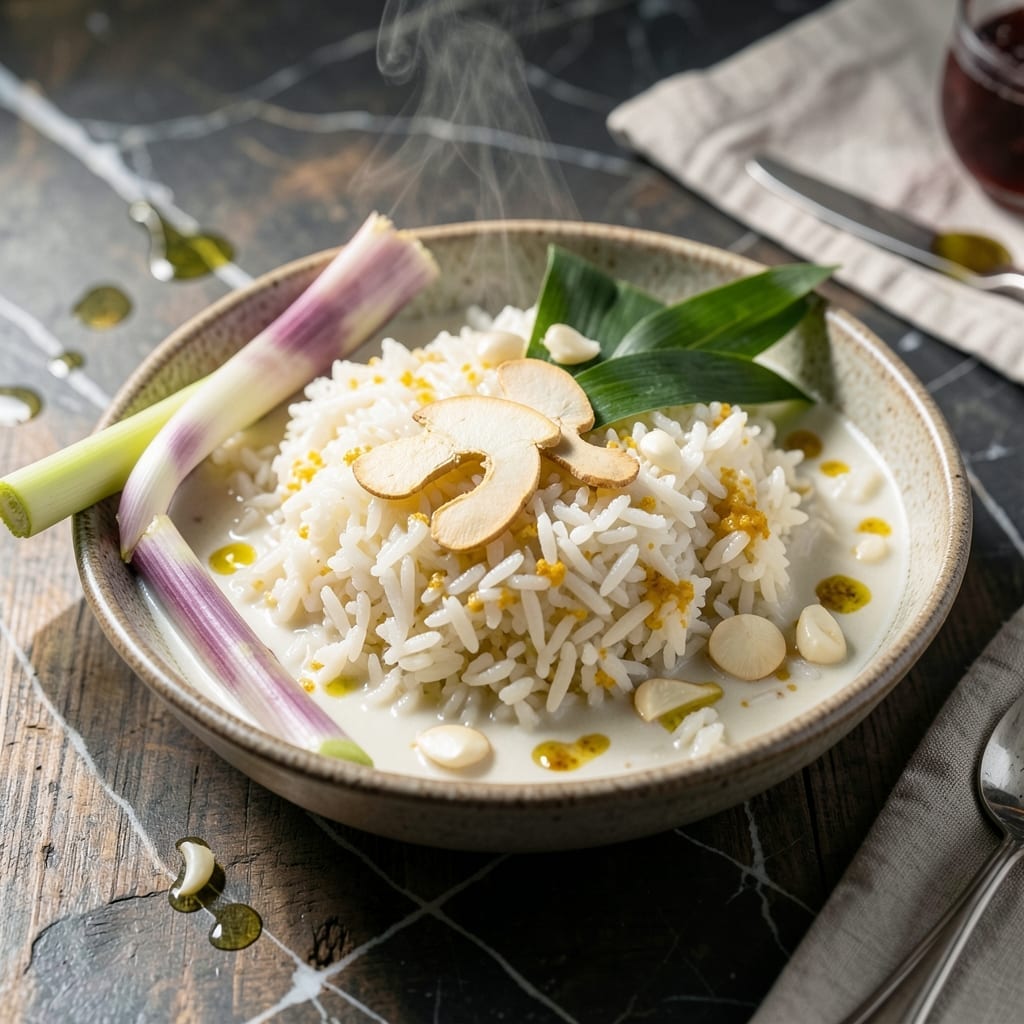
This fragrant dish brings the warmth of Malaysian kitchens to your table with its rich coconut and spice profile. The secret lies in the perfect balance of pandan leaves and lemongrass, creating layers of aroma that define this traditional meal.
I’ve refined this method to ensure the rice absorbs every bit of flavor while maintaining its light, fluffy texture. A hint of ginger and garlic adds depth without overpowering the delicate coconut base.
The result is a dish that’s both comforting and elegant, with each grain of rice infused with a subtle sweetness and earthy warmth. It pairs beautifully with fried anchovies, peanuts, and a spicy sambal.
Whether served for breakfast or dinner, this creation stays true to its roots while fitting seamlessly into modern meals.
Ingredients for Malay Rice
Aromatic rice meets coconut and spices for a traditional Malaysian-inspired dish with layers of flavor.
| Ingredient | Amount | Notes |
|---|---|---|
| Jasmine Rice 🌾 | 2 cups | Rinsed until water runs clear |
| Coconut Milk 🥥 | 2 cups | Full-fat for creaminess |
| Pandan Leaves 🌿 | 4 whole | Fresh or frozen, knotted |
| Lemongrass Stalks 🌱 | 2 whole | Bruised and cut into 3-inch pieces |
| Fresh Ginger 🌿 | 1 tbsp | Minced or grated fine |
| Garlic Cloves 🧄 | 4 cloves | Minced for aromatic base |
| Shallots 🧅 | 2 whole | Thinly sliced for depth |
| Turmeric Powder 🌶️ | ½ tsp | For golden color and earthiness |
| Salt 🧂 | 1 tsp | Adjust to taste preference |
| Water 💧 | 1 ½ cups | For rice cooking balance |
| Peanuts 🥜 | ½ cup | Crushed, for garnish |
| Fried Anchovies 🐟 | ¼ cup | Optional topping for crunch |
| Sambal Oelek 🌶️ | 2 tbsp | For spicy kick, adjust to heat preference |
The pandan leaves and lemongrass are non-negotiable for authenticity. Asian markets are your best bet for fresh pandan—frozen works in a pinch (thaw before using). Look for bright green leaves without brown spots. Lemongrass should be firm and fragrant; if it bends easily, it’s past its prime. Most Whole Foods locations carry these now, but call ahead to save a trip.
No pandan? Vanilla bean or bay leaves won’t replicate the flavor but add a subtle aroma. Swap fresh ginger for galangal if available—it’s more traditional. Coconut milk can be light, but full-fat delivers the richness this dish demands. Out of shallots? Red onion at a 1:1 ratio works, though the flavor profile shifts slightly. The sambal can be homemade or store-bought (Huy Fong is reliable).
Leftover rice keeps in the fridge for 3-4 days in an airtight container. Reheat with a splash of water to restore moisture. The pandan and lemongrass can be frozen for up to 3 months if you won’t use them immediately. Always rinse the rice thoroughly—this removes excess starch for fluffier grains.
Why You’ll Love This Recipe
- I’ll be real: this dish stretches effortlessly for potlucks or meal prep, and it reheats like a dream.
- One Pot Magic: I just toss jasmine rice, coconut milk, and the aromatics into a single pot—minimal cleanup, maximum flavor.
- Fragrant Comfort: The pandan and lemongrass infuse every bite with this warm, floral aroma that’s honestly hard to resist.
- Feeds the Crowd: I’ll be real: this dish stretches effortlessly for potlucks or meal prep, and it reheats like a dream.
Step-by-Step Instructions for Fragrant Coconut and Spice Rice
Master this technique for perfectly scented rice with rich coconut depth and balanced spice.
Step 1: Prepare and Toast the Aromatics
Bruise the 2 whole Lemongrass Stalks by pressing firmly with the flat side of your knife, then cut them into 3-inch pieces. Tie the 4 whole Pandan Leaves into loose knots to release their fragrance during cooking.
In a medium pot, heat the 2 cups Coconut Milk over medium heat until it begins to shimmer. Add the 2 whole Shallots, 4 cloves Garlic Cloves, 1 tbsp Fresh Ginger, knotted pandan leaves, and lemongrass pieces. Simmer gently for 3-4 minutes until the shallots soften and the mixture becomes fragrant.
This infuses the coconut milk with layers of aroma that will penetrate every grain of rice. Stir occasionally to prevent the milk from scorching at the bottom of the pot.
Step 2: Add Rice and Seasonings
Stir in the 2 cups Jasmine Rice, 0.5 tsp Turmeric Powder, and 1 tsp Salt. The turmeric will turn the mixture a golden yellow, while the rice begins to absorb the flavored coconut milk. Cook for 1-2 minutes, stirring constantly, until the rice appears slightly translucent at the edges.
Pour in the 1.5 cups Water and stir once to combine all ingredients. The liquid should cover the rice by about ½ inch—this ensures even cooking without drying out or becoming mushy.
Bring the mixture to a gentle boil over medium-high heat. Watch for small bubbles breaking the surface consistently across the entire pot.
Step 3: Simmer Until Tender
Once boiling, reduce the heat to low, cover the pot with a tight-fitting lid, and simmer for 15 minutes. Resist the urge to lift the lid during this time—releasing steam disrupts the cooking process and can lead to uneven results.
After 15 minutes, turn off the heat and let the rice sit, still covered, for an additional 10 minutes. This resting period allows the grains to steam in their own moisture, becoming fluffy and separate. The pandan leaves and lemongrass will have released all their aromatic oils into the dish.
Step 4: Fluff and Serve with Garnishes
Remove the lid and discard the pandan leaves and lemongrass pieces. Gently fluff the rice with a fork, lifting from the bottom to separate the grains without crushing them. The rice should be tender with a slight chew, and the coconut flavor should be rich but not overpowering.
Transfer to a serving dish and top with 0.5 cup Peanuts and 0.25 cup Fried Anchovies for added texture. Serve immediately with 2 tbsp Sambal Oelek on the side for those who want a spicy kick. The contrast of creamy rice, crunchy toppings, and fiery sambal creates the perfect balance of flavors and textures.
Pro Tips For Making Malay Rice
- Soak the rice: Give jasmine rice a 20-minute soak in warm water before cooking—it prevents the grains from turning mushy when simmered in coconut milk.
- Bruise the aromatics: Lightly crush lemongrass stalks and pandan leaves with the flat of your knife so their oils release into the rice as it cooks.
- Simmer low and slow: Once the coconut milk starts to bubble, drop the heat to the lowest setting—I learned this the hard way after scorching two pots.
- Use full-fat coconut milk: Skip the light version; the fat in full-fat coconut milk carries the ginger and pandan flavors and gives the rice its rich, creamy texture.
Health Benefits of These Flavors
Rich in Healthy Fats
This dish features coconut milk as its base, providing a generous dose of medium-chain triglycerides (MCTs). These healthy fats are metabolized differently than long-chain fats, offering a quick energy source. A single serving contains about 15-20g of these beneficial fats. 💪
Antioxidant Boost
The combination of turmeric, ginger, and garlic delivers powerful antioxidants that combat inflammation. Turmeric’s curcumin is particularly noted for its anti-inflammatory properties, while ginger aids digestion and supports immune health.
Low Glycemic Impact
Using jasmine rice with coconut milk slows down carbohydrate absorption, leading to a more gradual rise in blood sugar. This makes the dish a better option for those monitoring their glycemic response compared to plain white rice.
Essential Minerals
The ingredients provide important minerals like iron from turmeric and potassium from coconut milk. These contribute to blood health and proper muscle function respectively. The peanuts add a boost of magnesium for nerve and muscle support.
Digestive Benefits
Ginger and lemongrass both have natural digestive properties that can help soothe the stomach. The fiber from the rice and toppings supports healthy digestion, while the spices may help reduce bloating. 🌱
Energy Sustaining
The combination of complex carbohydrates from rice and healthy fats from coconut creates a balanced energy source. This helps maintain steady blood sugar levels, providing long-lasting fuel for your body throughout the day.
Nutrition Facts
Frequently Asked Questions
What can I use if I don’t have pandan leaves?
If pandan isn’t available, use 1 vanilla bean or 2 bay leaves for a subtle aroma. These won’t replicate the flavor but add depth. Frozen pandan works too—just thaw first.
Can I make this with brown rice instead?
Yes, but adjust the liquid to 2.5 cups water and extend cooking time to 40-45 minutes. Brown rice needs more moisture and time to soften properly.
How do I prevent the rice from getting mushy?
Rinse the rice thoroughly until water runs clear to remove excess starch. Also, resist stirring during cooking and let it rest covered for 10 minutes after simmering.
Can I prepare this dish in advance?
Cook the rice as directed, then store in an airtight container for up to 3 days. Reheat with a splash of water to restore moisture.

- Lump Rice Recipe Sri Lanka: Traditional Island-Style Texture - November 4, 2026
- Laos Sticky Rice Recipe: Traditional Steamed Perfection - November 4, 2026
- Magic Rice Recipe: One-Pot Aromatic Wonder - November 4, 2026