
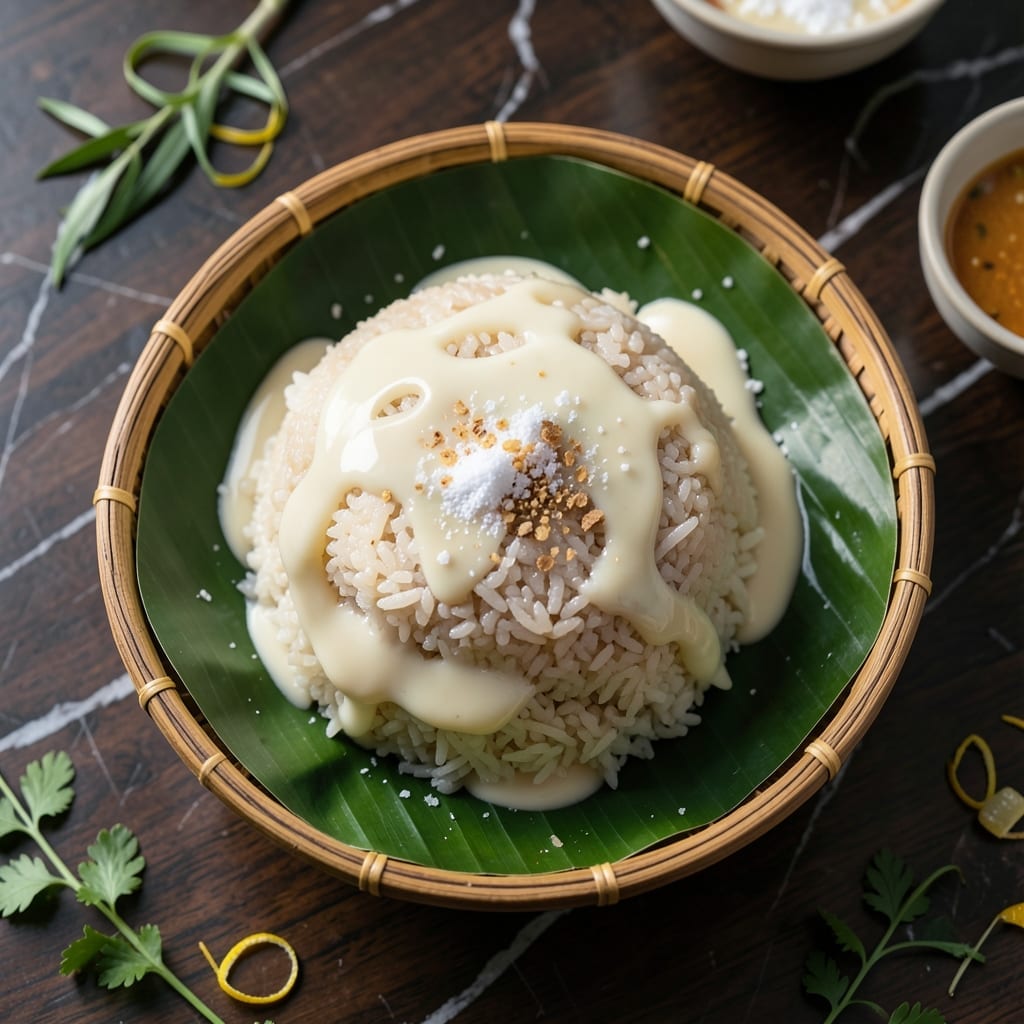
This Malaysian glutinous rice recipe captures the essence of traditional Southeast Asian cooking with its fragrant pandan aroma and perfectly sticky texture. The dish, also known as pulut, is a staple at celebrations and family gatherings.
What makes this version special is the combination of pandan leaves and coconut milk, which infuse the rice with a natural sweetness and intoxicating scent. The grains come out tender yet slightly chewy, clinging together just enough to hold their shape.
I’ve refined this method to ensure consistent results every time, using a simple steaming technique that preserves the rice’s delicate flavor. The process requires patience, but the payoff is a dish that’s both comforting and deeply satisfying.
Serve warm as a side or pair with savory dishes for a complete meal.
Ingredients for Malaysian Glutinous Rice
Fragrant pandan and coconut milk transform simple rice into a Malaysian celebration staple.
| Ingredient | Amount | Notes |
|---|---|---|
| Glutinous Rice 🍚 | 2 cups | Rinsed until water runs clear |
| Pandan Leaves 🌿 | 4 pieces | Fresh or frozen, tied in knots |
| Coconut Milk 🥥 | 1 ½ cups | Full-fat for richness |
| Water 💧 | 1 ½ cups | For soaking rice |
| Salt 🧂 | ½ tsp | Fine sea salt preferred |
| Sugar 🍬 | 2 tbsp | Granulated white sugar |
| Pandan Extract 🌿 | 1 tsp | Optional for stronger aroma |
| Shallots 🧅 | 2 whole | Thinly sliced for garnish |
| Dried Shrimp 🦐 | 2 tbsp | Optional, for savory note |
| Peanuts 🥜 | ¼ cup | Crushed, for topping |
| Fresh Cilantro 🌿 | ¼ cup | Chopped, for garnish |
| Lime 🍈 | 1 whole | Cut into wedges for serving |
The pandan is non-negotiable for authentic flavor. Asian markets carry fresh leaves year-round, but frozen works nearly as well—just thaw before using. For coconut milk, Chaokoh or Thai Kitchen brands deliver consistent creaminess. The glutinous rice should be labeled as such (not to be confused with rice flour). Rinse it thoroughly—this removes excess starch and prevents gummy texture.
No pandan leaves? Pandan extract at 1 tsp per 4 leaves substitutes the aroma, though the visual green hue will be missing. Dried shrimp can be omitted for vegetarian versions, or swap in mushroom powder for umami. For nut allergies, toasted sesame seeds replace the peanuts. The sugar can be adjusted to taste, but don’t skip it entirely—it balances the coconut’s richness.
Cooked rice keeps 2 days at room temperature (traditional method) or 1 week refrigerated. Re-steam with a damp towel to revive. The pandan leaves can be frozen for 3 months—just wrap tightly. Always use the rice within its shelf life for best texture and aroma.
Why You’ll Love This Recipe
- 5-Minute Prep: I just rinse the rice, tie the pandan leaves into a knot, and dump everything into the pot—no fancy steps.
- Coconut Pandan Magic: The coconut milk soaks into the sticky rice while the pandan leaves perfume it with that sweet, floral aroma I can’t get enough of.
- Feeds a Crowd: I make a big batch on Sunday and we snack on it all week—breakfast, dessert, you name it.
- Leftovers? Better: Honestly, it tastes even richer the next day after the coconut milk really settles in.
Step-by-Step Instructions for Malaysian Glutinous Rice
This traditional method ensures perfectly fragrant, sticky rice with authentic pandan aroma.
Step 1: Rinse and Soak the Glutinous Rice
Place the 2 cups glutinous rice in a large bowl and cover with cold water. Agitate the rice with your hands, then drain. Repeat this process 3-4 times until the water runs completely clear—this removes excess starch and prevents a gummy texture.
Once rinsed, add the 1.5 cups water and let the rice soak for at least 4 hours or preferably overnight. The grains should nearly double in size and become slightly translucent when fully hydrated. Proper soaking ensures even cooking and that signature sticky consistency.
Step 2: Prepare the Pandan Infusion
In a small saucepan, combine the 1.5 cups coconut milk, 0.5 tsp salt, 2 tbsp sugar, and 1 tsp pandan extract. Tie the 4 pieces pandan leaves into knots to prevent them from breaking apart and add them to the mixture.
Heat over medium-low heat until the sugar fully dissolves and the mixture reaches a gentle simmer. You’ll notice the coconut milk taking on a vibrant green hue and a fragrant aroma. Remove from heat and let the pandan leaves steep for 10 minutes to infuse maximum flavor. Strain before using.
Step 3: Steam the Rice to Perfection
Drain the soaked glutinous rice thoroughly in a fine-mesh strainer. Transfer it to a heatproof dish that fits inside your steamer. Pour the warm pandan coconut milk mixture over the rice, stirring gently to distribute the liquid evenly. The liquid should just cover the surface of the rice.
Place the dish in a steamer over boiling water, cover with a tight lid, and steam for 25-30 minutes. Check that the rice has absorbed all the liquid and is tender with a slight bite. The grains should be glossy and clump together when pressed. If it’s still firm, add 2-3 minutes more steaming time.
Step 4: Prepare the Garnishes
While the rice steams, thinly slice the 2 whole shallots and fry them in a dry pan over medium heat until they turn golden brown and crispy. This usually takes 5-7 minutes—watch carefully as they can burn quickly. Transfer to a paper towel to drain.
If using, briefly toast the 2 tbsp dried shrimp in the same pan until fragrant, then crush the 0.25 cup peanuts lightly. Chop the 0.25 cup fresh cilantro and cut the 1 whole lime into wedges for serving.
Step 5: Serve and Enjoy
Once the rice is fully cooked, let it rest covered for 5 minutes. This allows the grains to set and absorb any remaining liquid. Fluff gently with a fork to separate the grains without breaking them.
Transfer to a serving dish and top with the crispy shallots, dried shrimp, crushed peanuts, and fresh cilantro. Serve warm with lime wedges on the side for a bright, citrusy contrast. The rice should have a delicate sweetness from the coconut and pandan, balanced by the savory toppings.
Pro Tips For Making Malaysian Glutinous Rice
- Soak the Rice: Give the glutinous rice at least 4 hours in cold water—I learned this the hard way after ending up with a hard, undercooked center more than once.
- Bruise Pandan Leaves: Smash the pandan leaves lightly with the flat of your knife before adding them to the rice; it releases way more aroma than leaving them whole.
- Use Full-Fat Coconut Milk: Skip the light version—full-fat coconut milk is what gives the rice that rich, creamy texture that makes this dish unmistakably Malaysian.
- Steam Low and Slow: Keep the heat at medium-low and steam for 25-30 minutes—rushing it with high heat leads to a dry, unevenly cooked batch.
Wine and Beer Pairings for This malaysian glutinous rice
Tea Pairings
I love serving this with jasmine tea—its floral notes complement the pandan beautifully. The light, aromatic profile doesn’t overpower the rice’s delicate sweetness. Brew at 195°F for 3 minutes to preserve those subtle flavors. 🌸
Beer Options
A crisp Singha beer from Thailand cuts through the coconut richness perfectly. The light lager’s effervescence cleanses your palate between bites. For craft lovers, Saison Dupont offers similar citrusy contrast.
White Wine Choices
An off-dry Riesling from Germany or Washington state matches the rice’s slight sweetness. I prefer Dr. Loosen Blue Slate for its mineral notes. Serve chilled at 45-50°F for best results.
Sparkling Pairings
Prosecco works wonderfully—its gentle bubbles and apple notes enhance the dish’s tropical vibe. Look for La Marca for consistent quality. The light body won’t compete with the rice’s texture.
Non-Alcoholic
Pandan coconut water (available at Asian markets) doubles down on the flavors. Or try lychee iced tea—its floral sweetness mirrors the pandan. Both pair especially well with the savory toppings.
Nutrition Facts
Frequently Asked Questions
Can I use regular rice instead of glutinous?
No, regular rice won’t give the same sticky texture. Glutinous rice is essential for that signature chewy consistency.
How do I know when it’s fully cooked?
The grains should be tender with a slight bite and glossy. They’ll clump together when pressed, with all liquid absorbed. Steaming for 25-30 minutes usually does it.
What if I don’t have pandan leaves?
Use 1 tsp pandan extract per 4 leaves for aroma, though you’ll miss the green hue. Frozen leaves work nearly as well as fresh.
Can I make this ahead of time?
Yes! Cooked rice keeps 2 days at room temperature or 1 week refrigerated. Re-steam with a damp towel to revive.

- Mujadara Rice and Lentils Recipe: Earthy Spiced Lentils With Caramelized Onions - November 1, 2026
- Naija Fried Rice Recipe: Street-Style Spice With Veggie Crunch - November 1, 2026
- Mushy Rice Recipe: Fluffy Grains Transformed in Minutes - November 1, 2026