
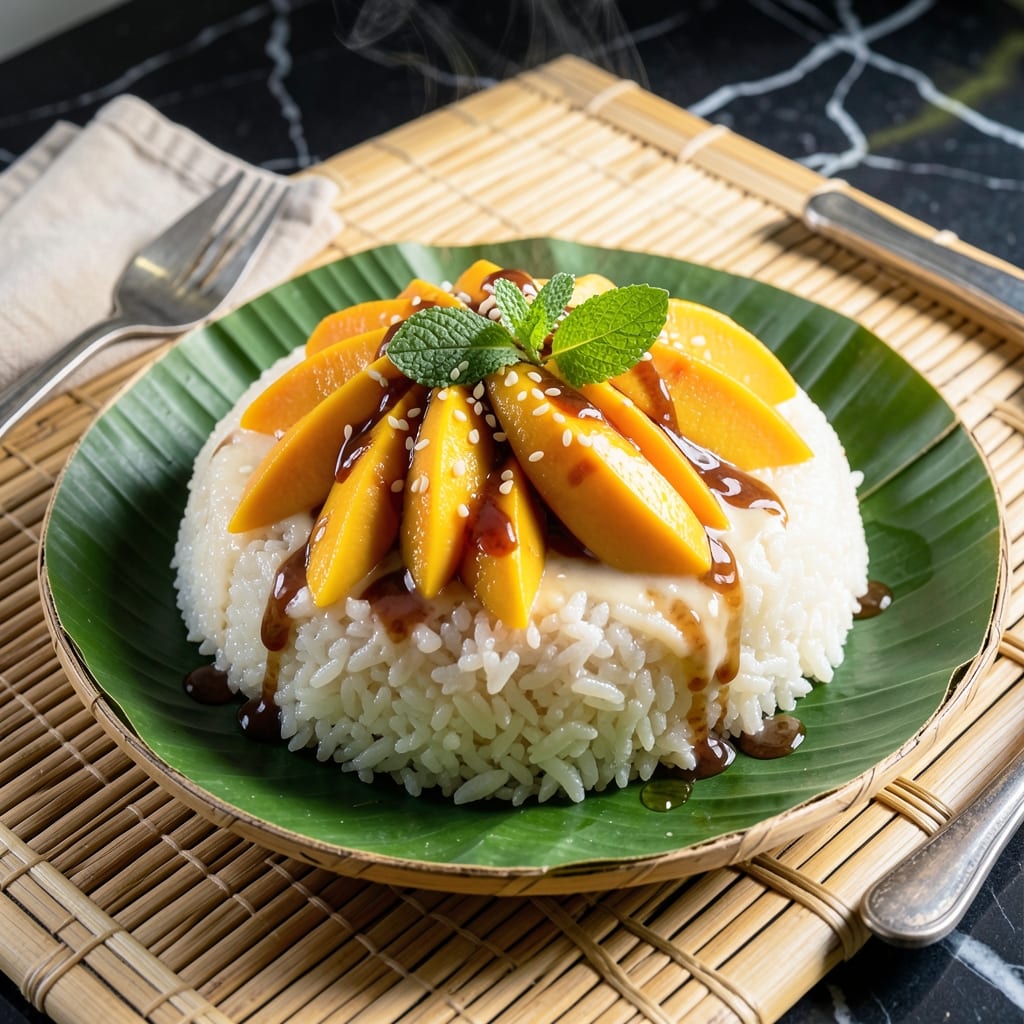
This Filipino-inspired dessert brings tropical flavors to your table with perfectly balanced sweetness and creaminess. The combination of ripe mangoes, coconut milk, and glutinous rice creates a texture that’s both rich and satisfying.
The secret lies in soaking the rice before cooking, which ensures it absorbs the coconut milk fully. A pinch of salt enhances the sweetness naturally, while the mango’s freshness cuts through the richness of the coconut sauce.
What emerges is a dish with layers of flavor: sticky, slightly chewy rice at the base, a velvety coconut sauce in the middle, and fresh, juicy mango on top. The contrast of warm rice with cool mango makes every bite memorable.
Serve this as a refreshing end to any meal or as a standalone treat. The recipe scales easily for gatherings or quiet evenings at home.
Ingredients for Mango Sticky Rice Pinoy
Rich coconut milk, sweet mangoes, and sticky rice create this tropical Filipino-inspired dessert.
| Ingredient | Amount | Notes |
|---|---|---|
| Glutinous Rice 🍚 | 1 ½ cups | Sweet rice, soaked overnight |
| Water 💧 | 2 cups | For soaking rice |
| Coconut Milk 🥥 | 1 ½ cups | Full-fat for creaminess |
| Granulated Sugar 🍚 | ½ cup | Adjust to taste preference |
| Salt 🧂 | ¼ tsp | Enhances sweetness balance |
| Ripe Mangoes 🥭 | 2 whole | Ataulfo or Philippine variety |
| Cornstarch 🌾 | 1 tbsp | Thickens coconut sauce |
| Water 💧 | ¼ cup | For cornstarch slurry |
| Toasted Sesame Seeds 🌰 | 1 tbsp | Optional garnish |
| Pandan Leaves 🌿 | 2 pieces | For aromatic flavor |
The rice is the foundation here. Glutinous rice (also called sweet rice) is non-negotiable—regular jasmine or basmati won’t give you that sticky texture. Asian markets carry it in bulk, or look for brands like Koda Farms at well-stocked supermarkets. Soaking overnight (or at least 4 hours) ensures even cooking and full coconut milk absorption.
No glutinous rice? Sushi rice is your closest backup, though the texture won’t be identical. For coconut milk, full-fat cans from Thai Kitchen or Chaokoh deliver the best creaminess—light versions water it down. Mangoes should be ripe but firm; Ataulfo (champagne mangoes) are ideal for their honey-like sweetness. The pandan leaves add authenticity but can be skipped if unavailable.
Cooked rice keeps 2-3 days in the fridge, best reheated with a splash of coconut milk. The coconut sauce thickens as it cools—loosen with warm water if needed. Assemble just before serving so the mangoes stay fresh and crisp.
Why You’ll Love This Recipe
- One Pot Wonder: I love that this comes together in a single pot—just glutinous rice, coconut milk, and sugar simmering while I slice the mangoes.
- Sweet & Salty Magic: The combo of creamy coconut rice with ripe mango and a pinch of salt hits that perfect sweet-savory balance every time.
- Feeds a Crowd: Honestly, it’s my go-to for potlucks—doubles easily and disappears faster than I can serve it.
- Budget Friendly: Between us, glutinous rice and coconut milk stretch far, and even off-season mangoes work in a pinch.
Step-by-Step Instructions for Mango Sticky Rice
Here is the tested method that consistently produces authentic coconut-infused sticky rice with sweet mango.
Step 1: Soak and Steam the Glutinous Rice
Drain the soaked 1.5 cups glutinous rice thoroughly in a fine-mesh strainer. Transfer it to a steamer basket lined with cheesecloth or a clean kitchen towel. The rice should be spread in an even layer no thicker than 1 inch to ensure even cooking.
Place the steamer over a pot of boiling 2 cups water with the 2 pieces pandan leaves added for aroma. Steam for 20-25 minutes until the rice is tender and translucent. Check by pressing a grain between your fingers—it should be soft with no hard center.
Step 2: Prepare the Coconut Sauce
In a small saucepan, combine the 1.5 cups coconut milk, 0.5 cup granulated sugar, and 0.25 tsp salt. Cook over medium heat for 3-4 minutes, stirring constantly until the sugar and salt fully dissolve and the mixture just begins to simmer.
Remove from heat and discard the pandan leaves if used. Pour ¾ cup of this warm coconut sauce over the steamed rice, reserving the rest for serving. Fold gently to coat every grain without breaking them. Cover and let it absorb for 10 minutes.
Step 3: Thicken the Remaining Coconut Sauce
Create a slurry by whisking the 1 tbsp cornstarch with the 0.25 cup water in a small bowl until smooth. Return the remaining coconut sauce to medium-low heat and slowly drizzle in the slurry while whisking continuously.
Cook for 1-2 minutes until the sauce thickens enough to coat the back of a spoon. Remove from heat immediately to prevent over-thickening. The sauce should have a glossy, syrupy consistency that drizzles easily but clings to the rice.
Step 4: Peel and Slice the Mangoes
Peel the 2 whole ripe mangoes using a vegetable peeler or sharp knife. Stand each mango on its end and slice downward along either side of the large central pit to yield two thick cheeks per fruit. Lay each cheek flat and slice into ¼-inch thick pieces, creating fan-like presentations.
Arrange the mango slices on a serving plate. The fruit should be vibrant orange with no green near the skin, and slightly yielding when pressed gently. Any remaining fruit on the pit can be scraped off and added to the plate.
Step 5: Assemble and Serve
Spoon the coconut-coated glutinous rice onto the plate alongside the mango slices. Drizzle the thickened coconut sauce generously over both the rice and fruit. The sauce should pool slightly around the base without overwhelming the presentation.
Sprinkle with the 1 tbsp toasted sesame seeds for added texture and visual contrast. Serve immediately while the rice is still warm and the sauce maintains its glossy sheen. Each serving should have a balanced ratio of rice to mango with ample sauce.
Pro Tips For Making Mango Sticky Rice Pinoy
- Soak the Rice: Give the glutinous rice at least 4 hours in cold water—overnight if you can swing it. I learned this the hard way when my first batch came out gummy instead of tender.
- Warm the Coconut Milk: Heat the coconut milk gently before mixing with sugar and salt, about 2 minutes on low. Sounds weird, but it works—prevents that grainy texture in the sauce.
- Skip the Rinse: Resist the urge to rinse the rice after soaking. My grandmother swore by this, and she was right: the extra starch is what gives it that perfect sticky texture.
- Use Ripe Mangoes: Pick mangoes that yield slightly to pressure and have a sweet aroma at the stem. After using underripe ones once, I now wait for that deep yellow color near the skin.
Health Benefits of mango sticky rice pinoy
Rich in Healthy Fats
The coconut milk in this dessert provides medium-chain triglycerides (MCTs), which your body metabolizes quickly for energy. A single serving offers about 15g of healthy fats that support brain function and satiety. These fats help your body absorb fat-soluble vitamins from the mangoes. 💪
Vitamin C Boost
Ripe mangoes deliver a significant dose of vitamin C—about 60mg per fruit, covering nearly 70% of your daily needs. This antioxidant helps combat free radicals while supporting immune function and collagen production. The freshness of the mango makes this a nutritious dessert option.
Fiber for Digestion
Each serving contains roughly 4g of dietary fiber, with glutinous rice providing resistant starch and mangoes contributing natural fibers. This aids digestion and helps regulate blood sugar levels. The combination keeps you feeling full longer, preventing post-meal spikes.
Mineral-Rich Base
The glutinous rice offers essential minerals like magnesium and phosphorus, which support muscle function and bone health. A 1.5-cup serving of cooked rice provides about 10% of your daily magnesium needs. These minerals work synergistically with the mango’s potassium for balanced nutrition.
Antioxidant Properties
Mangoes are packed with polyphenols like quercetin and beta-carotene, which have powerful antioxidant effects. The pandan leaves add aromatic compounds that may also possess antioxidant properties. Together, they help protect your cells from oxidative stress.
Energy-Sustaining Carbs
The glutinous rice provides complex carbohydrates that release energy slowly, preventing blood sugar crashes. A serving contains about 60g of carbs, making this a great pre- or post-workout treat. The natural sugars from the mango complement this energy release perfectly. ✨
Nutrition Facts
Frequently Asked Questions
Can I use regular rice instead of glutinous rice?
No, regular rice won’t give you the same sticky texture. Glutinous rice is essential for that chewy, clingy consistency. If unavailable, sushi rice is the closest substitute, though the result won’t be identical.
How do I know when the coconut sauce is thick enough?
It should coat the back of a spoon and drip slowly. Cook for 1-2 minutes after adding the cornstarch slurry, then remove from heat immediately to prevent over-thickening.
Can I make this ahead of time?
Yes, but assemble just before serving. Cooked rice keeps 2-3 days refrigerated. Reheat with a splash of coconut milk, and thicken the sauce if needed.
What if my mangoes aren’t very sweet?
Adjust the sugar in the coconut sauce to taste. Ripe Ataulfo mangoes are ideal, but if yours are tart, add an extra 1-2 tablespoons of sugar to balance the flavors.

- Mujadara Rice and Lentils Recipe: Earthy Spiced Lentils With Caramelized Onions - November 1, 2026
- Naija Fried Rice Recipe: Street-Style Spice With Veggie Crunch - November 1, 2026
- Mushy Rice Recipe: Fluffy Grains Transformed in Minutes - November 1, 2026