
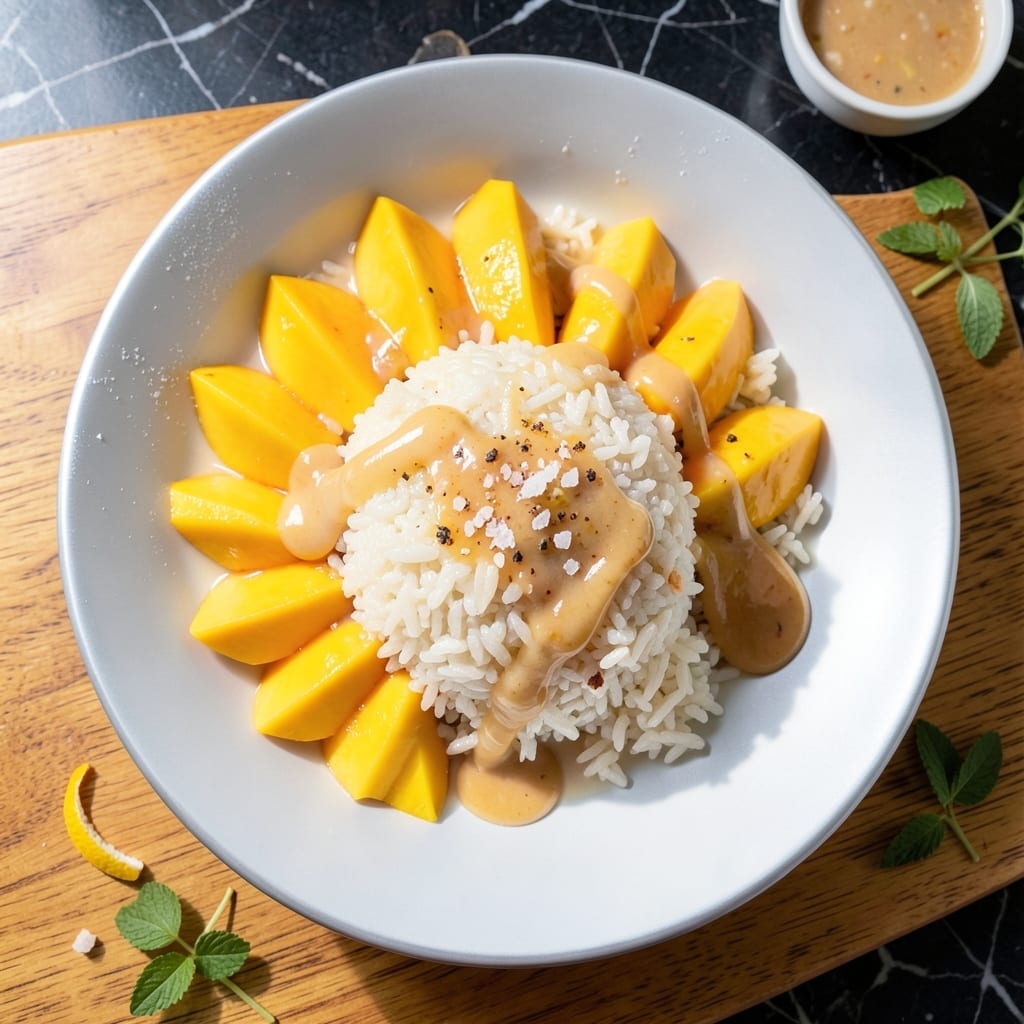
This classic Thai dessert brings sweet, tropical flavors to your table with minimal effort. The combination of ripe mango, creamy coconut, and sticky rice creates a perfect balance of textures and tastes that feels indulgent yet authentic.
I’ve perfected the method to ensure the rice absorbs just the right amount of coconut cream, while the mango stays fresh and vibrant. The dish is naturally gluten-free and relies on simple, traditional ingredients.
What you’ll get is a dessert that’s creamy, chewy, and restaurant-quality—no special equipment required. The coconut sauce soaks into the rice, making every bite rich and fragrant.
Serve warm or chilled for a refreshing finish to any meal.
Ingredients for Mango Sticky Rice Recipe Video
Simple, traditional ingredients create this authentic Thai dessert with ease.
| Ingredient | Amount | Notes |
|---|---|---|
| Glutinous Rice 🍚 | 1 ½ cups | Also called sweet rice, rinsed well |
| Water 💧 | 2 cups | For soaking rice |
| Coconut Milk 🥥 | 1 ½ cups | Full-fat, divided for soaking and sauce |
| Sugar 🍚 | ½ cup | Granulated white sugar preferred |
| Salt 🧂 | ½ tsp | Fine sea salt |
| Ripe Mangoes 🥭 | 2 whole | Ataulfo or Nam Dok Mai preferred |
| Cornstarch 🌾 | 1 tbsp | Optional, for thickening sauce |
| Vanilla Extract 🌿 | ½ tsp | Pure extract for best flavor |
| Toasted Sesame Seeds 🌰 | 1 tbsp | For garnish (optional) |
| Fresh Lime 🍋 | 1 whole | For zoning and garnish |
The rice is everything here. Glutinous rice (also called sweet rice) is non-negotiable—regular jasmine or long-grain won’t absorb the coconut cream properly. Asian markets have it in bulk, or check the international aisle at larger supermarkets. For the mango, Ataulfo or Nam Dok Mai varieties are the sweetest, most fragrant choices. Avoid fibrous mangoes; they ruin the texture.
No glutinous rice? Don’t bother—this dish won’t work with substitutes. For coconut milk, full-fat is essential (light versions separate and lack richness). Sugar can be swapped for palm sugar if you want to go fully traditional, but granulated works fine. The cornstarch is optional—skip it if you prefer a thinner sauce.
Cooked rice keeps 1-2 days at room temperature, but assemble just before serving. The mango can be prepped 8 hours ahead and refrigerated. Leftovers? Rare, but they’ll keep 2 days in the fridge (reheat rice gently with a splash of water).
Why You’ll Love This Recipe
- One Pot Wonder: I just dump the glutinous rice, water, and a pinch of salt in a pot and let it steam—no fancy gadgets, no fuss.
- Sweet & Creamy Fix: The coconut milk soaks into the warm rice while the ripe mango adds that juicy, sunny burst. Honestly, it’s like dessert hugged a meal.
- Feeds a Crowd: I make a big batch for parties and it’s always the first to disappear—even the picky eaters come back for seconds.
- Budget Stretch: A cup of rice, a can of coconut milk, and one mango feeds four. I’ll be real: it’s my go-to when I need something impressive for cheap.
Step-by-Step Instructions for Mango Sticky Rice
This traditional Thai dessert comes together with simple, precise steps for authentic results.
Step 1: Soak the Glutinous Rice
Rinse the 1.5 cups Glutinous Rice thoroughly under cold running water until the water runs clear. This removes excess starch and prevents gumminess. Place the drained rice in a bowl and add the 2 cups Water along with ½ cup Coconut Milk.
Let it soak for at least 30 minutes or up to 4 hours. The rice grains will plump significantly and become translucent at the edges. This step ensures even cooking and the perfect sticky texture. Drain the rice completely before cooking—any remaining liquid will steam the grains instead of toasting them.
Step 2: Steam the Rice to Perfection
Line a steamer basket with cheesecloth or a clean kitchen towel to prevent the rice from falling through. Spread the soaked and drained glutinous rice evenly in the prepared steamer. Bring 1 inch of water to a boil in a pot, then place the steamer on top.
Cover tightly and steam for 20-25 minutes until the rice is tender and translucent throughout. Check by pressing a grain between your fingers—it should feel soft with no hard center. Keep the water simmering consistently; if it boils dry, add more hot water to maintain steady steam.
Step 3: Prepare the Coconut Sauce
In a small saucepan, combine the remaining 1 cup Coconut Milk, ½ cup Sugar, and ½ tsp Salt. Heat over medium-low and whisk until the sugar and salt dissolve completely, about 2-3 minutes. The mixture should be smooth and slightly thickened.
For a thicker sauce, mix the 1 tbsp Cornstarch with 1 tablespoon of cold water in a small bowl, then whisk this slurry into the warm coconut mixture. Simmer for 1-2 minutes until it reaches your desired consistency. Remove from heat and stir in the ½ tsp Vanilla Extract.
Step 4: Assemble the Dessert
Peel and slice the 2 whole Ripe Mangoes into thin, even pieces. Arrange a portion of the warm steamed rice on each serving plate, shaping it into a small mound or oval. Fan the mango slices alongside or on top of the rice.
Drizzle the warm coconut sauce generously over the rice and mango, allowing some to pool around the edges. The sauce should coat the rice thoroughly while keeping the mango slices visible. For garnish, sprinkle with 1 tbsp Toasted Sesame Seeds and serve with lime wedges from the 1 whole Fresh Lime for a bright citrus contrast.
Pro Tips For Making Mango Sticky Rice Recipe Video
- Soak the Rice: Give the glutinous rice a good 4-6 hour soak—any less and it won’t absorb the coconut milk properly. I learned this the hard way when my first batch came out dry and starchy.
- Warm the Coconut Milk: Heat the coconut milk gently before mixing with sugar and salt—cold milk won’t dissolve the sugar evenly, and you’ll end up with a grainy sauce. Sounds weird, but it works.
- Use Ripe Mangoes: Pick mangoes that yield slightly to pressure—overripe ones turn mushy, and underripe ones stay hard and sour. After ruining two batches with rock-hard fruit, I finally got the timing right.
- Steam, Don’t Boil: Cook the rice over simmering water in a steamer basket, not direct boiling. Boiling makes it gummy, but steaming keeps the grains separate and tender. My grandmother swore by this, and she was right.
Essential Equipment for Great mango sticky rice recipe video
Essential Rice Steamer
A bamboo steamer basket is my top recommendation for even steam distribution. Look for one that’s 10-12 inches in diameter to accommodate the rice in a single layer. Bamboo allows steam to circulate while cheesecloth prevents sticking. 💪
Heavy Saucepan
Use a 3-4 quart heavy-bottomed pot (I love All-Clad) for the coconut sauce. The thick base prevents scorching and ensures even heating. A nonstick pan works too, but avoid thin aluminum pots that create hot spots.
Fine Mesh Strainer
Rinsing the glutinous rice requires a fine mesh strainer to catch the small grains. I use a Cuisinox model—it fits over most sinks and lasts forever. Regular colanders have holes that are too large, letting rice escape.
Sharp Chef’s Knife
For slicing mangoes, a 8-inch chef’s knife gives you the control needed for thin, even slices. The mango’s large pit requires a sturdy blade. I keep my Wüsthof razor-sharp for clean cuts that preserve the fruit’s texture.
Microplane Zester
A Microplane is perfect for zesting the lime garnish without removing the bitter white pith. It also works for grating fresh coconut if you want to add that texture to your dessert. The fine teeth create fluffy, aromatic zest.
Serving Bowls
Wide, shallow bowls (like Asian-style rice bowls) showcase the dish beautifully. The shape allows the coconut sauce to pool around the rice and mango. I prefer unglazed stoneware for a rustic, traditional presentation. ✨
Nutrition Facts
Frequently Asked Questions
Can I use regular rice instead of glutinous?
No, glutinous rice is essential for the right texture. Regular rice won’t absorb the coconut cream properly and will fall apart.
How do I pick the best mango?
Choose ripe Ataulfo or Nam Dok Mai mangoes—they’re sweeter and less fibrous. Look for fragrant, slightly soft fruit with golden skin.
Why is my sauce too thin?
Simmer the coconut mixture longer or add a cornstarch slurry (1 tbsp cornstarch + 1 tbsp water). Boil for 1-2 minutes to thicken.
Can I make this ahead?
Cook rice and prep mango up to 8 hours early. Assemble just before serving to keep the rice warm and the mango fresh.

- Peri Peri Rice Recipe: Spicy Portuguese One-Pot Harmony - November 6, 2026
- Mexican Flavoured Rice Recipe: Authentic Spice-Infused One-Pot Meal - November 6, 2026
- Lao Gan Ma Fried Rice Recipe: Spicy Wok-Tossed Perfection - November 6, 2026