
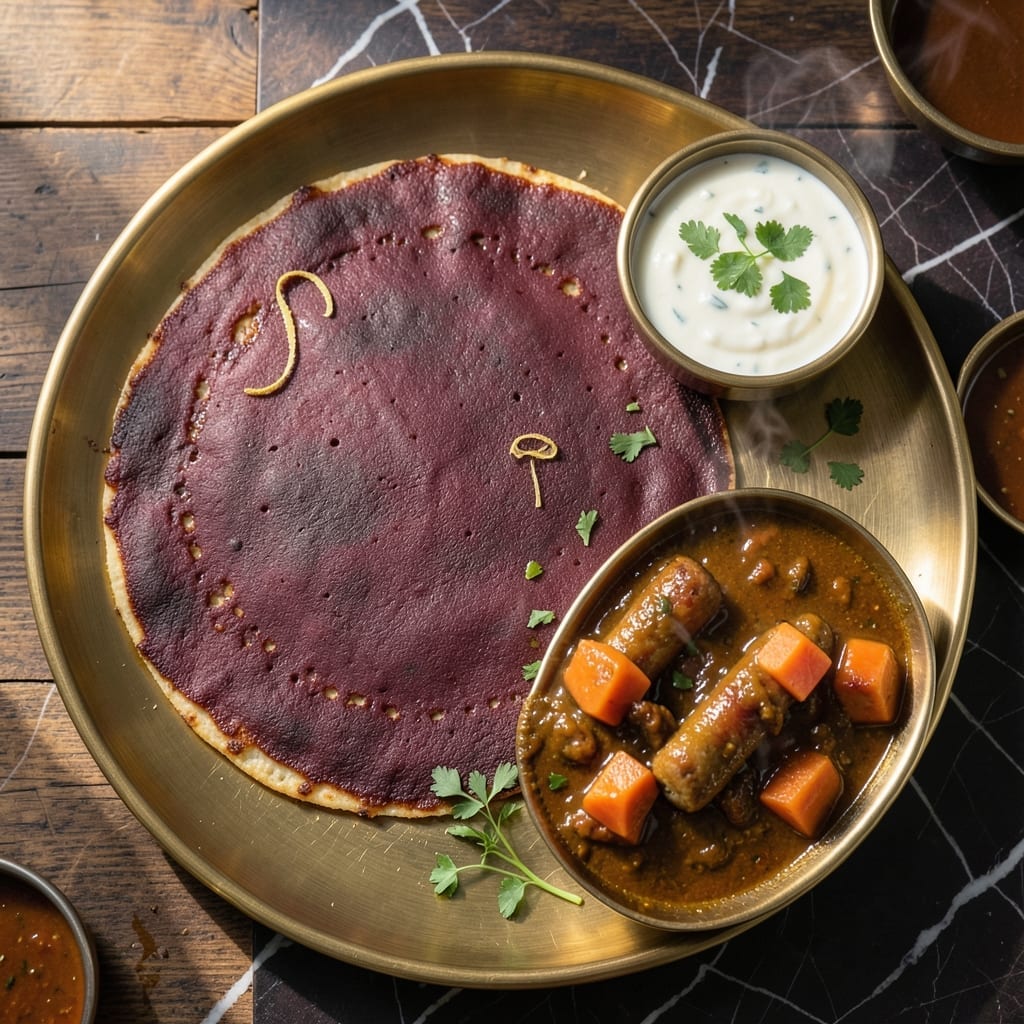
This traditional Kerala-style dosa offers a unique twist on the classic South Indian crepe. The use of matta rice creates a distinct nutty flavor and slightly chewy texture that sets it apart from regular dosa.
I’ve perfected this recipe to achieve the signature lace-like crispness while maintaining the earthy depth that makes matta rice so special. The fermentation process is key, developing complex flavors over 8-12 hours.
The batter comes together with just a few simple ingredients, yet the result is anything but ordinary. These dosas fry up golden and delicate, with a satisfying crispness that holds up to any filling.
Serve with coconut chutney and sambar for an authentic experience. This method delivers consistent, restaurant-quality results every time.
Ingredients for Matta Rice Dosa
A handful of traditional ingredients transform into crisp, nutty Kerala-style crepes with complex flavor.
| Ingredient | Amount | Notes |
|---|---|---|
| Matta Rice 🌾 | 2 cups | Rinsed thoroughly before soaking |
| Urad Dal 🌱 | ½ cup | Black gram, split and skinned |
| Methi Seeds 🌿 | ½ tsp | Fenugreek seeds for fermentation |
| Water 💧 | 4 cups | For soaking and grinding |
| Salt 🧂 | 1 tsp | Adjust to taste after fermentation |
| Coconut Oil 🥥 | ¼ cup | For greasing the pan |
| Poha 🍚 | ¼ cup | Flattened rice, optional for texture |
| Cooked Rice 🍚 | ½ cup | For adjusting batter consistency |
| Cumin Seeds 🌿 | ½ tsp | Optional, for added flavor |
| Green Chili 🌶️ | 2 whole | Finely chopped, optional for heat |
| Fresh Ginger 🌿 | 1 piece | Thumb-sized, grated |
| Curry Leaves 🍃 | 10 pieces | Optional, for authentic flavor |
The matta rice is non-negotiable here—Indian grocery stores like Patel Brothers or Bharat Bazaar are your best bet for authentic variety. Look for dark, unpolished grains with a deep earthy aroma. Urad dal should be fresh and white inside; old stock turns rancid. Methi seeds are tiny but mighty—sparingly used (a little goes a long way for fermentation).
No matta rice? Regular parboiled rice works in a pinch, but the flavor won’t be as deep. Skip the poha if you prefer a simpler batter. For heat, serrano peppers can stand in for green chili. The coconut oil can be swapped with ghee for richness (though this keeps it vegetarian). Fresh ginger is best, but ground ginger at half the amount works too.
Fermented batter keeps in the fridge for 2-3 days. The dosas actually improve in flavor after 24 hours. Store in an airtight container, but give it a good stir before using as the mixture separates. Leftover dosas can be refrigerated for 1 day—reheat in a dry pan to restore crispness.
Why You’ll Love This Recipe
- Soak & Blend: I just soak the matta rice and urad dal overnight, blend with methi seeds, and the batter is ready—no fancy steps.
- Nutty Crisp: The matta rice gives it this earthy, nutty flavor that’s so satisfying with that perfect crispy edge.
- Breakfast to Dinner: Honestly, I make this for lazy Sunday brunches or quick weeknight dinners—it works every time.
- Budget Stretcher: A bag of matta rice and a handful of urad dal feed my family for days without breaking the bank.
Step-by-Step Instructions for Matta Rice Dosa
Master the fermentation and cooking process for crisp, nutty dosa with a delicate lace pattern.
Step 1: Soak and Prepare the Base Ingredients
Rinse the 2 cups Matta Rice thoroughly until the water runs clear. Combine it with the 0.5 cup Urad Dal and 0.5 tsp Methi Seeds in a large bowl. Add the 4 cups Water and mix well to ensure all grains are submerged.
Cover and allow the mixture to soak for 6-8 hours, or overnight for best results. The rice and dal should double in volume and soften significantly. This soaking step is crucial for proper fermentation and a smooth batter texture.
Step 2: Grind and Ferment the Batter
Drain the soaked mixture and transfer it to a wet grinder or high-speed blender. Grind in batches, adding minimal water as needed, until you achieve a smooth, pancake-like batter. The consistency should be thick yet pourable.
Transfer the batter to a large bowl and add the 0.5 cup Cooked Rice for additional smoothness. Cover with a clean cloth and let it ferment in a warm place for 8-12 hours or until slightly bubbly with a tangy aroma. Stir in the 1 tsp Salt after fermentation is complete.
Step 3: Enhance Flavor and Texture
For added depth, heat a small pan with a touch of the 0.25 cup Coconut Oil and temper the 0.5 tsp Cumin Seeds, 2 whole Green Chili (finely chopped), 1 piece Fresh Ginger (grated), and 10 pieces Curry Leaves until fragrant. Stir this tempering into the batter.
Add the 0.25 cup Poha to the batter for a lighter texture. Mix well and let it rest for 15-20 minutes to incorporate the flavors fully. The batter should now have a slightly tangy smell and a smooth, airy consistency.
Step 4: Cook the Dosa to Lace Perfection
Heat a non-stick or cast-iron skillet over medium-high heat. Pour a ladleful of batter onto the center of the skillet and spread it outward in a thin, circular motion using the back of the ladle. Drizzle a few drops of the 0.25 cup Coconut Oil around the edges.
Cook until the top surface appears set and the edges start to lift and turn golden brown, about 2-3 minutes. Flip and cook for another 1-2 minutes until the underside is crisp and evenly browned. The dosa should have a delicate lace pattern with a nutty aroma.
Pro Tips For Making Matta Rice Dosa
- Soak Overnight: Matta rice and urad dal need a good 8-10 hours in water—any less and your dosa batter won’t ferment properly. I learned this the hard way after a few dense, sad dosas.
- Grind Urad Dal First: Always grind the urad dal and methi seeds first until fluffy before adding rice. This gives the batter that light, airy texture that makes dosas crisp.
- Skip Cold Water: Use room temperature or slightly warm water for grinding. Cold water slows fermentation and can leave your batter too thick.
- Rest the Batter: After grinding, let the batter sit for at least 6 hours before cooking. Sounds tedious, but it’s the only way to get that tangy flavor and perfect spread.
Health Benefits of These Flavors
High in Fiber
Matta rice is a whole grain packed with dietary fiber, providing about 4 grams per cooked cup. This supports healthy digestion and keeps you feeling full longer. Unlike white rice, the bran layer remains intact, offering more nutritional benefits. I notice better digestion when I include it regularly. 💪
Rich in Antioxidants
The unpolished nature of matta rice means it retains its natural antioxidants, including anthocyanins that give it that characteristic deep reddish-brown hue. These compounds help combat oxidative stress and inflammation in the body.
Fermented Goodness
The fermentation process in this dish enhances its nutritional profile significantly. It increases the bioavailability of B vitamins, particularly B12, and creates probiotics that support gut health. The 8-12 hour fermentation develops these benefits beautifully.
Plant-Based Protein
The combination of matta rice and urad dal creates a complete protein source. Urad dal alone provides about 25 grams of protein per cup when cooked. This makes the dish particularly valuable for vegetarian and vegan diets.
Mineral Powerhouse
Matta rice is notably rich in essential minerals like magnesium, iron, and zinc. These play crucial roles in energy production, oxygen transport, and immune function. The urad dal adds additional calcium and potassium to the mix. ✨
Low Glycemic Index
With its fiber content and complex carbohydrates, this creation has a lower glycemic index than regular rice dishes. This means it provides steady energy release without causing blood sugar spikes, making it ideal for those managing diabetes.
Nutrition Facts
Frequently Asked Questions
Why does the batter need to ferment?
Fermentation develops the tangy flavor and creates a light, airy texture. It also makes the dosa easier to digest and increases nutrient availability. The 8-12 hour process is essential for authentic taste and crispness.
Can I use regular rice instead?
You can, but the flavor and texture won’t be the same. Matta rice’s nutty depth and chewy texture are unique. If substituting, use parboiled rice for better results than white rice.
How do I know when the dosa is done?
The edges will lift and turn golden brown in 2-3 minutes. The top should appear set with a delicate lace pattern before flipping. Cook the other side for 1-2 minutes until crisp.
What if my batter doesn’t ferment?
Check the temperature – it needs warmth to activate. Try placing it in a slightly warm oven with the light on. Also ensure your urad dal and methi seeds are fresh.

- Peri Peri Rice Recipe: Spicy Portuguese One-Pot Harmony - November 6, 2026
- Mexican Flavoured Rice Recipe: Authentic Spice-Infused One-Pot Meal - November 6, 2026
- Lao Gan Ma Fried Rice Recipe: Spicy Wok-Tossed Perfection - November 6, 2026