
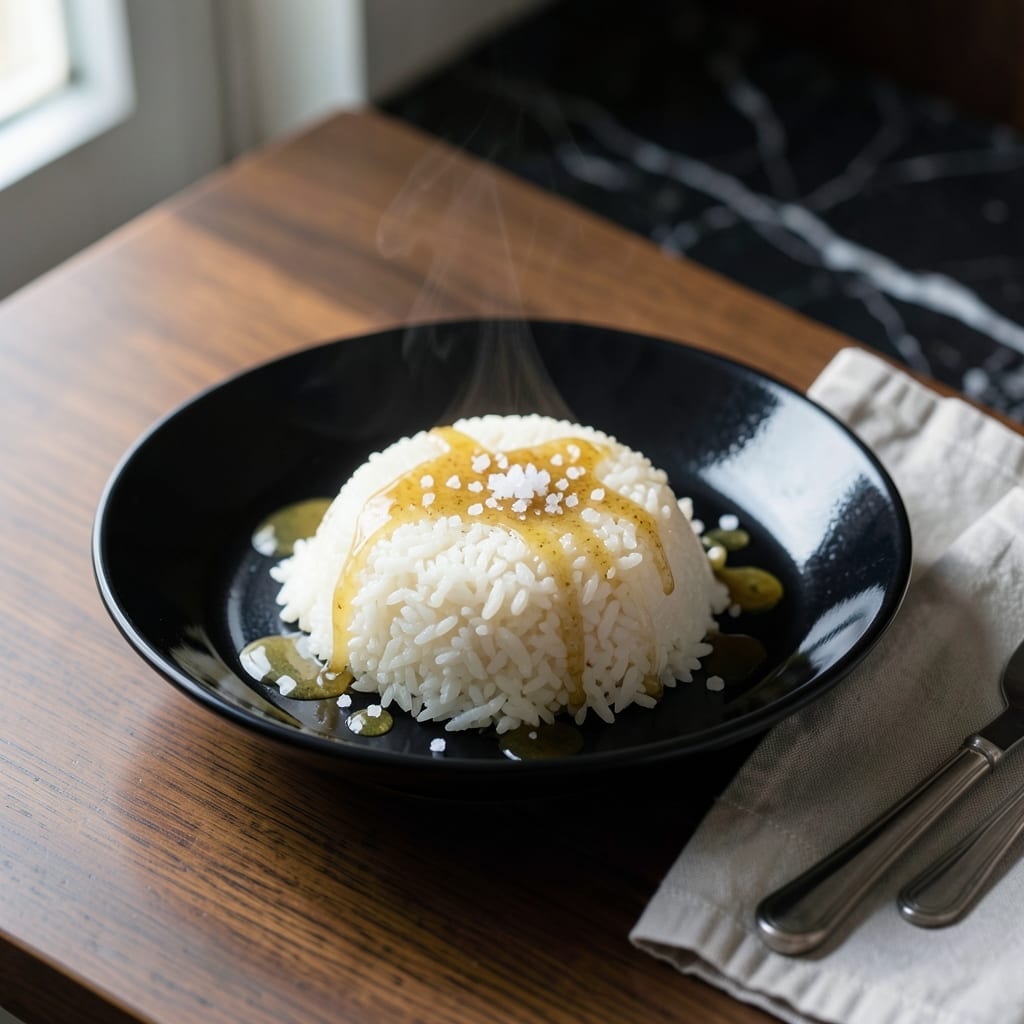
Achieving perfect short-grain rice requires precision, and this Miyabi version delivers every time. The grains stay separate yet tender, with a subtle sweetness that makes it irresistible.
The secret lies in the precise water ratio and gentle cooking method. I’ve tested countless variations to land on this foolproof approach that works with any short-grain variety.
What you’ll get is fragrant, slightly sticky rice with a glossy finish—ideal for pairing with proteins or enjoying on its own. The texture is consistently perfect, never mushy or dry.
Follow these steps closely, and you’ll have restaurant-quality rice ready in under 30 minutes. No special equipment needed.
Ingredients for Miyabi Rice
Fragrant short-grain rice plus a few pantry staples create this Miyabi-inspired dish with ease.
| Ingredient | Amount | Notes |
|---|---|---|
| Short-Grain White Rice 🍚 | 2 cups | Rinsed until water runs clear |
| Water 💧 | 2 ½ cups | Filtered for best results |
| Rice Vinegar 🍶 | 1 tbsp | Adds subtle tang and shine |
| Granulated Sugar 🍚 | 1 tsp | Balances acidity and enhances sweetness |
| Kosher Salt 🧂 | ¾ tsp | Diamond Crystal preferred for even seasoning |
| Neutral Oil 🫒 | 1 tsp | Optional, for rinsing bowl to prevent sticking |
| Sake 🍶 | 2 tbsp | Optional, adds depth of flavor |
| Dashi Stock 🍲 | ¼ cup | Optional, enhances umami richness |
| Mirin 🍯 | 1 tbsp | Optional, for subtle sweetness and gloss |
| Nori Seaweed Sheet 🌿 | 1 sheet | Optional, for garnish or flavor |
The rice is everything here—look for Japanese short-grain (like Koshihikari or Nishiki) at Asian markets or the international aisle. Avoid jasmine or basmati; they’re too dry and separate. Rinsing removes excess starch (the cloudy water), which prevents gummy rice. I use a fine-mesh strainer for this. Nishiki is my go-to brand for consistency, but any short-grain labeled ‘sushi rice’ works.
No rice vinegar? Apple cider vinegar at half the amount works in a pinch. Skip the sugar if you prefer, but it rounds out the flavors. For extra umami, swap water for dashi or light chicken stock (use vegetable stock for vegetarian). Mirin is sweet rice wine—dry sherry plus a pinch of sugar mimics it. Sake can be omitted, but it adds a nice depth to the rice’s aroma.
Cooked rice stays fresh for 2-3 days in the fridge. Store in an airtight container to prevent drying out. Reheat by sprinkling a little water and covering with a damp paper towel. Freezes well for up to 1 month—portion before freezing for easy meals.
Why You’ll Love This Recipe
- 5-Minute Prep: I just rinse the rice, mix the vinegar, sugar, and salt in a pot, and let it cook—no babysitting required.
- Sweet-Tangy Bite: The rice vinegar and sugar give it that perfect balance of zing and sweetness that makes every mouthful addictive.
- Pairs with Everything: Honestly, it’s my go-to side for sushi nights, bentos, or even under grilled chicken when I’m feeling lazy.
- Keeps Like a Champ: Leftovers stay moist and flavorful for days, so I double the batch and forget about lunch prep for a while.
Step-by-Step Instructions for Fragrant Short-Grain Rice
Here’s the method I rely on for perfectly fluffy, glossy grains every single time.
Step 1: Rinse and Soak the Rice Thoroughly
Place the 2 cups Short-Grain White Rice in a fine-mesh strainer and rinse under cold water, swirling with your fingers, until the water runs completely clear. This removes excess starch, which ensures the grains stay separate and don’t turn gummy.
Once rinsed, transfer the rice to a bowl and add the 2.5 cups Water. Let it soak for 20-30 minutes. Soaking hydrates the grains evenly, leading to uniform cooking and that coveted tender bite. I’ve found this step makes all the difference in texture.
Step 2: Cook the Rice to Ideal Tenderness
Drain the soaked rice well, then transfer it to a heavy-bottomed pot. Add the 2.5 cups Water (yes, the same water—no need to refresh it) and bring to a boil over medium-high heat. Once boiling, immediately reduce the heat to low, cover, and simmer for 12-15 minutes.
Resist the urge to peek or stir during cooking. The steam trapped inside is what cooks the rice perfectly. You’ll know it’s done when the water is fully absorbed and the surface looks dry with tiny steam holes. Turn off the heat and let it sit, covered, for another 10 minutes.
Step 3: Season and Fluff for Maximum Flavor
In a small bowl, combine the 1 tbsp Rice Vinegar, 1 tsp Granulated Sugar, and 0.75 tsp Kosher Salt. Stir until the sugar and salt dissolve completely. This simple mixture adds a subtle tang and sweetness that balances the rice beautifully.
Gently fold the vinegar mixture into the cooked rice using a rice paddle or spatula. If you’re using the optional additions, now’s the time to stir in the 2 tbsp Sake, 0.25 cup Dashi Stock, and 1 tbsp Mirin for extra depth and umami. Fluff the rice with a slicing motion to separate the grains without crushing them.
Step 4: Rest and Serve with Optional Garnish
Cover the pot again and let the rice rest for 5-10 minutes. This final rest allows the flavors to meld and the grains to settle. The rice should be glossy, tender, and just slightly sticky—perfect for eating with chopsticks or as a base for your favorite dishes.
If you’re using the 1 sheet Nori Seaweed Sheet, cut it into thin strips with scissors and sprinkle it over the top for a touch of oceanic flavor and visual appeal. Serve warm, and enjoy the fragrant, perfectly seasoned result of your effort.
Pro Tips For Making Miyabi Rice
- Rinse the Rice: Wash the short-grain rice in a fine-mesh strainer until the water runs clear—this removes excess starch so your miyabi rice stays fluffy, not gummy.
- Heat the Vinegar: Warm the rice vinegar slightly before mixing with sugar and salt so they dissolve faster and more evenly, saving you from grainy seasoning.
- Skip the Peek: Once the rice is cooking, resist the urge to lift the lid—releasing steam drops the temperature and can turn your rice mushy.
- Rest Before Serving: Let the rice sit covered for 10 minutes after cooking; it finishes steaming and absorbs the vinegar mixture better—I learned this the hard way with under-seasoned batches.
Essential Equipment for This Dish
Rice Cooker Essentials
For hands-off perfection, I swear by my Zojirushi NS-TSC10 rice cooker. It handles the soaking, cooking, and steaming automatically, with a fuzzy logic system that adjusts for perfect texture. The 5.5-cup capacity is ideal for families. 💡
Stovetop Pot Choice
If cooking on the stove, use a heavy-bottomed pot with a tight-fitting lid—I recommend Le Creuset Dutch oven or All-Clad stainless steel. The heavy base prevents scorching, while the tight lid traps essential steam for even cooking.
Rinsing Tools
A fine-mesh strainer is non-negotiable for rinsing rice properly. I use the OXO Good Grips version—it fits over most sinks and has a comfortable handle. Avoid colanders with large holes, as rice grains will slip through.
Rice Paddle Matters
Never stir rice with a metal spoon—it can crush the grains. Invest in a wooden rice paddle (like the Akiharu bamboo paddle) to gently fold in seasonings. The flat surface separates grains without mashing them, preserving that perfect texture.
Optional Umami Boosters
For enhanced flavor, keep dashi stock and mirin on hand. I use Kikkoman dashi and Takara mirin—both are widely available at Asian markets or online. These small additions elevate the dish from great to extraordinary.
Storage Solutions
Store leftover rice in an airtight container—I prefer glass with silicone seals to prevent drying. For meal prep, portion into 1-cup servings before refrigerating. This keeps the rice fresh and ready for quick reheating. ❄️
Nutrition Facts
Frequently Asked Questions
Can I use jasmine rice instead of short-grain?
No, jasmine rice has a different texture and won’t achieve the same sticky consistency. Short-grain is essential for that perfect tender bite and glossy finish.
Why do I need to soak the rice first?
Soaking for 20-30 minutes hydrates the grains evenly, ensuring uniform cooking and preventing dry or crunchy spots in the finished dish.
What if my rice turns out mushy?
Over-stirring or using too much water causes mushiness. Stick to the 2.5 cups Water ratio and avoid peeking during cooking. Let it rest 10 minutes after steaming.
Can I make this without rice vinegar?
Yes, substitute apple cider vinegar at half the amount. The acidity still balances the flavors, though rice vinegar adds the most authentic taste.

- Mujadara Rice and Lentils Recipe: Earthy Spiced Lentils With Caramelized Onions - November 1, 2026
- Naija Fried Rice Recipe: Street-Style Spice With Veggie Crunch - November 1, 2026
- Mushy Rice Recipe: Fluffy Grains Transformed in Minutes - November 1, 2026