
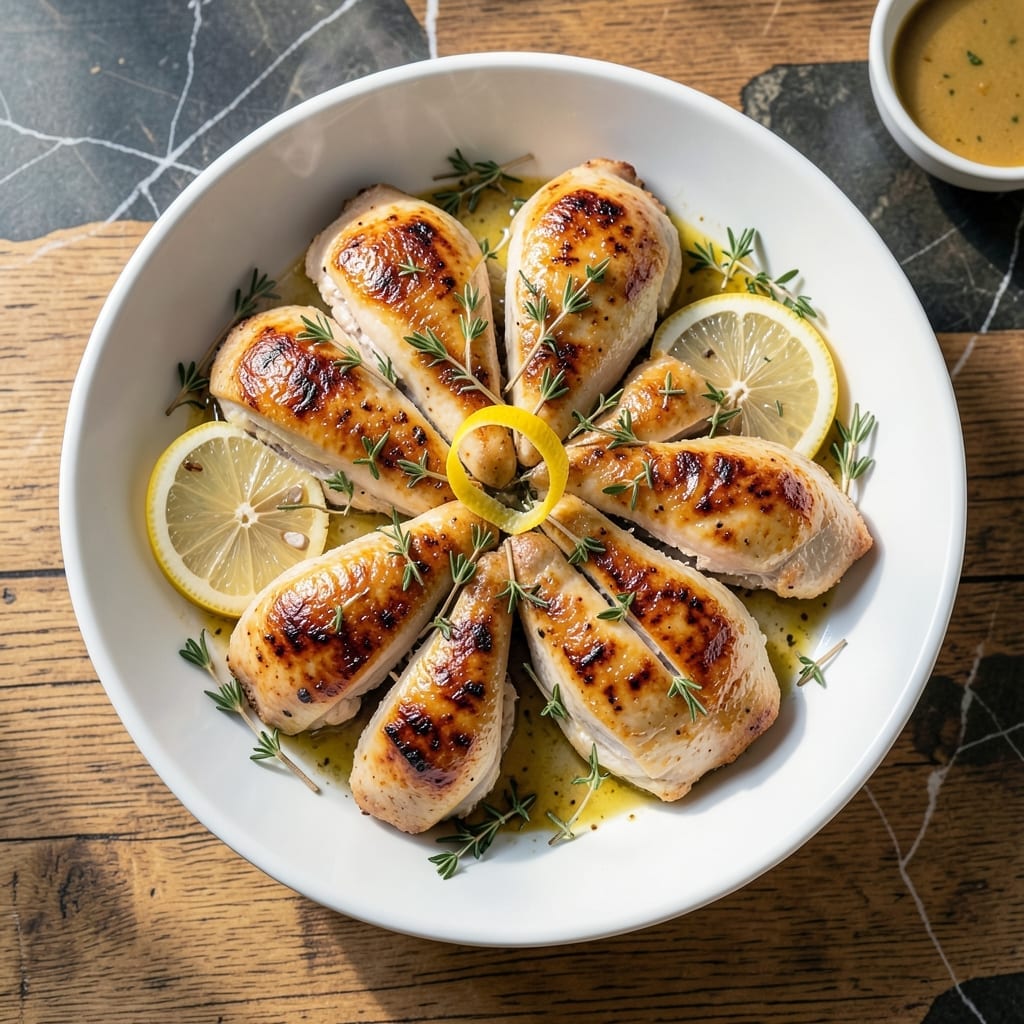
Achieving perfectly moist chicken every time comes down to two things: technique and timing. I’ve tested countless methods, and this approach consistently delivers tender, juicy results with minimal effort.
The secret lies in brining the chicken first, which locks in moisture before cooking. A simple mixture of salt, sugar, and water works wonders, ensuring the meat stays succulent even if it’s slightly overcooked.
Cooking at the right temperature is just as important. High heat can dry it out quickly, so I use a gentle, controlled method that preserves the natural juices. The result is chicken that’s tender and flavorful.
With these simple but precise steps, you’ll never settle for dry chicken again. Let’s get started.
Ingredients for Moist Chicken
Simple ingredients, brined then cooked low and slow for perfect juiciness.
| Ingredient | Amount | Notes |
|---|---|---|
| Boneless Skinless Chicken Breasts 🍗 | 1 ½ lb | Pounded to even thickness |
| Kosher Salt 🧂 | ½ cup | Diamond Crystal preferred |
| Granulated Sugar 🍚 | ¼ cup | Dissolves easily in brine |
| Cold Water 💧 | 4 cups | For brining solution |
| Olive Oil 🫒 | 2 tbsp | Extra-virgin for flavor |
| Unsalted Butter 🧈 | 2 tbsp | Melted for basting |
| Garlic Cloves 🧄 | 4 cloves | Minced for aroma |
| Fresh Thyme Sprigs 🌿 | 4 whole | Stems removed before use |
| Fresh Rosemary Sprigs 🌿 | 2 whole | Finely chopped for garnish |
| Lemon 🍋 | 1 whole | Zested and juiced |
| Black Pepper 🌶️ | 1 tsp | Freshly ground preferred |
| Paprika 🌶️ | ½ tsp | Sweet or smoked variety |
The chicken is the star here. Boneless, skinless breasts work best for even cooking and maximum moisture retention. Look for pieces that are uniform in thickness (or pound them yourself) to avoid dry spots. I get mine from Costco for consistency, but any grocery store with a good butcher section will do. The brine is non-negotiable—Diamond Crystal kosher salt dissolves beautifully and seasons evenly.
No fresh thyme or rosemary? Dried herbs at one-third the amount work in a pinch, but fresh really shines here. Short on time? Skip the brine and instead dry-brine the chicken with salt and sugar for 30 minutes. For extra richness, swap the butter for ghee (it has a higher smoke point). The lemon can be bottled if fresh isn’t available, but you’ll miss that bright, zesty kick.
Brined chicken stays fresh in the fridge for 2 days before cooking. Leftovers keep for 4 days sealed tight. The herbs? Wrap them in damp paper towels—they’ll last a week. Pro tip: Freeze extra brine in ice cube trays for next time.
Why You’ll Love This Recipe
- 5-Minute Prep: I just mix salt, sugar, and cold water—no fancy steps. The chicken does the rest.
- Juicy Every Time: That sugar-salt brine locks in moisture like magic. Even my picky nephew cleans his plate.
- Meal Prep Hero: I cook a big batch Sunday and it stays tender all week. Salads, wraps, you name it.
- Budget Stretcher: Boneless breasts on sale? This turns them into something special. Leftovers disappear fast.
Step-by-Step Instructions for Moist Chicken
Here’s the method. Straightforward, tested, works every time.
Step 1: Brine the Chicken Breasts
In a large bowl, whisk together the 0.5 cup Kosher Salt, 0.25 cup Granulated Sugar, and 4 cups Cold Water until the salt and sugar dissolve completely. I use Diamond Crystal kosher salt for its clean flavor and consistent texture.
Submerge the 1.5 lb Boneless Skinless Chicken Breasts in the brine, ensuring they’re fully covered. Let them soak for 30 minutes to 1 hour in the refrigerator. This step is non-negotiable—it seasons the meat deeply and helps retain moisture during cooking.
Step 2: Prep and Season the Chicken
Remove the chicken from the brine and pat it completely dry with paper towels. This step is crucial—excess moisture prevents proper browning. Place each breast between plastic wrap and pound to an even ½-inch thickness using a meat mallet.
Rub the chicken all over with the 2 tbsp Olive Oil, then season generously with the 1 tsp Black Pepper and 0.5 tsp Paprika. The paprika adds a subtle smokiness that complements the herbs beautifully.
Step 3: Sear and Aromatize
Heat the 2 tbsp Unsalted Butter in a large oven-safe skillet over medium-high heat until it stops foaming. Add the chicken breasts and sear for 4-5 minutes per side until golden brown and just cooked through.
During the last 2 minutes of cooking, add the minced 4 cloves Garlic Cloves, 4 whole Fresh Thyme Sprigs, and finely chopped 2 whole Fresh Rosemary Sprigs to the pan. The garlic should become fragrant but not brown.
Step 4: Finish with Lemon and Rest
Remove the pan from heat and add the zest and juice of the 1 whole Lemon. Spoon the herbed butter mixture over the chicken repeatedly for 30 seconds to build layers of flavor.
Transfer the chicken to a cutting board and let it rest for 5-10 minutes before slicing. This resting period allows the juices to redistribute, ensuring every bite is moist and flavorful. The internal temperature should read 160-165°F when fully cooked.
Pro Tips For Making Moist Chicken
- Brine First Always: Mix ¼ cup kosher salt and ¼ cup sugar with 4 cups cold water, then soak the chicken breasts for 30 minutes—this is the easiest way to guarantee they stay juicy, especially with lean cuts like these.
- Pound Even Thickness: Use a rolling pin or heavy pan to pound the breasts to an even ½-inch thickness, so they cook through at the same rate and don’t dry out on the edges while waiting for the center.
- Skip Cold Chicken: Pull the chicken from the brine 15 minutes before cooking to let it come to room temp—I learned this the hard way after serving dry, rubbery chicken straight from the fridge.
- High Heat Sear: Heat the olive oil in a skillet until shimmering, then sear the chicken for 3-4 minutes per side; the quick, hot cook locks in moisture better than a slow simmer.
Storing and Reheating This Dish
Refrigerator Storage
Let the chicken cool for no more than 2 hours before transferring to an airtight container. I use glass containers with locking lids. Store in the fridge at 40°F or below for up to 4 days. The herbs will continue to infuse flavor. ❄️
Freezer Storage
For longer storage, wrap each piece tightly in plastic wrap, then place in a freezer bag. Squeeze out excess air to prevent freezer burn. This creation freezes well for up to 3 months without losing moisture or flavor. Label with the date for easy tracking.
Stovetop Reheating
This is my go-to method for maintaining moisture. Heat a skillet over medium-low heat, add the chicken, and splash in 2 tbsp water or chicken broth. Cover and warm for 5-7 minutes, flipping once. The steam keeps it juicy. 🔥
Microwave Reheating
For quick meals, place chicken on a microwave-safe plate and cover with a damp paper towel. Heat on 50% power for 1-2 minutes, checking frequently. Add a pat of butter or a splash of broth to restore moisture if needed.
Oven Reheating
Preheat oven to 325°F. Wrap chicken in aluminum foil with 1 tbsp broth and heat for 10-15 minutes. This method works best for larger portions and ensures even warming without drying out.
Nutrition Facts
Frequently Asked Questions
Why is brining important for chicken?
Brining helps retain moisture by allowing the meat to absorb liquid before cooking. A simple 30-minute to 1-hour soak in salt and sugar water seasons the chicken deeply and prevents dryness.
Can I skip the resting time?
No! Resting for 5-10 minutes lets juices redistribute. Slicing too soon means those juices will spill out, leaving the meat dry. Patience pays off here.
What if my chicken cooks unevenly?
Pound breasts to an even ½-inch thickness before cooking. This ensures consistent doneness and prevents dry spots. A meat mallet works perfectly.
How do I know when it’s done?
Use a meat thermometer! Chicken is safe at 160-165°F internally. The flesh should be opaque with no pink, and juices should run clear.

- Jollof Rice Sauce Recipe: West African Tomato and Spice Infusion - September 25, 2026
- Japanese Rice Soup Recipe: Umami-Rich Comfort in a Bowl - September 25, 2026
- Homemade Cream Of Rice Recipe: Silk-Smooth Breakfast in Minutes - September 25, 2026