
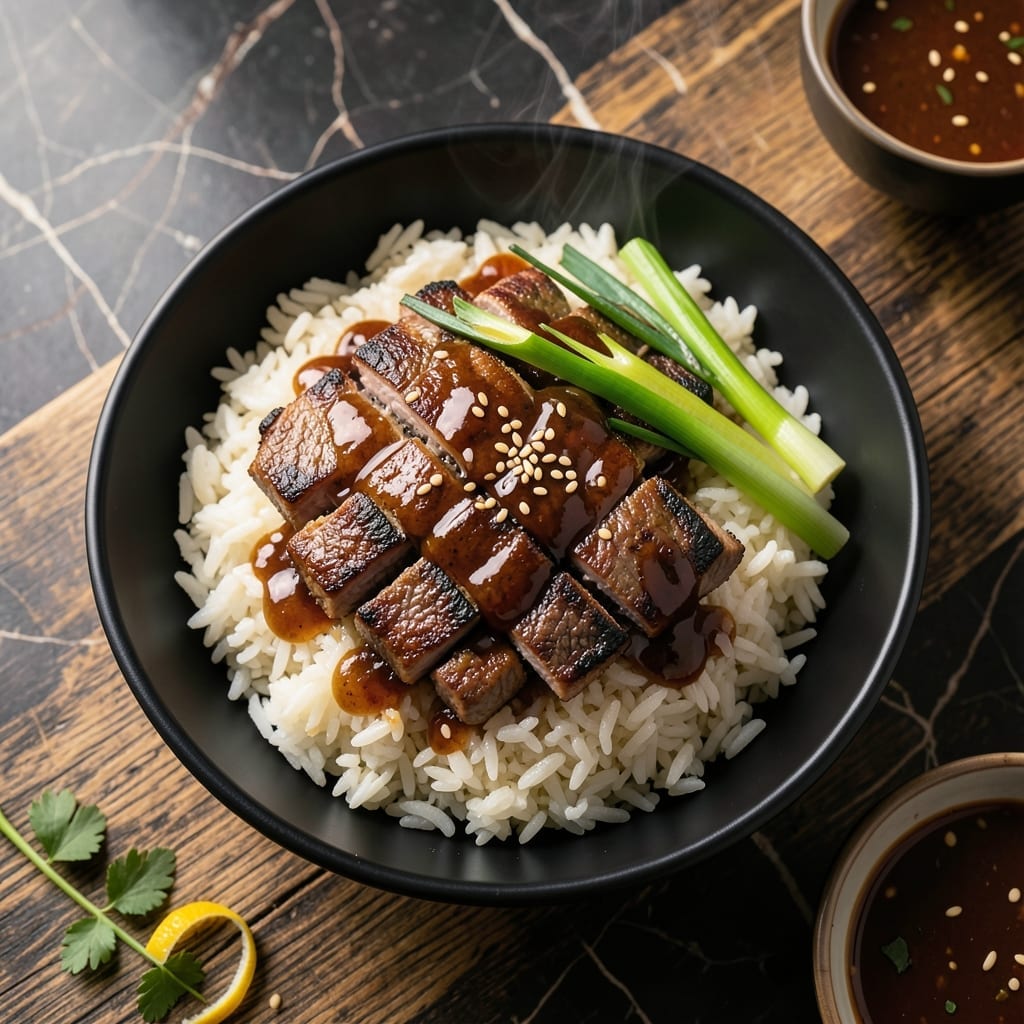
This rice bowl delivers bold umami flavor with wok-charred edges and aromatic scallion garnish. A simple technique transforms basic ingredients into a restaurant-quality dish that’s both satisfying and impressive.
The secret lies in high-heat cooking that creates caramelized, slightly crispy rice with deep savory notes. Thinly sliced protein and vegetables absorb the rich Mongolian sauce, while fresh scallions add a bright finish.
Each bite combines tender meat, perfectly charred rice, and a glossy sauce that coats every component. The dish comes together quickly once prepped, making it ideal for weeknight cooking.
Serve immediately while hot to enjoy the full spectrum of textures and flavors. Here’s how to recreate this takeout favorite at home.
Ingredients for Mongolian Rice Bowl
High-heat wok cooking turns simple ingredients into restaurant-quality Mongolian rice bowls with bold flavor.
| Ingredient | Amount | Notes |
|---|---|---|
| Jasmine Rice 🍚 | 2 cups | Day-old, cooked and chilled |
| Flank Steak 🥩 | 1 lb | Thinly sliced against grain |
| Soy Sauce 🫒 | ½ cup | Low-sodium preferred for control |
| Dark Brown Sugar 🍚 | ⅓ cup | Packed, for caramelization |
| Rice Vinegar 🍯 | 2 tbsp | Adds balanced acidity |
| Sesame Oil 🫒 | 1 tbsp | Toasted for depth |
| Garlic Cloves 🧄 | 4 cloves | Minced for maximum flavor |
| Fresh Ginger 🌿 | 1 tbsp | Grated, skin removed |
| Scallions 🧅 | 4 whole | Thinly sliced, white and green parts |
| Vegetable Oil 🫒 | 3 tbsp | High smoke point for wok |
| Cornstarch 🌾 | 1 tbsp | For velveting steak |
| Red Bell Pepper 🌶️ | 1 whole | Thinly sliced for texture |
| Carrot 🥕 | 1 whole | Julienned for even cooking |
| Water 💧 | ¼ cup | For deglazing wok |
| Toasted Sesame Seeds 🌾 | 1 tsp | Garnish for crunch |
The flank steak is non-negotiable for texture—look for well-marbled cuts at Whole Foods or Costco. Slice it thinly against the grain yourself (or ask the butcher) for maximum tenderness. Jasmine rice is ideal for its slightly sticky quality, but any long-grain works. The key is using day-old, chilled rice to prevent mushiness during high-heat cooking. For the soy sauce, Kikkoman low-sodium gives consistent results without overpowering the dish.
Need to swap the steak? Chicken thighs at 1:1 ratio work beautifully—just slice thinly for even cooking. Vegetarian? Extra-firm tofu pressed and cubed soaks up the sauce like a sponge. No rice vinegar? Apple cider vinegar at half the amount gets you close. The brown sugar can be swapped for coconut sugar (same quantity), but avoid granulated—it lacks the molasses depth. Skip the sesame oil? Perilla oil offers a similar nutty finish (found at Korean markets).
Cooked rice keeps 3-4 days in the fridge, but day-old is best for texture. The sauce components can be pre-mixed 2 days ahead—just whisk before using. Leftovers reheat well in a skillet over medium-high heat to restore that wok-charred edge. Freeze without scallion garnish for up to 3 months.
Why You’ll Love This Recipe
- One Pan Wonder: I love that everything cooks together—jasmine rice soaks up the soy and brown sugar while the flank steak sizzles right alongside.
- Sweet and Savory: That dark brown sugar caramelizes with the soy sauce, giving the steak this sticky, umami-packed glaze I can’t resist.
- Meal Prep Hero: Honestly, this tastes even better the next day—the flavors meld overnight, so I make a double batch for lunches.
- Budget Stretcher: Flank steak is affordable, and a little goes a long way when you pair it with hearty jasmine rice and that bold vinegar kick.
Step-by-Step Instructions for Mongolian Rice Bowl
Achieve restaurant-quality results with this precise wok technique and velveting method.
Step 1: Velvet the Flank Steak for Tenderness
In a bowl, combine the 1 lb Flank Steak with 1 tbsp Cornstarch and 1 tbsp Soy Sauce. Mix until the steak is evenly coated. This velveting process creates a protective layer that locks in moisture during high-heat cooking.
Let the steak marinate for 10 minutes at room temperature. Meanwhile, slice the red bell pepper and carrot into thin, even strips. Proper velveting ensures the flank steak remains tender despite its lean nature, while uniform vegetable cuts guarantee even cooking.
Step 2: Create the Mongolian Sauce Base
In a small bowl, whisk together the remaining soy sauce, 0.33 cup Dark Brown Sugar, 2 tbsp Rice Vinegar, and 1 tbsp Sesame Oil. The sugar should dissolve completely into a glossy, dark liquid. This balance of salty, sweet, and tangy creates the signature umami profile.
Mince the 4 cloves Garlic Cloves and grate the 1 tbsp Fresh Ginger directly into the sauce. These aromatics will bloom in the wok, deepening the sauce’s complexity. Set this mixture aside while you begin cooking.
Step 3: Wok-Char the Steak and Vegetables
Heat a wok or large skillet over high heat until smoking. Add 2 tbsp Vegetable Oil and swirl to coat. Working in batches, add half the velveted steak in a single layer. Let it sear undisturbed for 1-2 minutes until the edges become dark brown and slightly charred.
Remove the steak and repeat with the remaining 1 tbsp Vegetable Oil and beef. Then add the sliced red bell pepper and carrot, stir-frying for 2-3 minutes until they soften but retain a slight crispness. This high-heat cooking creates the characteristic wok hei, or breath of the wok.
Step 4: Combine and Finish with Garnishes
Return all the steak to the wok along with the minced garlic and ginger. Pour the sauce mixture over everything and stir to coat. Add the 2 cups Jasmine Rice, breaking up any clumps, and toss to combine. The rice should absorb the sauce and take on a light caramel color.
Deglaze the wok with 0.25 cup Water, scraping up any browned bits. Cook for an additional 1-2 minutes until the sauce thickens slightly and coats the rice evenly. The mixture should glisten but not be soupy.
Step 5: Plate and Garnish Professionally
Divide the Mongolian rice among four bowls. Garnish each serving with the thinly sliced 4 whole Scallions, distributing both white and green parts evenly. The scallions add a fresh, sharp contrast to the rich dish.
Sprinkle 1 tsp Toasted Sesame Seeds over the top of each bowl just before serving. The seeds provide a nutty crunch and visual appeal. Serve immediately while the rice maintains its slight crispness from the wok.
Pro Tips For Making Mongolian Rice Bowl
- Slice Against the Grain: Cut the flank steak into thin strips against the grain before cooking—this makes the meat noticeably more tender in every bite.
- Bloom the Sauce: Let the soy sauce, brown sugar, and rice vinegar simmer together for 2-3 minutes before adding the meat; it deepens the flavor and thickens it just enough to cling to the rice.
- Skip Cold Rice: Use day-old or fully cooled jasmine rice—freshly cooked rice turns mushy when stir-fried, and I learned this the hard way after ruining two batches.
- Velvet the Beef: Toss the steak slices with 1 teaspoon of cornstarch and a splash of soy sauce before cooking; it creates a silky texture that soaks up the Mongolian sauce like a dream.
Best Sauces and Condiments for These Flavors
Classic Mongolian Sauce
I always start with a homemade Mongolian sauce base—mix ¼ cup hoisin sauce with 2 tbsp soy sauce and 1 tbsp rice vinegar for that perfect balance of sweet, salty, and tangy. This triple threat elevates every bite. 💛
Spicy Chili Oil Drizzle
For heat lovers, a chili oil drizzle adds depth. I use Lao Gan Ma Spicy Chili Crisp—just 1 tsp per bowl gives a slow-building warmth without overpowering the dish. The crunchy bits add texture too.
Creamy Sriracha Mayo
Combine ¼ cup mayonnaise with 1 tbsp sriracha and ½ tsp lime juice for a cooling contrast. This creamy sauce tempers the heat while adding a velvety finish to the charred rice.
Fresh Lime Wedges
A squeeze of fresh lime brightens the rich flavors. I serve 2 wedges per bowl—the acidity cuts through the sauce and cleanses your palate between bites. Simple but essential.
Pickled Vegetables
Quick-pickled carrots and daikon (thinly sliced, soaked in rice vinegar and 1 tsp sugar for 30 minutes) add crunch and acidity. These pickles balance the dish’s richness beautifully. ✨
Nutrition Facts
Frequently Asked Questions
Can I use fresh rice instead of day-old?
Fresh rice is too moist and will turn mushy in the wok. Always use day-old, chilled rice for the best texture. Spread freshly cooked rice on a tray to cool quickly if needed.
What’s the best way to slice the steak?
Slice against the grain into ¼-inch thick strips for maximum tenderness. Partially freeze the steak for 20 minutes first to make slicing easier and more precise.
Can I make this vegetarian?
Yes! Swap the steak for extra-firm tofu pressed and cubed. Velvet it the same way with cornstarch for a similar texture that soaks up the sauce beautifully.
Why does my sauce turn out watery?
This usually happens if the wok isn’t hot enough. Ensure it’s smoking before adding oil. Also, cook the sauce until it reduces and coats the back of a spoon—about 1-2 minutes.

- Mujadara Rice and Lentils Recipe: Earthy Spiced Lentils With Caramelized Onions - November 1, 2026
- Naija Fried Rice Recipe: Street-Style Spice With Veggie Crunch - November 1, 2026
- Mushy Rice Recipe: Fluffy Grains Transformed in Minutes - November 1, 2026