
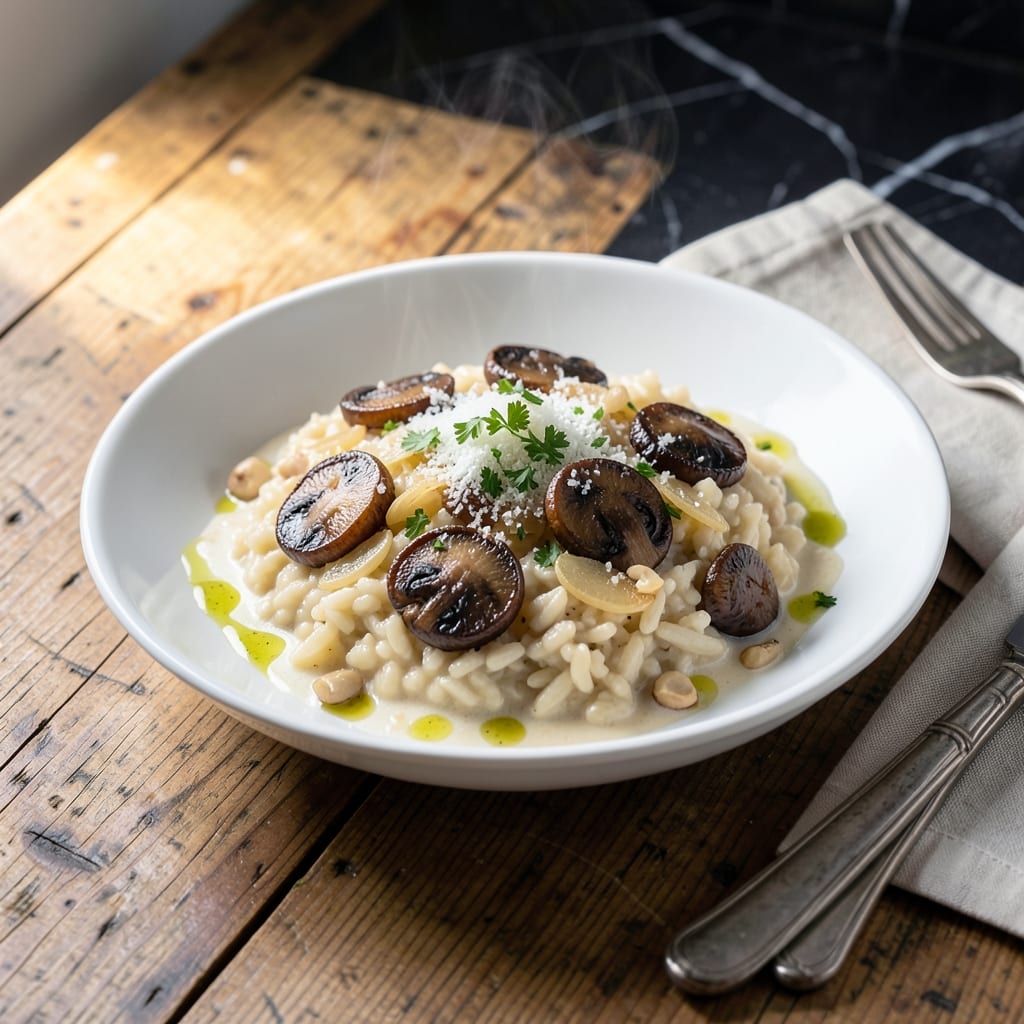
This mushroom arborio rice delivers the creamy texture that defines authentic risotto. The slow cooking process coaxes out the starches, creating that signature velvety consistency.
Earthy mushrooms add depth while the technique ensures each grain stays perfectly al dente. It is a classic dish that rewards patience with restaurant-quality results.
Ingredients for Mushroom Arborio Rice
Arborio rice, earthy mushrooms, and aromatic herbs create this classic creamy dish with restaurant-quality results.
| Ingredient | Amount | Notes |
|---|---|---|
| Arborio Rice 🌾 | 1 ½ cups | Short-grain, uncooked, for creamy texture |
| Cremini Mushrooms 🍄 | 8 oz | Sliced, stems removed, earthy flavor |
| Shallots 🧅 | 2 whole | Finely diced, mild onion flavor |
| Garlic Cloves 🧄 | 4 cloves | Minced for aromatic depth |
| Vegetable Stock 🥫 | 4 cups | Low-sodium preferred for control |
| Dry White Wine 🍷 | ½ cup | Crisp variety like Pinot Grigio |
| Unsalted Butter 🧈 | 4 tbsp | For richness and creaminess |
| Parmesan Cheese 🧀 | ¾ cup | Freshly grated, aged for depth |
| Fresh Thyme Sprigs 🌿 | 3 whole | Leaves stripped, for earthy aroma |
| Fresh Flat-Leaf Parsley 🌿 | ¼ cup | Chopped, for bright garnish |
| Olive Oil 🫒 | 2 tbsp | Extra-virgin for sautéing |
| Kosher Salt 🧂 | 1 tsp | Diamond Crystal preferred for texture |
| Freshly Ground Black Pepper 🌶️ | ½ tsp | For subtle heat and aroma |
The Arborio rice is non-negotiable—its high starch content is what delivers that signature creamy texture. Look for Italian imports at specialty stores like Eataly or well-stocked supermarkets. Cremini mushrooms (baby bellas) offer the deepest earthy flavor, but shiitake or porcini work beautifully if you want more intensity. Always buy them fresh—avoid pre-sliced, as they lose moisture quickly.
No white wine? Dry vermouth is an excellent substitute, or use additional stock with a splash of lemon juice. Shallots can be replaced with yellow onion at a 1:1 ratio, though the flavor will be slightly sharper. For a vegan version, swap butter for olive oil and use nutritional yeast instead of Parmesan (though the flavor profile will differ). The stock must be warm when added—cold liquid shocks the rice and interrupts the creaming process.
Store Arborio rice in an airtight container in a cool, dark place for up to 1 year. Fresh mushrooms keep in the fridge for 5-7 days but are best used within 3 for peak flavor. The risotto itself is best served immediately, though leftovers can be refrigerated for 2 days and reheated with a splash of stock.
Why You’ll Love This Recipe
- One Pot Wonder: I love that it all comes together in a single pan—no extra dishes, just creamy Arborio rice soaking up all the mushroom and garlic flavor.
- Umami Bomb: The cremini mushrooms and shallots create this deep, earthy taste that makes every bite feel like a restaurant meal.
- Meal Prep Hero: Honestly, it reheats beautifully for lunch the next day, and the rice stays just as creamy.
- Budget Friendly: Arborio rice and mushrooms stretch a long way, and vegetable stock keeps it affordable without sacrificing taste.
Step-by-Step Instructions for Mushroom Arborio Rice
Master the technique for achieving that perfect creamy texture with every grain.
Step 1: Sauté Aromatics and Mushrooms
Heat the 2 tbsp olive oil in a large, heavy-bottomed pot over medium heat. Add the 2 whole shallots and cook for 2-3 minutes until translucent and fragrant. Stir in the 8 oz cremini mushrooms and cook for 5-6 minutes until they release their moisture and develop a golden brown color.
This step builds the flavor foundation. The mushrooms should shrink significantly and the shallots should be soft but not browned. Add the 4 cloves garlic cloves and 3 whole fresh thyme sprigs during the last 30 seconds of cooking to infuse their aromas without burning.
Step 2: Toast the Arborio Rice
Stir in the 1.5 cups Arborio Rice and cook for 1-2 minutes, stirring constantly. The grains should become slightly translucent at the edges with a white dot in the center—this indicates proper toasting.
Toasted rice develops a nutty flavor and creates a starch coating that helps achieve the creamy texture. Watch carefully to prevent burning. Season with 1 tsp kosher salt and 0.5 tsp freshly ground black pepper during this step to layer the flavors from the beginning.
Step 3: Deglaze with White Wine
Pour in the 0.5 cup dry white wine and stir constantly until the liquid is nearly completely absorbed. This should take 2-3 minutes at a gentle simmer. The alcohol will cook off, leaving behind its bright acidity to balance the richness of the dish.
You’ll notice the rice mixture become slightly sticky as the starches begin to release. This is exactly what you want. Maintain medium heat throughout—too high will cause the wine to evaporate too quickly without properly deglazing the pan.
Step 4: Gradually Add Vegetable Stock
Begin adding the 4 cups vegetable stock ½ cup at a time, stirring frequently. Wait until each addition is nearly fully absorbed before adding the next. This gradual process should take 18-20 minutes total and is crucial for developing the characteristic creamy consistency.
The rice is ready for the next addition when you can draw a line through the mixture with your spoon and it holds its shape briefly. The grains should be plump but still have a slight bite. Stir in 2 tbsp unsalted butter during the last 5 minutes of cooking to enrich the developing sauce.
Step 5: Finish with Parmesan and Rest
Remove from heat and stir in the remaining 2 tbsp unsalted butter and 0.75 cup Parmesan cheese. The mixture should become glossy and flow like thick porridge. Taste and adjust seasoning if needed—remember the Parmesan adds saltiness.
Let the risotto rest for 2 minutes off heat. This allows the final starches to release and the flavors to meld. Garnish with 0.25 cup fresh flat-leaf parsley just before serving. The finished dish should be creamy but not soupy, with each grain of rice distinct yet bound by the rich sauce.
Pro Tips For Making Mushroom Arborio Rice
- Toast the Rice First: Sauté the Arborio in the pan for 2-3 minutes until translucent before adding liquid—I learned this the hard way after my first few batches tasted raw in the center.
- Sear the Mushrooms: Cook the creminis in a dry pan first to drive off moisture, then add oil. Sounds weird, but it actually changes the outcome, giving them a deeper, meatier flavor.
- Warm the Stock: Keep your vegetable stock simmering in a pot next to the risotto—I skip this when I’m lazy, but the dish is noticeably better when the liquid is hot from the start.
- Skip the Rinse: Resist the urge to wash the Arborio rice; the starch on the grains is crucial for that creamy texture you’re after.
Troubleshooting mushroom arborio rice
Rice Still Crunchy
If your grains remain hard after 20 minutes, the stock wasn’t warm enough. Always heat broth to a gentle simmer before adding. Also, ensure you’re adding liquid in ½ cup increments—too much at once can dilute the cooking process and prevent proper starch release. 💡
Mushy Texture
Overcooked risotto often results from adding all stock at once. The gradual addition is crucial. If it happens, reduce cooking time by 2-3 minutes next time and taste test earlier. Stirring constantly prevents sticking but also helps you monitor doneness.
Bland Flavor
Season in layers: salt the rice during toasting, and don’t forget the Parmesan adds saltiness. If still bland, finish with a squeeze of lemon juice to brighten flavors. I always taste before the final cheese addition to adjust seasoning properly.
Stock Absorbs Too Fast
Your heat might be too high. Maintain a gentle simmer, not a boil. If liquid absorbs too quickly, lower the temperature slightly and add a splash of warm water between stock additions. A heavy-bottomed pot, like Le Creuset, helps maintain even heat. 🔥
Sauce Too Thin
Let it rest off heat for 2 minutes—the starches will thicken it naturally. If still thin, cook for 1-2 minutes longer. Avoid adding cold liquid at the end, as it can shock the rice and prevent proper creaminess.
Sticking to Pan
Use a wooden spoon and keep stirring. If it sticks, your heat is too high or you waited too long between additions. Scrape the bottom gently to release any fond, which adds flavor. Nonstick pans work, but I prefer stainless steel for better browning.
Nutrition Facts
Frequently Asked Questions
What’s the best type of rice for creamy texture?
Arborio is ideal for its high starch content. Carnaroli or Vialone Nano also work well. Avoid long-grain varieties as they lack the starch needed for that signature velvety finish.
Can I use a different type of mushroom?
Yes! Try shiitake for umami depth or wild mushrooms for earthier flavor. Just avoid watery varieties like button mushrooms. Sauté any type until golden for best results.
How do I prevent the risotto from sticking?
Use a heavy-bottomed pot and maintain medium heat. Stir frequently with a wooden spoon. If using stainless steel, deglaze with a splash of stock between additions.
Can I make this ahead of time?
Risotto is best served immediately, but you can par-cook the rice for 15 minutes, then finish with stock and cheese just before serving. Store leftovers in the fridge for up to 2 days.

- Mujadara Rice and Lentils Recipe: Earthy Spiced Lentils With Caramelized Onions - November 1, 2026
- Naija Fried Rice Recipe: Street-Style Spice With Veggie Crunch - November 1, 2026
- Mushy Rice Recipe: Fluffy Grains Transformed in Minutes - November 1, 2026