
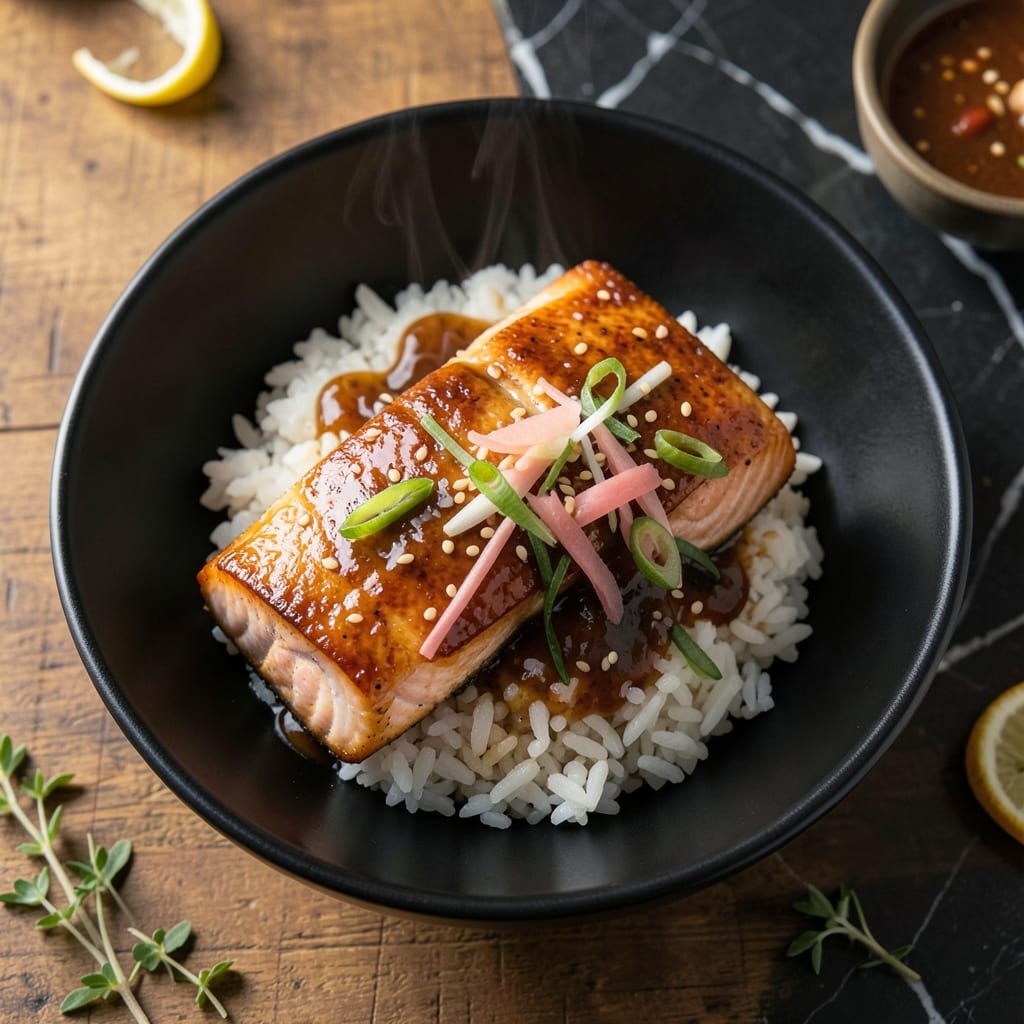
This rice cooker method delivers restaurant-quality miso salmon with almost no effort. The hands-off approach lets the flavors meld perfectly while you focus on other tasks.
I’ve perfected this technique to ensure the salmon stays moist and tender while absorbing the rich umami of the miso marinade. The rice cooker creates the ideal steam environment for even cooking.
What emerges is flaky salmon with a glossy glaze, infused with miso’s deep, savory notes. The dish comes together in 30 minutes with minimal active time.
Serve the salmon over rice for a complete meal that tastes like it came from a professional kitchen. The results speak for themselves.
Ingredients for Miso Salmon Rice Cooker
Minimal effort, maximum flavor with these restaurant-quality ingredients for the dish.
| Ingredient | Amount | Notes |
|---|---|---|
| Salmon Fillets 🐟 | 1 ½ lb | Skin-on, wild-caught preferred |
| White Miso Paste 🥣 | ½ cup | Fermented soybean, smooth texture |
| Mirin 🍶 | 2 tbsp | Sweet cooking rice wine |
| Soy Sauce 🫙 | 2 tbsp | Low-sodium preferred |
| Sake 🍸 | 1 tbsp | Dry Japanese rice wine |
| Brown Sugar 🏝️ | 1 tbsp | Packed, for balance |
| Fresh Ginger 🌿 | 1 tbsp | Minced or grated fine |
| Garlic Cloves 🧄 | 2 cloves | Minced for marinade |
| Jasmine Rice 🍚 | 1 ½ cups | Uncooked, rinsed well |
| Water 💧 | 2 ¼ cups | For rice cooker |
| Green Onions 🧅 | 3 whole | Thinly sliced for garnish |
| Sesame Seeds 🌰 | 1 tsp | Toasted, for finishing |
The salmon quality matters here. Wild-caught fillets (sockeye or king) have the richest flavor and hold up best to cooking. Look for bright, vibrant flesh with no brown spots. Whole Foods and Costco have reliable options. For the miso, white or awase (mixed) works best—avoid red miso as it’s too strong. Most Asian markets carry it in the refrigerated section.
No mirin? Substitute 1 tbsp rice vinegar plus 1 tbsp sugar. Sake can be replaced with dry sherry in a pinch. If you’re avoiding alcohol entirely, skip the sake and add 1 tsp extra sugar to balance. Fresh ginger is ideal, but ground ginger at one-third the amount works. For the rice, basmati or short-grain work too—just adjust water slightly.
The miso marinade keeps 3 days refrigerated in an airtight container. Cooked salmon holds for 2 days in the fridge—reheat gently to avoid drying. Leftovers? Flake into salads or grain bowls. The rice freezes well for up to 1 month.
Why You’ll Love This Recipe
- Dump and Run: I toss everything in the rice cooker, press start, and walk away—no babysitting required.
- Umami Bomb: The miso, mirin, and sake create this deep, savory glaze that makes the salmon taste like it came from a high-end sushi spot.
- Meal Prep MVP: I make a big batch on Sunday and it reheats beautifully for lunches all week.
- Budget Stretcher: One fillet goes a long way when paired with rice, and the sauce ingredients last for multiple meals.
Step-by-Step Instructions for Miso Salmon Rice Cooker
This method delivers perfectly cooked salmon and rice with minimal effort and maximum flavor.
Step 1: Prepare the Miso Marinade
In a medium bowl, combine the 0.5 cup white miso paste, 2 tbsp mirin, 2 tbsp soy sauce, 1 tbsp sake, 1 tbsp brown sugar, 1 tbsp fresh ginger, and 2 cloves garlic cloves.
Whisk the mixture until the brown sugar dissolves completely and the marinade becomes smooth and glossy. The miso paste should be fully incorporated with no visible lumps.
The balance of sweet mirin, salty miso, and aromatic ginger and garlic creates a complex umami flavor base that will infuse the salmon beautifully.
Step 2: Marinate and Prepare the Salmon
Place the 1.5 lb salmon fillets skin-side down in a shallow dish and pour the marinade over them, ensuring all surfaces are coated. Let the salmon marinate at room temperature for 15-20 minutes while you prepare the rice.
Do not marinate the salmon for longer than 30 minutes as the acidic ingredients in the marinade can begin to break down the protein, resulting in a mushy texture.
After marinating, gently wipe off excess marinade from the salmon. This prevents burning during cooking while maintaining the flavor infusion.
Step 3: Cook the Rice in the Rice Cooker
Rinse the 1.5 cups jasmine rice thoroughly under cold water until the water runs clear. This removes excess starch and prevents the rice from becoming gummy.
Add the rinsed rice to your rice cooker along with the 2.25 cups water. Start the rice cooker and let it run its standard cooking cycle. Most rice cookers will automatically switch to “keep warm” when done.
The rice should be finished cooking just as your salmon is ready, allowing for perfect timing. The steam from the rice cooker will also help cook the salmon placed on top.
Step 4: Cook the Salmon on the Rice
Once the rice is nearly finished (when the cooker switches to keep warm or about 5 minutes before completion), place the marinated salmon fillets skin-side down directly on top of the hot rice.
Close the rice cooker lid and let the salmon steam for 10-12 minutes. The salmon is done when it flakes easily with a fork and reaches an internal temperature of 145°F.
The residual heat and steam in the rice cooker will perfectly cook the salmon while infusing it with additional aroma from the rice.
Step 5: Garnish and Serve
Carefully remove the salmon from the rice cooker and place it on a serving platter. Thinly slice the 3 whole green onions and sprinkle them over the salmon and rice.
Sprinkle the 1 tsp sesame seeds evenly over the top of the salmon for added texture and visual appeal. The green onions add a fresh contrast to the rich miso flavor.
Serve the salmon immediately with the jasmine rice, ensuring each serving gets a portion of both. The salmon should be moist and flaky with a beautiful glaze from the miso marinade.
Pro Tips For Making Miso Salmon Rice Cooker
- Pre-cook the marinade: Mix the miso, mirin, soy sauce, and sake in a small pan and heat for 2-3 minutes to mellow the raw alcohol flavor—it makes a real difference in the final taste.
- Pat salmon dry: Blot the fillets with paper towels before marinating so the sauce clings better instead of sliding right off.
- Don’t overcrowd: Place salmon in a single layer in the rice cooker with space between pieces, or it’ll steam unevenly and stick together.
- Use room-temp fish: Let the salmon sit out for 10-15 minutes before cooking—cold fillets straight from the fridge cook less evenly in the rice cooker.
Dietary Considerations for These Flavors
Gluten-Free Adaptation
This dish is naturally gluten-free if you use tamari instead of regular soy sauce. Check your miso paste label—most white miso is gluten-free, but some brands add barley. I trust Miso Master or South River Miso for safe options.
Low-Sodium Option
Reduce sodium by using low-sodium soy sauce and low-sodium miso paste. You can also decrease the total soy sauce to 1 tbsp and add 1 tsp fish sauce for depth. Taste the marinade before applying to adjust seasoning.
Vegetarian Substitution
Swap salmon for extra-firm tofu pressed and cut into 1-inch slabs. Marinate for 30 minutes and cook the same way. The tofu absorbs the miso flavor beautifully, though it won’t flake like fish. 💪
Dairy-Free Note
This recipe contains no dairy, making it suitable for lactose-intolerant diners. The miso marinade and salmon provide rich umami without any milk products. Always verify your miso paste brand, as some may contain trace dairy from processing.
Pescatarian-Friendly
As a pescatarian dish, this fits perfectly into seafood-focused diets. The salmon provides omega-3 fatty acids while the rice offers complex carbs. I often add steamed edamame on the side for extra plant-based protein.
Allergen Awareness
Common allergens here are soy (miso, soy sauce) and fish. For soy allergies, use coconut aminos as a substitute. Always disclose ingredients to guests with food sensitivities. 💡
Nutrition Facts
Frequently Asked Questions
Can I use a different type of miso?
White miso is best for its mild, sweet flavor. Red miso is too strong and can overpower the salmon.
Should I remove the salmon skin?
Keep the skin on—it helps hold the fillets together during cooking. The rice cooker steam will soften it nicely.
What if my rice cooker doesn’t have a steam setting?
Simply start the rice cycle, then add salmon when it switches to keep warm. The residual heat works perfectly.
How do I prevent the salmon from sticking to the rice?
Lightly oil the rice surface before placing salmon on top. Use a thin spatula to lift it off after cooking.

- Mujadara Rice and Lentils Recipe: Earthy Spiced Lentils With Caramelized Onions - November 1, 2026
- Naija Fried Rice Recipe: Street-Style Spice With Veggie Crunch - November 1, 2026
- Mushy Rice Recipe: Fluffy Grains Transformed in Minutes - November 1, 2026