
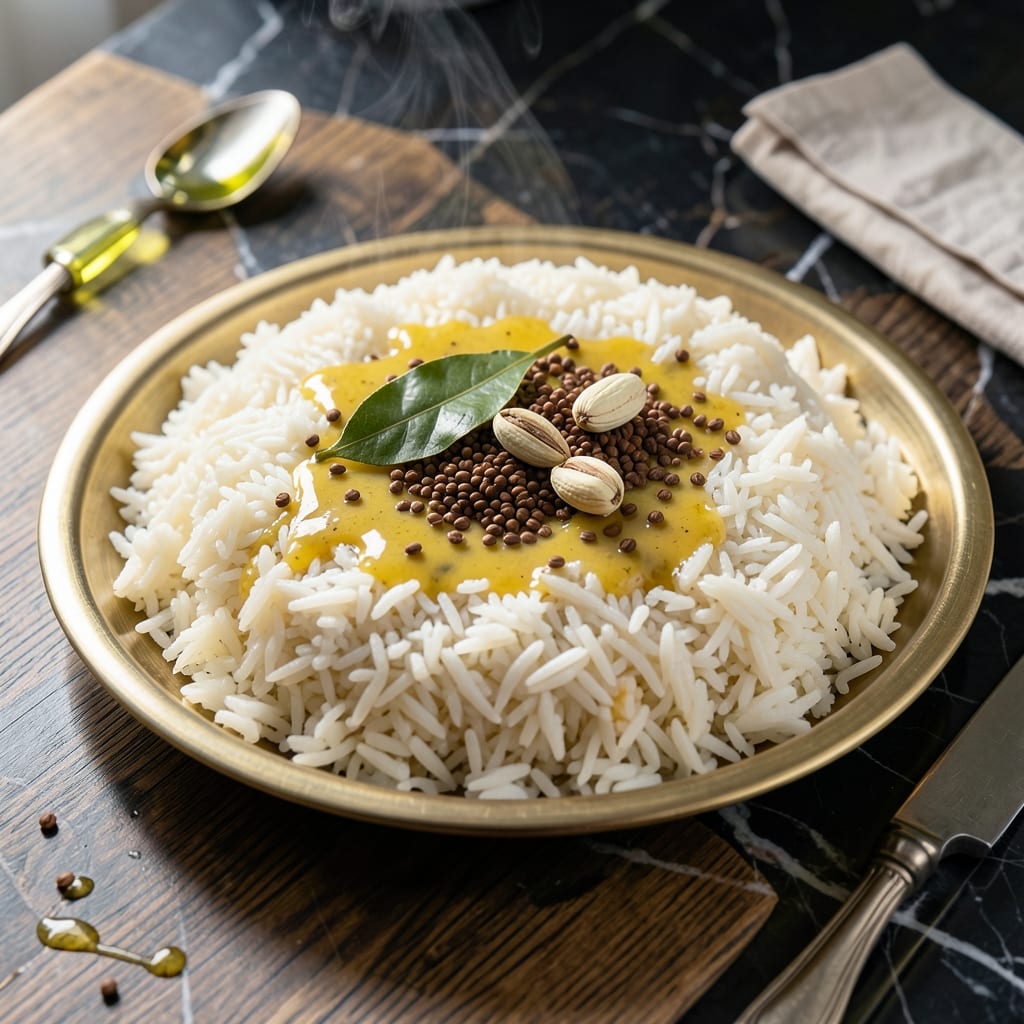
This traditional dish brings the essence of Nepal to your kitchen with its distinctive aroma and simple preparation.
Using just a few basic ingredients, this recipe captures the authentic flavors of the Himalayas. The technique ensures each grain stays separate and fragrant.
What emerges is perfectly cooked rice with a subtle, earthy scent that complements any Nepali meal. The texture remains light and fluffy every time.
Serve this as a base for curries, vegetables, or lentils to complete your authentic Nepali dining experience.
Ingredients for Nepali Rice
Simple ingredients create authentic Himalayan fragrant rice with perfect texture every time.
| Ingredient | Amount | Notes |
|---|---|---|
| Basmati Rice 🍚 | 2 cups | Rinsed until water runs clear |
| Water 💧 | 4 cups | Filtered for best flavor |
| Ghee 🧈 | 2 tbsp | Clarified butter, traditional choice |
| Cumin Seeds 🌿 | 1 tsp | Lightly toasted for aroma |
| Bay Leaf 🍃 | 1 whole | Dried, for infusion |
| Cardamom Pods 🌿 | 2 whole | Lightly crushed to release flavor |
| Cloves 🌿 | 2 whole | Optional for depth |
| Cinnamon Stick 🌿 | 1 whole | Small piece, about 1 inch |
| Salt 🧂 | 1 tsp | Adjust to taste preference |
| Fresh Cilantro 🌿 | ¼ cup | Chopped, for garnish |
For authentic Nepali flavor, ghee from an Indian grocery store is ideal—look for brands like Gowardhan or Amul. Basmati rice should be aged and long-grain; Tilda or Daawat are reliable. Whole spices (cardamom, cloves, cinnamon) lose potency quickly, so buy from stores with high turnover like Patel Brothers or local South Asian markets. Freshness is key for that signature aroma.
No ghee? Clarified butter or neutral oil works in a pinch. Missing whole spices? Ground cumin and a pinch of cinnamon can substitute (use half the amount). For extra fragrance, add a dried rose petal while cooking (available at Middle Eastern stores). The cilantro garnish is optional but adds vibrant color and freshness.
Uncooked rice keeps indefinitely in a cool, dry place. Cooked rice stays fresh for 3-4 days refrigerated or 3 months frozen. For best texture, reheat with a splash of water and fluff with a fork. Always store spices in airtight containers away from light.
Why You’ll Love This Recipe
- One Pot Wonder: I just dump everything in—basmati rice, cumin seeds, bay leaf, ghee—and let it simmer. No stirring, no fuss.
- Aroma Heaven: The ghee and cumin hit my kitchen with this warm, nutty scent that makes my whole house smell like home.
- Pairs With Anything: I serve it with dal one night, then with curry the next. Honestly, it’s my blank canvas for any meal.
- Stretches Far: A cup of rice makes enough for two meals, so I always have leftovers. Between us, it tastes even better the next day.
Step-by-Step Instructions for Nepali Rice
Master the technique for perfectly fragrant rice with these precise steps.
Step 1: Rinse and Soak the Basmati Rice
Place the 2 cups Basmati Rice in a fine-mesh strainer and rinse under cold running water until the water runs completely clear. This removes excess starch that could make your rice gummy. I rinse mine at least 4-5 times to ensure purity.
Transfer the rinsed rice to a bowl and cover with fresh water. Let it soak for 20-30 minutes. This step plumps the grains and ensures they cook evenly without breaking. Drain thoroughly before cooking—any residual water will throw off your liquid ratio.
Step 2: Toast the Whole Spices and Cumin
In a heavy-bottomed pot, melt the 2 tbsp Ghee over medium heat. Add the 1 tsp Cumin Seeds, 1 whole Bay Leaf, 2 whole Cardamom Pods, 2 whole Cloves, and 1 whole Cinnamon Stick. Stir constantly for 1-2 minutes until the spices become fragrant and the cumin seeds start to sizzle.
Here’s the thing—you want to toast the spices just until they release their aroma, not until they brown. Burnt spices will make your rice bitter. The ghee should be shimmering but not smoking when you add the next ingredients.
Step 3: Cook the Rice with Spices
Add the drained 2 cups Basmati Rice to the pot and stir to coat the grains with the spiced ghee. Cook for 1-2 minutes, stirring gently, until the rice becomes slightly translucent at the edges. This step enhances the nutty flavor of the basmati.
Pour in the 4 cups Water and add the 1 tsp Salt. Stir once to distribute the spices and salt evenly. Bring the mixture to a rolling boil over high heat—you should see vigorous bubbles breaking the surface.
Step 4: Simmer Until Tender
Once boiling, reduce the heat to low, cover the pot with a tight-fitting lid, and let the rice simmer undisturbed for 15 minutes. Don’t peek during this time—releasing steam will lower the temperature and extend the cooking time.
After 15 minutes, turn off the heat but leave the lid on for an additional 5 minutes. This allows the rice to steam in its own moisture, ensuring every grain is perfectly tender. The rice is done when all liquid is absorbed and the grains are separate and fluffy.
Step 5: Fluff and Garnish
Remove the lid and gently fluff the rice with a fork, taking care not to break the grains. Look for the Bay Leaf, Cardamom Pods, Cloves, and Cinnamon Stick—you can leave them in for visual appeal or remove them before serving.
Transfer the rice to a serving dish and sprinkle with the 0.25 cup Fresh Cilantro. The vibrant green cilantro adds a fresh contrast to the warm, aromatic spices. Serve immediately while the rice is hot and the fragrance is at its peak.
Pro Tips For Making Nepali Rice
- Soak the Basmati: Give the rice a 30-minute soak in cold water before cooking—it plumps the grains and prevents that dreaded mushy texture I’ve ruined too many times.
- Toast the Cumin: Heat the cumin seeds in ghee for just 20-30 seconds until fragrant, but pull them off before they darken—burnt cumin tastes bitter, and I learned this the hard way.
- Use Enough Ghee: Don’t skimp on the ghee; about 2 tablespoons for 1 cup of rice coats the grains properly and gives that rich, nutty flavor Nepali rice is known for.
- Cover Tightly: Once the water’s absorbed, seal the pot with a tight lid and let it sit off-heat for 10 minutes—this steams the rice perfectly without sticking, even if you’re as impatient as I am.
Essential Equipment for This Recipe
Core Cooking Pot
I always use a heavy-bottomed stainless steel pot with a tight-fitting lid for this dish. The 3-quart All-Clad D3 is my go-to—it distributes heat evenly and prevents hot spots that could burn the spices. A dutch oven works too, but stainless lets you see the rice as it cooks.
Fine-Mesh Strainer
Rinsing basmati properly requires a fine-mesh strainer—I use the OXO Good Grips model. Regular colanders let small grains slip through. Rinse until the water runs completely clear, which usually takes 4-5 rinses for me. 💧
Spice Storage
Keep your whole spices fresh in airtight glass jars from IKEA or World Market. I store mine away from light and heat. Whole spices like cardamom and cloves retain their aroma much longer than ground versions.
Precision Measuring
For consistent results, use standard measuring cups and spoons. I prefer the Pyrek 1-cup for the rice and a set of stainless steel tablespoons for the spices. Level off each measurement for accuracy.
Rice Cooker Option
While traditional stovetop works best, a multi-function rice cooker like the Zojirushi can adapt. Use the “white rice” setting but add the spiced ghee step manually. The texture won’t be quite as perfect, but it’s convenient for busy days.
Serving Tools
A wooden rice paddle or fork is essential for fluffing without crushing the grains. I also keep a small fine-mesh skimmer handy to remove whole spices before serving if desired. Serve immediately in a warm bowl to maintain fragrance. 🔥
Nutrition Facts
Frequently Asked Questions
Can I use regular long-grain rice instead?
Basmati is ideal for its aroma and texture, but long-grain white rice can work in a pinch. Reduce water to 3.5 cups and expect slightly less fragrance. The grains won’t separate as perfectly.
Why do I need to soak the rice first?
Soaking for 20-30 minutes plumps the grains and ensures even cooking. It prevents broken rice and helps achieve that signature fluffy texture. Skipping this step often results in uneven doneness.
How do I fix mushy rice?
Drain immediately and spread on a baking sheet to dry. Next time, use less water (3.75 cups max) and avoid stirring after adding liquid. Always rinse thoroughly to remove excess starch.
Can I make this in a rice cooker?
Yes, but toast spices separately first. Use the standard white rice setting with the same 1:2 rice-to-water ratio. The texture may be slightly denser than stovetop.

- Jollof Rice Sauce Recipe: West African Tomato and Spice Infusion - September 25, 2026
- Japanese Rice Soup Recipe: Umami-Rich Comfort in a Bowl - September 25, 2026
- Homemade Cream Of Rice Recipe: Silk-Smooth Breakfast in Minutes - September 25, 2026