
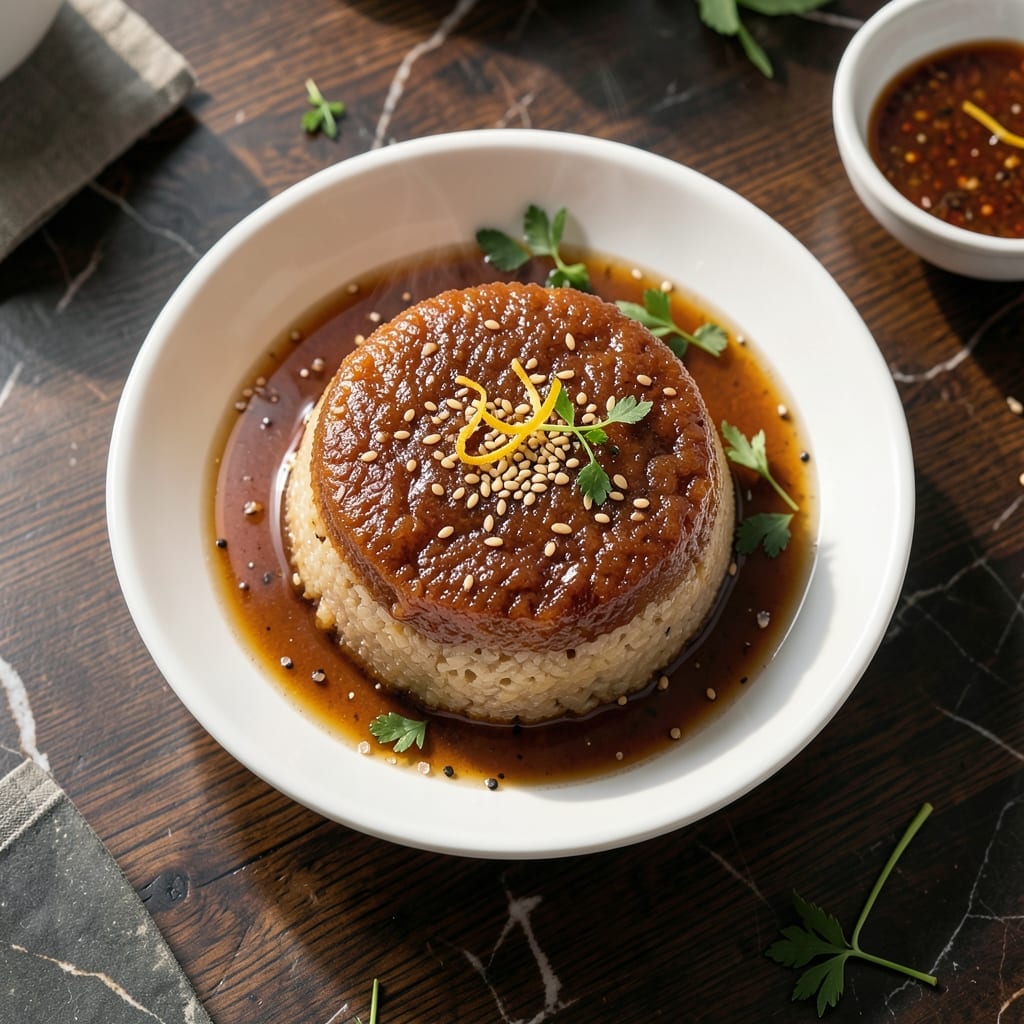
This traditional Chinese New Year treat delivers the perfect balance of chewy texture and crispy golden edges. I’ve refined the technique to achieve that coveted contrast without sacrificing the soft, sticky interior.
The secret lies in the slow steaming process, followed by a quick pan-fry to create that irresistible crust. Simple ingredients—glutinous rice flour, sugar, and water—come together to form a batter that transforms into something extraordinary.
What emerges is a cake with a glossy, slightly stretchy center and a caramelized exterior that adds depth to every bite. The sweetness is subtle, allowing the natural nuttiness of the rice flour to shine through.
Serve it sliced and pan-fried for an extra layer of texture. This dish is as rewarding to make as it is to eat.
Ingredients for Nian Gao Rice Cake
Simple pantry ingredients transform into this traditional chewy-sweet cake with golden edges.
| Ingredient | Amount | Notes |
|---|---|---|
| Glutinous Rice Flour 🌾 | 2 cups | Also called sweet rice flour |
| Granulated Sugar 🍚 | ¾ cup | White sugar preferred |
| Water 💧 | 1 ¼ cups | Warm water for batter |
| Brown Sugar 🟤 | ¼ cup | Light or dark variety |
| Neutral Oil 🫒 | 2 tbsp | For pan-frying slices |
| Sesame Seeds 🌰 | 1 tbsp | Toasted, for garnish |
| Red Bean Paste 🍡 | ½ cup | Optional filling layer |
| Dried Dates 🍈 | 4 pieces | Pitted and chopped |
| Vanilla Extract 🌿 | 1 tsp | Pure extract preferred |
| Baking Powder 🧂 | 1 tsp | For slight lift |
Glutinous rice flour is non-negotiable here—look for it in Asian markets or the international aisle at Whole Foods. It’s different from regular rice flour, so don’t substitute. The brown sugar creates that caramelized crust, so use fresh, soft brown sugar (not the hardened stuff in the back of your cabinet). For the red bean paste, store-bought works fine, but homemade is next-level if you’re feeling ambitious.
No glutinous rice flour? Unfortunately, there’s no perfect substitute—regular flour won’t give you the right texture. Swap the brown sugar for honey or maple syrup (reduce water slightly). Skip the dates if you prefer a smoother cake. The vanilla is subtle but worth it—use pure extract, not imitation. For a savory twist, omit the sugar and add scallions (but that’s a different dish entirely).
The cake steams first, then pan-fries, so no advance prep is needed. Store leftovers wrapped at room temp for 2-3 days, or refrigerate for 1 week. Reheat slices in a dry pan to revive the crispy edges. The batter comes together in minutes—no resting required.
Why You’ll Love This Recipe
- I’ll be real: leftovers taste even better the next day, and they’ll last for a week.
- Five Ingredients: I love that this only needs glutinous rice flour, sugar, water, oil and brown sugar—nothing fancy.
- Caramelized Sweetness: The brown sugar creates this deep, sticky caramel layer that makes every bite irresistible.
- Celebration Ready: Honestly, it’s my go-to for Lunar New Year, but also great for surprise potlucks.
Step-by-Step Instructions for Nian Gao Rice Cake
This method ensures a chewy interior with the promised crispy edges every time.
Step 1: Mix the Batter to Perfect Consistency
In a large bowl, whisk together the 2 cups Glutinous Rice Flour, 0.75 cup Granulated Sugar, 0.25 cup Brown Sugar, and 1 tsp Baking Powder until fully combined. This dry mix forms the foundation of your cake’s texture.
Gradually pour in the 1.25 cups Water and 1 tsp Vanilla Extract while whisking continuously. The batter should be smooth and thick, similar to pancake batter. Avoid lumps by whisking vigorously for 2-3 minutes until completely homogeneous.
Step 2: Steam the Cake Until Set
Lightly grease a heatproof dish or cake pan with 1 tbsp Neutral Oil to prevent sticking. Pour the batter into the prepared dish and smooth the top with a spatula. Sprinkle the 4 pieces Dried Dates (pitted and chopped) evenly over the surface for natural sweetness.
Place the dish in a steamer over boiling water, ensuring the water doesn’t touch the dish. Cover with a lid and steam for 45-50 minutes until the center is set and a toothpick inserted comes out clean. The top should look slightly glossy and firm to the touch.
Step 3: Add the Filling Layer (Optional)
If using, spread the 0.5 cup Red Bean Paste evenly over the steamed cake while it’s still warm. Press lightly so it adheres to the surface. This layer adds a rich, sweet contrast to the cake’s mild flavor.
Return the cake to the steamer and steam for an additional 10 minutes to warm the filling through. The red bean paste should soften slightly but retain its shape.
Step 4: Pan-Fry for Crispy Edges
Once cooled, cut the cake into ½-inch thick slices. Heat the remaining 1 tbsp Neutral Oil in a non-stick skillet over medium heat. Place the slices in the pan and cook for 3-4 minutes per side until golden brown and crispy.
Watch for the edges to develop a deep caramelized crust—that’s how you know they’re ready. The interior should remain soft and chewy, creating the perfect textural contrast.
Sprinkle with the 1 tbsp Sesame Seeds just before serving for added crunch and visual appeal. Serve warm to fully appreciate the sticky-sweet combination.
Pro Tips For Making Nian Gao Rice Cake
- Steam Evenly: Use a deep pot with a tight lid and keep the water at a rolling boil—this guarantees the glutinous rice flour cooks through without a gummy center.
- Sift the Flour: I learned this the hard way—clumps in the rice flour mean lumps in your nian gao, so sift it twice before mixing with water.
- Oil the Pan Well: Coat your baking dish with at least 1 tablespoon of neutral oil, even the sides, or the cake will stick and tear when you try to remove it.
- Cool Before Slicing: After steaming, let it rest for 10 minutes before cutting—this keeps the slices clean and prevents the soft texture from collapsing.
Wine and Beer Pairings for These Flavors
Tea Pairings
For a traditional approach, I love serving this with jasmine tea—its floral notes complement the cake’s subtle sweetness beautifully. Brew at 195°F for 3 minutes to avoid bitterness. The delicate aroma enhances the rice flour’s natural nuttiness. 🌸
Sweet Wines
A glass of Moscato d’Asti from Italy pairs wonderfully, as its light fizz and honeyed stone fruit flavors match the cake’s sticky texture. Serve chilled at 45-50°F for the best experience. The slight effervescence cleanses your palate between bites.
Beer Options
Surprisingly, a Belgian Tripel like Westmalle works well—the beer’s spicy yeast notes contrast the sweetness while its high carbonation cuts through the chewy texture. Serve in a tulip glass at 50°F to appreciate its complexity. 🍺
Non-Alcoholic Choices
For a kid-friendly pairing, try lychee juice or chilled soy milk with a touch of honey. Both drinks add a refreshing contrast to the cake’s richness. The lychee’s floral sweetness mirrors the dessert’s subtle caramelized edges.
Nutrition Facts
Frequently Asked Questions
Can I bake this instead of steaming?
Baking changes the texture significantly. While possible at 350°F for 40-45 minutes, you’ll lose the traditional sticky-chewy quality steaming provides. The edges may crisp but the center won’t be as tender.
Why did my cake turn out dense?
Overmixing the batter can develop the glutinous rice flour too much. Whisk just until smooth, and ensure your steamer has enough water to maintain consistent heat for the full 45-50 minutes.
How do I store leftovers?
Wrap tightly in plastic at room temperature for 2-3 days. For longer storage, refrigerate for up to 1 week. Reheat slices in a dry pan to restore crispiness.
Can I make this savory?
Omit all sugar and add 1 tsp salt and chopped scallions to the batter. Skip the pan-frying step—steamed savory versions are traditionally served plain or with soy sauce.

- Jollof Rice Sauce Recipe: West African Tomato and Spice Infusion - September 25, 2026
- Japanese Rice Soup Recipe: Umami-Rich Comfort in a Bowl - September 25, 2026
- Homemade Cream Of Rice Recipe: Silk-Smooth Breakfast in Minutes - September 25, 2026