
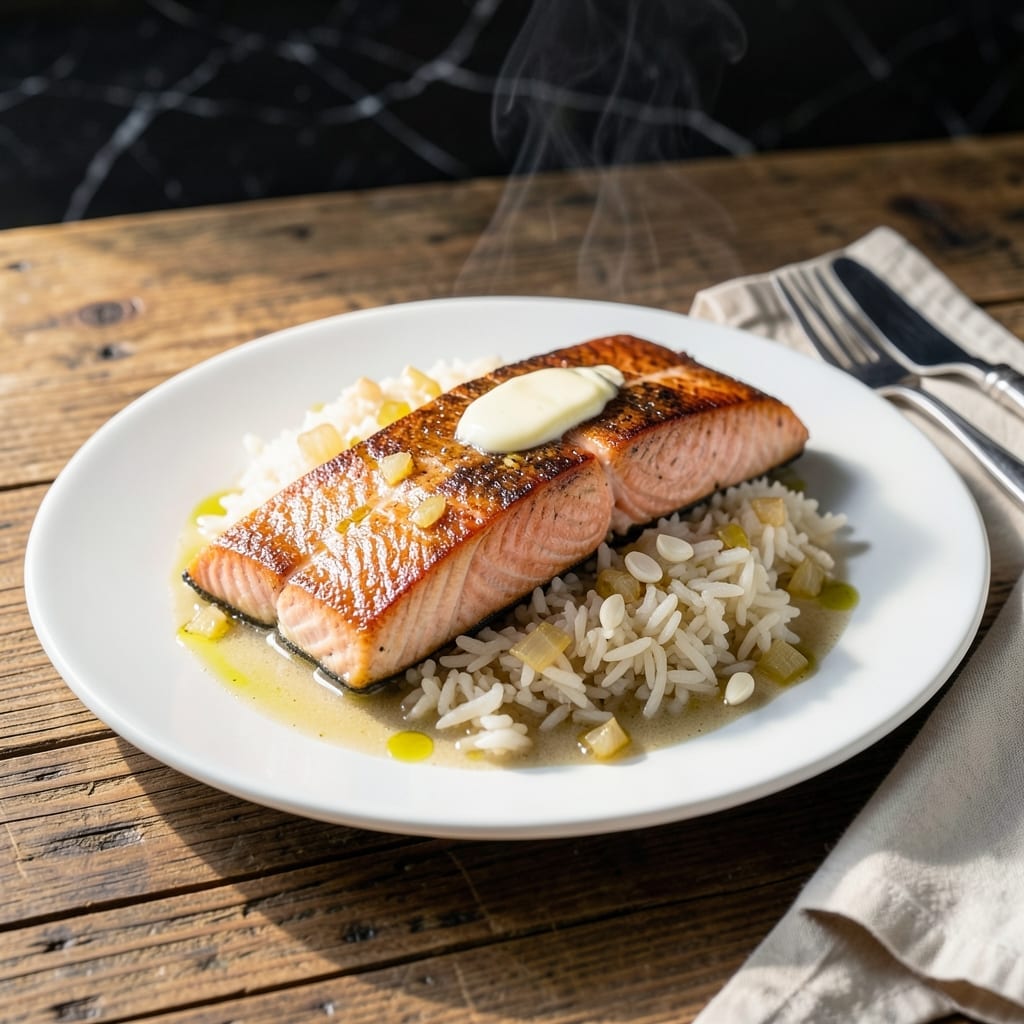
This classic preparation brings together tender salmon and perfectly cooked rice in a timeless combination. I’ve refined this method to ensure the fish stays flaky and moist while the rice absorbs rich, buttery flavor.
The salmon is gently baked to preserve its delicate texture, while the rice simmers in a savory broth for maximum taste. It’s a foolproof approach that honors traditional techniques without unnecessary complexity.
You’ll end up with a dish that feels both comforting and elegant—tender fish over grains that soak up every bit of flavor. The simplicity lets the quality of the ingredients shine.
Serve this for a weeknight dinner or a special occasion. The results are consistently impressive.
Ingredients for Old Fashioned Salmon and Rice
Salmon fillets, fragrant rice, and a few pantry staples create this timeless dish with flaky, buttery results.
| Ingredient | Amount | Notes |
|---|---|---|
| Salmon Fillets 🐟 | 1 ½ lb | Skin-on or skinless, wild-caught preferred |
| Long-Grain White Rice 🍚 | 1 ½ cups | Uncooked, rinsed before use |
| Chicken Broth 🥣 | 3 cups | Low-sodium for better control |
| Unsalted Butter 🧈 | ½ cup | Melted, divided for rice and salmon |
| Yellow Onion 🧅 | 1 whole | Finely diced for rice base |
| Garlic Cloves 🧄 | 3 cloves | Minced for aromatic depth |
| Fresh Lemon 🍋 | 1 whole | Zested and juiced for brightness |
| Fresh Dill 🌿 | ¼ cup | Chopped, for garnish and flavor |
| Dry White Wine 🍷 | ½ cup | Optional, for deglazing pan |
| Olive Oil 🫒 | 2 tbsp | For searing salmon |
| Kosher Salt 🧂 | 1 ½ tsp | Diamond Crystal preferred for even seasoning |
| Freshly Ground Black Pepper 🌶️ | ½ tsp | Coarse grind for texture |
| Bay Leaf 🍃 | 1 whole | For infusion in rice broth |
| Fresh Parsley 🌿 | 2 tbsp | Chopped, for final garnish |
The salmon quality is paramount. Wild-caught sockeye or king salmon delivers the best texture and flavor profile for this preparation. Look for fillets with vibrant color and a fresh, oceanic scent—avoid any with dull flesh or strong odor. Most Whole Foods or high-end seafood counters will have excellent options. For the rice, jasmine or basmati offer superior aroma and separation compared to standard long-grain.
Need to swap the wine? Additional chicken broth works fine, though you’ll miss some depth. Vegetable broth is an acceptable alternative for a lighter profile. If you can’t find fresh dill, 1 tbsp dried dill (added during cooking) provides adequate flavor. The butter can be replaced with olive oil for a dairy-free version, though the richness will differ slightly. No fresh lemon? 1 tbsp bottled lemon juice suffices.
Cooked salmon keeps in the fridge for 2-3 days but is best served immediately. The rice can be made 1 day ahead and reheated with a splash of broth. Leftovers freeze for up to 1 month—store in airtight containers. Always bring salmon to room temperature before reheating to preserve moisture.
Why You’ll Love This Recipe
- One Pot Wonder: I love tossing everything in a single skillet—salmon, rice, onion, broth—and letting it work its magic.
- Buttery Richness: The butter and chicken broth soak into the rice while the salmon stays tender and flaky.
- Weeknight Hero: Honestly, it’s my go-to for busy evenings when I need something hearty without the fuss.
- Stretches Further: Leftovers taste just as good the next day, and it’s kind to my grocery budget.
Step-by-Step Instructions for Salmon and Rice
Master the technique for perfectly flaky salmon paired with rich, buttery rice every time.
Step 1: Prepare the Buttery Rice Base
In a medium saucepan, melt 2 tablespoons of the unsalted butter over medium heat. Add the finely diced yellow onion and cook for 4-5 minutes until translucent and soft, stirring occasionally. The onions should just begin to take on a golden hue at the edges.
Add the minced garlic cloves and cook for 30 seconds until fragrant but not browned. Stir in the 1.5 cups long-grain white rice, coating each grain with the buttery mixture. This toasting step enhances the nutty flavor of the rice.
Pour in the 3 cups chicken broth and add the bay leaf and ½ teaspoon kosher salt. Bring to a boil, then reduce heat to low, cover, and simmer for 15 minutes until the liquid is absorbed. Remove from heat and let it steam, covered, for another 5 minutes.
Step 2: Season and Sear the Salmon
While the rice cooks, pat the 1.5 lb salmon fillets dry with paper towels. This crucial step ensures a good sear. Season both sides with 1 teaspoon kosher salt and ½ teaspoon freshly ground black pepper, pressing the seasoning gently into the flesh.
Heat the 2 tbsp olive oil in a large skillet over medium-high heat until it shimmers. Place the salmon fillets skin-side up in the pan. Cook undisturbed for 4-5 minutes until the bottom develops a golden crust and the edges appear opaque.
Carefully flip the fillets and cook for another 3-4 minutes until the salmon is just cooked through and flakes easily with a fork. The internal temperature should reach 145°F at the thickest part. Transfer the salmon to a plate and tent loosely with foil to keep warm.
Step 3: Create the Pan Sauce and Finish
Reduce the heat to medium and add the ½ cup dry white wine to the skillet. Use a wooden spoon to scrape up any browned bits from the bottom. Let the wine simmer for 2-3 minutes until reduced by half.
Stir in the remaining 6 tablespoons unsalted butter (melted) and the zest and juice of the fresh lemon. Cook for 1 minute until the sauce thickens slightly and becomes glossy. This emulation technique captures all the fond from the pan, creating a rich, bright sauce.
To serve, fluff the rice with a fork and divide it among plates. Top each portion with a salmon fillet, spoon the pan sauce over the fish, and garnish with the ¼ cup chopped fresh dill and 2 tbsp fresh parsley. The herbs add a pop of color and freshness that balances the rich flavors.
Pro Tips For Making Old Fashioned Salmon And Rice
- Poach in Broth: Cook the salmon directly in the chicken broth with the rice—it infuses the fish with flavor and keeps it moist without extra pans.
- Rinse the Rice: Give the long-grain white rice a quick rinse before cooking to remove excess starch, or you’ll end up with a gummy, sticky mess.
- Skin Side Down First: If searing the salmon, start skin-side down in a hot pan with butter for 3-4 minutes—this guarantees crispy skin and prevents sticking.
- Sweat the Onion: Cook the yellow onion in butter until soft and translucent (about 5 minutes) before adding rice—it builds a sweeter, deeper base for the dish.
Essential Equipment for This Recipe
Quality Cookware
For the rice, I swear by my 3-quart Le Creuset Dutch oven—it distributes heat evenly and retains it perfectly for consistent results. The heavy lid creates a tight seal, which is essential for fluffy, well-cooked grains every time. 💛
Skillet Selection
A 12-inch stainless steel skillet like All-Clad D3 is my go-to for searing salmon. It heats quickly and develops a beautiful fond for sauces. Avoid nonstick for this recipe—you want those browned bits for flavor.
Wooden Spoon
Use a wooden spoon to deglaze your pan and scrape up all those flavorful browned bits. I keep a bamboo spoon in my kitchen just for this purpose. It won’t scratch your cookware and handles high heat beautifully.
Instant-Read Thermometer
To ensure perfect salmon every time, I rely on my ThermoWorks ThermoPop. It gives accurate readings in 3-4 seconds so you can pull the fish at exactly 145°F. No more guessing or overcooking.
This small investment takes all the stress out of cooking fish to perfection.
Fine Mesh Strainer
For rinsing your rice before cooking, a fine mesh strainer is essential. I use a Cuisinox model that fits over my sink perfectly. Rinsing removes excess starch, which prevents gummy rice.
Nutrition Facts
Frequently Asked Questions
Can I use brown rice instead?
Yes, but adjust cooking time to 40-45 minutes and use 3.5 cups broth. Brown rice needs more liquid and time to soften.
What’s the best way to reheat leftovers?
Gently warm in a skillet over low heat with a splash of broth. Microwaving can dry out the salmon, so avoid it when possible.
How do I prevent the rice from sticking?
Rinse the rice thoroughly and use a heavy-bottomed pot. Let it rest 5 minutes off heat after cooking to steam evenly.

- Jollof Rice Sauce Recipe: West African Tomato and Spice Infusion - September 25, 2026
- Japanese Rice Soup Recipe: Umami-Rich Comfort in a Bowl - September 25, 2026
- Homemade Cream Of Rice Recipe: Silk-Smooth Breakfast in Minutes - September 25, 2026