
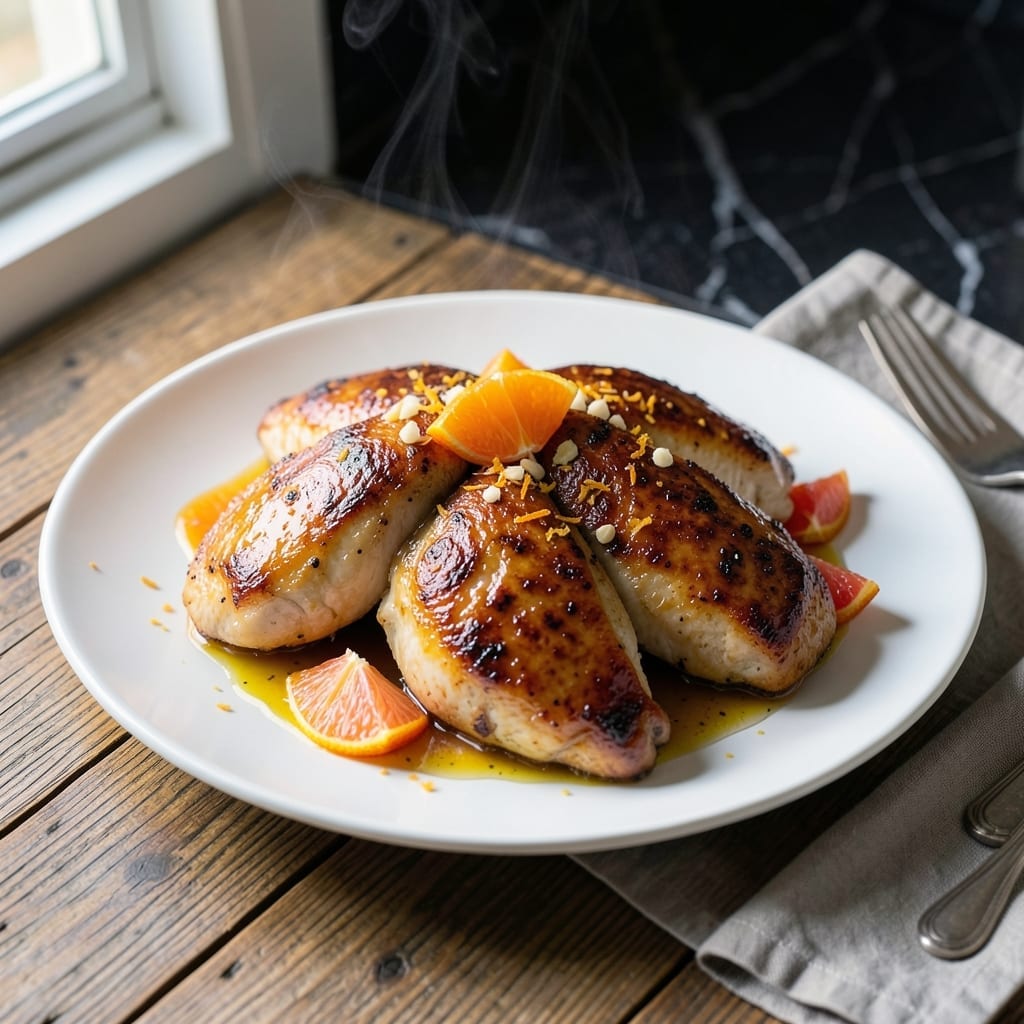
This dish transforms everyday chicken into something extraordinary with a bright citrus glaze that’s both sweet and savory.
I developed this recipe to highlight how orange juice can tenderize meat while building layers of flavor in the sauce. The acidity balances the richness, creating a perfect harmony in every bite.
What makes it special is the simplicity—just a few ingredients and 30 minutes deliver a dish that tastes like it came from a restaurant kitchen.
The result is juicy chicken with a glossy, caramelized finish that pairs beautifully with rice or roasted vegetables.
Ingredients for Orange Juice Chicken
Transform everyday chicken with bright citrus and pantry staples for this restaurant-quality dish.
| Ingredient | Amount | Notes |
|---|---|---|
| Boneless Skinless Chicken Breasts 🍗 | 1 ½ lb | Pounded to even thickness |
| Fresh Orange Juice 🍊 | 1 ½ cups | Newly squeezed preferred |
| Orange Zest 🍊 | 1 tbsp | Finely grated from fresh orange |
| Honey 🍯 | 3 tbsp | Balances citrus acidity |
| Soy Sauce 🫒 | 2 tbsp | Low-sodium for controlled seasoning |
| Minced Garlic 🧄 | 3 cloves | Freshly minced recommended |
| Fresh Ginger 🌿 | 1 tbsp | Peeled and finely grated |
| Olive Oil 🫒 | 2 tbsp | Divided for cooking and finishing |
| Unsalted Butter 🧈 | 2 tbsp | For sauce richness |
| Dijon Mustard 🟡 | 1 tsp | Enhances glaze depth |
| Kosher Salt 🧂 | ½ tsp | Plus more to taste |
| Freshly Ground Black Pepper 🌶️ | ½ tsp | For seasoning chicken |
| Cornstarch 🌾 | 1 tbsp | For glaze thickening |
| Chicken Broth 🍲 | ¼ cup | Low-sodium preferred |
The orange juice is non-negotiable. Freshly squeezed from navel or Valencia oranges delivers the best balance of sweetness and acidity—bottled lacks depth. For the chicken, air-chilled breasts (found at Whole Foods or Trader Joe’s) retain moisture better than water-chilled. Zest the oranges before juicing to maximize flavor extraction. The ginger should be firm and smooth, not fibrous or shriveled.
No fresh oranges? Bottled orange juice in a pinch (use not-from-concentrate), though it won’t caramelize as well. Swap honey for maple syrup or agave at a 1:1 ratio. For a gluten-free version, tamari replaces soy sauce. The Dijon can be substituted with whole-grain mustard for texture. If you lack chicken broth, water with a bouillon cube works, but expect milder flavor.
This glaze thickens as it cools—factor that in if prepping ahead. Store leftovers in an airtight container for up to 3 days in the fridge. The chicken reheats best gently in a skillet with a splash of broth to prevent drying. Freezing isn’t recommended as the texture degrades.
Why You’ll Love This Recipe
- I’ll be real: the flavors taste even better the next day, so I always make extra for lunch.
- One Pan Wonder: I toss everything in a single skillet—chicken, fresh orange juice, honey, and soy sauce—then let it do its thing.
- Sweet-Tangy Magic: The honey and orange zest create this ridiculous caramelized glaze that makes the chicken irrationally addictive.
- Weeknight Hero: Honestly, it’s my go-to for busy evenings—ready faster than takeout and way more satisfying.
Step-by-Step Instructions for Orange Juice Chicken
This method ensures tender chicken with a glossy, citrus-kissed glaze every time.
Step 1: Prepare and Season the Chicken
Pat the 1.5 lb boneless skinless chicken breasts dry with paper towels to ensure proper browning. Pound them to an even ½-inch thickness using a meat mallet—this guarantees uniform cooking and prevents dry spots.
Season both sides generously with the 0.5 tsp kosher salt and 0.5 tsp freshly ground black pepper. I press the seasoning into the meat lightly to ensure it adheres. Let the chicken rest at room temperature for 10-15 minutes while you prepare the glaze components.
Step 2: Sear the Chicken for Maximum Flavor
Heat 1 tbsp olive oil in a large skillet over medium-high heat until it shimmers. Add the chicken breasts and sear for 4-5 minutes per side until golden brown and just cooked through. The internal temperature should reach 160°F.
Watch for the edges to release easily from the pan—that’s your cue to flip. Don’t crowd the skillet; cook in batches if necessary. Transfer the seared chicken to a plate and tent loosely with foil to keep warm while you prepare the glaze.
Step 3: Create the Orange Glaze Base
In the same skillet, reduce heat to medium and add the remaining 1 tbsp olive oil. Sauté the 3 cloves minced garlic and 1 tbsp fresh ginger for 30-45 seconds until fragrant but not browned. This builds the aromatic foundation for your glaze.
Pour in the 1.5 cups fresh orange juice, 1 tbsp orange zest, 3 tbsp honey, 2 tbsp soy sauce, and 1 tsp Dijon mustard. Stir to combine and bring the mixture to a gentle simmer. Let it reduce by about half, which takes 5-7 minutes.
Step 4: Thicken and Finish the Glaze
In a small bowl, whisk together the 1 tbsp cornstarch and 0.25 cup chicken broth until smooth. Slowly pour this slurry into the simmering orange mixture, stirring constantly. The glaze will begin to thicken within 1-2 minutes.
Once the glaze coats the back of a spoon, reduce heat to low and stir in the 2 tbsp unsalted butter until fully melted and incorporated. This adds a luxurious sheen and richness to the sauce. Taste and adjust seasoning if needed.
Step 5: Coat and Serve the Chicken
Return the seared chicken to the skillet, spooning the glaze over each piece to coat evenly. Simmer for 1-2 minutes to allow the flavors to meld and the chicken to absorb the citrus glaze. The sauce should be thick enough to cling to the chicken.
Transfer the chicken to a serving platter, pouring any remaining glaze on top. Garnish with additional orange zest if desired. Serve immediately while the glaze is still glossy and the chicken is at its most tender. Pairs beautifully with steamed rice or roasted vegetables.
Pro Tips For Making Orange Juice Chicken
- Pound the Chicken: Use a meat mallet to even out the chicken breasts to about 1/2-inch thickness—this guarantees they cook through without drying out, and the orange juice marinade penetrates every bite.
- Zest Before Juicing: Always zest the oranges first, then juice them. I learned this the hard way after wasting a perfectly good orange trying to zest it after juicing.
- Sear First, Simmer Later: Start the chicken in a hot pan to get a golden crust, then lower the heat and add the orange juice mixture to finish cooking—this keeps the meat tender and the sauce from turning bitter.
- Reduce the Sauce: After cooking the chicken, pour the orange juice-honey-soy mixture into the pan and simmer for 3-4 minutes to thicken. Sounds simple, but it turns a thin, watery sauce into a glossy, restaurant-worthy glaze.
Creative Variations of This Recipe
Honey-Sriracha Fusion
Swap 1 tbsp honey for sriracha in the glaze for a sweet-spicy twist. The heat from the chili sauce balances the citrus beautifully. I add ½ tsp red pepper flakes for extra depth. This version pairs perfectly with jasmine rice. 🌶️
Asian-Inspired Teriyaki
Replace soy sauce with teriyaki sauce and add 1 tsp grated ginger extra. The orange juice enhances the teriyaki’s natural sweetness. Garnish with sesame seeds and sliced green onions for a restaurant-style finish.
Mediterranean Herb
Add 1 tsp dried oregano and 1 tsp dried thyme to the glaze. The herbs complement the citrus while adding earthy notes. I love serving this with orzo pasta and a Greek salad. 💫
Spiced Citrus
Stir in ½ tsp ground cumin and ½ tsp smoked paprika to the glaze for warmth. The spices add complexity without overpowering the orange. This works especially well with roasted sweet potatoes on the side.
Creamy Orange
After thickening the glaze, stir in ¼ cup heavy cream for a richer, velvety texture. The cream tempers the acidity and creates a luxurious sauce. Serve with buttered egg noodles to soak up every drop.
Grilled Variation
Marinate the chicken in the glaze ingredients for 2-4 hours before grilling over medium-high heat. Baste with extra glaze while cooking. The char from the grill adds a smoky dimension to the citrus flavors.
Nutrition Facts
Frequently Asked Questions
Can I use thighs instead of breasts?
Yes! Bone-in, skin-on thighs work beautifully with this glaze. They stay juicier and can handle 5-6 minutes per side over medium-high heat. Just adjust the cooking time to reach 175°F internally.
Why did my glaze turn out runny?
Most likely, the glaze didn’t reduce enough before adding the cornstarch slurry. Simmer the orange juice mixture for the full 5-7 minutes first, then thicken. A rolling boil is key for proper consistency.
How do I prevent the chicken from drying out?
Pounding to ½-inch thickness is crucial. Also, don’t overcook—remove from heat at 160°F and let it rest. The residual heat will bring it to 165°F safely.

- Jollof Rice Sauce Recipe: West African Tomato and Spice Infusion - September 25, 2026
- Japanese Rice Soup Recipe: Umami-Rich Comfort in a Bowl - September 25, 2026
- Homemade Cream Of Rice Recipe: Silk-Smooth Breakfast in Minutes - September 25, 2026