
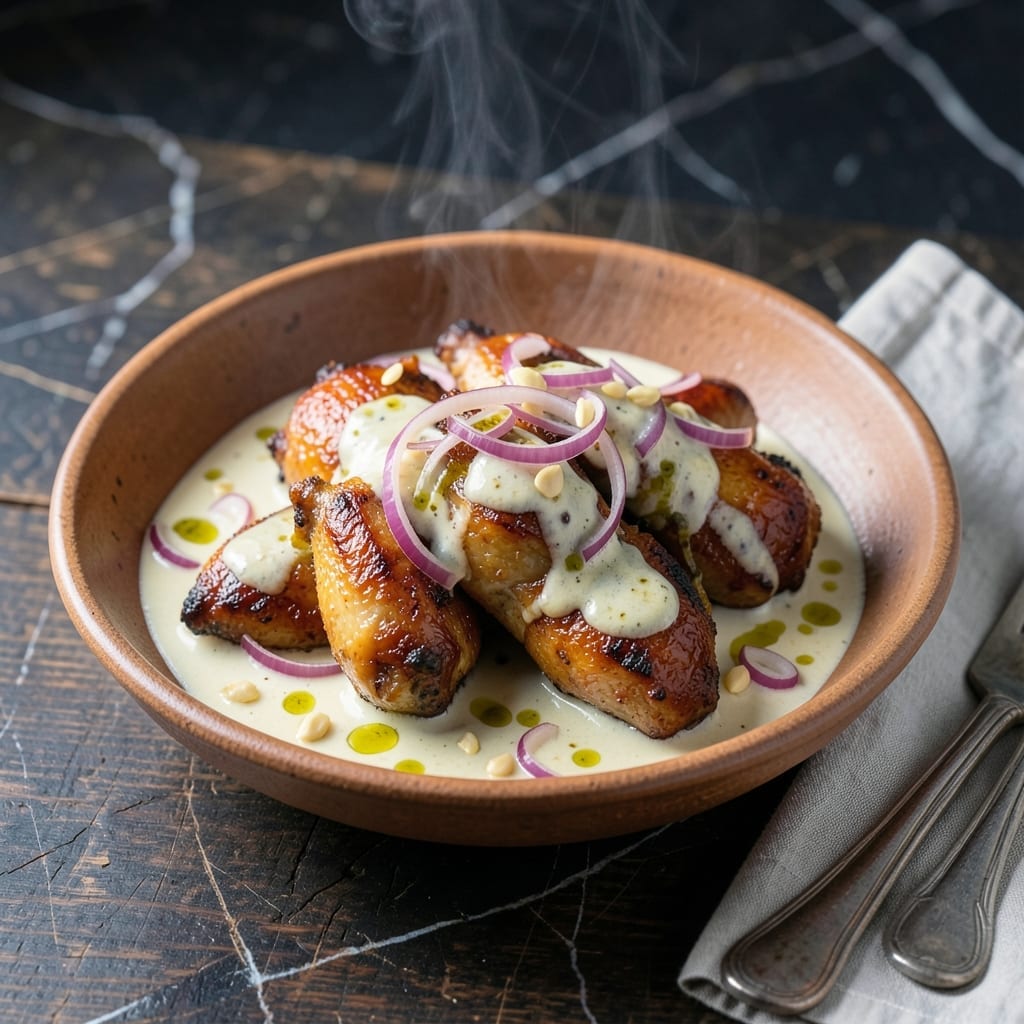
This traditional Filipino dish transforms humble chicken into a rich, tender masterpiece through slow braising in coconut milk. The technique, known as palang, creates a sauce so velvety it demands to be soaked up with rice.
What makes this method special is its simplicity: chicken simmers gently with coconut milk, garlic, and ginger until fall-off-the-bone tender. The natural oils in the coconut milk create a luxurious sauce that clings beautifully to each piece.
You’ll end up with chicken that’s impossibly moist, infused with subtle sweetness from the coconut and aromatic depth from the spices. The sauce reduces to a perfect consistency that’s neither too thin nor too thick.
Serve this with steamed rice to fully appreciate the sauce’s richness. The dish improves overnight as flavors meld further.
Ingredients for Palang Chicken
Rich coconut milk, aromatic ginger, and tender chicken create this Filipino braise with a velvety sauce.
| Ingredient | Amount | Notes |
|---|---|---|
| Chicken Thighs 🍗 | 2 lb | Boneless, skin-on preferred |
| Full-Fat Coconut Milk 🥥 | 2 cups | Canned, well-shaken |
| Garlic Cloves 🧄 | 8 cloves | Peeled, lightly crushed |
| Fresh Ginger 🌿 | 2 tbsp | Peeled, thinly sliced |
| Red Onion 🧅 | 1 whole | Thinly sliced, medium size |
| Fish Sauce 🐟 | 2 tbsp | Filipino patis preferred |
| Soy Sauce 🫙 | 2 tbsp | Low-sodium if available |
| Bay Leaves 🍃 | 2 pieces | Dried, whole leaves |
| Ground Black Pepper 🌶️ | 1 tsp | Freshly ground preferred |
| Brown Sugar 🍚 | 1 tbsp | Light or dark variety |
| Scallions 🧅 | 4 whole | Thinly sliced for garnish |
| Neutral Cooking Oil 🫒 | 1 tbsp | Vegetable or canola oil |
| Kosher Salt 🧂 | 1 ½ tsp | Or to taste |
| Calamansi or Lime Juice 🍋 | 1 tbsp | Freshly squeezed |
The coconut milk is non-negotiable here—full-fat canned from Thai Kitchen or Native Forest gives that luxurious texture. Chicken thighs outperform breasts (the fat renders into the sauce). Skip the skinless version if possible—the skin adds depth. For the fish sauce, Red Boat or Three Crabs are widely available at Asian markets or Amazon.
No fish sauce? Soy sauce plus a pinch of salt gets you 80% there. Fresh ginger is ideal, but ground ginger at half the amount works in a pinch. Swap scallions for chives or green onions—whatever you’ve got. The bay leaves are subtle but important; if you don’t have any, add a pinch of ground allspice for complexity.
This tastes even better the next day. Store in an airtight container for up to 4 days in the fridge or freeze for 3 months. Reheat gently to avoid separating the coconut milk (it’ll come back together with stirring).
Why You’ll Love This Recipe
- One Pan Wonder: I love that everything cooks together—just sear the thighs, toss in the coconut milk, garlic, ginger, and onion, then let it simmer.
- Crave-Worthy Sauce: The coconut milk turns silky and rich, soaking up the garlic and ginger in a way that makes the chicken irresistible.
- Feeds a Crowd: Between us, this stretches easily for leftovers or a dinner party, and the flavors taste even better the next day.
Step-by-Step Instructions for Filipino Coconut Milk Braised Chicken
This traditional technique delivers rich, aromatic chicken with a velvety coconut sauce.
Step 1: Sear and Aromatize the Chicken Base
Heat 1 tbsp neutral cooking oil in a large, heavy pot over medium-high heat until shimmering. Add the 2 lb chicken thighs skin-side down and sear undisturbed for 5-6 minutes until the skin renders fat and turns deep golden brown. This builds the foundation of flavor.
Flip the chicken and sear the other side for 3-4 minutes. Remove to a plate, leaving the rendered fat in the pot. To this fat, add the 1 whole red onion, 8 cloves garlic cloves, and 2 tbsp fresh ginger. Sauté for 3-4 minutes until the onions soften and become translucent.
Step 2: Build the Braising Liquid
Pour in the 2 tbsp fish sauce and 2 tbsp soy sauce, stirring to deglaze the pot. The liquid should bubble and release all the browned bits from the bottom. Add the 1 tbsp brown sugar and 1.5 tsp kosher salt, stirring until the sugar dissolves completely.
Return the chicken to the pot along with any accumulated juices. Add the 2 cups full-fat coconut milk, 2 pieces bay leaves, and 1 tsp ground black pepper. Stir gently to combine, ensuring the chicken is mostly submerged in the liquid. The mixture should have a rich, caramel color.
Step 3: Simmer to Tenderness
Bring the liquid to a gentle simmer, then reduce the heat to medium-low. Cover the pot and let it cook for 30-35 minutes, stirring occasionally to prevent sticking. The sauce should maintain a slow, steady bubble—never a rolling boil.
You’ll know it’s ready when the chicken is fork-tender and the sauce has reduced slightly, coating the back of a spoon. The coconut milk will separate slightly, with creamy solids rising to the top. This is normal and adds depth to the dish. Taste and adjust seasoning if needed.
Step 4: Finish and Garnish
Remove the pot from heat and discard the bay leaves. Stir in the 1 tbsp calamansi or lime juice, which brightens the rich sauce with a touch of acidity. The juice should be added off heat to preserve its fresh, citrusy character.
Ladle the chicken and sauce into shallow bowls. Garnish with the 4 whole scallions, thinly sliced. The scallions add a fresh, crisp contrast to the tender chicken and creamy sauce. Serve immediately with steamed rice to soak up every bit of the flavorful coconut braise.
Pro Tips For Making Palang Chicken
- Brown the Thighs Well: Get a deep golden sear on the chicken thighs before adding liquids—this builds the rich, caramelized base that makes palang chicken so flavorful. I learned this the hard way after skipping it once and ending up with a bland, pale sauce.
- Use Full-Fat Coconut Milk: Skip the light version; full-fat coconut milk gives the dish its creamy, luxurious texture and balances the bold ginger and garlic. After trying both, I can confirm the difference is noticeable.
- Don’t Rush the Simmer: Let the sauce reduce slowly over medium-low heat for at least 20 minutes so the flavors meld and the coconut milk thickens slightly. Sounds tedious, but it’s what makes the dish taste layered and rich.
- Grate the Ginger Fine: Fresh ginger is non-negotiable here, but grating it finely ensures it distributes evenly and doesn’t leave fibrous bits in the sauce. I was skeptical until I tried it—now I swear by a microplane for this step.
Health Benefits of palang chicken
Healthy Fats Source
This dish gets its richness from coconut milk, packed with medium-chain triglycerides that your body uses efficiently for energy. A serving provides about 14g of healthy fats that support brain function and heart health. The natural fats also help you absorb fat-soluble vitamins from the other ingredients. 💪
Protein Powerhouse
The 2 lb chicken thighs deliver approximately 50g of protein per serving, with all essential amino acids your body needs. Chicken thighs are particularly rich in B vitamins like B6 and B12, which support metabolism and nervous system health.
Immune Support
Garlic and ginger in this recipe aren’t just for flavor—they’re powerhouse ingredients with immune-boosting properties. The 8 cloves garlic provide allicin, while 2 tbsp fresh ginger offers gingerol, both known for their anti-inflammatory benefits.
Electrolyte Balance
The combination of fish sauce and soy sauce provides natural electrolytes like sodium and potassium. These help maintain fluid balance in your body, especially important in tropical climates where this dish originated. I notice I feel more hydrated after eating it.
Antioxidant Boost
Red onion and scallions bring quercetin and other antioxidants to the table. The calamansi or lime juice adds a vitamin C punch that helps your body absorb iron from the chicken more effectively. This traditional pairing isn’t just tasty—it’s nutritionally smart. 🥗
Nutrition Facts
Frequently Asked Questions
Can I use chicken breasts instead of thighs?
Thighs work best due to their higher fat content, but breasts can be used if cooked carefully. Reduce simmering time to 20-25 minutes to prevent dryness. The sauce may not be as rich without the rendered fat from thighs.
What if my coconut milk separates during cooking?
This is completely normal! The natural oils rise to the top. Simply stir the pot occasionally to recombine. The finished sauce will still be creamy and delicious.
How do I store leftovers?
Keep in an airtight container in the fridge for up to 4 days. The flavors deepen overnight. Reheat gently on the stove, adding a splash of water if the sauce thickens too much.
Can I make this dish spicy?
Add 1-2 chopped chili peppers with the garlic and ginger, or stir in 1 tsp chili flakes at the end. Adjust to your preferred heat level.

- Jollof Rice Sauce Recipe: West African Tomato and Spice Infusion - September 25, 2026
- Japanese Rice Soup Recipe: Umami-Rich Comfort in a Bowl - September 25, 2026
- Homemade Cream Of Rice Recipe: Silk-Smooth Breakfast in Minutes - September 25, 2026