
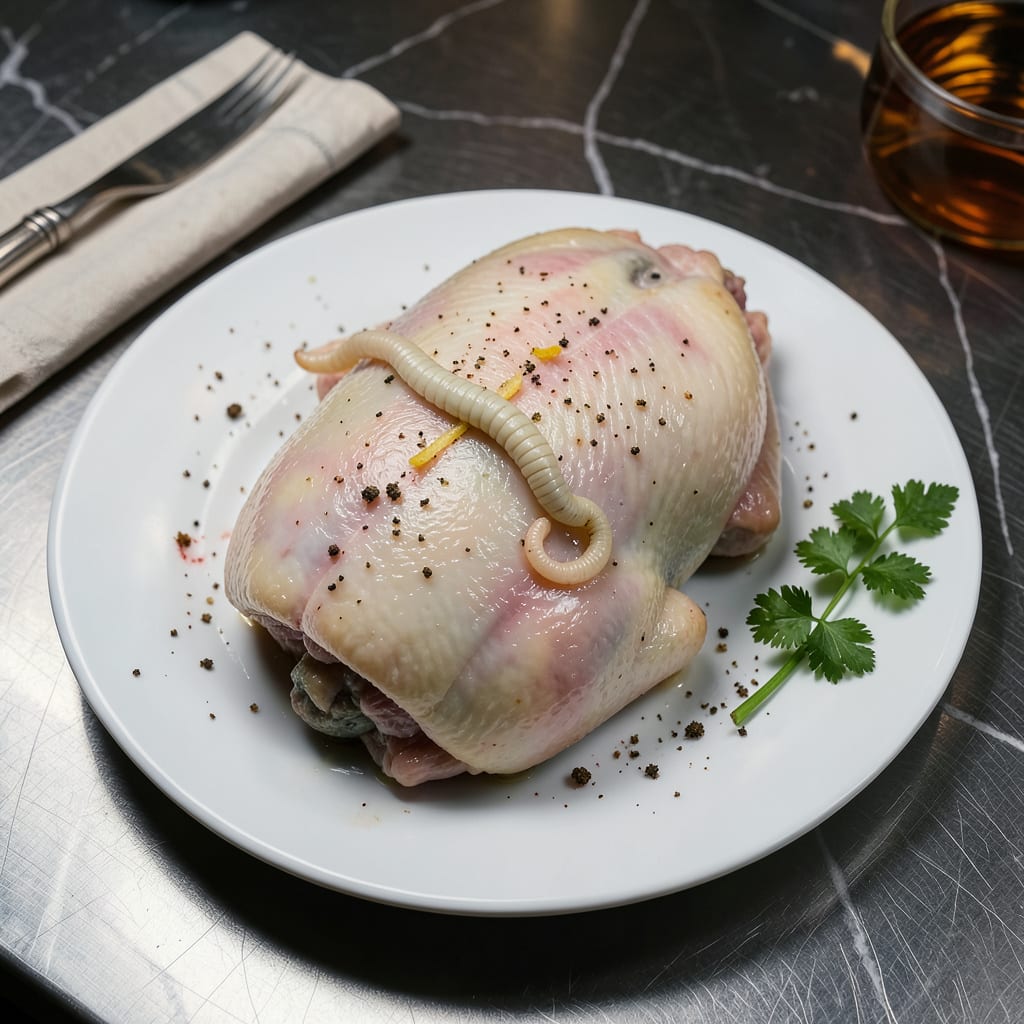
If you spot small white, black, or red worms or cysts on raw chicken breast, it’s likely a parasitic infection like roundworms or tapeworms. Discard the meat immediately—cooking may kill some parasites, but contamination risks remain high for food safety.
Finding parasites on poultry is rare but serious, as these organisms can spread beyond just the visible area. 🔥 What’s concerning is that some parasites, like Toxoplasma gondii, may not even be visible to the naked eye yet still pose health risks if the meat is undercooked. I always recommend checking the entire piece of chicken under bright light—especially near the skin and fatty areas—since parasites often cluster there. Even if you’re tempted to salvage the meat, the risk of cross-contamination in your kitchen isn’t worth it.
Most commercial chicken undergoes USDA inspections, but gaps can happen during processing or storage. 💫 If you notice anything unusual, document it with photos and contact the store or supplier immediately. This helps track potential outbreaks and prevents others from buying contaminated products. Trust your instincts—when in doubt, throw it out.
💡 In This Article
- Common Chicken Parasites and How to Recognize Them
- Safe Handling and Prevention Tips for Parasite-Free Chicken
Common Chicken Parasites and How to Recognize Them
When examining raw chicken, the parasites you’re most likely to encounter fall into two main categories: roundworms (nematodes) and tapeworms (cestodes). Roundworms often appear as thin, white or cream-colored threads, typically 1-3 inches long, while tapeworm segments may look like tiny rice grains or flattened ribbons.
These organisms thrive in the chicken’s digestive tract but can migrate to muscle tissue under stress conditions. What’s particularly alarming is that some parasites, like Ascaridia galli, can survive in chicken meat for up to 2 weeks under refrigeration. ✨
The location of parasites on the chicken breast offers clues about the severity of infestation. Surface-level worms often indicate recent contamination, while parasites embedded in the muscle tissue suggest a systemic infection. Pay special attention to the underside of the breast and areas near the rib meat, where parasites frequently concentrate.
Under magnification, you might notice microscopic cysts containing larval stages – these appear as tiny white specks smaller than a grain of salt but can contain hundreds of potential worms. The texture of infected meat often feels unusually soft or slimy compared to healthy chicken. 🔥
Parasites find their way into chicken meat through several pathways in the poultry production chain. Free-range chickens face higher exposure risks from contaminated soil, insects, or other infected birds. Even in controlled environments, parasites can spread through shared water sources or improper sanitation. Processing plants with inadequate inspection protocols may miss early-stage infestations.
What’s particularly concerning is that some parasites, like Histomonas meleagridis, can survive in chicken feces for months, creating persistent contamination risks in poultry housing. 💫
The presence of parasites often comes with other sensory red flags. Infected chicken may emit a faint but distinct ammonia-like odor even before visible spoilage occurs. The meat might develop a greenish tint near parasite clusters due to bile pigment leakage. When pressed, infected areas often release a cloudy liquid rather than clear juices.
These secondary signs are crucial because some parasitic infections, like coccidiosis, primarily affect the intestines but can leave microscopic traces in the muscle tissue that aren’t immediately visible to the naked eye. ⚡
What makes chicken parasites particularly dangerous is their potential to cause zoonotic infections – diseases that can jump from animals to humans. While cooking at 165°F kills most parasites, some like Toxoplasma gondii can form resilient cysts that survive higher temperatures.
The risk isn’t just from ingestion either; handling contaminated meat can lead to skin absorption or inhalation of parasitic eggs. This is why proper disposal methods are critical – double-bagging the meat and using disinfectant on all surfaces that came into contact with it. 💛
For those wondering about prevalence, studies show that about 1-5% of commercially raised chickens in the U.S. may carry visible parasites, though the actual rate of microscopic contamination could be higher.
Organic and free-range chickens often show slightly higher parasite loads due to their exposure to natural environments, but this doesn’t necessarily mean they’re less safe when properly handled and cooked. The key difference lies in the inspection processes – USDA-graded poultry undergoes more rigorous parasite screening than non-graded products. ✨
If you’re examining chicken and find what appears to be parasites, here’s a quick visual guide: White threads that move when touched are likely roundworms; flat, segmented worms are tapeworms; tiny white dots that don’t move could be cysts; and black specks might indicate fly larvae contamination.
When in doubt, the safest approach is to treat any unusual findings as potential parasites and dispose of the meat accordingly. Remember that some parasitic infections can remain dormant in chicken meat for weeks, making visual inspection only the first line of defense. 💫

- Jollof Rice Sauce Recipe: West African Tomato and Spice Infusion - September 25, 2026
- Japanese Rice Soup Recipe: Umami-Rich Comfort in a Bowl - September 25, 2026
- Homemade Cream Of Rice Recipe: Silk-Smooth Breakfast in Minutes - September 25, 2026