
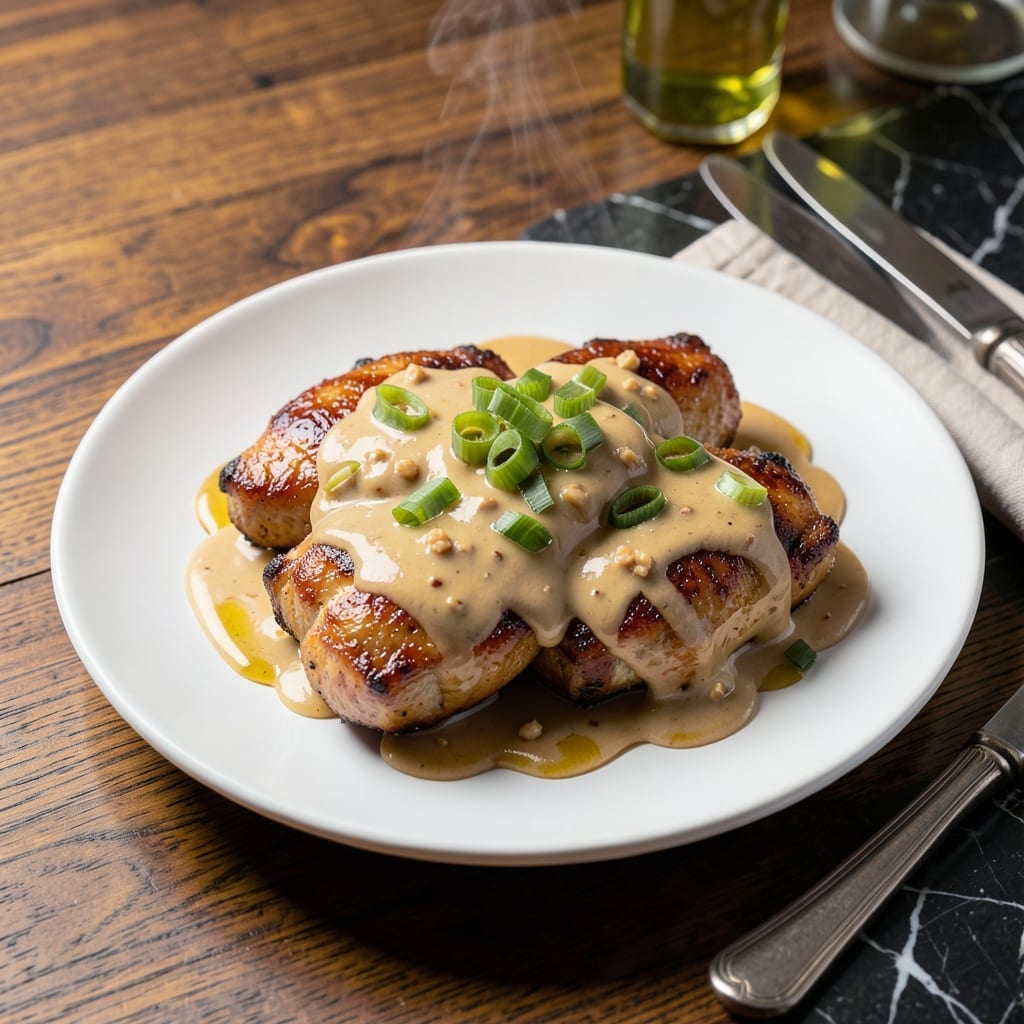
This Thai-inspired peanut chicken delivers restaurant-quality flavor with a perfect balance of savory, sweet, and nutty notes. The satay glaze transforms ordinary chicken into something extraordinary, with crunchy peanuts adding texture to every bite.
I developed this recipe after trying countless versions that were either too sweet or lacked depth. This version uses a simple marinade and a carefully balanced glaze that builds layers of flavor without overwhelming the dish.
The chicken stays juicy and tender, while the satay glaze thickens into a glossy coating that clings to each piece. Serve it over rice or with fresh vegetables to soak up every drop of the delicious sauce.
This dish comes together in under 45 minutes, making it ideal for weeknight dinners or impressive enough for guests. The flavors only improve if made ahead.
Ingredients for Peanut Chicken
Pantry staples plus fresh ginger and garlic bring this Thai-inspired dish to life.
| Ingredient | Amount | Notes |
|---|---|---|
| Boneless Skinless Chicken Thighs 🍗 | 1 ½ lb | Cut into bite-sized pieces |
| Creamy Peanut Butter 🥜 | ½ cup | Unsweetened, natural variety |
| Soy Sauce 🫒 | ¼ cup | Low-sodium preferred |
| Honey 🍯 | 3 tbsp | For balancing sweetness |
| Rice Vinegar 🍋 | 2 tbsp | Or lime juice as substitute |
| Fresh Ginger 🌿 | 1 tbsp | Minced or grated fine |
| Garlic Cloves 🧄 | 3 cloves | Minced for depth of flavor |
| Sesame Oil 🫒 | 1 tbsp | Toasted for nutty aroma |
| Crunchy Peanuts 🥜 | ½ cup | Chopped, for garnish |
| Red Pepper Flakes 🌶️ | ½ tsp | Adjust to spice preference |
| Cornstarch 🌾 | 1 tbsp | For thickening glaze |
| Water 💧 | ¼ cup | To adjust sauce consistency |
| Fresh Cilantro 🌿 | ¼ cup | Chopped, for garnish |
| Lime 🍈 | 1 whole | Cut into wedges for serving |
The peanut butter is key—natural, unsweetened gives the best texture without extra sugar. Trader Joe’s and Whole Foods both carry great options. For the chicken, thighs stay juicier than breasts, but either works. Look for thighs with good marbling for extra flavor. The peanuts? Dry-roasted, unsalted so they crisp up properly (the pre-salted kind can taste flat).
No peanut butter? Almond butter works in a pinch, though the flavor shifts slightly. Out of honey? Brown sugar mixed with a splash of water gets you close. The rice vinegar can be swapped for apple cider vinegar if that’s what’s in the cupboard. For extra heat, add sriracha or sambal oelek to the glaze (start with a teaspoon and go up from there).
The glaze thickens as it cools, so don’t panic if it seems thin at first. Leftovers keep for 3-4 days in the fridge—reheat with a splash of water to loosen. Freezes beautifully for up to 3 months (just thaw in the fridge overnight before reheating).
Why You’ll Love This Recipe
- One Pot Wonder: I brown the chicken, stir in the sauce, and dinner’s done. No extra pans, no fuss.
- Sweet-Savory Magic: That combo of honey and peanut butter with soy sauce? Ridiculously good—like takeout but better.
- Feeds Everyone: I serve it over rice for the kids, in lettuce wraps for me. Works for picky eaters and foodies alike.
- Budget Stretcher: Chicken thighs stay cheap, and a jar of peanut butter makes two meals. Honestly, it’s my wallet’s favorite.
Step-by-Step Instructions for Peanut Chicken
Here’s my method for achieving that perfect balance of sweet, savory, and spicy in every bite.
Step 1: Sear the Chicken Thighs
Heat the sesame oil in a large skillet over medium-high heat until it shimmers. Add the 1.5 lb boneless skinless chicken thighs and cook for 5-6 minutes until the pieces develop a golden brown crust on the first side.
Flip and cook for another 4-5 minutes until the chicken is cooked through and no longer pink inside. Don’t crowd the pan—work in batches if needed. Transfer the chicken to a plate and set aside.
Real talk: if your chicken sticks, let it sear longer. It’ll release when it’s ready. This step builds flavor that makes the sauce taste incredible.
Step 2: Create the Peanut Sauce Base
In the same skillet, reduce heat to medium. Add the 3 cloves garlic cloves and 1 tbsp fresh ginger, stirring constantly for 30 seconds until fragrant but not browned. Pour in the 0.25 cup soy sauce, 3 tbsp honey, and 2 tbsp rice vinegar.
Let this mixture simmer for 2 minutes, scraping up any browned bits from the bottom of the pan. These bits are packed with flavor. Stir in the 0.5 cup creamy peanut butter and 0.5 tsp red pepper flakes until the mixture is smooth and well combined.
Step 3: Thicken and Finish the Sauce
In a small bowl, whisk together the 1 tbsp cornstarch and 0.25 cup water until smooth. Pour this slurry into the skillet with the peanut sauce mixture.
Stir constantly for 2-3 minutes until the sauce thickens enough to coat the back of a spoon. If it’s too thick, add a splash more water. Taste and adjust seasoning if needed—though the peanut butter and soy sauce usually provide perfect balance.
Step 4: Combine and Garnish
Return the cooked chicken to the skillet and toss to coat evenly with the sauce. Cook for another 1-2 minutes just to heat everything through. The sauce should cling beautifully to each piece of chicken.
Transfer to a serving platter and sprinkle with the 0.5 cup crunchy peanuts and 0.25 cup fresh cilantro. Serve immediately with the 1 whole lime cut into wedges on the side for squeezing over the top.
This is the moment that matters: the crunch of peanuts against the tender chicken with that rich, glossy sauce. You’ve nailed it.
Pro Tips For Making Peanut Chicken
- Sear the Thighs First: Brown the chicken thighs in a hot pan for 3-4 minutes per side before adding the sauce—this builds deep flavor and prevents the peanut butter from burning.
- Thin the Peanut Butter: Whisk the creamy peanut butter with a splash of warm water (about 2 tablespoons) before mixing it into the sauce. It blends smoother and coats the chicken evenly.
- Skip the Boiling: Simmer the sauce gently once the peanut butter is added, and resist the urge to crank the heat—peanut butter can separate or scorch if it gets too hot.
- Add Vinegar Last: Stir in the rice vinegar at the very end of cooking to preserve its bright tang, rather than letting it reduce and lose its punch.
Regional Styles of This Dish
Thai Satay Style
This version stays true to its roots with a coconut milk addition to the peanut sauce, creating a richer, creamier texture that’s signature to Thai street food. I add 1 tbsp fish sauce and 1 tsp turmeric for depth. Serve with cucumber slices and a side of jasmine rice. 🗺️
Indonesian Gado-Gado
Inspired by the famous Indonesian salad, I use 2 tbsp tamarind paste instead of rice vinegar for a tangier profile. The chicken is served cold over mixed greens with boiled eggs and potatoes. The peanut sauce becomes a dressing rather than a glaze.
Chinese Kung Pao
Transform this into a Sichuan classic by adding 1 tbsp hoisin sauce, 1 tsp five-spice powder, and ½ cup dried red chilies to the sauce. Stir-fry the chicken with bell peppers and water chestnuts for texture. The result is spicier with a deeper umami flavor.
African Groundnut Stew
West African versions use tomato paste and 1 tsp cayenne in the sauce. I add sweet potatoes and okra to the pan with the chicken. The dish becomes heartier, perfect served over rice or with flatbread.
This stew-style approach makes the dish more substantial for colder weather. 💛
Vietnamese Lemongrass
Infuse the sauce with 2 tbsp minced lemongrass and 1 tbsp fish sauce. I also add 1 cup shredded cabbage and carrots to the chicken while cooking. The result is lighter and more aromatic than the Thai version.
Nutrition Facts
Frequently Asked Questions
Can I use chicken breasts instead of thighs?
Yes, but thighs stay juicier. If using breasts, reduce cooking time to 4-5 minutes per side to prevent dryness. Pound them to even thickness for best results.
How do I make the sauce thicker?
Simmer longer after adding cornstarch slurry. For extra thickness, mix 1 tsp cornstarch with 1 tbsp water and stir in. Let it cook for 1-2 minutes more.
What if I don’t have rice vinegar?
Lime juice or apple cider vinegar work well. Use the same 2 tbsp measurement. The tang balances the peanut butter’s richness perfectly.
Can this be made ahead?
The flavors deepen overnight. Store in an airtight container for up to 3 days. Reheat gently with a splash of water to loosen the sauce.

- Jollof Rice Sauce Recipe: West African Tomato and Spice Infusion - September 25, 2026
- Japanese Rice Soup Recipe: Umami-Rich Comfort in a Bowl - September 25, 2026
- Homemade Cream Of Rice Recipe: Silk-Smooth Breakfast in Minutes - September 25, 2026