
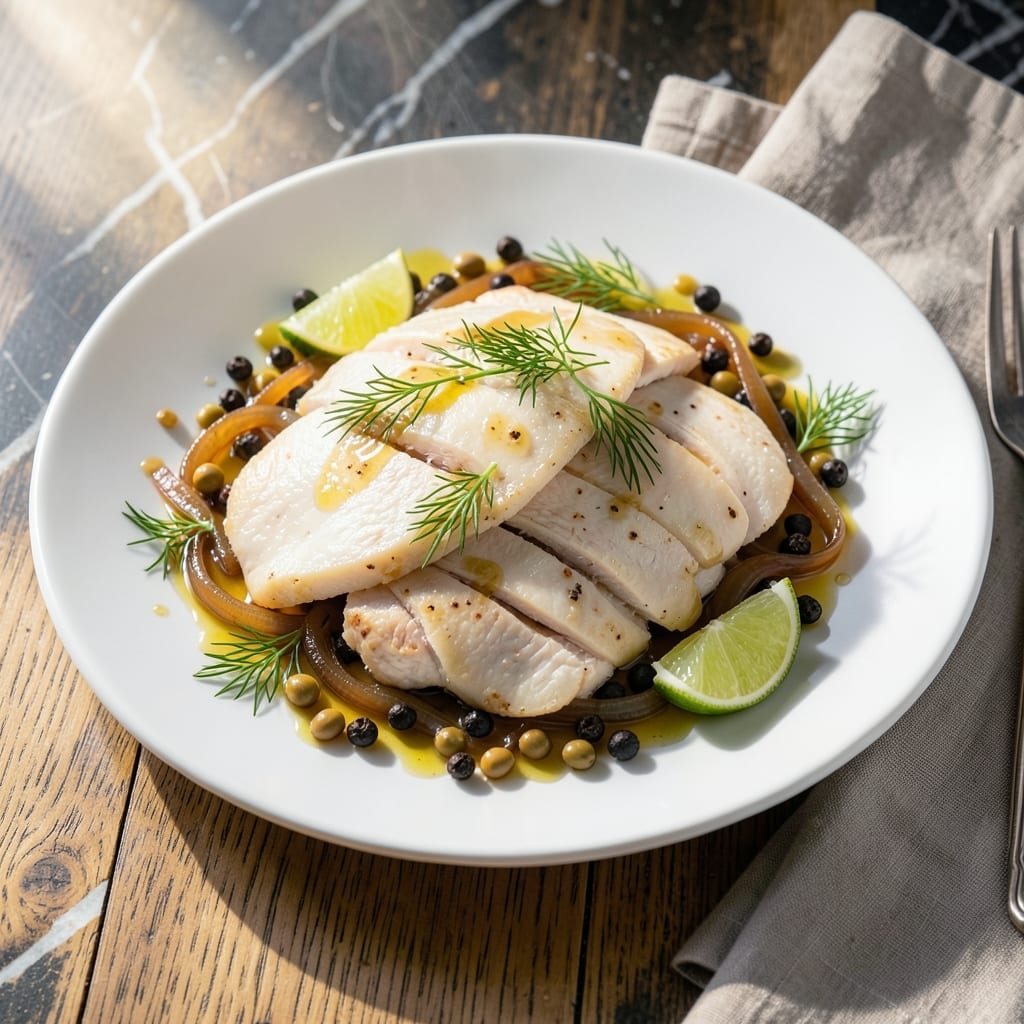
This pickled chicken delivers a perfect balance of tender meat and bright, tangy flavor that transforms ordinary meals.
I developed this method to ensure the chicken stays juicy while absorbing the vinegar brine’s bold seasonings. The process is straightforward: cook, cool, then immerse in the pickling liquid.
The result is moist, flavorful bites with a zesty kick, ideal for sandwiches, salads, or snacks. The brine infuses every piece with a tangy depth that improves over time.
Store in the fridge for up to a week, and watch the flavors deepen. This dish proves that pickling isn’t just for vegetables.
Ingredients for Pickled Chicken
Everyday ingredients transform into something special with this tangy, tender dish.
| Ingredient | Amount | Notes |
|---|---|---|
| Boneless Skinless Chicken Breasts 🍗 | 1 ½ lb | Pounded to even thickness |
| White Vinegar 💧 | 2 cups | 5% acidity for best pickling |
| Apple Cider Vinegar 🍏 | 1 cup | Adds fruity depth to brine |
| Water 💧 | 1 cup | Filtered for cleanest flavor |
| Granulated Sugar 🍚 | ¼ cup | Balances acidity in brine |
| Kosher Salt 🧂 | 2 tbsp | Diamond Crystal preferred |
| Black Peppercorns 🌶️ | 1 tbsp | Lightly crushed for infusion |
| Mustard Seeds 🌿 | 1 tsp | Yellow or brown variety |
| Dried Bay Leaves 🍃 | 2 pieces | For aromatic depth |
| Garlic Cloves 🧄 | 6 cloves | Smashed for maximum flavor |
| Red Onion 🧅 | 1 whole | Thinly sliced for brine |
| Fresh Dill Sprigs 🌿 | 4 pieces | Stems included for flavor |
| Olive Oil 🫒 | 1 tbsp | For cooking chicken |
The chicken quality matters here. Boneless, skinless breasts from Whole Foods or your local butcher are ideal—uniform thickness ensures even cooking. I’ve found organic, air-chilled varieties hold up best to the brining process. For vinegars, Heinz white vinegar and Bragg apple cider vinegar are reliable grocery store options that deliver consistent acidity levels.
Out of apple cider vinegar? White wine vinegar works in a pinch (use the same amount). No fresh dill? Dried dill at one-third the quantity still infuses well. The sugar is flexible—brown sugar or honey (if not strictly avoiding) can substitute 1:1. For the onions, shallots or yellow onions bring a slightly different but still delicious profile to the brine.
The pickled chicken keeps beautifully in its brining liquid for up to 1 week refrigerated. For longer storage, transfer to airtight containers—flavors actually deepen over 5-7 days. Always use clean utensils when serving to prevent contamination of the brine.
Why You’ll Love This Recipe
- No Fuss Prep: Honestly, it’s just a matter of mixing the vinegars, sugar, and water before adding the chicken—no fancy techniques.
- Tangy Bite: The blend of white vinegar and apple cider vinegar gives it that bright, zesty kick I crave.
- Meal Prep Star: I make a big batch on Sunday and it keeps beautifully for sandwiches or salads all week.
- Stretch Your Dollar: Boneless skinless chicken breasts stay tender in the brine, and a little goes a long way for multiple meals.
Step-by-Step Instructions for Pickled Chicken
This method ensures the chicken stays tender while absorbing the bright, tangy flavors of the brine.
Step 1: Prepare and Cook the Chicken
Begin by pounding the 1.5 lb boneless skinless chicken breasts to an even thickness—about ½ inch. This guarantees uniform cooking and better brine penetration. Pat the meat dry to ensure a good sear.
Heat 1 tbsp olive oil in a large skillet over medium-high heat. Once shimmering, add the chicken and cook for 5-6 minutes per side, until golden brown and the internal temperature reaches 165°F. Avoid overcooking, as the meat will finish in the hot brine.
Step 2: Toast the Spices and Build the Brine Base
While the chicken cooks, lightly crush the 1 tbsp black peppercorns and 1 tsp mustard seeds to release their aromas. In a saucepan, combine the 2 cups white vinegar, 1 cup apple cider vinegar, 1 cup water, 0.25 cup granulated sugar, and 2 tbsp kosher salt.
Bring the mixture to a gentle simmer over medium heat, stirring until the sugar and salt fully dissolve. This creates a balanced brine that’s tangy, slightly sweet, and well-seasoned.
Step 3: Infuse the Brine with Aromatics
Once the brine is simmering, remove it from the heat. Add the crushed black peppercorns, mustard seeds, 2 pieces dried bay leaves, 6 cloves garlic cloves (smashed), 1 whole red onion (thinly sliced), and 4 pieces fresh dill sprigs.
Let the mixture steep for 10 minutes. The heat will extract the flavors from the dill, garlic, and spices, infusing the brine with depth. The red onion adds a subtle sweetness that complements the vinegar’s acidity.
Step 4: Combine Chicken and Brine for Pickling
Slice the cooked chicken into strips or bite-sized pieces for quicker pickling. Place the chicken in a clean, heatproof container or jar. Strain the warm brine to remove the solids, then pour it over the chicken, ensuring it’s fully submerged.
Let the chicken cool to room temperature, then cover and refrigerate for at least 24 hours. For the best flavor and texture, allow it to pickle for 2-3 days. The acidity of the white vinegar and apple cider vinegar will tenderize the meat while imparting a bright, tangy taste.
Pro Tips For Making Pickled Chicken
- Brine First: Soak the chicken breasts in the vinegar-water-sugar mixture for at least 4 hours—I learned this the hard way after my first batch tasted more like vinegar than chicken.
- Use Both Vinegars: Don’t skip the apple cider vinegar; its milder acidity balances the sharp white vinegar and actually changes the outcome.
- Skip Raw Chicken: Always poach or lightly cook the chicken before pickling, or you’ll end up with rubbery meat after it sits in the brine.
- Warm the Brine: Dissolve the sugar in the warm vinegar-water mix before adding the chicken—sounds weird, but it works and prevents grainy texture.
Perfect Pairings for This pickled chicken
Bread Pairings
This creation shines in a crusty hoagie roll with some of the pickling brine drizzled over the meat. I love using ciabatta for its chewy texture that holds up to the tangy juices. Toast the bread lightly to prevent sogginess.
Fresh Sides
A crisp green salad with a light vinaigrette balances the vinegar’s acidity beautifully. I toss mixed greens with cucumber slices and a simple lemon-olive oil dressing. The cool crunch contrasts perfectly with the dish’s bold flavors. 🥗
Creamy Complements
For richness, serve with potato salad or a creamy coleslaw. The cool creaminess tempers the tang while adding satisfying texture. I use Duke’s mayonnaise for its thick, tangy profile that stands up to the pickled chicken.
Chewy Additions
Add pickled red onions or quick-pickled jalapeños to double down on the tangy theme. Their bright acidity enhances the chicken’s flavor. I keep a jar of pickled onions in my fridge for exactly this purpose.
Beverage Pairings
A cold IPA or wheat beer cuts through the acidity with its crisp, hoppy notes. For non-alcoholic options, sparkling water with lime refreshes your palate. I find the carbonation cleanses between bites beautifully. 🍺
Nutrition Facts
Frequently Asked Questions
Can I use chicken thighs instead?
Thighs stay juicier due to their fat content. Cook them to 165°F and adjust pickling time to 2-3 days for best flavor.
How long does it last in the fridge?
Properly stored in its brine, it stays fresh for up to 1 week. For best texture, consume within 5 days.
Why did my chicken turn mushy?
Over-pickling past 3 days or using too much vinegar breaks down the meat. Stick to the recommended 24-hour minimum.
Can I reuse the brine?
Discard after first use—reusing can introduce bacteria. Always make fresh brine for new batches.

- Jollof Rice Sauce Recipe: West African Tomato and Spice Infusion - September 25, 2026
- Japanese Rice Soup Recipe: Umami-Rich Comfort in a Bowl - September 25, 2026
- Homemade Cream Of Rice Recipe: Silk-Smooth Breakfast in Minutes - September 25, 2026