
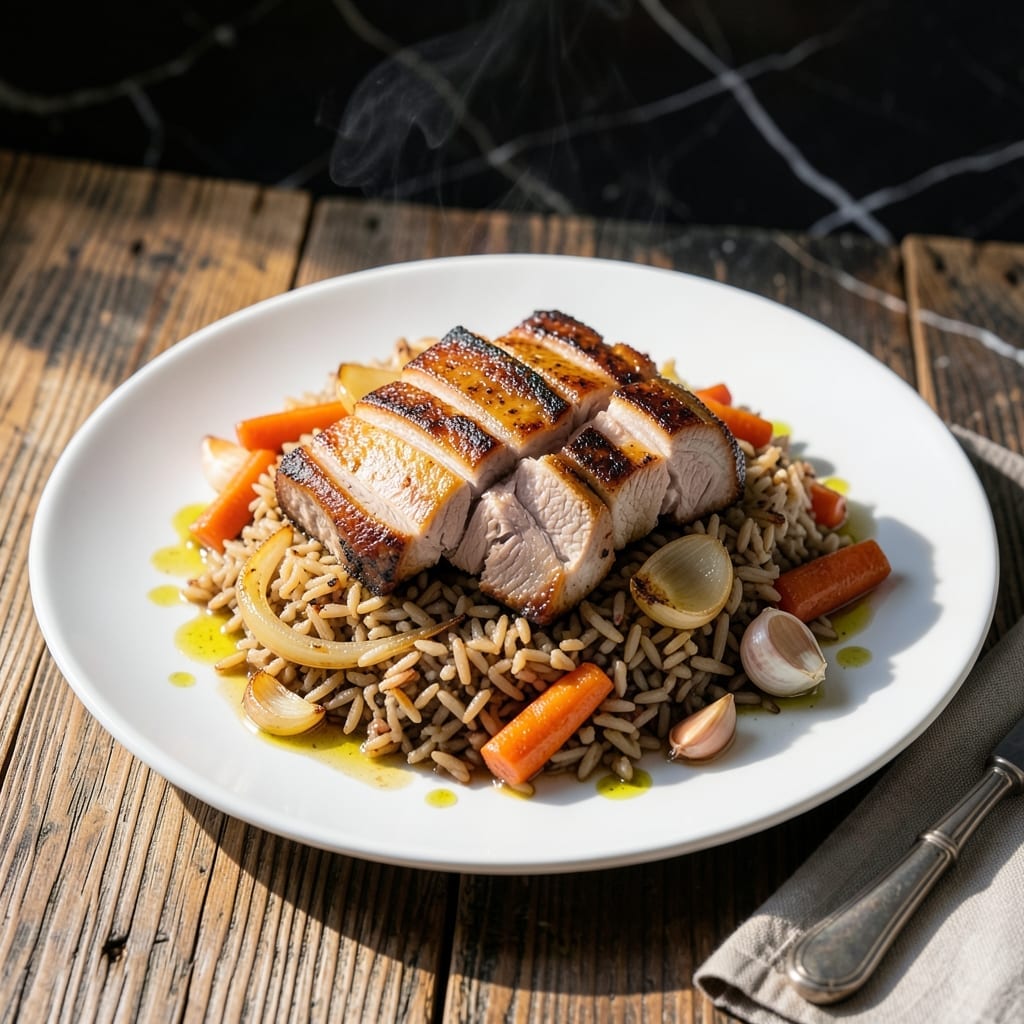
This one-pot meal combines tender pork with nutty brown rice for a complete, balanced dinner that cooks together effortlessly.
I developed this method to maximize flavor while minimizing cleanup, letting the pork and rice absorb each other’s essence during cooking. The result is a dish where every grain carries rich, savory notes.
The beauty of this approach is its simplicity: brown the pork, add the remaining ingredients, and let the pot work its magic. No extra pans, no complicated timing—just one-pot efficiency.
What emerges is a hearty, nutrient-packed meal with perfectly cooked pork and rice, ready to serve straight from the pot. The flavors meld together beautifully, making it a family favorite.
Ingredients for Pork and Brown Rice
Tender pork and nutty brown rice unite in this one-pot meal for a complete, balanced dinner.
| Ingredient | Amount | Notes |
|---|---|---|
| Pork Shoulder 🐖 | 1 ½ lb | Boneless, cut into 1-inch cubes |
| Long-Grain Brown Rice 🍚 | 1 ½ cups | Rinsed, drained thoroughly |
| Chicken Broth 🥣 | 3 cups | Low-sodium preferred for control |
| Yellow Onion 🧅 | 1 whole | Medium, finely diced |
| Garlic Cloves 🧄 | 4 cloves | Minced finely for even distribution |
| Carrots 🥕 | 2 whole | Peeled, diced into 1/2-inch pieces |
| Celery Stalks 🌿 | 2 whole | Diced, leaves reserved for garnish |
| Tomato Paste 🍅 | 2 tbsp | Double-concentrated for depth |
| Dried Thyme 🍃 | 1 tsp | Rubbed between fingers to release oils |
| Bay Leaf 🌿 | 1 whole | Removed before serving |
| Worcestershire Sauce 🫒 | 1 tbsp | Adds umami depth to the dish |
| Olive Oil 🫒 | 2 tbsp | Divided for browning and finishing |
| Kosher Salt 🧂 | 1 ½ tsp | Diamond Crystal preferred for even seasoning |
| Black Pepper 🌶️ | 1 tsp | Freshly ground for optimal flavor |
| Fresh Parsley 🌿 | ¼ cup | Chopped, for garnish |
The pork shoulder is non-negotiable here—its fat content renders down beautifully, infusing the brown rice with rich, savory depth. Look for well-marbled cuts at your butcher or Whole Foods meat counter. Avoid lean alternatives like tenderloin, which dry out during the long cooking process. The long-grain brown rice provides the perfect chewy texture; avoid instant or parboiled varieties as they turn mushy.
No pork shoulder? Pork butt is an excellent substitute with similar fat content. For a leaner option, chicken thighs (bone-in, skin-on) work well—just reduce the cooking time by 10 minutes. Vegetable broth can replace chicken broth for a vegetarian adaptation. The tomato paste can be swapped for 2 tbsp ketchup in a pinch, though the flavor profile will be slightly sweeter.
This dish reheats exceptionally well—the flavors actually deepen overnight. Store leftovers in an airtight container in the refrigerator for up to 4 days or freeze for 3 months. The rice absorbs liquid as it cools, so add a splash of broth when reheating to restore its texture.
Why You’ll Love This Recipe
- One-Pot Meal: I love tossing everything in one pot—pork, rice, broth—and letting it simmer while I tackle other things.
- Garlic-Infused Bites: The pork shoulder soaks up all that garlic and onion flavor, making every bite ridiculously good.
- Meal Prep Hero: I make a big batch on Sunday and it reheats beautifully for lunches all week.
- Budget Stretcher: Pork shoulder is so affordable, and it feeds my family for days without breaking the bank.
Step-by-Step Instructions for Pork and Brown Rice
This one-pot method ensures every grain absorbs rich flavor while the pork becomes fall-apart tender.
Step 1: Brown the Pork Shoulder
Heat 1 tablespoon Olive Oil in a heavy pot or Dutch oven over medium-high heat. Add the 1.5 lb Pork Shoulder and sear until deeply browned on all sides, about 5-7 minutes total. I don’t stir too often—let it develop a good crust before turning.
This browning creates the Maillard reaction, building complex flavors that will infuse the entire dish. Remove the pork and set aside. The fond left in the pot will dissolve into the rice, adding depth to every bite.
Step 2: Sauté the Aromatics
In the same pot, add the remaining 1 tablespoon Olive Oil if needed. Stir in the 1 whole Yellow Onion, 2 whole Carrots, and 2 whole Celery Stalks. Cook for 4-5 minutes until the vegetables soften and the onion becomes translucent.
Add the 4 cloves Garlic Cloves, 2 tbsp Tomato Paste, 1 tsp Dried Thyme, 1 whole Bay Leaf, 1.5 tsp Kosher Salt, and 1 tsp Black Pepper. Cook for 1 minute until the tomato paste darkens slightly—this intensifies its sweetness and removes any raw flavor.
Step 3: Toast the Rice and Deglaze
Stir in the 1.5 cups Long-Grain Brown Rice and cook for 2 minutes, allowing the grains to toast lightly. This step enhances the rice’s nutty flavor and prevents it from becoming mushy.
Pour in the 1 tbsp Worcestershire Sauce and 3 cups Chicken Broth, scraping the bottom of the pot to release all the browned bits. These caramelized particles dissolve into the liquid, creating a rich foundation for the dish.
Step 4: Simmer Until Tender
Return the pork to the pot, nestling it into the rice. Bring to a boil, then reduce heat to low, cover, and simmer for 45-50 minutes. Resist the urge to stir during cooking—this prevents the rice from breaking and ensures even absorption.
You’ll know it’s done when the rice is tender and the pork shreds easily with a fork. The liquid should be fully absorbed, with the rice looking plump and slightly sticky. If the top looks dry before the rice is done, add ¼ cup hot water and continue cooking.
Step 5: Rest and Garnish
Remove from heat and let the dish rest, covered, for 10 minutes. This allows the rice to steam and the flavors to meld completely. Discard the 1 whole Bay Leaf before serving.
Garnish with the 0.25 cup Fresh Parsley and serve hot. The parsley adds a bright contrast to the rich, savory dish. Each serving should have a generous portion of pork and rice, with the vegetables distributed throughout.
Pro Tips For Making Pork And Brown Rice
- Brown the Pork Well: Sear the pork shoulder in batches over medium-high heat until deeply browned—about 4-5 minutes per side. I learned this the hard way: under-browned pork makes the whole dish taste flat.
- Rinse the Rice: Give the long-grain brown rice a quick rinse under cold water before cooking. Sounds weird, but it removes excess starch and keeps the grains from turning gluey.
- Skip the Cold Broth: Use warm or room-temperature chicken broth when cooking the rice. After burning three batches, I finally figured out cold broth makes the rice cook unevenly.
- Rest Before Serving: Let the pork rest 10 minutes under foil before slicing. My grandmother swore by this, and she was right: it keeps all the juices from running out onto the cutting board.
Common Mistakes When Making This Recipe
Overcrowding the Pot
Don’t dump all the 1.5 cups brown rice and pork in at once. I learned this the hard way—it steams instead of searing. Work in batches for even browning, then combine. This ensures every piece develops that rich, caramelized crust. 🔥
Skipping the Toast
Toasting the rice for 2 minutes is non-negotiable. It enhances the nutty flavor and prevents mushiness. I stir constantly to avoid burning. The aroma when it’s ready is incredible.
Peeking Too Often
Every time you lift the lid, you release precious steam, extending cook time by 5-10 minutes. Trust the process—45-50 minutes of undisturbed simmering yields perfect, fluffy rice.
Under-Seasoning the Broth
Taste your 3 cups chicken broth before adding it. Low-sodium versions often need a boost. I add an extra ½ tsp Kosher Salt to the liquid to ensure the rice absorbs enough flavor. 💡
Using the Wrong Rice
Instant or parboiled rice turns to mush in this method. Stick with long-grain brown rice—it holds up to the long cook time. I’ve tried basmati, but the texture suffers.
Neglecting the Rest
Let the dish rest, covered, for 10 minutes off the heat. This final steam finishes the cooking and lets the flavors meld. Skipping this makes the rice gummy.
Nutrition Facts
Frequently Asked Questions
Can I use white rice instead of brown?
No, white rice cooks faster and will turn mushy. Long-grain brown rice holds its shape during the 45-50 minutes simmer. If you must use white, reduce liquid and cook time by half.
What’s the best cut of pork for this?
Pork shoulder is ideal for its fat content and tenderness. Pork butt works too. Avoid lean cuts like tenderloin—they dry out during the long cook.
How do I know when it’s done?
The rice should be tender and the pork should shred easily with a fork. If the top looks dry but rice isn’t done, add ¼ cup hot water and continue cooking.

- Jollof Rice Sauce Recipe: West African Tomato and Spice Infusion - September 25, 2026
- Japanese Rice Soup Recipe: Umami-Rich Comfort in a Bowl - September 25, 2026
- Homemade Cream Of Rice Recipe: Silk-Smooth Breakfast in Minutes - September 25, 2026