
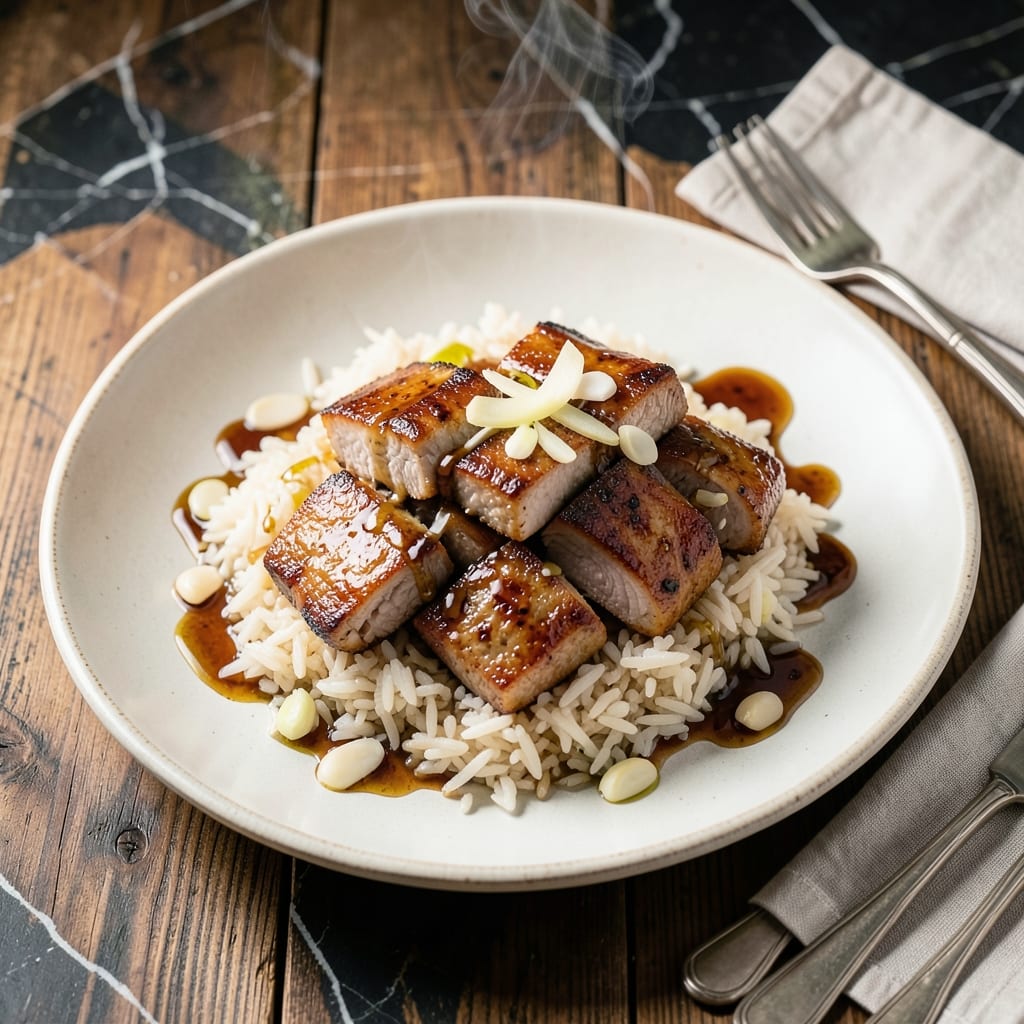
This dish transforms simple ingredients into a savory one-pan meal with toasted depth. The pork develops a caramelized crust while the rice absorbs all the rich flavors, creating perfectly seasoned bites every time.
With just 30 minutes of active cooking, you’ll have a complete meal that’s hearty, balanced, and packed with aromatic layers. The technique ensures the pork stays tender and the rice cooks evenly without turning mushy.
Ingredients for Pork and Rice Dish
Transform simple pantry staples into this rich, one-pan meal with ease.
| Ingredient | Amount | Notes |
|---|---|---|
| Pork Shoulder 🐖 | 1 ½ lb | Cut into 1-inch cubes, bone-in preferred |
| Long-Grain White Rice 🍚 | 1 ½ cups | Rinsed until water runs clear |
| Chicken Stock 🥣 | 2 ½ cups | Low-sodium preferred for control |
| Soy Sauce 🫕 | 3 tbsp | Use reduced-sodium for balance |
| Garlic Cloves 🧄 | 5 cloves | Minced finely for even distribution |
| Fresh Ginger 🌿 | 1 tbsp | Grated, peeled first |
| Green Onions 🧅 | 4 whole | Thinly sliced, white and green parts separated |
| Sesame Oil 🫒 | 1 tbsp | Toasted variety for depth |
| Rice Vinegar 🍶 | 1 tbsp | Adds bright acidity to balance |
| Brown Sugar 🍚 | 1 tbsp | Light or dark, packed |
| Cornstarch 🌾 | 1 tbsp | For velvety sauce texture |
| Neutral Oil 🫒 | 2 tbsp | High smoke point for searing |
| Salt 🧂 | 1 tsp | Diamond Crystal kosher preferred |
| Black Pepper 🌶️ | ½ tsp | Freshly ground for best flavor |
The pork quality is paramount for proper caramelization and tenderness. Opt for bone-in pork shoulder with visible marbling, available at most butchers or the meat counter at Whole Foods. The rice should be long-grain white—jasmine works beautifully here. Avoid pre-cooked or parboiled varieties, as they lack the necessary starch for the dish’s signature texture.
Substitutions are possible but impact the final character: pork tenderloin can replace shoulder (reduce cook time by half), while brown rice requires additional liquid and time. For gluten-free needs, tamari replaces soy sauce at a 1:1 ratio. If fresh ginger is unavailable, ground ginger at one-quarter the amount works, though fresh delivers superior brightness.
Store raw pork in the coldest part of your refrigerator and use within 2 days, or freeze for up to 3 months. The cooked dish keeps well for 4 days refrigerated, with flavors deepening overnight. Reheat gently with a splash of water to prevent drying.
Why You’ll Love This Recipe
- One Pot Wonder: I toss everything in a single pot—pork shoulder, rice, stock—and let it work its magic while I do other things.
- Umami Bomb: The soy sauce and garlic turn simple ingredients into a rich, savory bite that’s hard to resist.
- Feeds a Crowd: Honestly, this stretches easily for family dinners or meal prep, and the flavors only get better the next day.
- Budget Friendly: Pork shoulder is affordable, and a little goes a long way with rice to fill everyone up without breaking the bank.
Instructions
Master the technique behind this dish with precision timing and proper layering.
Step 1: Sear and Brown the Pork Shoulder
Heat 2 tbsp neutral oil in a large pot or Dutch oven over medium-high heat until shimmering. Add the 1.5 lb pork shoulder cubes in a single layer, being careful not to overcrowd the pan. Sear undisturbed for 4-5 minutes until the bottom develops a deep golden-brown crust.
Flip the pork pieces and repeat the searing process on the other sides. The meat should release easily when it’s properly browned. This step builds a flavor foundation for the entire dish. Season with 1 tsp salt and 0.5 tsp black pepper as the pork cooks.
Step 2: Aromatics and Rice Foundation
Reduce heat to medium and push the pork to one side of the pot. Add the 5 cloves garlic cloves, 1 tbsp fresh ginger, and the white parts of the 4 whole green onions. Sauté for 1-2 minutes until fragrant but not browned.
Stir in the 1.5 cups long-grain white rice and toast for 2 minutes, coating the grains with the rendered pork fat and aromatics. This toasting step enhances the nutty flavor of the rice and prevents it from becoming mushy during cooking.
Step 3: Build the Liquid Base and Simmer
Pour in the 3 tbsp soy sauce, 1 tbsp brown sugar, 1 tbsp rice vinegar, and 2.5 cups chicken stock. Stir to combine, making sure to scrape up any browned bits from the bottom of the pot. These fond bits dissolve into the liquid, adding depth of flavor.
Bring the mixture to a boil, then reduce heat to low, cover, and simmer for 20 minutes. The rice should absorb most of the liquid and become tender. Avoid lifting the lid during this time, as the steam is crucial for even cooking.
Step 4: Finish with Cornstarch Slurry and Garnish
In a small bowl, mix the 1 tbsp cornstarch with 2 tbsp of the cooking liquid to create a slurry. Stir this into the pot and cook for an additional 2-3 minutes until the sauce thickens to a velvety consistency that coats the back of a spoon.
Remove from heat and stir in the 1 tbsp sesame oil. The sesame oil adds a rich, toasty depth that complements the savory pork and rice. Garnish with the green parts of the green onions just before serving. The green onions add a fresh, vibrant finish to the dish.
Let the pork and rice rest, covered, for 5 minutes before serving to allow the flavors to meld together perfectly.
Pro Tips For Making Pork And Rice Dish
- Sear the Pork First: I learned this the hard way—browning the pork shoulder in hot oil for 3-4 minutes per side locks in juices and adds depth to the dish. Skip this and your rice will taste flat.
- Rinse the Rice: Sounds tedious, but rinsing the long-grain rice until the water runs clear removes excess starch so it cooks up fluffy, not gummy.
- Use Cold Stock: After burning a batch, I realized adding cold chicken stock to the hot pan deglazes all those tasty browned bits from the pork—free flavor.
- Mince Garlic Fine: My grandmother swore by this: finely minced garlic (almost paste-like) distributes better in the rice and prevents those unpleasant big chunks.
Perfect Pairings for pork and rice dish
Vegetable Sides
Steamed bok choy with a drizzle of sesame oil makes a light, fresh counterpoint to the rich pork. I blanch 4 baby bok choy for 2 minutes then finish with a sprinkle of flaky sea salt. 🥗
Starch Pairings
For extra carb lovers, serve with crispy roasted potatoes. Toss 1 lb baby potatoes with 1 tbsp neutral oil and roast at 425°F for 25 minutes. The contrast in textures is wonderful.
Beverage Matches
A cold Asian lager like Sapporo or Tsintgtao cuts through the richness beautifully. The crisp carbonation refreshes your palate between bites. For non-alcoholic options, jasmine tea with its floral notes complements the dish’s aromatics perfectly.
Fresh Garnishes
Add a quick cucumber salad by tossing 1 sliced cucumber with 1 tbsp rice vinegar and ½ tsp sugar. The cool crunch provides a nice textural contrast to the tender pork. 💡
Condiment Options
Set out sriracha and hoisin sauce for customizable heat and sweetness. I also love adding pickled jalapeños for a tangy kick that brightens up each mouthful.
Nutrition Facts
Frequently Asked Questions
Can I use a different cut of pork?
Yes, pork tenderloin works but cook for only 12-15 minutes. Shoulder is ideal for its fat content and tenderness. Avoid lean cuts like loin as they can dry out during simmering.
What if my rice is still crunchy after 20 minutes?
Add 1/2 cup more liquid, cover, and cook for another 5 minutes. Check frequently to avoid overcooking. This usually happens with older rice or insufficient liquid.
Can this be made in a slow cooker?
Brown the pork first, then transfer everything to the slow cooker. Cook on low for 6-7 hours or high for 3-4 hours. The flavors will deepen beautifully.

- Jollof Rice Sauce Recipe: West African Tomato and Spice Infusion - September 25, 2026
- Japanese Rice Soup Recipe: Umami-Rich Comfort in a Bowl - September 25, 2026
- Homemade Cream Of Rice Recipe: Silk-Smooth Breakfast in Minutes - September 25, 2026