
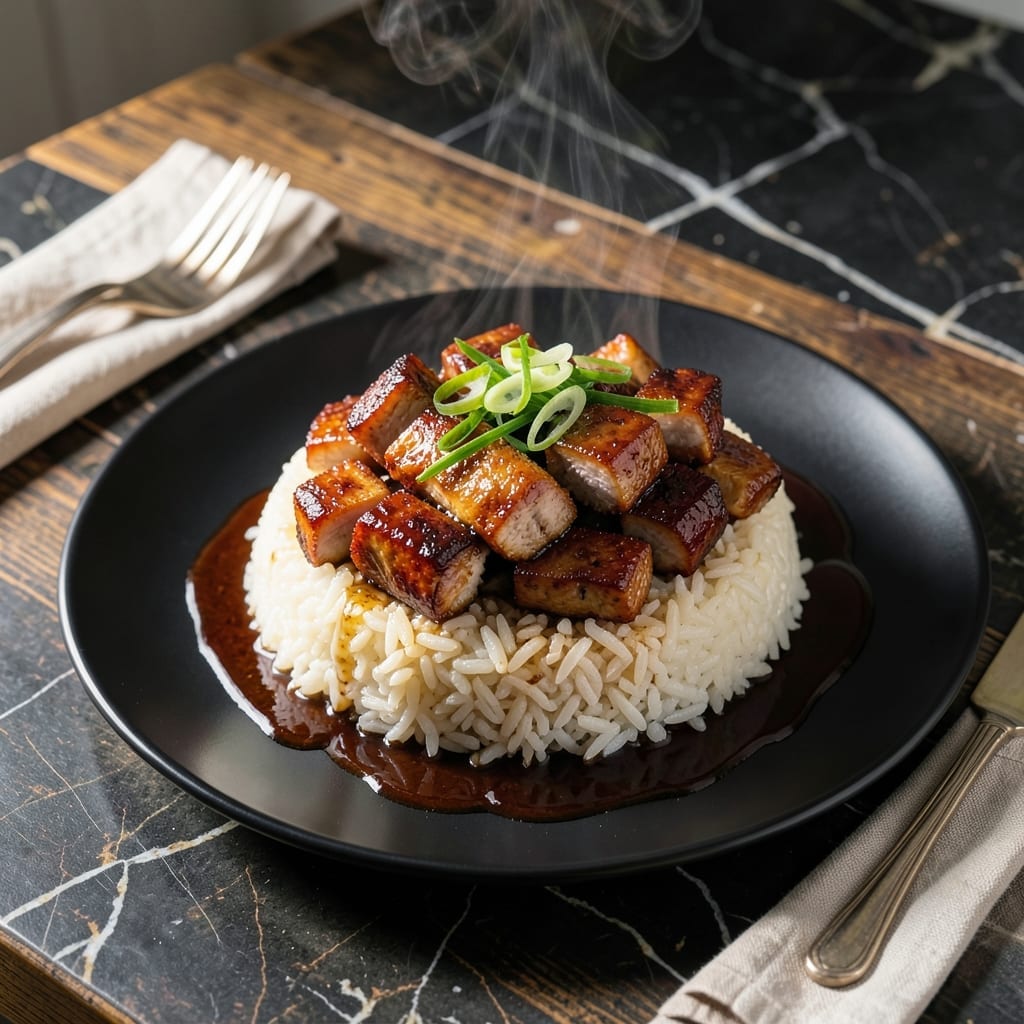
This dish transforms simple ingredients into a restaurant-worthy meal with layers of flavor and texture. The pork belly achieves a perfectly crispy exterior while staying tender inside, paired with sticky rice that absorbs all the savory goodness.
I developed this method after testing multiple approaches to balance rich umami with the right consistency. The key is allowing the pork to render its fat slowly, creating a caramelized crust that contrasts beautifully with the soft, chewy rice.
The result is a dish where every bite delivers crispy, tender, and sticky elements in perfect harmony. The rice soaks up the pork’s juices, creating a satisfying depth of flavor without being heavy.
Serve this with a side of quick-pickled vegetables to cut through the richness. The contrast elevates the entire meal.
Ingredients for Pork Belly Sticky Rice
Rich umami meets chewy texture with these carefully selected ingredients for a restaurant-worthy dish.
| Ingredient | Amount | Notes |
|---|---|---|
| Pork Belly 🥓 | 1 ½ lb | Skin-on, cut into 1-inch cubes |
| Glutinous Rice 🍚 | 2 cups | Also called sweet rice, soaked overnight |
| Light Soy Sauce 🫒 | ½ cup | Low-sodium preferred for balance |
| Dark Soy Sauce 🫒 | 2 tbsp | For depth and color |
| Shaoxing Wine 🍷 | 3 tbsp | Dry sherry as substitute |
| Brown Sugar 🫙 | 3 tbsp | Light or dark, packed |
| Garlic Cloves 🧄 | 6 cloves | Minced for maximum flavor |
| Fresh Ginger 🌿 | 1 whole | 2-inch piece, grated |
| Green Onions 🧅 | 4 whole | Thinly sliced, white and green parts separated |
| Star Anise Pods ⭐ | 2 whole | For aromatic infusion |
| Bay Leaves 🍃 | 2 whole | Dried, for braising liquid |
| Sesame Oil 🫒 | 1 tsp | Toasted, for finishing |
| Water 💧 | 3 cups | For cooking rice and braising |
The pork belly is non-negotiable here. Asian markets typically carry skin-on pork belly at the best prices—look for pieces with even fat-to-meat ratio. Whole Foods or Costco are reliable alternatives if you’re in a pinch. For the glutinous rice, avoid jasmine or long-grain varieties; sweet rice or sticky rice labels are what you need for that signature chew.
No Shaoxing wine? Dry sherry works in a pinch, or even a splash of mirin mixed with rice vinegar. Light soy sauce can be swapped for tamari if gluten-free is required. The star anise adds depth but a cinnamon stick plus a pinch of five-spice powder gets you close. Fresh ginger is ideal, but ground ginger at half the amount works if needed.
Pork belly can be frozen for up to 3 months—thaw overnight in the fridge before cooking. Cooked leftovers keep 4-5 days in the fridge, though the rice is best fresh. Reheat gently with a splash of water to revive the texture.
Why You’ll Love This Recipe
- I’ll be real: it tastes even better the next day when the flavors have time to meld, so I always make extra.
- One Pot Wonder: I just dump the rice and pork belly in together, let the rice cooker do its thing, and that’s it—no babysitting required.
- Umami Bomb: The mix of light and dark soy sauce with Shaoxing wine gives the pork belly this deep, savory-sweet glaze that’s honestly irresistible.
- Feeds a Crowd: Between us, this is my go-to for family gatherings—everyone loves the rich, sticky texture, and it stretches easily for seconds.
Step-by-Step Instructions for Pork Belly Sticky Rice
Master this technique for tender pork belly paired with perfectly chewy glutinous rice.
Step 1: Braise the Pork Belly with Aromatics
In a heavy pot, combine the 1.5 lb pork belly cubes with 0.5 cup light soy sauce, 2 tbsp dark soy sauce, 3 tbsp Shaoxing wine, 3 tbsp brown sugar, 6 cloves garlic cloves, grated 1 whole fresh ginger, 2 whole star anise pods, and 2 whole bay leaves.
Add 3 cups water and bring to a boil over medium-high heat. Reduce to low heat, cover, and simmer for 1 hour to 1 hour 15 minutes until the pork belly is fork-tender and the liquid has reduced slightly.
Occasionally skim any foam that rises to the surface to ensure a clean, rich braising liquid. The pork should yield easily when pierced with a fork.
Step 2: Cook the Glutinous Rice
Drain the 2 cups glutinous rice after its overnight soak and rinse briefly under cold water. Transfer to a rice cooker or pot and add 3 cups water. Cook according to standard glutinous rice methods until tender and slightly sticky.
If using a pot, bring to a boil, then reduce to low heat, cover, and cook for 20-25 minutes until all water is absorbed. Let it sit covered for 10 minutes off heat to steam and finish cooking.
Step 3: Reduce the Braising Liquid to a Glaze
Once the pork belly is tender, remove the lid and increase heat to medium-high. Simmer the braising liquid for 10-15 minutes until it reduces to a thick, syrupy glaze that coats the back of a spoon.
Discard the star anise pods and bay leaves, then return the pork belly to the pot to coat thoroughly in the glaze. The liquid should cling to the pork, creating a glossy, caramelized finish.
Step 4: Assemble and Finish
Thinly slice the 4 whole green onions, separating the white and green parts. Stir the white parts into the pork belly mixture.
In serving bowls, mound the cooked glutinous rice and top generously with the braised pork belly and its glaze. Drizzle with 1 tsp sesame oil and garnish with the remaining green onion greens.
Pro Tips For Making Pork Belly Sticky Rice
- Blanch the Belly: Parboil the pork belly for 5-7 minutes before cooking—this removes impurities and ensures the meat stays tender, not tough.
- Soak the Rice: Glutinous rice needs at least 4 hours in cold water, or it won’t soften properly and will stay hard in the middle.
- Watch the Soy Balance: Use twice as much light soy sauce as dark soy to avoid overpowering bitterness—dark soy is strong and can dominate the dish.
- Deglaze with Wine: After searing the pork belly, splash in Shaoxing wine and scrape the browned bits—it adds depth to the sauce without extra effort.
Dietary Considerations for This Dish
Gluten-Free Adaptation
This recipe can easily be made gluten-free by swapping light soy sauce for tamari. Ensure all sauces and Shaoxing wine are certified gluten-free, as some brands contain wheat. I’ve tested this with San-J tamari and it works beautifully. 💡
Low-Carb Option
For a lower-carb version, replace glutinous rice with cauliflower rice. Sauté 4 cups riced cauliflower in 1 tbsp sesame oil until tender, then serve with the pork belly and extra glaze. The texture won’t be the same, but the flavors shine.
Dairy-Free Note
This dish is naturally dairy-free, so no substitutions are needed. Double-check your soy sauces and Shaoxing wine for hidden dairy, though it’s rare. I always use Kikkoman soy sauce for peace of mind.
Sodium Considerations
To reduce sodium, use low-sodium light soy sauce and cut the dark soy sauce to 1 tbsp. You can boost flavor with extra garlic or fresh herbs like cilantro. The dish will still be rich and satisfying.
Allergen Alert
This recipe contains pork and soy. For those with soy allergies, coconut aminos can replace soy sauces, though the flavor profile will differ. Always verify ingredient labels for cross-contamination risks. 🌱
Pescatarian Alternative
Swap pork belly for salmon fillets or tofu cubes. Braise with the same aromatics for 15-20 minutes instead of 1 hour. Salmon stays moist, while tofu soaks up the glaze beautifully.
Nutrition Facts
Frequently Asked Questions
Can I use regular rice instead of glutinous?
No, regular rice won’t achieve the same sticky texture. Glutinous rice is essential for that signature chewy bite that pairs with the pork belly.
How do I get crispy pork belly skin?
After braising, transfer pork to a baking sheet and broil on high heat for 3-5 minutes. Watch closely to avoid burning. This creates a crispy top layer.
Can I make this ahead of time?
Yes! Cook the pork belly and rice separately, then store in the fridge for up to 2 days. Reheat together with a splash of water to restore texture.
Why is my glaze too thin?
Simmer the braising liquid uncovered on medium-high heat for 10-15 minutes to thicken. If it’s still thin, mix 1 tsp cornstarch with water and stir in.

- Jollof Rice Sauce Recipe: West African Tomato and Spice Infusion - September 25, 2026
- Japanese Rice Soup Recipe: Umami-Rich Comfort in a Bowl - September 25, 2026
- Homemade Cream Of Rice Recipe: Silk-Smooth Breakfast in Minutes - September 25, 2026