
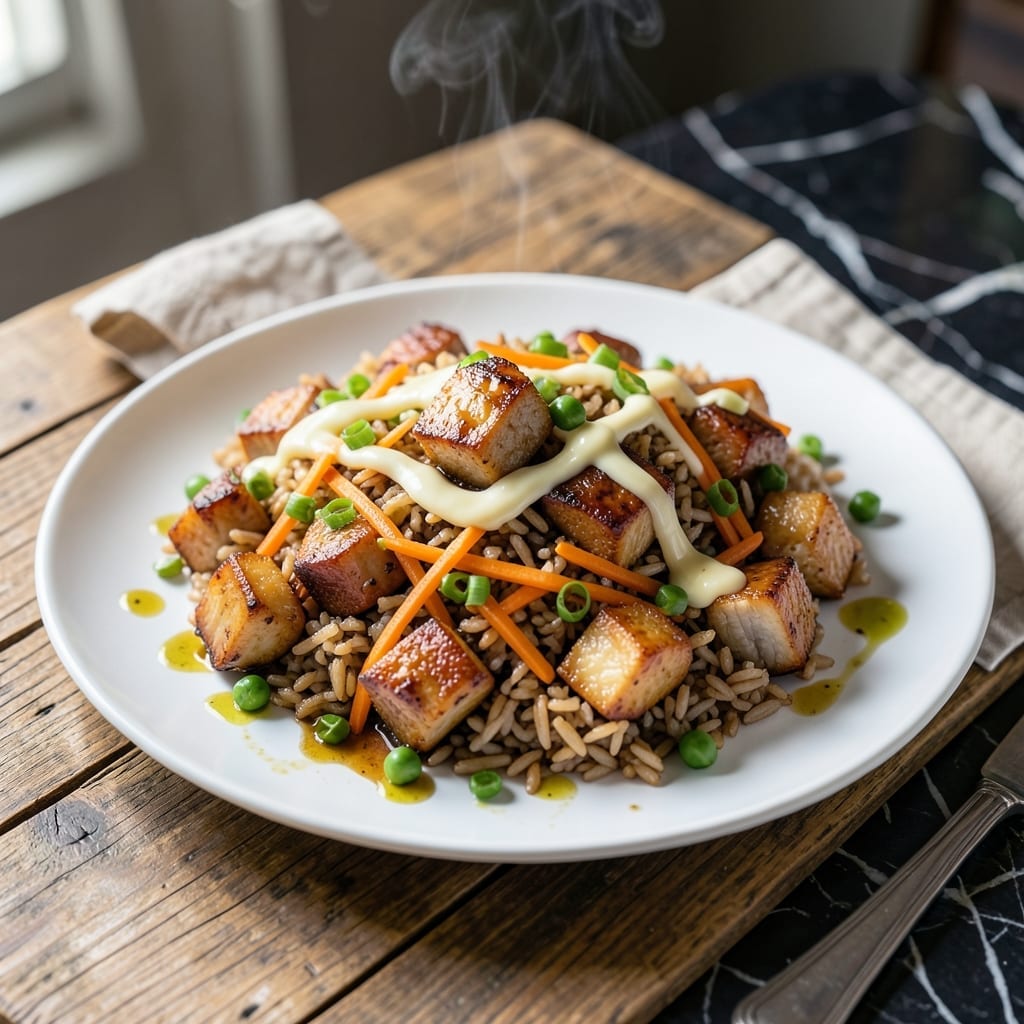
This pork fried brown rice delivers smoky wok-charred goodness with every bite, transforming simple ingredients into a deeply flavorful meal. The high heat creates that signature restaurant-quality texture and taste at home.
Brown rice adds a nutty depth, while tender pork pieces and crisp vegetables provide the perfect contrast. Each component is cooked just right to maintain distinct textures without mushiness.
The secret lies in the wok technique—quick cooking at high temperatures locks in flavors and creates those coveted charred bits. The sauce ties everything together with a balanced savory-sweet finish.
This dish comes together in 30 minutes for a weeknight dinner that tastes anything but ordinary. The results are consistently impressive with minimal effort.
Ingredients for Pork Fried Brown Rice
High heat, bold flavors, and textures that pop in every bite of this dish.
| Ingredient | Amount | Notes |
|---|---|---|
| Cooked Brown Rice 🍚 | 4 cups | Day-old, chilled for texture |
| Pork Shoulder 🥩 | ¾ lb | Boneless, cut into small cubes |
| Large Eggs 🥚 | 2 whole | Lightly beaten for scrambling |
| Carrots 🥕 | 2 whole | Medium, diced into small pieces |
| Green Onions 🧅 | 4 whole | Thinly sliced, whites and greens separated |
| Frozen Peas 🌱 | ¾ cup | Thawed before cooking |
| Garlic Cloves 🧄 | 3 cloves | Minced for aromatic base |
| Fresh Ginger Root 🌿 | 1 tbsp | Peeled and finely grated |
| Low-Sodium Soy Sauce 💧 | 3 tbsp | Divided for seasoning layers |
| Oyster Sauce 🍶 | 1 tbsp | For umami depth |
| Sesame Oil 🫒 | 1 tsp | Toasted variety for finish |
| Neutral Cooking Oil 🛢️ | 3 tbsp | High smoke point for wok frying |
| Granulated Sugar 🍚 | ½ tsp | Balances savory elements |
| White Pepper 🌶️ | ¼ tsp | Freshly ground for brightness |
| Kosher Salt 🧂 | ½ tsp | Adjust to taste at end |
The pork is non-negotiable here. Pork shoulder offers the ideal fat-to-meat ratio for juicy, charred bits—avoid lean cuts like tenderloin. Source from Whole Foods or a trusted butcher for quality marbling. Brown rice must be fully chilled (overnight is best) to prevent mushiness during frying. Jasmine or basmati brown rice add fragrance, but any long-grain works.
No oyster sauce? Vegan oyster sauce or hoisin sauce provides similar depth. Substitute tamari for soy sauce if gluten-free. Pork can be swapped for chicken thighs (cut similarly), but expect a milder flavor. Fresh ginger is essential—jarred ginger lacks complexity. The neutral oil must withstand high heat; avocado or peanut oil are ideal alternatives.
Leftovers keep well, though best eaten fresh for texture. Store in an airtight container for up to 4 days. Reheat in a skillet with a splash of water to revive. For meal prep, cook rice and prep veggies ahead, but keep separate until frying. Freezing is not recommended—rice loses its texture.
Why You’ll Love This Recipe
- One Pan Wonder: I toss in the cooked brown rice, pork shoulder, and veggies—all in the same pan. Cleanup is a breeze.
- Umami Bomb: The pork shoulder caramelizes while frying, and those green onions add a fresh kick that ties it all together.
- Meal Prep Hero: I make a big batch on Sunday and it reheats beautifully for lunches all week. Honestly, it tastes even better the next day.
- Budget Stretcher: Pork shoulder is affordable, and brown rice fills us up without breaking the bank. My wallet thanks me every time.
Step-by-Step Instructions for Pork Fried Brown Rice
Master the wok technique to achieve smoky, restaurant-quality fried rice with perfect texture and depth of flavor.
Step 1: Prepare the Protein and Aromatics
Heat 1 tablespoon neutral cooking oil in a wok over high heat until shimmering. Add the 0.75 lb pork shoulder cubes and spread them in a single layer. Let them sear undisturbed for 2-3 minutes until deeply browned on one side.
Stir-fry for another 2-3 minutes until the pork is cooked through and evenly browned. Remove to a plate and set aside. In the same wok, add the remaining 2 tablespoons neutral cooking oil, then add the minced garlic cloves and grated fresh ginger root. Stir for 30 seconds until fragrant but not browned.
Step 2: Scramble the Eggs and Vegetables
Push the aromatics to one side of the wok and pour in the lightly beaten large eggs. Let them set for 10 seconds before scrambling gently with a spatula until just set but still slightly runny. This ensures ribbons of egg throughout the dish rather than dry curds.
Add the diced carrots and cook for 2 minutes until slightly softened. Stir in the thawed frozen peas and the white parts of the green onions. Cook for another 1 minute until the vegetables are heated through and vibrant in color.
Step 3: Combine Rice and Seasonings
Add the chilled 4 cups cooked brown rice, breaking up any clumps with your spatula. The rice should sizzle upon contact with the hot wok. Stir-fry for 3-4 minutes until the rice is heated through and begins to develop a slight char.
Drizzle 2 tablespoons low-sodium soy sauce around the edges of the wok, then add the 1 tablespoon oyster sauce, 0.5 teaspoon granulated sugar, and 0.25 teaspoon white pepper. Toss everything together to coat the rice evenly, ensuring each grain glistens with sauce.
Step 4: Finish and Serve
Return the reserved pork to the wok along with the remaining 1 tablespoon low-sodium soy sauce. Stir-fry for 1-2 minutes until everything is uniformly combined and heated through. Taste and adjust seasoning with 0.5 teaspoon kosher salt if needed.
Remove from heat and drizzle with 1 teaspoon sesame oil. Stir once more to distribute. Garnish with the green parts of the green onions and serve immediately while hot. The rice should have distinct wok hei (breath of the wok) aroma with tender pork and vibrant vegetables in every bite.
Pro Tips For Making Pork Fried Brown Rice
- Chill the Rice: Use day-old, refrigerated brown rice—it’s drier and fries up fluffier instead of mushy. I learned this the hard way after making soggy batches with fresh rice.
- Small Pork Pieces: Cut the pork shoulder into tiny, uniform bits (about 1/4-inch) so they cook through quickly and blend seamlessly with the rice.
- High Heat First: Crank the heat to medium-high when stir-frying the pork and veggies to get a good sear, then drop to medium to finish cooking without burning.
- Scramble Eggs Separately: Cook the eggs first, remove them, then add back at the end—this keeps them soft and distinct instead of disappearing into the rice.
Pro Cooking Tips for This Recipe
Wok Heat Control
High heat is non-negotiable for authentic wok hei. I use a carbon steel wok on my gas burner at maximum flame. The oil should shimmer and nearly smoke before adding ingredients. A wok ring helps stabilize the pan if your burner is small. 🔥
Rice Temperature
Cold rice is essential for proper texture. I spread the 4 cups cooked brown rice on a baking sheet and refrigerate overnight. This prevents steaming in the wok. Day-old rice from the fridge works perfectly if you’re short on time.
Pork Browning
Don’t crowd the 0.75 lb pork shoulder in the wok—this steams rather than sears. I cook it in a single layer, undisturbed for 2-3 minutes per side. The goal is caramelized edges with juicy interiors. Use avocado oil for its high smoke point.
Egg Technique
For those perfect egg ribbons, I let the beaten 2 large eggs set for 10 seconds before gently scrambling. The key is removing them just before they’re fully cooked—they’ll finish in the final stir-fry. A flexible silicone spatula helps with this delicate process.
Sauce Distribution
Always add sauces around the edges of the wok, not directly to the center. This lets the 3 tablespoons soy sauce and 1 tablespoon oyster sauce caramelize slightly before mixing. I toss everything with a lifting motion to coat each rice grain evenly.
Final Touches
The 1 teaspoon sesame oil should be added off-heat to preserve its aroma. I drizzle it down the sides of the wok, then fold everything together once. The green onion garnish adds freshness that cuts through the richness. 💡
Nutrition Facts
Frequently Asked Questions
Can I use fresh rice instead of chilled?
No, fresh rice contains too much moisture and will turn mushy. Always use day-old chilled rice for the best texture and proper charring in the wok.
What’s the best pork cut for this dish?
Pork shoulder is ideal for its fat marbling and tenderness. Avoid lean cuts like tenderloin—they dry out quickly and lack the rich flavor needed.
How do I prevent the eggs from overcooking?
Scramble the eggs just until slightly runny, then remove them from the wok. They’ll finish cooking when combined with the rice and pork later.
Can I make this gluten-free?
Yes! Substitute tamari for soy sauce and ensure your oyster sauce is gluten-free. Double-check all labels to avoid cross-contamination.

- Jollof Rice Sauce Recipe: West African Tomato and Spice Infusion - September 25, 2026
- Japanese Rice Soup Recipe: Umami-Rich Comfort in a Bowl - September 25, 2026
- Homemade Cream Of Rice Recipe: Silk-Smooth Breakfast in Minutes - September 25, 2026