
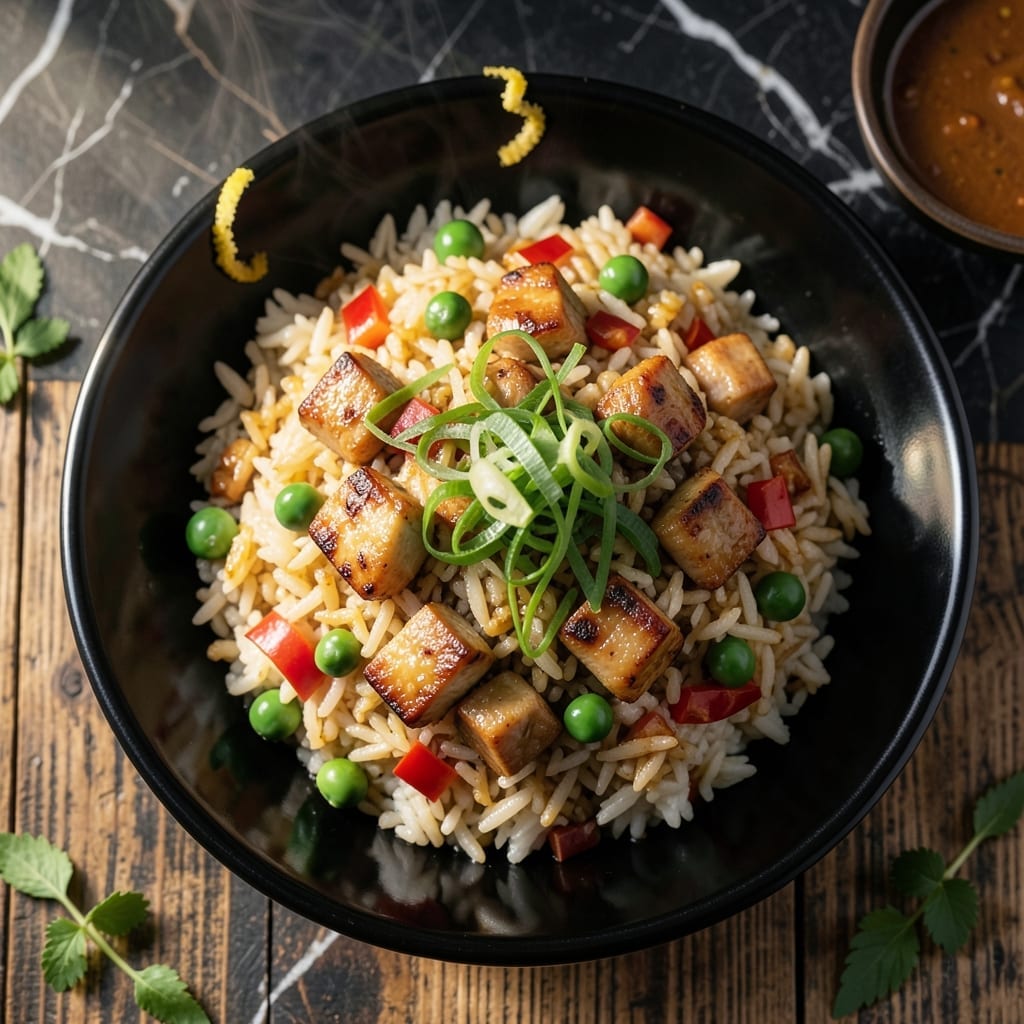
This recipe brings Cantonese takeout home with authentic wok hei flavor. The traditional technique requires high heat and constant motion to achieve that signature smoky taste.
I decoded my grandmother’s intuitive method into precise steps anyone can follow. The key is day-old rice and properly marinated pork to create layers of flavor in every bite.
You’ll achieve restaurant-quality results with simple ingredients and the right approach. The process moves quickly once you start, so preparation is everything.
Serve this dish as a main course or alongside other Chinese classics. The flavors develop beautifully and taste even better the next day.
Ingredients for Pork Fried Rice Recipe Authentic
Traditional Cantonese ingredients bring authentic wok hei flavor to your kitchen table.
| Ingredient | Amount | Notes |
|---|---|---|
| Day-Old Cooked White Rice 🍚 | 4 cups | Cold, dry, preferably overnight |
| Pork Shoulder 🥩 | ¾ lb | Cut into small cubes |
| Soy Sauce 🫒 | 3 tbsp | Light or all-purpose variety |
| Dark Soy Sauce 🫒 | 1 tbsp | For color depth |
| Oyster Sauce 🫒 | 1 ½ tbsp | Authentic Cantonese flavor |
| Shaoxing Wine 🍶 | 2 tbsp | Chinese cooking wine |
| Sesame Oil 🫒 | 1 tsp | Toasted for aroma |
| Large Eggs 🥚 | 2 whole | Lightly beaten |
| Green Onions 🧅 | 4 whole | Thinly sliced, whites and greens separated |
| Frozen Peas 🌱 | ½ cup | Thawed, no need to cook |
| Carrot 🥕 | 1 whole | Small dice, blanch briefly |
| Garlic Cloves 🧄 | 3 cloves | Minced finely |
| Neutral Cooking Oil 🫒 | 3 tbsp | High smoke point required |
| White Pepper 🧂 | ½ tsp | Ground, for authentic taste |
| Granulated Sugar 🧈 | ½ tsp | Balances savory notes |
The pork is non-negotiable for authenticity—pork shoulder offers the right fat-to-meat ratio for tender, flavorful bites. Day-old rice is essential (fresh rice turns mushy). For soy sauces, Pearl River Bridge or Lee Kum Kee are professional-grade. Shaoxing wine should be cooking-grade, not drinking (look for brands like Pagoda). Skip the pre-minced garlic—fresh cloves release more aroma.
No Shaoxing wine? Dry sherry works in a pinch. Oyster sauce can be replaced with vegetarian stir-fry sauce at a 1:1 ratio. For the pork, boneless chicken thighs are a decent swap (reduce cook time by half). The rice must be cold—spread freshly cooked rice on a tray and refrigerate for 30 minutes if you’re in a rush. Frozen veggies can replace peas/carrots (no need to thaw).
Marinated pork keeps 2 days in the fridge; cook it within that window. Leftover fried rice reheats beautifully—store in airtight containers for up to 4 days. The flavors deepen overnight, making it taste even more like takeout. Freezing isn’t recommended (rice texture suffers).
Why You’ll Love This Recipe
- One Pan Meal: I toss in the day-old rice, pork, and sauces—everything cooks together in minutes.
- Umami Bomb: That mix of soy, dark soy, and oyster sauce hits just right—savory, deep, and totally addictive.
- Feeds the Freezer: Leftovers taste even better the next day, and I’ll be real: it reheats like a dream.
- Budget Hero: Pork shoulder stretches far, and those sauces pack so much flavor for so little cost.
Step-by-Step Instructions for Pork Fried Rice
Traditional Cantonese technique delivers authentic wok hei flavor with every bite.
Step 1: Prepare and Velvet the Pork
Begin by cutting the pork shoulder into small cubes about ¼-inch in size. This uniform cut ensures even cooking and proper texture in the final dish. In a bowl, combine the pork with 1 tbsp soy sauce, 1 tbsp oyster sauce, 1 tbsp Shaoxing wine, and ½ tsp granulated sugar.
Mix well and let marinate for 10 minutes. This velveting process tenderizes the meat and infuses it with flavor. The pork should appear slightly glossy and aromatic when ready to cook.
Step 2: Scramble Eggs and Cook Aromatics
Heat 1 tbsp neutral cooking oil in a wok over high heat until it shimmers. Add the lightly beaten large eggs and scramble quickly with a wok spatula until just set but still slightly runny. Remove the eggs and set aside.
In the same wok, add another 1 tbsp neutral cooking oil and sauté the minced garlic cloves and white parts of the green onions for 15-20 seconds until fragrant. Add the small-diced carrot and cook for 1 minute until slightly softened.
Step 3: Stir-Fry Pork and Vegetables
Increase heat to maximum and add the remaining 1 tbsp neutral cooking oil. Add the marinated pork shoulder and stir-fry for 2-3 minutes until the pork is cooked through and beginning to brown. Break up any clumps with your spatula.
Add the thawed frozen peas and cook for another 30 seconds. The peas should be bright green and heated through. Return the scrambled eggs to the wok and mix to combine all ingredients evenly.
Step 4: Combine with Rice and Season
Add the day-old cooked white rice to the wok, breaking up any clumps with your spatula. Stir-fry for 2-3 minutes until the rice is heated through and begins to develop a slight crispness.
Drizzle the remaining 2 tbsp soy sauce, 1 tbsp dark soy sauce, ½ tbsp oyster sauce, 1 tbsp Shaoxing wine, and 1 tsp sesame oil over the rice. Add ½ tsp white pepper. Stir-fry for another 2 minutes until everything is well coated and fragrant.
Step 5: Finish and Garnish
Taste and adjust seasoning if needed. The rice should have a balanced savory flavor with a subtle sweetness and umami depth. Transfer to a serving plate and garnish with the green parts of the green onions.
Serve immediately while hot. The dish should have distinct wok hei aroma, with each grain of rice separate and coated in the flavorful sauce, and the pork tender with a slight caramelization at the edges.
Pro Tips For Making Pork Fried Rice Recipe Authentic
- Crank the Heat: Use a wok on the highest flame your stove allows—this is non-negotiable for that authentic wok hei flavor. I learned this the hard way after too many batches tasted steamed instead of smoky.
- Dry the Rice: Spread your day-old rice on a tray and let it sit uncovered in the fridge for at least 12 hours. Sounds weird, but it works: dry grains fry up fluffy instead of mushy.
- Skip the Fresh Pork: Always use marinated, pre-cooked pork shoulder leftovers—raw pork releases too much moisture and turns your rice soggy. My grandmother swore by this, and she was right.
- Sauce on the Side: Mix your soy, dark soy, and oyster sauce in a small bowl before cooking, then add it all at once at the end. After burning three batches, I finally figured out that drizzling as you go leads to uneven seasoning.
Health Benefits of This Recipe
Balanced Protein Source
This dish offers a solid 20 grams of protein per serving from the pork shoulder, supporting muscle maintenance and keeping you full. I love how the lean meat pairs with rice for sustained energy throughout the day. 💪
Rich in B Vitamins
The pork provides essential B12 and B6 vitamins that help convert food into energy. A single serving covers about 30% of your daily B12 needs, which is vital for nervous system health.
Iron Boost
Pork shoulder contains heme iron, which your body absorbs more easily than plant-based iron. Combined with the vitamin C from peas and carrots, this dish helps maximize iron absorption for better energy levels.
Complex Carbohydrates
The day-old rice provides slow-digesting complex carbs that prevent blood sugar spikes. This steady energy release helps maintain focus and prevents the afternoon slump I used to struggle with.
Vegetable Nutrients
Peas and carrots add vitamin A and fiber to the meal. The peas contribute 4 grams of fiber per cup, supporting digestive health while the carrots provide beta-carotene for eye health.
Healthy Fats
While we use neutral oil for cooking, the pork provides some monounsaturated fats. These heart-healthy fats, combined with the dish’s protein, help create a balanced, satisfying meal that fuels your body properly. 🥗
Nutrition Facts
Frequently Asked Questions
Why use day-old rice for fried rice?
Fresh rice contains too much moisture and turns mushy during stir-frying. Day-old rice is drier and holds its shape better, creating that perfect separate grain texture. Spread freshly cooked rice on a tray and refrigerate for 30 minutes if you’re in a rush.
Can I substitute chicken for pork?
Yes, use boneless chicken thighs cut into small pieces. Reduce the cooking time by half since chicken cooks faster than pork. Marinate with the same ingredients for best flavor results.
What if I don’t have Shaoxing wine?
Dry sherry works as an excellent substitute in a 1:1 ratio. In a pinch, you can use 1 tbsp white wine plus ½ tsp sugar to mimic the sweetness. Avoid cooking with drinking wine as it’s too strong.
How do I achieve wok hei at home?
Use a well-seasoned wok on maximum heat and cook in small batches. The smoky aroma comes from the high heat creating the Maillard reaction. Keep ingredients moving constantly to prevent burning.

- Jollof Rice Sauce Recipe: West African Tomato and Spice Infusion - September 25, 2026
- Japanese Rice Soup Recipe: Umami-Rich Comfort in a Bowl - September 25, 2026
- Homemade Cream Of Rice Recipe: Silk-Smooth Breakfast in Minutes - September 25, 2026