
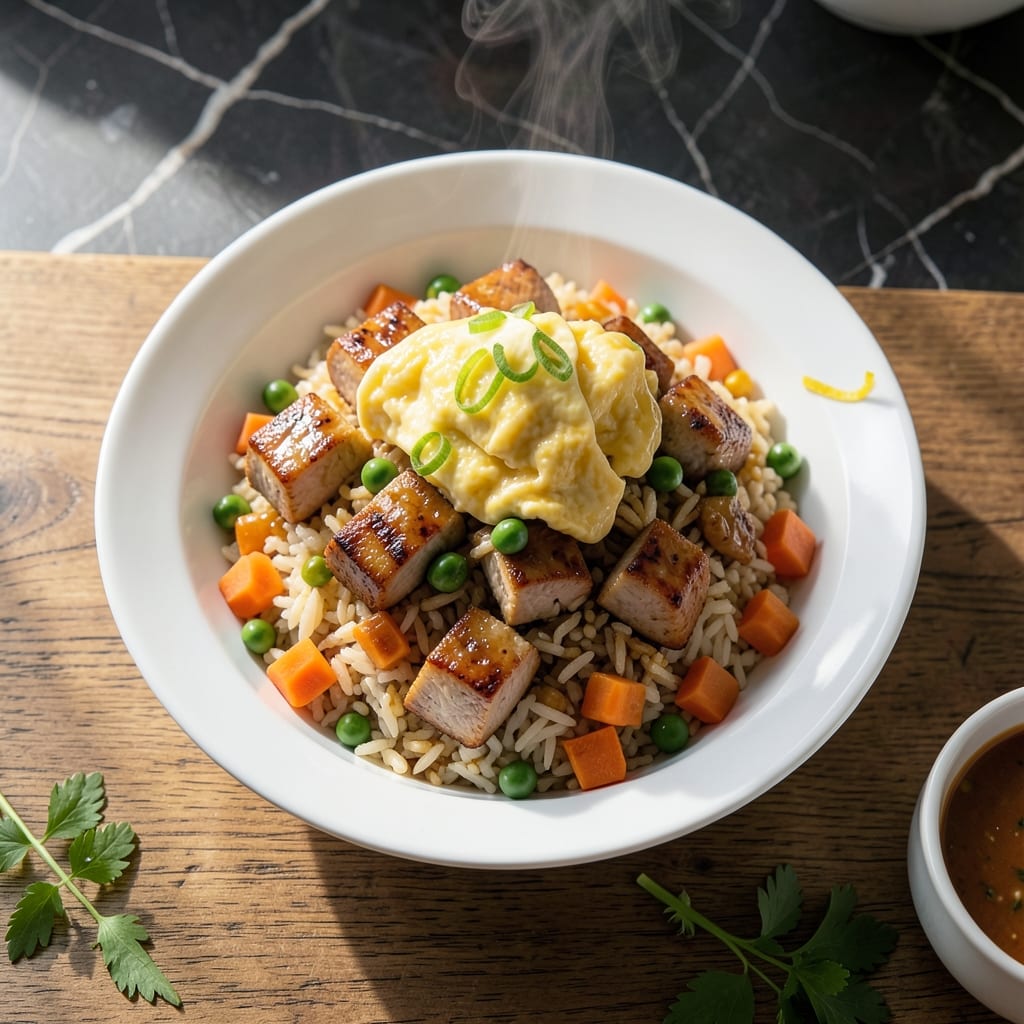
I’ve tested this fried rice method countless times to achieve that signature wok char without a commercial stove. The key is high heat and day-old rice—fresh grains won’t crisp properly. Pork should be cooked separately first to render fat and develop flavor.
This dish comes together quickly once prepped, with peas and carrots adding color and texture. Martha Stewart’s approach emphasizes balance: savory pork, sweet vegetables, and a subtle soy seasoning that ties everything together without overpowering.
The result is tender pork and fluffy rice with just enough charred edges for depth. Each bite delivers the comfort of a classic takeout favorite, made better with fresh ingredients and careful technique.
Perfect for using leftovers, this recipe transforms simple components into something restaurant-worthy.
Ingredients for Pork Fried Rice Recipe Martha Stewart
Day-old rice, tender pork, and crisp vegetables create this restaurant-worthy wok classic.
| Ingredient | Amount | Notes |
|---|---|---|
| Cooked White Rice 🍚 | 4 cups | Day-old, chilled preferred |
| Pork Shoulder 🥩 | ¾ lb | Cut into small cubes |
| Peas 🌱 | 1 cup | Frozen or fresh |
| Carrots 🥕 | 2 whole | Diced into small cubes |
| Large Eggs 🥚 | 3 whole | Lightly beaten |
| Soy Sauce 🫕 | 3 tbsp | Low-sodium preferred |
| Garlic Cloves 🧄 | 3 cloves | Minced finely |
| Green Onions 🧅 | 4 whole | Thinly sliced, whites and greens separated |
| Vegetable Oil 🫒 | 3 tbsp | High smoke point for frying |
| Sesame Oil 🫒 | 1 tsp | Toasted, for finishing |
| Kosher Salt 🧂 | ½ tsp | Adjust to taste |
| Ground White Pepper 🌶️ | ¼ tsp | For authentic flavor |
| Ginger Root 🌿 | 1 tbsp | Freshly grated |
The rice is critical here. Day-old, chilled rice from a takeout container works perfectly—it fries up dry and separate. For pork, shoulder or butt gives the best texture and fat content. Look for pieces with visible marbling at Whole Foods or your local butcher. The vegetables should be prepped uniformly for even cooking—small, even cubes for both peas and carrots ensure every bite has the right texture.
No pork? Chicken thighs or shrimp work well, but adjust cooking time accordingly. Out of soy sauce? Tamari or coconut aminos can substitute in a pinch. Fresh ginger is ideal, but ground ginger at half the amount works if that’s what you have. For a vegetarian version, swap pork for extra-firm tofu pressed and cubed, and use vegetable oil instead of pork fat.
Cooked rice can be prepped 1-2 days ahead and refrigerated. The pork can be cubed and marinated overnight. Leftovers keep in the fridge for 3-4 days and reheat beautifully in a skillet with a splash of water to refresh the texture.
Why You’ll Love This Recipe
- One Pan Wonder: I love that this comes together in a single skillet—rice, pork, and veggies all in one go.
- Rich Umami Burst: The pork shoulder adds this deep, savory flavor that pairs perfectly with the sweetness of the carrots and peas.
- Weeknight Lifesaver: Honestly, it’s my go-to for busy evenings when I need something hearty and fast.
- Stretches Further: Leftovers taste even better the next day, and it’s a solid way to use up extra rice and pork.
Step-by-Step Instructions for Wok-Charred Pork Fried Rice With Peas and Carrots
This method delivers authentic wok hei flavor with perfectly tender pork and vegetables.
Step 1: Prepare and Marinate the Pork
Cut the pork shoulder into small cubes and place in a bowl. Add 1 tbsp of soy sauce, 0.5 tsp kosher salt, and 0.25 tsp ground white pepper. Mix well to coat evenly and let marinate for 10 minutes while you prep the remaining ingredients.
This marinade ensures the pork stays juicy during the high-heat cooking process while adding depth of flavor. The small cubes cook quickly and distribute evenly throughout the dish.
Step 2: Scramble the Eggs and Cook the Aromatics
Heat 1 tbsp of vegetable oil in a wok or large skillet over high heat until shimmering. Pour in the lightly beaten large eggs and scramble quickly with a spatula until just set but still slightly runny—about 30-45 seconds. Remove the eggs and set aside.
In the same wok, add another 1 tbsp of vegetable oil. Add the minced garlic cloves and freshly grated ginger root, stirring constantly for 15-20 seconds until fragrant but not browned. This builds the aromatic foundation for your dish.
Step 3: Cook the Pork and Vegetables
Increase heat to maximum and add the remaining 1 tbsp of vegetable oil. Add the marinated pork shoulder cubes in a single layer. Let them sear undisturbed for 1-2 minutes until browned, then stir-fry for another 2-3 minutes until cooked through.
Add the diced carrots and cook for 2 minutes, then add the peas and the white parts of the green onions. Stir-fry for 1-2 minutes until the vegetables are tender-crisp. The pork should be golden brown and the carrots just beginning to soften.
Step 4: Combine and Finish the Fried Rice
Add the cooked white rice to the wok, breaking up any clumps with your spatula. Drizzle the remaining 2 tbsp of soy sauce over the rice. Stir-fry for 3-4 minutes, pressing the rice against the hot wok surface to achieve that characteristic char.
Return the scrambled eggs to the wok and add the green parts of the green onions. Toss everything together for 1 minute to heat through. Finish with a drizzle of sesame oil and toss once more to coat evenly.
Step 5: Serve Immediately
Transfer the pork fried rice to a serving platter. The rice should have a slight smoky aroma from the high heat, with each grain distinct yet coated in the savory sauce. The pork should be tender and browned, while the vegetables retain a slight bite.
Serve hot, with additional soy sauce on the side if desired. The dish should have visible char on some rice grains and a glossy sheen from the sesame oil finish.
Pro Tips For Making Pork Fried Rice Recipe Martha Stewart
- Chill the Rice: Use day-old, cold rice straight from the fridge—fresh rice turns to mush when stir-fried. I learned this the hard way after my first batch turned into a sticky mess.
- Velvet the Pork: Marinate the pork shoulder with 1 tsp cornstarch and 1 tbsp soy sauce for 15 minutes before cooking. It keeps the meat tender and juicy, even when stir-fried at high heat.
- Skip the Overcrowding: Cook the pork in batches if needed—crowding the pan steams the meat instead of searing it. After burning three batches, I finally figured out this was the issue.
- Scramble Eggs Separately: Beat the eggs with a pinch of salt and scramble them in the wok first, then set aside. Sounds weird, but it works: you’ll get fluffy egg bits instead of a rubbery mess mixed into the rice.
Make-Ahead Tips for This Recipe
Prep Ahead Strategy
I always cook the rice 1-2 days ahead and refrigerate it—this is the secret to achieving that perfect dry texture that fries up beautifully. Day-old rice from a takeout container works just as well in my Boston kitchen experiments. 💡
Pork Prep
Cube the pork shoulder the night before and store it in an airtight container with its marinade. This not only saves time but allows the flavors to penetrate deeper. I’ve found that morning prep works best for evening cooking.
Vegetable Prep
Dice the carrots and slice the green onions up to 24 hours ahead. Keep them in separate containers in the fridge to maintain freshness. Peas can stay frozen until cooking day—no prep needed.
Egg Mixture
Beat the eggs with a pinch of salt and store covered in the fridge. This small step saves precious minutes during the high-heat cooking process, which is crucial in my tiny triple-decker kitchen.
Storage Tips
Leftover fried rice keeps beautifully in the fridge for 3-4 days. Store in shallow, airtight containers to maintain texture. I’ve tested this multiple times—it reheats perfectly in a skillet with a splash of water. ❄️
Reheating Method
For best results, reheat in a skillet over medium-high heat with 1-2 tbsp water to refresh the texture. Microwave works in a pinch, but the stovetop method preserves that coveted wok char.
Nutrition Facts
Frequently Asked Questions
Can I use fresh rice instead of day-old?
Fresh rice contains too much moisture and will turn mushy. Always use day-old, chilled rice for the best texture. Spread freshly cooked rice on a tray to cool quickly if you’re in a pinch.
What’s the best cut of pork for this dish?
Pork shoulder or butt works best due to its marbling and tenderness. Cut into small cubes for even cooking. Avoid lean cuts like tenderloin as they can dry out during stir-frying.
Can I make this without a wok?
Use a large, heavy skillet instead. Heat it over high heat and cook in batches if needed to avoid overcrowding. A cast iron skillet works particularly well for achieving that wok char.
How do I prevent my fried rice from being soggy?
Cook over high heat and avoid overcrowding the pan. Press the rice against the hot surface to create charred bits. Drain any excess liquid from vegetables before adding them to the wok.

- Jollof Rice Sauce Recipe: West African Tomato and Spice Infusion - September 25, 2026
- Japanese Rice Soup Recipe: Umami-Rich Comfort in a Bowl - September 25, 2026
- Homemade Cream Of Rice Recipe: Silk-Smooth Breakfast in Minutes - September 25, 2026