
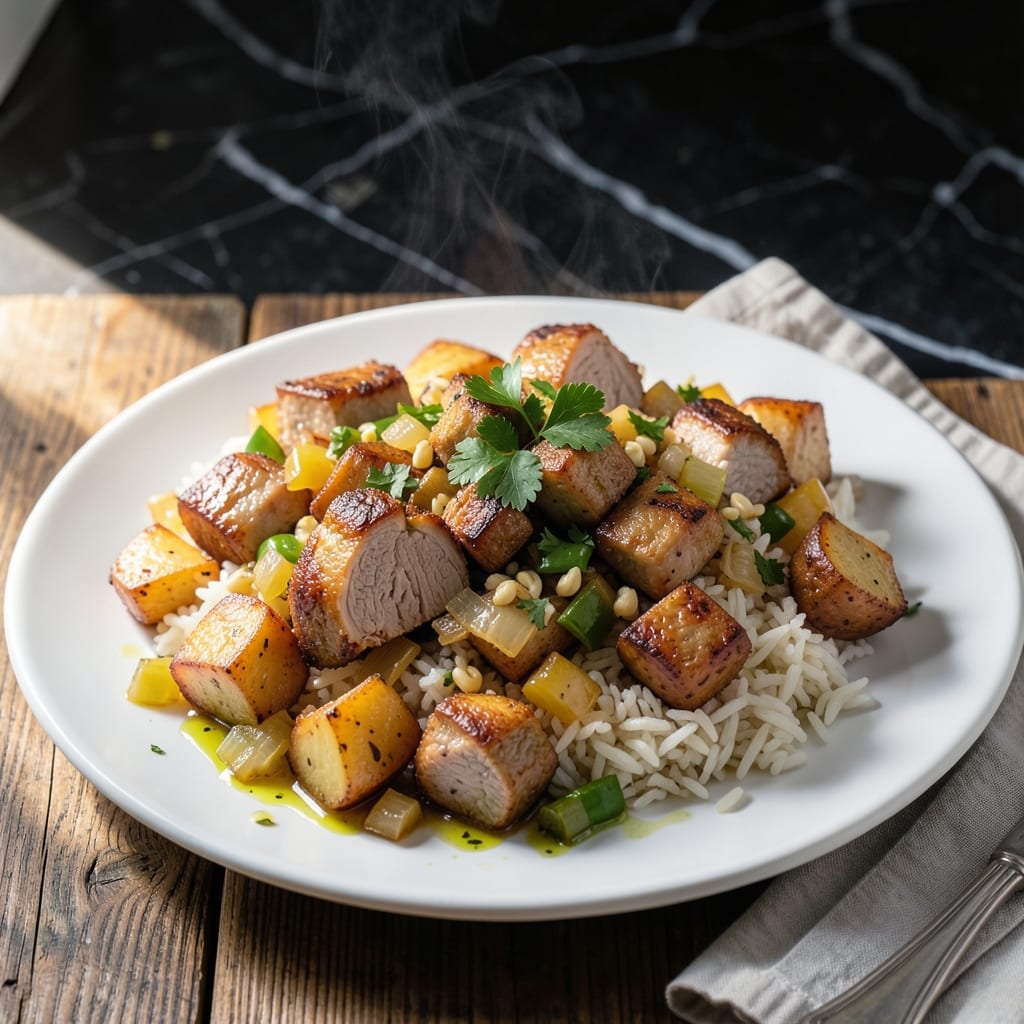
There’s something deeply satisfying about a well-made pork hash and rice dish that transforms simple ingredients into a perfect skillet meal. This recipe brings together tender pork, crispy potatoes, and aromatic vegetables for a hearty, flavorful experience.
The key is cooking the pork until golden and crispy, then combining it with diced potatoes that develop a golden-brown crust. A touch of garlic and onions ties everything together, while the rice soaks up all the savory juices.
What you get is a dish that’s rich, filling, and packed with layers of texture and flavor. The pork stays juicy, the potatoes are crisp, and the rice adds a comforting, neutral base.
Ideal for breakfast, brunch, or a quick weeknight dinner. Here’s how to make it right every time.
Ingredients for Pork Hash and Rice
Tender pork, crisp potatoes, and aromatic vegetables create a satisfying skillet meal with layers of flavor.
| Ingredient | Amount | Notes |
|---|---|---|
| Pork Shoulder 🐷 | 1 ½ lb | Boneless, diced into 1/2-inch pieces |
| Russet Potatoes 🥔 | 1 ½ lb | Peeled and diced into 1/2-inch cubes |
| Yellow Onion 🧅 | 1 whole | Medium, finely diced |
| Garlic Cloves 🧄 | 4 cloves | Minced finely |
| Green Bell Pepper 🌶️ | 1 whole | Diced into 1/4-inch pieces |
| Long-Grain White Rice 🍚 | 1 ½ cups | Uncooked, rinsed before use |
| Chicken Broth 🥣 | 2 cups | Low-sodium preferred |
| Worcestershire Sauce 💧 | 1 tbsp | Adds umami depth to pork |
| Dijon Mustard 🟡 | 1 tbsp | Smooth, not grainy variety |
| Smoked Paprika 🌶️ | 1 tsp | For a subtle smoky flavor |
| Dried Thyme 🌿 | ½ tsp | Crushed between fingers before adding |
| Kosher Salt 🧂 | 1 tsp | Plus more to taste |
| Freshly Ground Black Pepper 🌶️ | ½ tsp | Coarse grind preferred |
| Olive Oil 🫒 | 3 tbsp | Divided for cooking in stages |
| Unsalted Butter 🧈 | 2 tbsp | For finishing and richness |
The pork shoulder is non-negotiable for optimal texture—look for well-marbled cuts at Whole Foods or your local butcher. Russet potatoes provide the right starch content for that golden-brown crust. For the rice, jasmine or basmati work beautifully, but any long-grain variety will do. Freshly ground black pepper and smoked paprika add depth that pre-ground spices simply cannot match.
No pork shoulder? Pork belly or country-style ribs work well, though cooking times may vary. Vegetable broth can substitute for chicken broth in a pinch. For a bolder flavor, add a pinch of cayenne with the paprika. If you’re out of Dijon, whole-grain mustard adds a pleasant texture. The bell pepper can be swapped for red or yellow for a sweeter profile.
Cooked pork hash keeps in the refrigerator for 3-4 days and reheats well. The rice is best made fresh but can be stored separately for up to 5 days. For longer storage, freeze the hash without rice for up to 3 months—thaw overnight before reheating.
Why You’ll Love This Recipe
- One Pan Wonder: I toss everything—the pork shoulder, potatoes, even the bell pepper—into one skillet. No piles of dishes, just hearty flavor.
- Crave-Worthy Bites: The pork gets this crispy edge while the potatoes soak up the garlic and onion. Honestly, I sneak bites straight from the pan.
- Feeds My Crew: I make a big batch on Sunday, and it’s just as good reheated for lunches or a quick dinner. My kids even fight over the leftovers.
- Budget Stretcher: Pork shoulder and russets are cheap, but together they taste like a million bucks. I’ll be real—this is my go-to when I’m watching my wallet.
Step-by-Step Instructions for Pork Hash and Rice
Master this technique and you’ll produce a perfectly balanced skillet dish with crispy pork and tender rice.
Step 1: Sear and Brown the Pork Shoulder
Heat 2 tbsp Olive Oil in a large, heavy skillet over medium-high heat until shimmering. Add the diced 1.5 lb Pork Shoulder in a single layer, being careful not to crowd the pan. I always wait until the oil is properly hot—this prevents the pork from steaming instead of browning.
Cook undisturbed for 5-7 minutes until the bottom develops a deep golden-brown crust. Stir and continue cooking for another 5 minutes until the pork is evenly browned on all sides. The pork should release easily from the pan when properly seared. Transfer to a plate and set aside.
Step 2: Sauté Aromatics and Vegetables
In the same skillet, add the remaining 1 tbsp Olive Oil. Add the finely diced 1 whole Yellow Onion, diced 1 whole Green Bell Pepper, and minced 4 cloves Garlic Cloves. Cook over medium heat for 6-8 minutes, stirring occasionally, until the vegetables soften and the onion becomes translucent.
Add the diced 1.5 lb Russet Potatoes to the skillet. Season with 1 tsp Kosher Salt, 0.5 tsp Freshly Ground Black Pepper, 1 tsp Smoked Paprika, and 0.5 tsp Dried Thyme. Cook for 10 minutes, stirring occasionally, until the potatoes begin to develop golden edges.
Step 3: Deglaze and Incorporate Pork
Return the seared pork to the skillet along with any accumulated juices. Pour in the 1 tbsp Worcestershire Sauce and 1 tbsp Dijon Mustard, stirring to coat all the ingredients evenly. Cook for 2-3 minutes to allow the flavors to meld. The Worcestershire adds depth, while the mustard provides a subtle tang.
This step transforms the browned bits on the bottom of the pan into a rich, flavorful base for the hash. Make sure to scrape up any fond with a wooden spoon—this is where the magic happens.
Step 4: Cook Rice to Perfection
Add the rinsed 1.5 cups Long-Grain White Rice to the skillet and stir to combine with the pork and vegetable mixture. Pour in the 2 cups Chicken Broth and bring to a boil. Once boiling, reduce heat to low, cover, and simmer for 18-20 minutes until the rice is tender and the liquid has been absorbed.
Resist the urge to stir the rice while it cooks—this can make it gummy. Instead, give it one gentle stir halfway through the cooking time. When done, the rice should be fluffy and the liquid completely absorbed.
Step 5: Finish and Serve
Remove the skillet from heat and stir in the 2 tbsp Unsalted Butter until fully melted. Let the hash rest, covered, for 5 minutes. This allows the flavors to fully develop and the butter to create a silky finish.
Taste and adjust seasoning with additional salt if needed. Serve hot, with each portion featuring a mix of crispy pork, tender potatoes, and fluffy rice. The final dish should have a rich, savory aroma with visible flecks of herbs and spices throughout.
Pro Tips For Making Pork Hash And Rice
- Parboil the Potatoes: Soak peeled and diced russet potatoes in cold water for 10 minutes before cooking, then parboil for 5 minutes—this removes excess starch so they crisp up instead of turning mushy in the hash.
- Render the Pork First: Start the pork shoulder in a cold pan with no oil, then slowly render the fat over medium-low heat before adding anything else. I learned this the hard way—it prevents greasy hash and adds deep flavor.
- Skip the Overcrowding: Resist the urge to dump all the veggies in at once. Cook the onions and peppers separately until soft, then combine—this keeps them from steaming and getting soggy.
- Use Day-Old Rice: Sounds weird, but it works: cold, leftover rice holds its shape and soaks up the pork juices better than fresh. If you don’t have any, spread newly cooked rice on a tray and chill it for 20 minutes.
Health Benefits of pork hash and rice
Protein Powerhouse
The 1.5 lb pork shoulder in this dish delivers about 90 grams of protein per serving, supporting muscle repair and growth. It’s also rich in B vitamins, particularly B12 and B6, which are essential for energy metabolism. 💪
Iron and Zinc Boost
Pork is an excellent source of heme iron, which your body absorbs more easily than plant-based iron. A single serving provides roughly 20% of your daily iron needs, helping prevent fatigue. You’ll also get a healthy dose of zinc, crucial for immune function.
Complex Carbs for Energy
The 1.5 cups long-grain white rice offers sustained energy through complex carbohydrates. This pair balances protein with carbs, keeping you full and energized. The potatoes add potassium, which supports heart health and muscle function.
Fiber and Vitamins
The yellow onion, green bell pepper, and garlic contribute dietary fiber for digestive health, along with vitamin C and antioxidants. These veggies also provide vitamin A, which supports vision and immune health.
Healthy Fats
Olive oil adds heart-healthy monounsaturated fats, which help reduce bad cholesterol levels. The 2 tbsp unsalted butter provides a small amount of vitamin K2, beneficial for bone and heart health. 💛
Low Sodium Control
Using low-sodium chicken broth lets you control the salt content. The 1 tsp kosher salt enhances flavor without overdoing it, making this dish a smarter choice for those watching their sodium intake.
Nutrition Facts
Frequently Asked Questions
Can I use a different cut of pork?
Yes, pork belly or country-style ribs work well. Shoulder is ideal for tenderness, but belly adds extra richness. Adjust cooking time for leaner cuts to prevent dryness.
How do I get crispy potatoes?
Patience is key! Cook diced potatoes at medium-high heat for 10 minutes without stirring too often. Use russets for best results, and ensure the pan is hot before adding them.
What can I substitute for Worcestershire sauce?
Try soy sauce or coconut aminos for umami. Add a splash of lemon juice to mimic the tang. Each has a slightly different flavor profile but works in a pinch.
Can I make this ahead of time?
Cook the hash and store it in the fridge for up to 3-4 days. Reheat gently on the stove with a splash of broth. Avoid storing rice with the hash to keep textures fresh.

- Jollof Rice Sauce Recipe: West African Tomato and Spice Infusion - September 25, 2026
- Japanese Rice Soup Recipe: Umami-Rich Comfort in a Bowl - September 25, 2026
- Homemade Cream Of Rice Recipe: Silk-Smooth Breakfast in Minutes - September 25, 2026